
The Lynnwood City Council’s primary responsibility is to protect the economic stability of the City’s government. As the current Chair of the Lynnwood City Council Finance Committee, I am responding to the Mayor’s public comments regarding Lynnwood’s budget deficit in 2025.
The Mayor has said,” like many jurisdictions across the Country, Lynnwood is experiencing a notable decline in revenue…the turbulent national economic realities have caused a steep decline in revenues.”
The Mayor’s statement does not align with the facts. Revenues coming into the City have not dropped off an imaginary cliff. According to the City’s June financial report, revenues have gone up compared to 2024. I am writing this to provide residents with an honest explanation of why we are now in a budget deficit.

The cause of Lynnwood’s budget crisis is the Mayor’s inaccurate economic forecasts that are embedded into the 2025-26 Biennial Budget. These forecasts are used to determine how much money the City would be spending in the next two years. For example, how much revenue will there be to pay employees, can we afford more community events, will the Recreation Center be open every day?

If the economic forecasts are off a few thousand dollars City departments can easily make minor adjustments in spending. But if the forecasts are off by millions of dollars and expected revenues are not coming in, that creates overwhelming problems. City programs will be cancelled; fewer police will be hired, and other City employees will be laid off.
We are only in the sixth month of our two-year budget, and it is apparent there are some big mistakes in the revenue forecasts that are in the budget. There are three inaccurate forecasts that are the major reasons for the budget deficit as of June.

- $1.5 million less sales tax revenue has come in compared to the Mayor’s forecast.
- $2 million less revenue from fees and permits compared to the Mayor’s forecast.
- $2.2 million less revenue from red light camera tickets compared to the Mayor’s forecast.
These three categories have created a $5.7 million deficit in six months. By the end of 2025 we could be looking at a gap of $11.4 million. And these same inaccurate revenue forecasts are part of the 2026 budget, creating even larger future deficits.
The Lynnwood budget crisis is not going to be resolved with short-term fixes. Already I have heard talk about increasing the City Property tax or increasing sales tax or increasing car tab fees.
I have zero confidence in this Administration’s ability to come up with long term solutions to solve this self-inflicted budget deficit.
Last year to have a balanced budget, the administration created forecasts that ignored financial data and trends. We need action now to meet this fiscal crisis.


I will be asking the City Council to establish a citizen committee of individuals who have lived experience with creating city budgets. They will provide advice to the City Council on how to resolve our budget issues.
It is vital that the City Council act with transparency and accountability in addressing these challenges.
By engaging citizens with real expertise and a vested interest in the city’s well-being, we can create a collaborative approach that prioritizes fiscal responsibility and innovation. The goal must be to restore stability not through temporary patches but through smart, informed decision-making that puts Lynnwood’s future first. Only then can we ensure the sustainability of vital city programs and the quality of life our residents deserve.
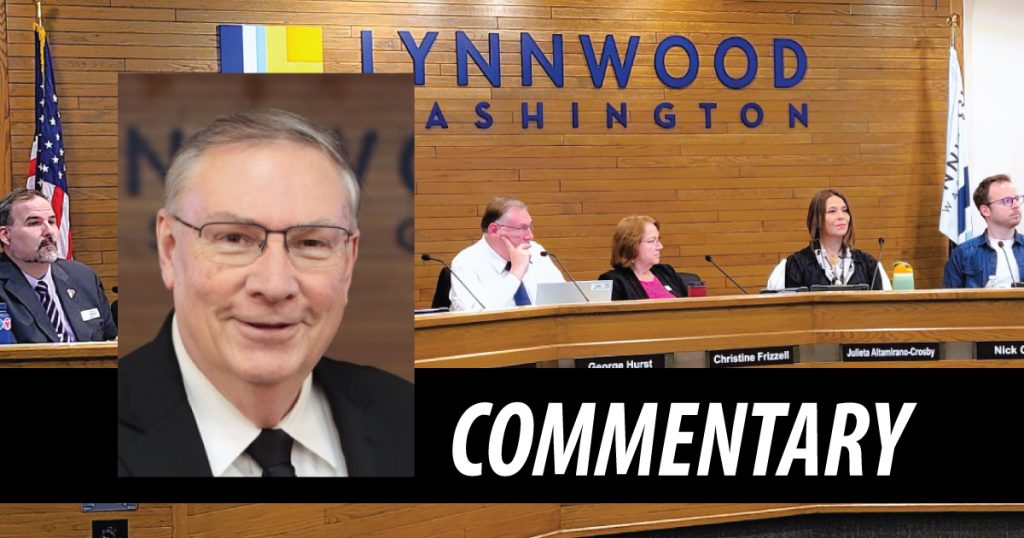
George Hurst, Chair, Lynnwood City Council Finance Committee
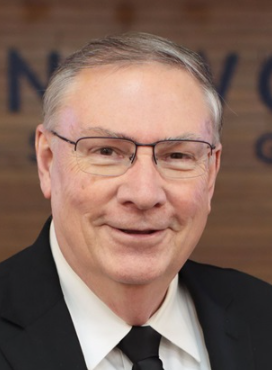
Hurst was first elected to the City Council in 2015, re-elected in 2019 and 2023. During his years on the Council, Hurst has focused on making Lynnwood a safer place to live and work. He was Chair of the committee that created the South County Regional Fire Authority and served on the Board that combined two 911 call centers into one efficient 911 system for all of Snohomish County. Hurst legislative priorities over the years have been focused on addressing housing shortages, controlling government spending, and providing a business-friendly environment.
Hurst was born in Seattle and for 32 years has lived in Lynnwood with his wife and their four children. He has a Bachelor of Arts in History/Political Science from the University of Washington and a Master of Arts in American History from the University of North Carolina, Chapel Hill.
In 2021, Hurst earned the Association of Washington Cities Certificate of Municipal Leadership.
COMMENTARY DISCLAIMER: The views and comments expressed are those of the writer and not necessarily those of the Lynnwood Times nor any of its affiliate

Author: Lynnwood Times Contributor