
LYNNWOOD—The Washington State Department of Transportation (WSDOT) has initiated a pre-design study for State Route 99 (SR 99) in Lynnwood and unincorporated Snohomish County to identify improvements that enhance safety and mobility for pedestrians, cyclists, and transit users, while meeting Complete Streets requirements, with public input sought through an ongoing online open house.

SR 99 serves as a key north-south corridor parallel to Interstate 5, connecting communities such as Lynnwood and Everett amid regional growth. However, sections of the route currently lack adequate safe crossings, sidewalks, bike pathways, and other elements supporting pedestrian and transit access, complicating non-motorized travel.




The study’s objectives include pinpointing long- and near-term enhancements to provide secure connections for walking, biking, and rolling; improving transit accessibility along SR 99; and boosting overall safety and mobility across transportation modes. It emphasizes Complete Streets principles, integrating these with maintenance, safety, and capacity projects.
Funding for the initiative totals $1,893,531, sourced from grants. The Lynnwood portion is supported by an $800,000 award from the state-funded Sandy Williams Connecting Communities Grant. The unincorporated Snohomish County segment receives $945,918 from a federal Equity grant via the Puget Sound Regional Council, matched by $147,613 from WSDOT.


The study covers SR 99 from 212th Street Southwest to Airport Road. It aims to address safety and stress concerns for pedestrians and cyclists, outline targeted improvements, enhance connectivity for all users, and establish a long-term vision for the corridor.
The process involves reviewing current and projected conditions, defining purpose and needs, gathering input from agencies, the community, and stakeholders, creating evaluation criteria, developing and assessing concepts and alternatives, and finalizing recommendations. Community feedback is integral to aligning outcomes with local priorities.
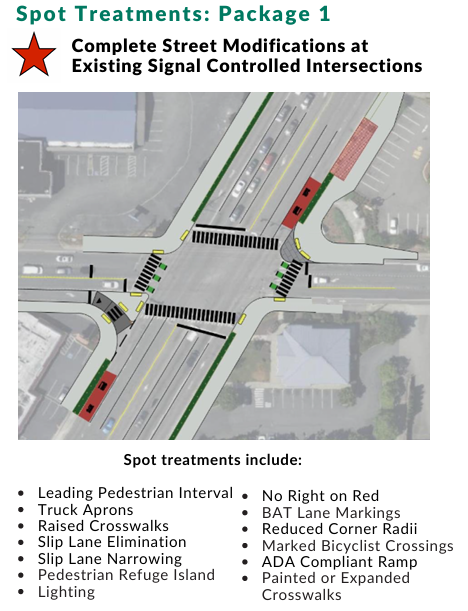
This project will include spot treatments, which are targeted improvements implemented at specific locations, such as intersections, road segments or transit stops to address identified issues such as safety or operational inefficiencies. This study corridor has been divided into five sections with four different packages for improvements.


The online open house can be accessed here and runs through Monday, July 28, 2025, allowing participants to review details and provide comments.

Author: Mario Lotmore