

OLYMPIA—Washington State’s Work Zone Speed Camera Program, that launched in April 2025, has issued 7,599 infractions for speeding in highway work zones, with another 3,968 currently being processed, during its first 90 days the Washington State Patrol announced on Wednesday, July 30.
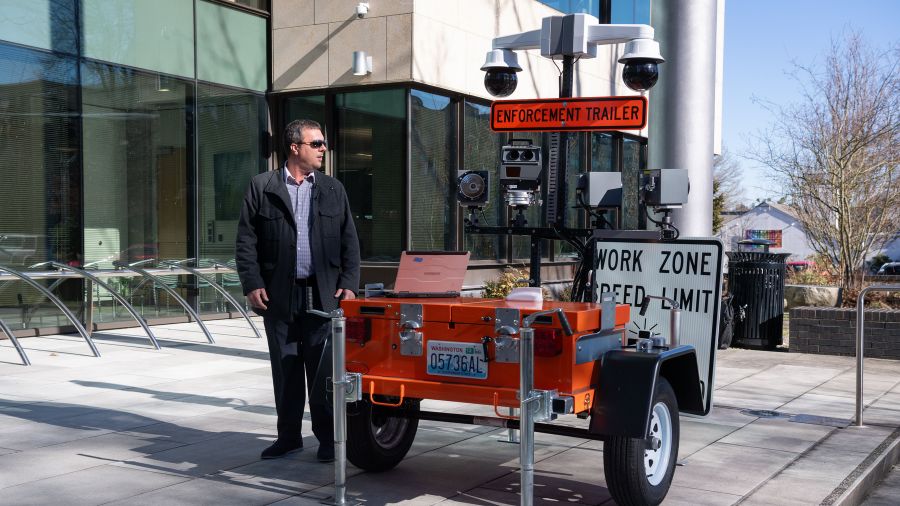
“While the number of infractions has been high during the first 90 days of operation, we hope to see a reduction of speeding through work zones as the word gets out about this new safety tool,’ said WSP Chief John R. Batiste. “This isn’t about writing tickets and fining motorists; this is about slowing inattentive drivers down and saving lives.”
Since 2020, Washington has averaged 1,345 crashes in highway work zones each year. The program’s primary goal is to improve safety for workers and drivers through automated enforcement—fines are waived for first-time offenders. Authorized by the passage of Senate Bill 5272 in 2023, whose primary sponsor was Senator Marko Liias (D-Edmonds), the program is set to run through 2030 unless extended.
The Work Zone Speed Camera Program uses scanning Light Detection and Ranging, also referred to as LiDAR, for vehicle speed detection in active highway work zones across the state.


These units capture images of vehicles exceeding posted speed limits, including license plates, speed data, location, date, and time, but do not photograph a driver’s face, according to the Washington Department of Transportation (WSDOT). Warning signs are placed ahead of enforced areas to alert motorists. Once a potential violation is detected, the Washington State Patrol (WSP) reviews the evidence and, if confirmed, mails a notice of infraction to the vehicle’s registered owner within 30 days.
Under current rules, the first infraction carries no financial penalty. Subsequent violations incur a $248 fine; however, starting July 1, 2026, first offenses will cost $125 while subsequent offenses will remain at $248.


Recipients must respond online or by mail, even without a penalty, and can contest the infraction, request a reduction, or arrange a payment plan through the Office of Administrative Hearings. These are classified as non-moving violations, meaning they do not affect driving records or insurance rates. Unpaid fines, however, can lead to holds on vehicle registration renewals.
Revenue from fines primarily covers program operations, with any surplus supporting WSP’s DUI and general safety initiatives.
Speeding is identified as a leading factor in work zone incidents, reducing drivers’ reaction times in altered roadway conditions and contributing to deaths, injuries, property damage, and delays affecting millions of travelers, WSDOT reports.
Statistics from WSDOT indicate that nearly 95% of those injured in such crashes are drivers, passengers, or nearby pedestrians, rather than road workers.


External studies on similar automated speed enforcement systems suggest they can enhance safety. For instance, research from the Federal Highway Administration has found that speed cameras can reduce injury crashes by up to 47% on busy streets and decrease crashes by 15%, injuries by 17%, and fatalities by 55% in certain zones.
In New York City, speed cameras have lowered daily violations by 94% since 2014, while the National Highway Traffic Safety Administration reports average speed reductions of about 9 mph and decreased speed variance in enforced areas.
Proponents, including the Governors Highway Safety Association, argue that such systems effectively curb dangerous driving behaviors.
However, speed camera programs have faced criticism. Opponents often label them as revenue-generating tools rather than genuine safety measures, with concerns raised about hefty fines burdening drivers.

Author: Mario Lotmore