


LYNNWOOD—At Bloodworks Northwest, just 15-minutes of one’s time, and a pint of donated blood, can have the impact of saving several lives. But throughout the summer the Pacific Northwest-based blood bank is seeing a tremendous drop in donation participation amid a higher demand for blood for medical services.
Though blood donations are in, what’s called, the ‘100 Deadliest Days’ – the time between Memorial Day and Labor Day when donations tend to plummet while the need for blood increases – according to Juan Cotto, Government Affairs Director for Bloodworks, the “need for blood is constant” year-round.
“We have to be able to provide blood for transfusion, medical, and research, platelets for individuals who are undergoing cancer treatments, so the needs are constant,” said Cotto. “In the last fifteen-twenty years, as our population is starting to age and we’re beginning to get away from that generation that was in World War II, or close to WWII, blood donations, certainly as a civic activity, is one of those things that I think people don’t understand the universal importance of.”
Cotto continued that the dip in donations can be seen nation-wide, teetering on the edge of an emergency but, in the words of the late Dr. Beverly Torok-Storb, researcher at Fred Hutch who passed away from her years-long battle with Parkinson’s in 2023: “Blood is still important.”


“When the word gets out after, for example, a train derailment or mass shooting, people tend to line up, in some cases, around the block,” said Cotto. “But in those cases, the blood used in these situations were donated 10 days ago. We really need people to understand that you’re serving your community by donating blood.”
One pint of donated blood can save as many as three people’s lives through surgeries, childbirth, trauma, cancer treatment, blood disorders, and transfusions – not to mention allowing researching to be conducted that could result in developing cures for other ailments.

The most common of these is blood transfusions with 30 blood transfusions being administered every minute in the United States, according to the Red Cross.
Just last week, Cotto said he was attending a high school football game at O’Dea High School in Seattle – where his son attends – when a woman approached him to share that the work of Bloodworks NW saved the life of her family member, who relied upon blood donations throughout her cancer treatment.
But Bloodworks, as is the case with other blood donor organizations, historically sees a dip in donations during the summer, when people are on vacation, busy with extracurricular activities, and students are on break from school. Schools alone make up about 28% of all of Bloodworks donations.
What’s more, while donations are down during the summer months, a rise in accidents – from increased traffic congestion, pedestrian flow, impairment from increased drug and alcohol consumption, and other factors – lead to a rising need for blood. According to the National Highway Traffic Safety Administration, summer months are often the deadliest time for both drivers and pedestrians.

In addition to this, people tend to schedule their important medical procedures during the summer to align with their vacations.
In the United States nearly 40% of the population is O positive which, obviously make up the highest donor pools as well as need. But O negative blood types, of which only 7% of Americans have, are always needed as it’s considered a “universal blood type.” Because of that blood donation centers tend to focus on these two types, however, the center is in frequent need of all blood types to serve the region’s diverse and increasing population.
The need for blood platelets (cell fragments in blood that coagulate and stop/prevent bleeding) are also in increasing demand as most chemotherapy (for cancer treatment) erodes a patient’s platelets after time.
Blood donation organizations like Lynnwood’s Bloodworks are able to “spin” different components out of donations as needed – such as platelets, red blood cells, or plasma – so just one donation has the ability to serve a wide variety of medical functions. To extract two pints of platelets takes approximately 90 minutes but the need, especially in the Pacific Northwest, is well worth the time and effort.
Donated plasma can be frozen and last up to 13 months, platelets can last five days, and whole blood cells can be used up to 45 days, according to the National Institute of Health (NIH).
Lynnwood Bloodworks said there really is no “target” they try to hit, as far as blood supply amounts on hand, but strive to have supplies ranging from seven to 10 days ahead. Currently they have supplies for up to two to three days ahead.
Bloodworks has contracts and partners with over 90 different hospitals and medical care groups between Bellingham and Eugene, Oregon. The organization supplies over 50% of all blood used in hospitals in the Portland, Oregon, area and has similar large contracts in the Washington counties of Pierce, King, and Snohomish.
“We’re all looking for opportunities to serve people in our community. I think that’s one of the most beautiful things about the region of the Seattle/Snohomish County area, is that we’re looking for different ways to serve,” said Cotto. “This is such an easy way to help save lives.”
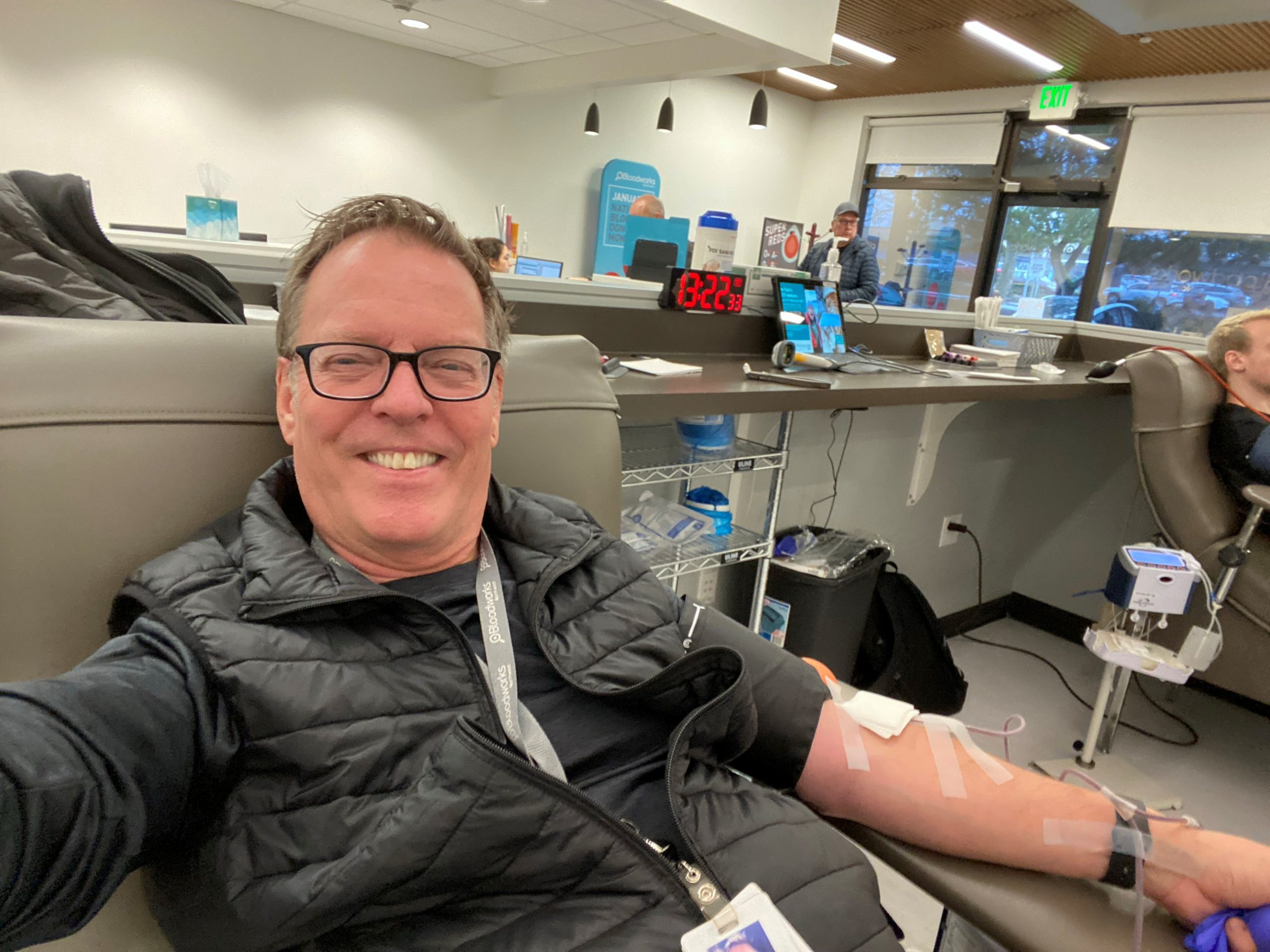
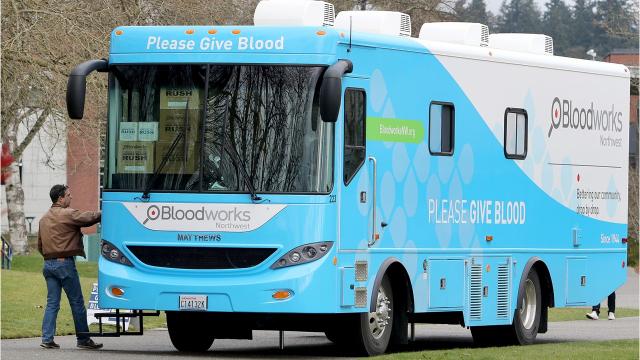
Interested donors at Bloodworks can expect to make an appointment online, walk into any of its 12 donor facilities in Western Washington, fill out some basic paperwork to ensure they’re fit to donate blood, take a quick finger prick test to check their iron, then carry through with the donation procedure.
A single visit can last anywhere from 15-minutes to 45-minutes depending on what type of donation they are giving – that’s less than an hour of a day that will go on to save countless lives. After donating, volunteers are then kept for a small amount of time to ensure they leave hydrated and healthy. They also receive a cookie which Cotto joked is his favorite part of the donation process.
One notable blood donor Lynnwood City Councilman Robert Leutwyler who shared:
“Donating blood is one of the most direct ways we can save lives and help our community. We’re in the middle of a blood shortage right now, and we never know when the next emergency might occur. By donating regularly, we’re making sure life-saving care is there when it’s needed most,” Councilman Leutwyler told the Lynnwood Times. “Bloodworks Northwest makes it so convenient to schedule appointments and even receive text messages when your donation is put to use. Your donation could be the reason someone gets a second chance. I encourage everyone to make an appointment today”
It’s important to show up to your blood donation appointment hydrated and fed. In most blood donations donors lose about a pint of blood, losing about a pound of weight, so it’s important your body is well stocked in nutrients. Donors can donate blood every 56 days.
Bloodworks is also always accepting volunteers for those who want to give back beyond a donation. To book a donation appointment, check closest donation sites, or apply for volunteer opportunities, visit: www.bloodworksnw.org
Last legislative session two key blood-related bills passed in Olympia that are now signed into law. Those bills are SB5689, which will now add blood types to drivers’ licenses and identification cards, and SB5641, which encourages public school instruction in awareness of blood donation.

Author: Kienan Briscoe







One Response
Thanks for the comprehensive story. It’s such a simple procedure that only takes a few minutes. In fact, we did some research on the time it takes from when blood is first drawn to when the donation is over. The average is only 6 and a half minutes! That’s a small price to save a life. Thanks again.