

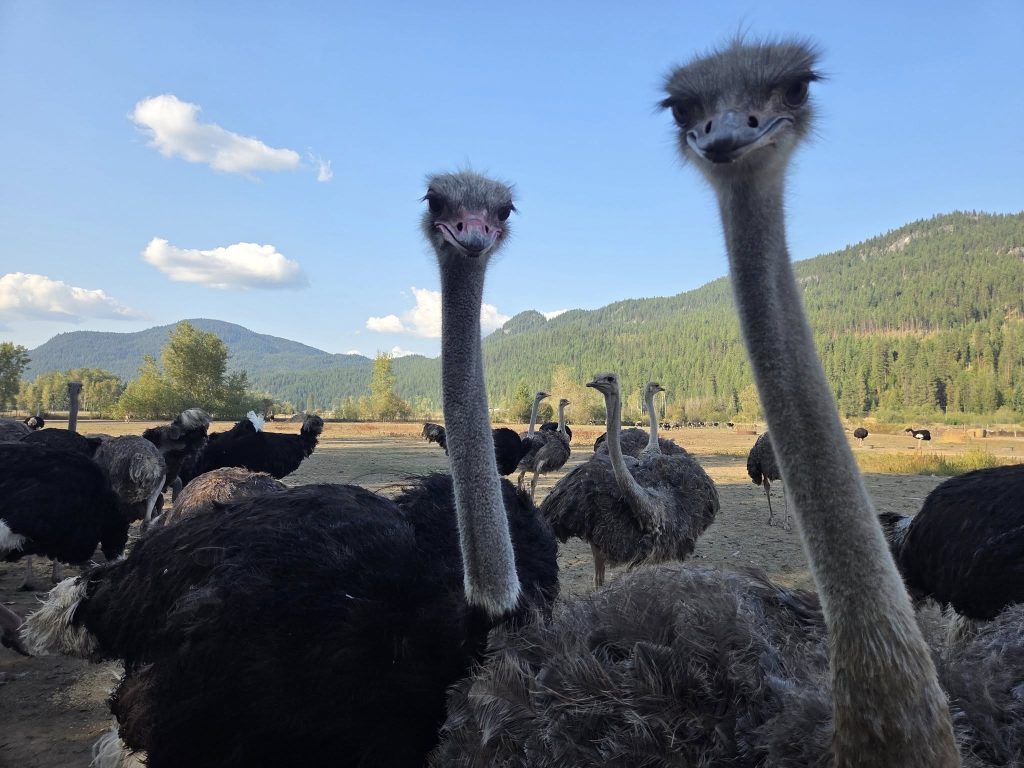
EDGEWOOD, BRITISH COLUMBIA—With the whole world watching and holding its breath, Canada’s Supreme Court slammed the brakes on the Canadian Food Inspection Agency’s (CFIA) brutal plan to massacre 400 healthy ostriches at Universal Ostrich Farms. The farm, located in the quiet Kootenay town of Edgewood, British Columbia, has become the focal point of a contentious legal and very public battle over the fate of the ostriches.
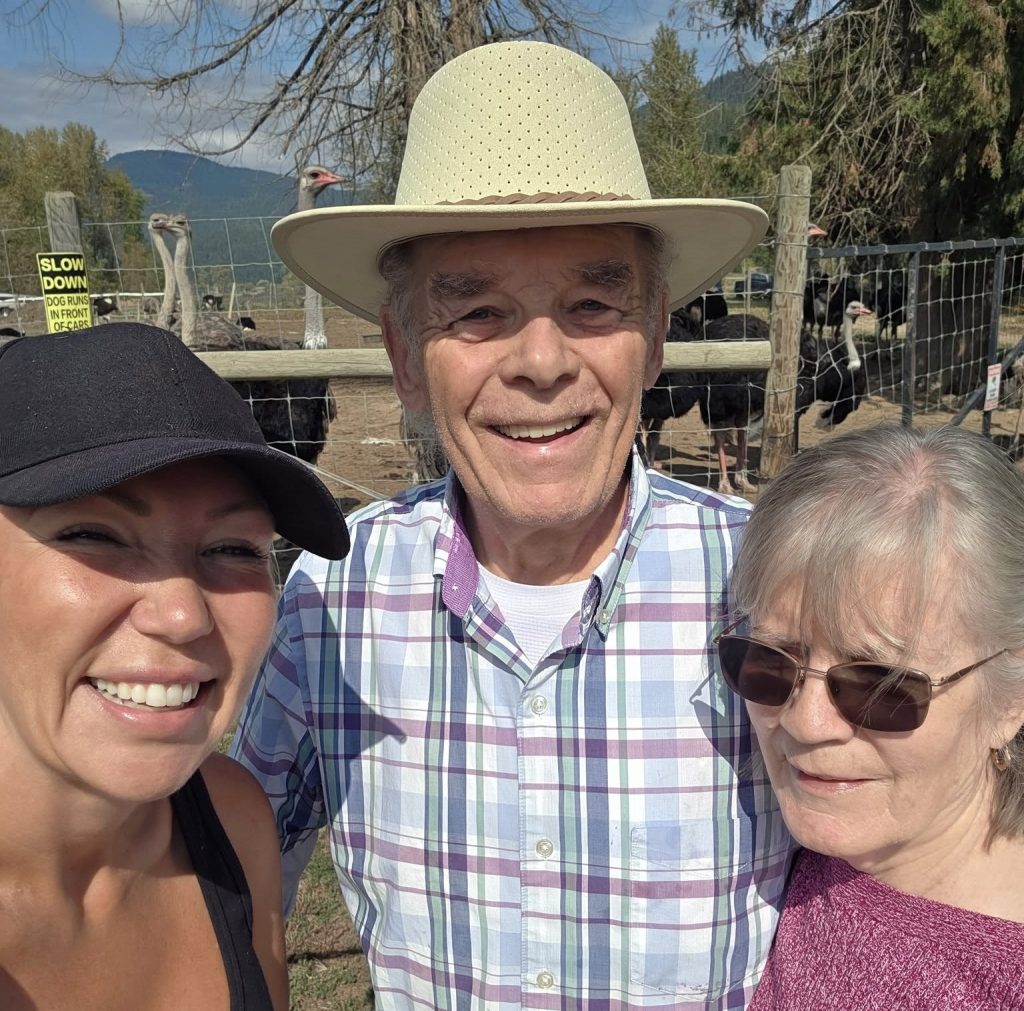
“We are all here to celebrate today, no death!” farm spokeswoman Katie Pasitney, daughter of farm co-owner Karen Espersen, holding back tears, told supporters as her attorney was telling her the details of Supreme Court’s stay over the phone.
On September 24, the Supreme Court of Canada granted an interim stay, halting the CFIA order to cull the flock of ostriches due to an H5N1 avian influenza outbreak detected in December 2024. The stay, issued hours before the planned cull, followed an emergency application by the farm’s owners, Karen Espersen and Dave Bilinski, who argued that the action by CFIA would cause irreparable harm and raised serious legal questions about its necessity. The CFIA must now respond by October 3, with the farm given two days to reply, as the court considers whether to hear a full appeal.
The farm’s crowdfunded lawyer, Umar Sheikh, is actively working on the case, arguing the cull violates property and research rights.




Mere minutes before the Supreme Court of Canada granted the stay, supporters gathered for a morning prayer on the farm asking for a “Wednesday miracle.”


“Lord, in these moments, in these moments where we don’t have much left, where we feel like every single one of our avenues has been exhausted, when we feel like we can’t rely on our system, when we can’t rely on our law, when we can’t rely on the things and the foundations that we truly thought we once could, it comes down to you. It comes down to you and the power and the faith that fills our heart,” the supporter said in the prayer.
The person leading the prayer shared his gratitude for the diverse group gathered in support of Universal Ostrich Farms, stating, “We all come from different paths, different walks, different ideologies. But at the end of the day, we are all one.”
On the morning of September 24, Pasitney handed a letter to law enforcement alleging that the farm is under the protection of a signatory First Nations community. However, the legal authority of the letter has not been confirmed. If the farm is placed under a First Nations community control, this would invoke Section 35 of Canada’s Constitution, which affirms Aboriginal rights.
Secwépemc Nation has stepped up to protect the Universal Ostrich Farm and prevent the cull. "Each day we're going to take each miracle we have, until these animals are saved, and the world can have a celebration," said Katie Pasitney to @DreaHumphrey. Full livestream link 👇🏻 pic.twitter.com/0kEFCIn51V
The First Nations involvement would challenge CFIA jurisdiction, as Indigenous governance can supersede federal authority in certain contexts under the Health of Animals Act, which mandates consultation with affected bands. The lease, timed just before the Supreme Court’s stay, strengthens the farm’s legal position by raising questions of sovereignty and consultation.
Legal experts note this aligns with precedents where Indigenous bands have asserted control over resources, potentially paving the way for negotiations on alternatives like enhanced testing instead of killing the ostriches. The CFIA has not publicly addressed the lease, leaving its impact on enforcement unclear.
The case has also drawn U.S. interest. In spring 2025, Trump administration officials, including Health Secretary Robert F. Kennedy Jr., urged the CFIA to reconsider the cull for research purposes. Dr. Mehmet Oz offered his Florida ranch as a relocation site, though Canadian quarantine rules prevented this.
Domestically, B.C. MLAs Tara Armstrong and Jordan Keey, Conservative Leader John Rustad, and federal Conservatives have opposed the cull, joined by Green Party MP Elizabeth May.
The saga began on December 10, 2024, when a three-year-old ostrich at the farm, located 135 kilometers southeast of Vernon, displayed pneumonia-like symptoms. Over the next 36 days, 69 ostriches—about 15% of the original herd of 468—succumbed, primarily younger birds and those introduced after 2020. Older ostriches, previously exposed to a bacterial infection in 2020, showed no symptoms, suggesting possible herd immunity, the farm owners argued.
By January 15, 2025, the remaining birds had fully recovered, with no further illnesses reported. However, on December 28, 2024, an anonymous tip prompted the CFIA to investigate potential avian flu. Two days later, agents collected oral and rectal swabs from two birds deceased for over 24 hours, denying the farm’s request to test healthy ones. On December 31, PCR tests confirmed H5N1, leading to a cull order for the entire flock by February 1, 2025, accompanied by quarantine measures and a link to mental health support.
Espersen and Bilinski, who have operated the farm for over 30 years, requested tissue sampling—the gold standard for diagnosis—to rule out a bacterial cause like the 2020 pseudomonas outbreak, but the CFIA refused, prohibiting independent testing under threat of $200,000 fines and six months in jail.
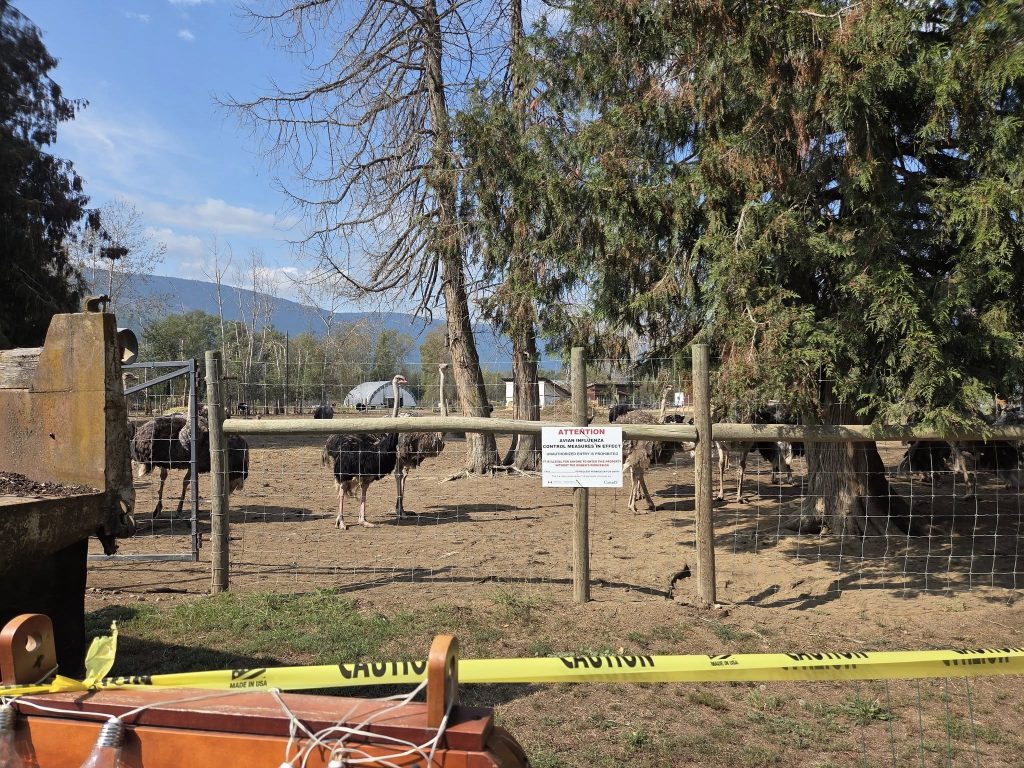
On January 2, 2025, the CFIA offered a depopulation exemption for rare genetics, but the form, designed for commercial poultry, was inapplicable to ostriches. After a five-hour meeting on January 5, where the farmers shared details of their research with hopes of collaboration, the CFIA denied the exemption on January 10, stating the decision was final.
Desperate, the farmers’ daughter, Katie Pasitney, launched the “Save the Ostriches” campaign on January 21. A website, social media posts, and roadside protests drew initial crowds of 10–15 supporters, prompting the CFIA to cancel a scheduled inspection. When agents returned with Royal Canadian Mounted Police (RCMP) escorts, supporters documented the visit, amplifying the worldwide.
On January 31, 2025, Federal Court Justice Michael Battista granted an emergency injunction, pausing the cull for judicial review. The CFIA responded on February 6 with 19 new quarantine measures, including separating sexes and adding fencing, which Pasitney called overly burdensome.
CFIA appealed against the injunction and on May 13, the Federal Court upheld the cull order, citing public health risks. The Federal Court of Appeal affirmed the ruling on August 22, noting a particularly lethal H5N1 strain.
Tensions escalated on September 22, when the CFIA, backed by RCMP, executed a search warrant and began cull preparations, erecting hay-bale enclosures. A suspicious fire damaged part of the hay-bale structure, which is now under investigation.
On September 23, Pasitney and Espersen were arrested for obstructing agents after refusing to leave the birds’ enclosure, later released with conditions barring re-entry.
The farm’s ostriches are not raised for meat but for research, a focus since 2020. Their eggs yield antibodies effective against viruses like H5N1 and COVID-19, per a 2021 Quebec lab study. Collaborations with Dr. Yasuhiro Tsukamoto of Kyoto Prefectural University and Dr. Stu Greenberg in Boston explore applications for wildlife disease management.
Supporters argue the birds’ immunity, evident since January 2025, warrants further study rather than destruction, especially amid a North American H5N1 wave that has killed over 140 million birds since 2021.
The CFIA, adhering to World Organization for Animal Health guidelines, insists the cull is necessary to prevent H5N1 mutations that could affect mammals or humans. The agency retains custody of the flock and continues biosecurity operations, amid reports of removed security cameras raising transparency concerns.
Harassment of contractors, including threats against Nucor Environmental Solutions, contracted to dispose of the ostrich carcasses, has prompted RCMP investigations.
To learn more or support the Save the Ostriches movement, click here.
Editor’s Note: The article was updated 3:02 p.m., September 25, 2025, to remove that Universal Ostrich Farms entered into a lease agreement with the Lower Similkameen Indian Band (LSIB), a First Nations community. This was reported in error.

Author: Mario Lotmore