

EVERETT—At Hope N Wellness unhoused individuals can have a safe space where they can get a free meal, free clothes and hygiene products, receive peer counseling, housing and case management, or connected with local services throughout the region including substance abuse treatment and housing.
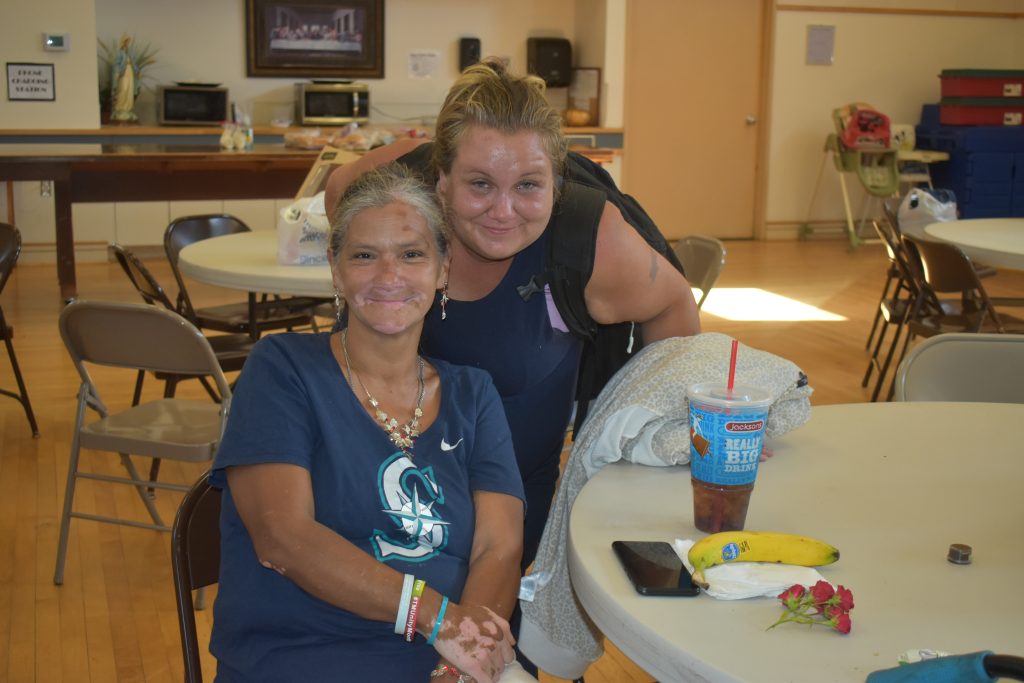
Founder Jasmine Donahue knows, firsthand, what it’s like to live on the streets and struggle with drug addiction. Growing up, her mother suffered from extreme mental health issues and was abusive to Donahue and her siblings.
Despite reaching out to authorities several times, Donahue was always brought back home, leaving her feeling betrayed, lost, and without options. At the age of 11 she decided to take matter into her own hands and run away from home.
“I learned how to become a criminal from the police because I learned that I didn’t want them to catch me, and that all went back to growing up in an abusive situation where no one would listen,” Donahue told the Lynnwood Times. “That ties in directly with a lot of [homeless] people I work with now not trusting services, not trusting the system, there’s a lot of different things that can lead to all of that.”



Donahue lived on the streets until the age of 16 when she became pregnant with her first child. She moved in with the father, who was equally abusive to her and was in and out of prison. During this time Donahue had two more of her children.
As Donahue matured, she began to realize that the root of most of her mother’s abuse was her mental health issues, and her lack of service providers available to help her. Often when her family would visit places her mother would be asked to leave because of her behavior. This would later inspire her decision to model Hope N Wellness as a “zero barrier – no matter what the challenges are,” according to Donahu.


“No matter the behavior you’re always asked to come back. It’s always done with compassion and intent,” Donahue added.
Donahue’s mother passed away this year. She never received the mental health she needed.
“I remember her desperation and hopelessness afterwards because she needed help and she knew we needed help, but not being able to understand, or control, her behaviors…those were really heartbreaking experiences afterwards,” said Donahue.
Though Donahue was housed, off and on, for 17 years, she always had a level of chaos she shared, because she didn’t know any other way of life. Feeling the pressures of not wanting to be a bad mother and repeating a pattern she didn’t know how to stop, Donahue began drinking heavily to cope with her depression, stress, and anxiety.
At the age of 31 she finally left her abusive relationship and tried to change her life for the better. But when her ex took her to court and try to gain custody of their kids, that’s when her mental health hit its limits.


She fell into a deep depression and eventually became unresponsive. At that point a friend of hers thought it would be a good idea to inject her with methamphetamine to “wake her up.” It worked, but at the cost of developing an addictive drug habit.
After a drug bust swept through where Donahue was staying in Eastern Washington, she found herself escaping to a horse ranch in Central Oregon where she eventually detoxed and found sobriety. She calls this intervention an act of “God.”
“When things calmed down, I reached out to some of the people I was running with and they told me to stay away, to focus on taking care of my kids. That saved my life,” said Donahue.
According to Joe Wankelman, who has been actively involved with Hope N Wellness, Donahue’s story is a story of perseverance, where she “defied all odds.”
“The primary focus of Hope N Wellness is to establish trust, with those who have been hurt by the system so often, and so frequently, that they don’t trust anybody in it. Hope N Wellness is that first place where you can begin to establish that trust so someone might say ‘okay there is someone who cares.’ It’s from her [Donahue] story, and her understanding of that lack of trust, that is so powerful,” said Wankelman. “In our PhD’s and our research, we don’t measure trust. It’s not statistically definable. I can state some statistics but at the same time we don’t look at that aspect, we look at wanting to treat the symptoms. Giving a person a bed doesn’t establish trust it’s just giving someone a bed.”
Though Donahue had found sobriety and stability in her own life, she continued to have a tremendous amount of guilt over the years for being okay while she knew many others continued to struggle. She began volunteering at a drug treatment center but, through this work, she noticed that many people still lacked a space where they could feel safe and exist.
In 2020, when many social services were closed due to the pandemic, Donahue launched Hope N Wellness to create exactly that; a safe space where unhoused individuals could come without feeling obligated to join anything or participate in anything. Where they could just come, show up, sleep, and be left alone, to escape the weather and the unprotected dangers of the street.
According to the National Health Care for the Homeless Council, approximately 70% of all unhoused individuals experience some sort of assault, either physical or sexual, while living on the streets.
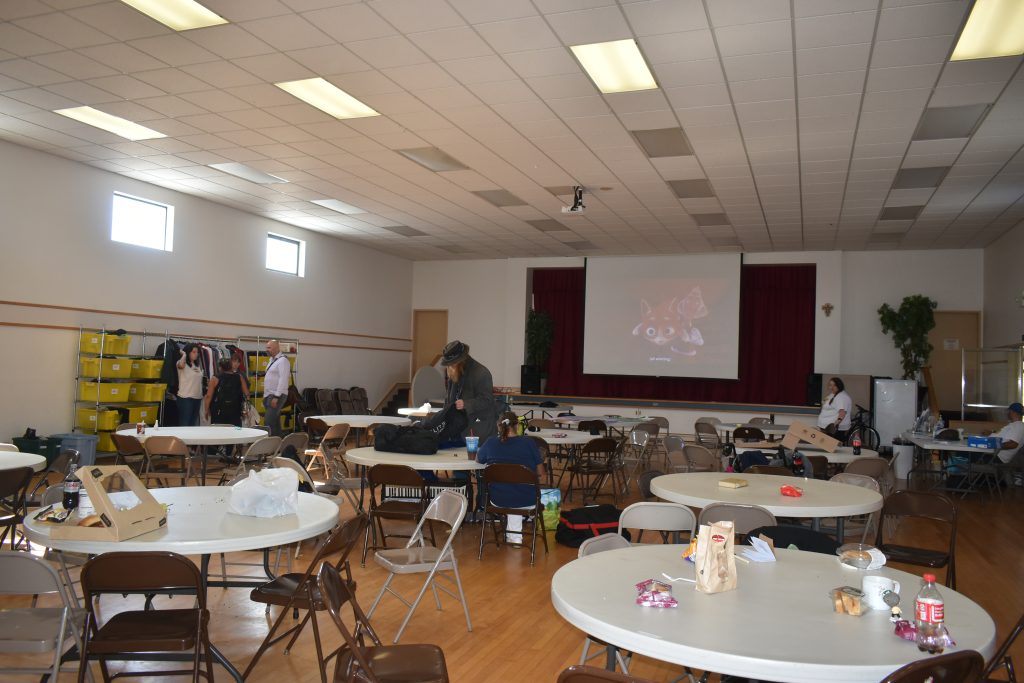
Some of the challenges Donahue has faced over the years is trying to find a location, with many cities and counties wanting their homeless issues to be “out of sight, out of mind.”
Another issue, she said, is governing bodies requiring trackable data to lend their support where things like “trust” is something not qualifiable. For example, last month Hope N Wellness served over 600 unhoused individuals but only 20 agreed to fill out paperwork to be considered an official “client.”
What’s more, when Snohomish County compiled its annual Point in Time (PIT) count compiling data on unhoused individuals in the region, her facility never received a visit or was included in the overall report.
Donahue’s solution to bridging the communicative gap between government bodies and service providers is to take personal testimony into account, not just numbers and data.
For Joe Wankelman, those forming decisions need to start walking the streets and meeting with individuals on a personal level. It also falls on how they collect, and measure, data.
“The people who are really having the challenges have an incredible story but they also have a perspective. We need to hear their perspective, we need hear the resources perspective, and those who have persevered’s perspective, but the people who have persevered have a very different story than the politicians who have never been in the ecosystem who have never had to endure a night on the street,” said Wankelman.
Hope ‘N Wellness partners with Wellpoint to provide compassionate, consistent case management that focuses on more than just checkboxes. It helps create a stable foundation, whether that means finding safe housing, preparing for employment, navigating systems, or simply having someone walk beside you who cares.

Author: Kienan Briscoe