

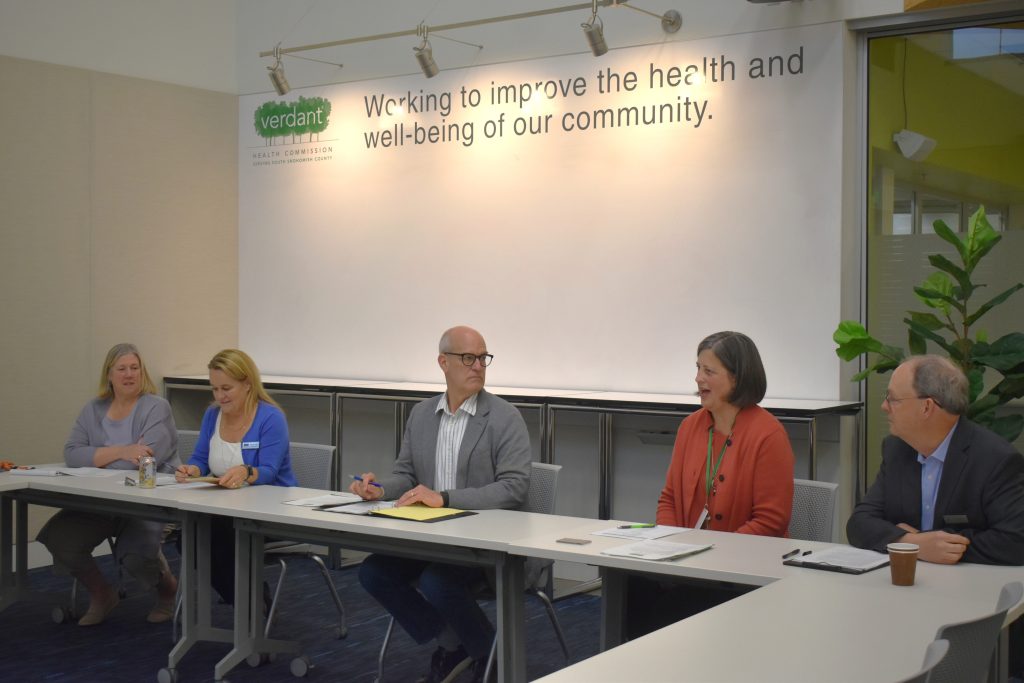
LYNNWOOD—Representative Rick Larsen (D-WA) met with the Verdant Health Commission, and Lahai Health Executive Director David Eller, to discuss the potential impacts of the federal government’s new spending bill on the region’s access to affordable healthcare.
In President Donald Trump’s ‘One Big Beautiful Bill Act’ (or what Larsen calls the ‘Big Ugly Bill’) – the federal governments recently passed spending bill – significant cuts to government spending were written into law back in July. The bill also allows the Affordable Care Act’s enhanced premium tax credits (or ePTC), which approximately 22 million Americans rely upon for health coverage, to expire by the end of the year without congressional action.


The One Big Beautiful Bill Act also made the single largest cut to Medicaid in the nation’s history.
“Medicaid is not healthcare for other people. It’s healthcare for friends and neighbors,” said Larsen Friday. “In 2023, in Whatcom County, 50% of the babies born there were born into families who used Medicaid as their primary healthcare. In Snohomish County it was about 30% and in Skagit County it was 60%.”


These tax credits help low- and moderate-income Americans who don’t receive health insurance from their employers afford health care on the ACA Health Insurance Marketplace.
Many healthcare exchanges, including Washington’s Benefit Healthcare Exchange, are set to have open enrollment for benefits on November 1.


The Washington State Insurance Commission has already filed rates, that both included the tax credit extension and did not include the tax credit extension to be prepared for either outcome, but other states were not as fortunate – filing rates in anticipation of the tax credits not being extended therefore locking insurance holders into higher rates even if the tax credits were extended.
In Washington State, an estimated 80,000 people could lose their health coverage as a result. In Larsen’s district alone, about 25,000 people purchased healthcare through the healthcare benefit exchange who could now be faced with 65% increases to their premiums.
Currently funding discussions are taking place considering a short-term continued resolution through November 21. But by that time, Larsen said, rates will already be filed and the spikes in prices could deter individuals from purchasing healthcare at all.
“That’s why this is an important debate right now,” said Larsen. “It might be difficult being an elected official right now. It’s much more difficult to be a person reliant on affordable healthcare and knowing it’s going away.”
On Friday, October 3, David Eller, Lahai Health Executive Director, one of Verdant’s partners who provide free healthcare in Larsen’s district, Sarah Zabel, Interim Superintendent for Verdant, Director of Community Impact Ceil Erickson and Commissioner Karianna Wilson welcomed Congressman Larsen to Verdant’s facility in Lynnwood to discuss how Trump’s spending bill could directly impact the health agencies ability to care for South Snohomish residents.
Verdant budgeted for $6.5 million to invest into the community in 2026, with about $850,000 allocated to food insecurity programs, as well as local hygiene centers, and behavioral health services. Since it began leasing its Edmonds Campus to Swedish in 2011, it has invested approximately $95 million to its community often gauging community outreach to hear where those funds would be best allocated from their perspective, according to Verdant Health Commissioner Wilson.
Recently, however, the community has expressed an emphasis on affordable healthcare options.
At the Edmonds Campus, which, again, Verdant leases out to Swedish (encompassing about 85% of its revenue), approximately 70% of patients rely on government-provided healthcare such as Medicare and Medicaid as their primary health coverage.
“From a patient perspective, what we would anticipate seeing is there would be a decrease in an availability on primary and specialty services so patients wouldn’t be getting that care in a less expensive environment, would get sicker, and show up in an emergency department and we already have overcrowded emergency departments and a lack of inpatient beds,” said Superintendent Zabel. “These will not alleviate current issues in healthcare; it will make them much worse.”
When congress was first debating the Affordable Care Act in 2009-2010, there was a large emphasis on tackling the uncompensated care problem in hospitals – paying for, or absorbing, the cost of care provided to individuals who would typically visit an emergency room because they didn’t have a healthcare plan.
“The idea was, if you have the opportunity to provide a primary health care provider or insurance, you would have fewer people using emergency departments as their healthcare provider. And that actually worked,” said Rep. Larsen adding that by eliminating premium tax credits, many people may defer back to using emergency departments instead of primary care, which is not only more expensive but hikes up insurance rates for everyone else.
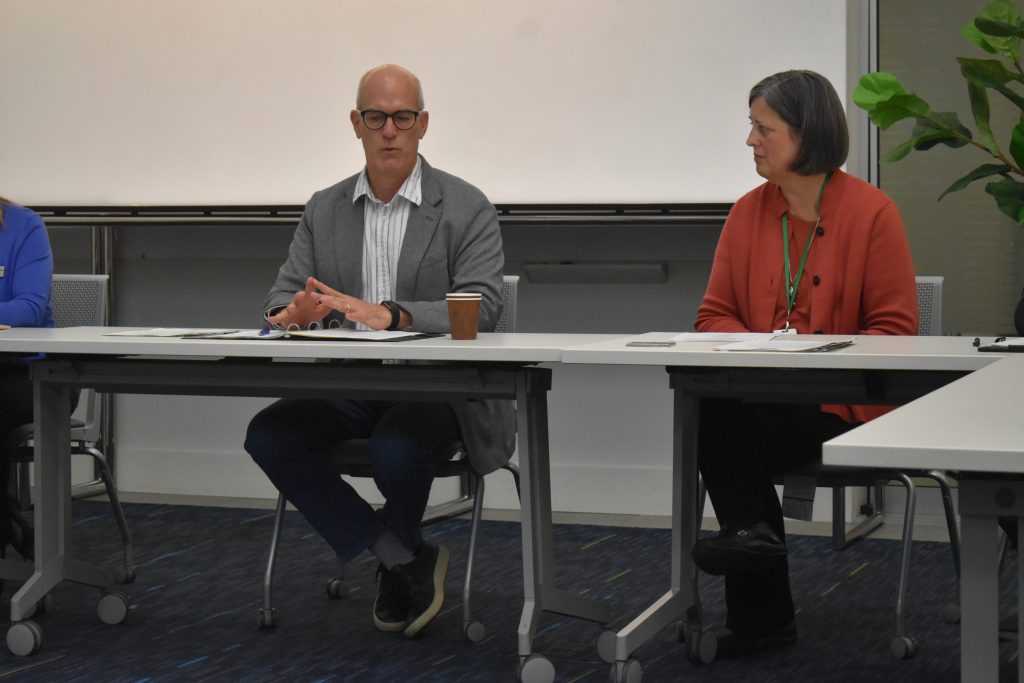
Zabel also added this could mean longer wait times for those who are need of emergency services.
One of Verdant’s solutions is its community partnerships of which Lahai Health, who provide health care services to uninsured, low-income, individuals.
Lahai recently held a symposium where it was estimated they could see a 15% increase in uninsured residents they serve, according to Executive Director David Eller.
To put this into perspective (using Larsen’s words), every representative in Washington State represents about 770,000 people (through 10 districts). With the One Big Beautiful Bill’s impacts, Washington State’s uninsured population could rise to the size of one congressional district.
Eller added that if Lahai did not offer the services that it does, about 23% of the people served would have gone to the emergency room. About 60% of individuals would have skipped care altogether.
“When people skip primary care then they go untreated for conditions that could become more severe and actually lead to premature death and become much more expensive when they do reach the hospital because they are now in a crisis situation instead of a preventative situation,” said Eller.
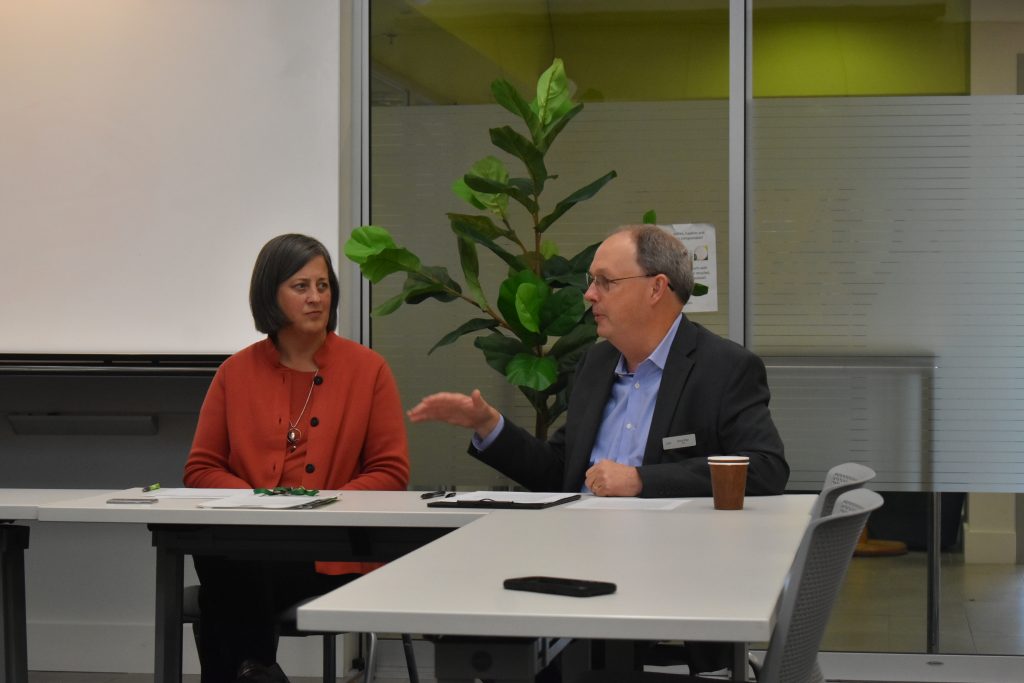
Eller added that Lahai is already at max capacity, with a two-month waiting list to get into a primary care appointment and a six-month waiting list to see a dentist. Last year Lahai had about 5,000 appointments – 1,800 unduplicated patients (approximately 20 appointments a day).
“A compounding issue that we’ve identified is if hospital systems reduce staff, which they have to do if they have an overall income reduction, then there will be fewer health care professionals, increased need, and fewer people for us to draw on for volunteers,” said Eller.
Lahai Health relies on about 500 volunteers to offer its services. Being already at max capacity, and having potentially fewer volunteers to draw from, there would simply be no way it could increase its volume of service if the tax credits were to expire.

Author: Kienan Briscoe