

TULALIP—The 2025 Native Hawaiian Convention came to a close today, Thursday, October 9, wrapping up four days of lūʻau, workshops, performances, and discussions all centered around the life, culture, and policies of the Native Hawaiian people.
This year more than 1,100 people gathered on the Tulalip Tribes land – the first time ever the Hawaiian Council held its annual convention on federal recognized tribal lands and the second time ever it was held on the continent, following its 2022 convention in Las Vegas, Nevada – from all over the world including 37 different states and four different countries.



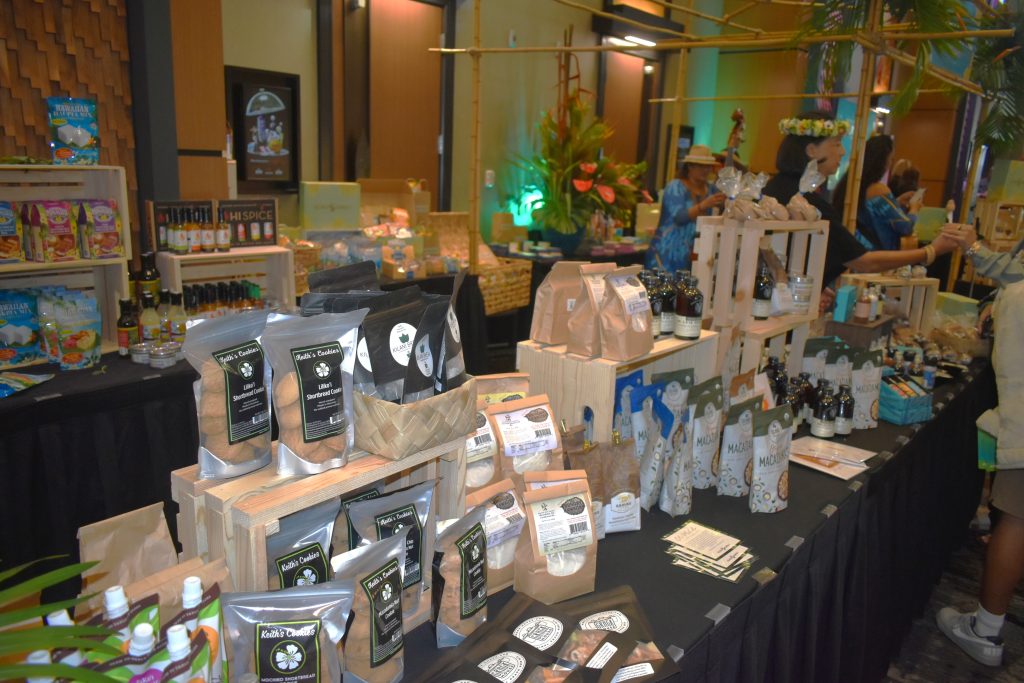
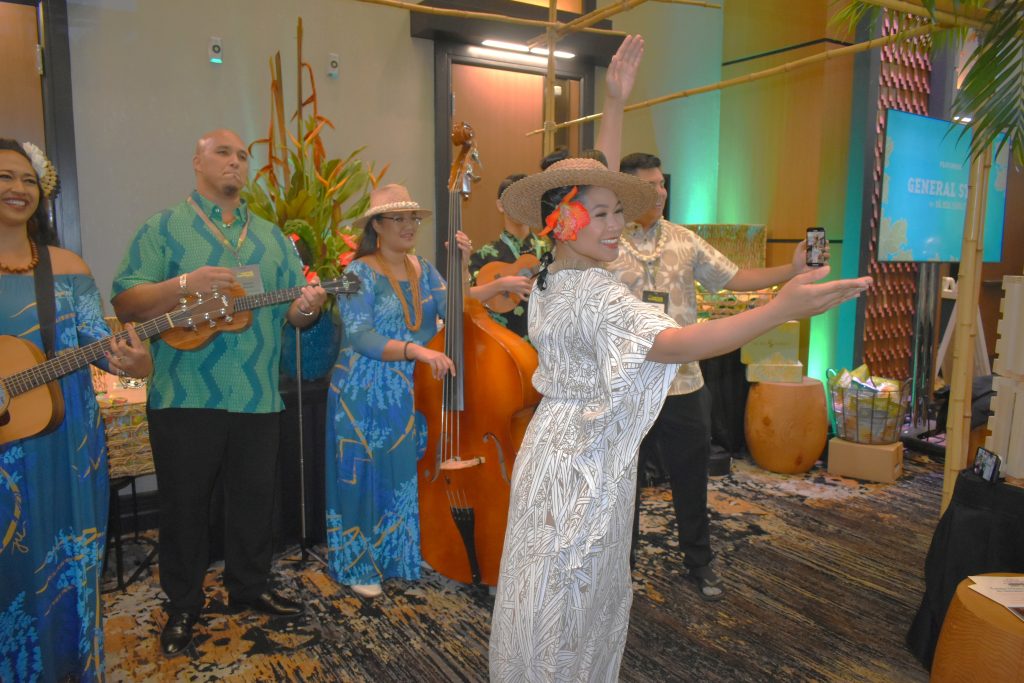
The four day-long event featured more than 50 breakout sessions and workshops, nearly 1,000 unique items for sale from Hawaiian small business owners at the on-site mākeke (Hawaiian for pop-up store), delicious Hawaiian food, music, hula, cultural storytelling, lei-making, resource connections, and the debut of a brand-new, Broadway-style, performance called The Epic Tale of Hi’iaka, among many other activities.
Beginning on Monday, October 6, the week commenced with a pre-convention Workshop Day, separated into four sessions beginning at 10 a.m. until 5 p.m. These workshops included classes on Hawaiian chants (that honor the nine waters that surround Hawaii), genealogy verification, lei-making, the Kumu Vicky Holt-Takamine (a protest hula standing against military bombing), kapa making (a fabric made from the inner bark of the paper mulberry), hala weaving, cultural storytelling, and workshops on genealogical research.


That night, the evening activities included games, mele (chants, songs, or poems), and arts and crafts where guests could turn their shirts and/or hoodies into lāhui (a collection of people connected by ancestry, culture, or identity) messages.
Day 1: Honoring Our Past
The first official day of the convention began Tuesday, October 7, with an opening ceremony at the Tulalip Resort and Casino Orca Ballroom. This ceremony began with a pre-show luau by Nā Lei Aloha, followed by opening remarks by Tulalip Tribes Chairwoman Teri Gobin and Hawaiian Council CEO Kūhiō Lewis.
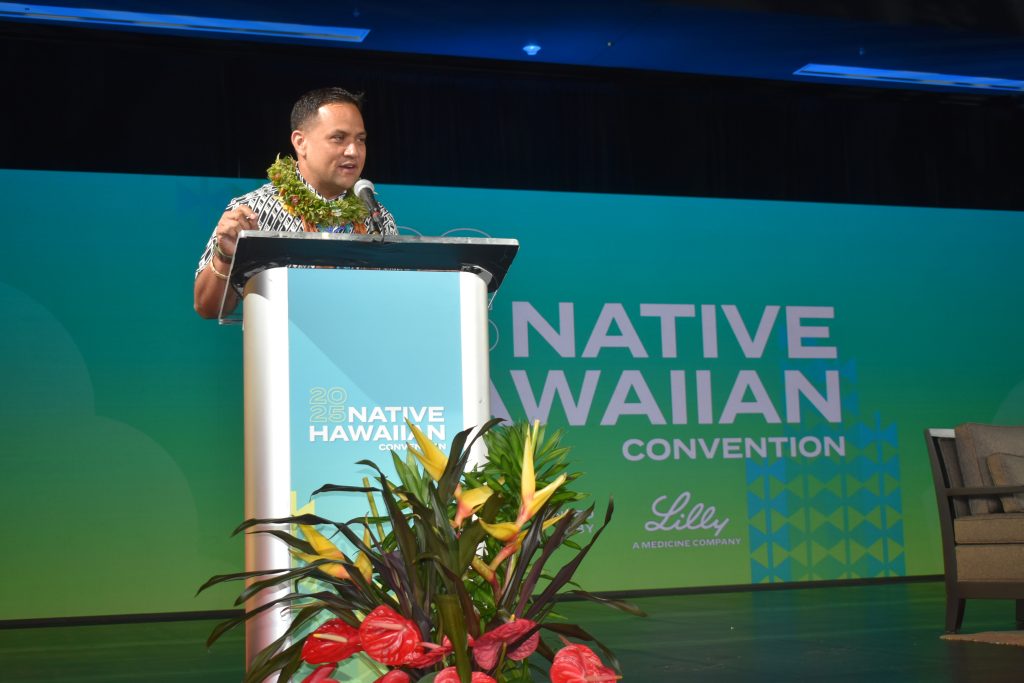
“The Tulalip Tribes takes great pride in building relationships with other indigenous communities,” Tulalip Chair Teri Gobin told the Lynnwood Times. “Tulalip is honored to participate in a cultural exchange with our Hawaiian relatives and to learn more about their history and to continue to support efforts to keep our native cultural traditions alive.”
Keynote Speaker Sue van, President and CEO of the Wallace H Coulter Foundation, then shared some words before a panel discussion featuring Moses Goods, Marques Hanalei Marzan, Dre Kalili, Malia Ka’aihue, and Alapaki Nahale-a on how to evolve as a culture while staying rooted in ʻike kūpun (the knowledge of one’s ancestors).
Prior to the first round of breakout sessions and workshops, Pa’a Sibbett gave a presentation on the Chief of War’s teachings on the power of Hawaiian voices, and the power of their history.
Throughout the day breakout sessions included a panel of Native Hawaiian survivors of gender-based crime discussing causes and solutions to missing, and murdered, native women, and girls, as well as panels on federal recognition (maintaining inherent sovereignty rights), native Hawaiian cultures taught in public schools, and a Hot Ones-inspired spicy wing talk show where panelists Tyler Iokepa Gomes and Aaron Sala discussed the “hot” topic of tourism in Hawaii and its future.
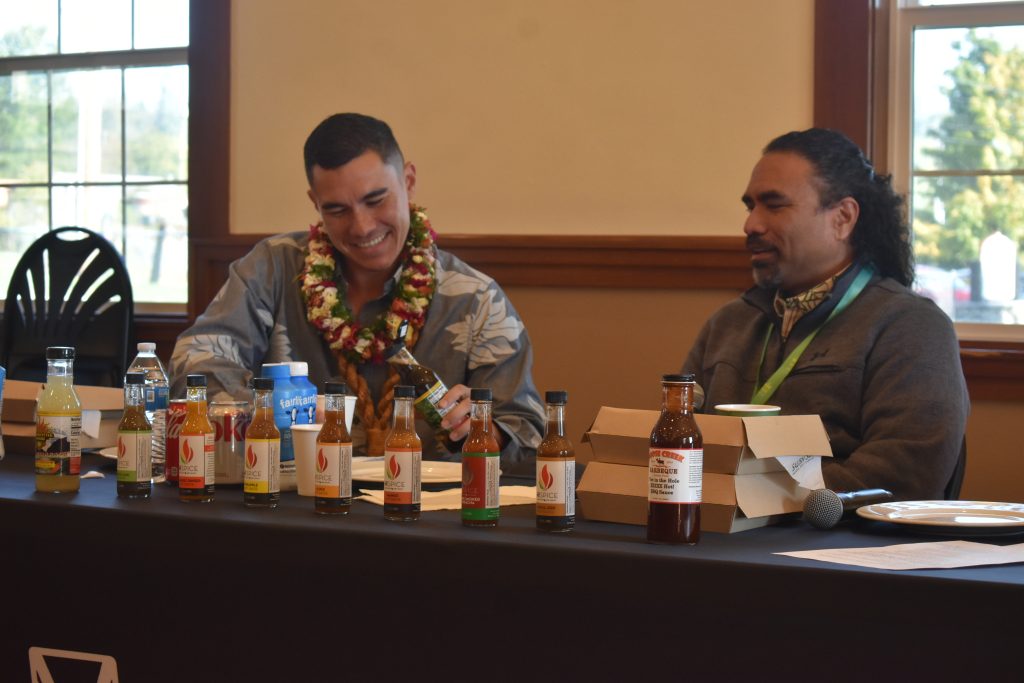
After a brief break for lunch, workshops and breakout sessions continued with topics ranging from Hawaii’s criminal justice system’s disproportionate targeting of natives, how to empower Pacific Islander communities, understanding native culture through hula, and a spotlight on Native Hawaiian artists Cris Romento, Brandon Naihe, Nyomi Iwalani, Malia Peoples, Bruce Clayton Tom, and Sage Ke’alohilani Quiamno who exhibited their art of resilience and pride.
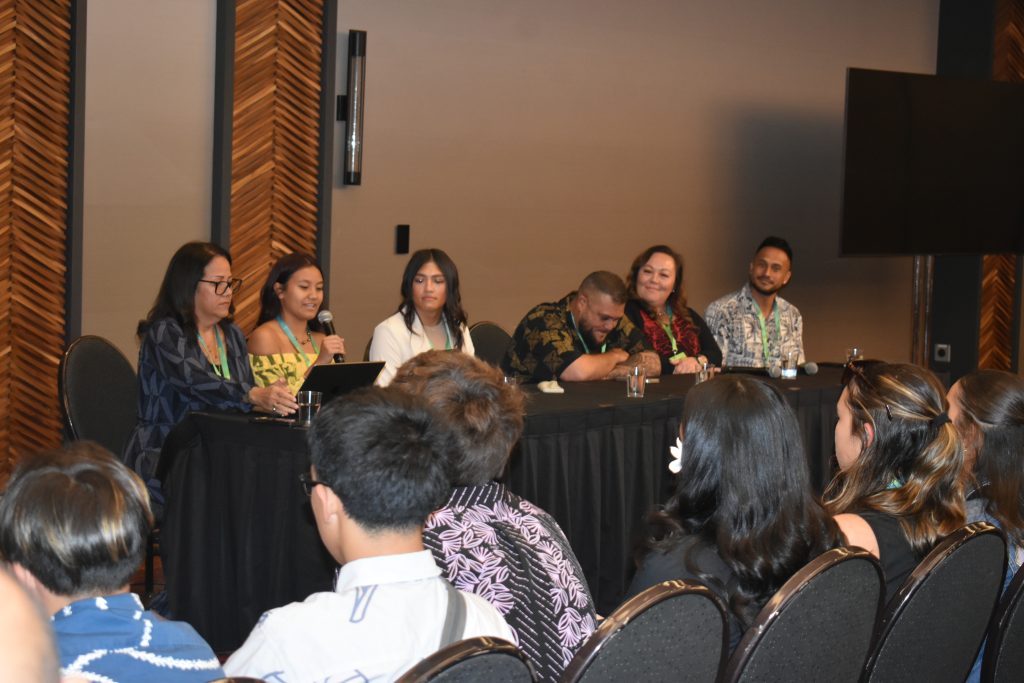
That evening the day concluded with games, trivia, and Wahine (women) self-defense classes.
Day 2: Uplifting the Present
The following day, on Wednesday, October 8, opened with a plenary session featuring a pre-show aloha, and keynote speaker Kaiali’I Kahele, Chair of the Office of Hawaiian Affairs.
Hawaiian Council Chairwoman Michelle Ka’uhane and Diana Birkett Rakow, with Hawaiian Airlines, also shared some words before a panel discussion centered on the “Journey Home” featuring panelists Makalika Naholowa’a, Pele Kaio, Keoni DeFranco, and Naka Nathaniel.
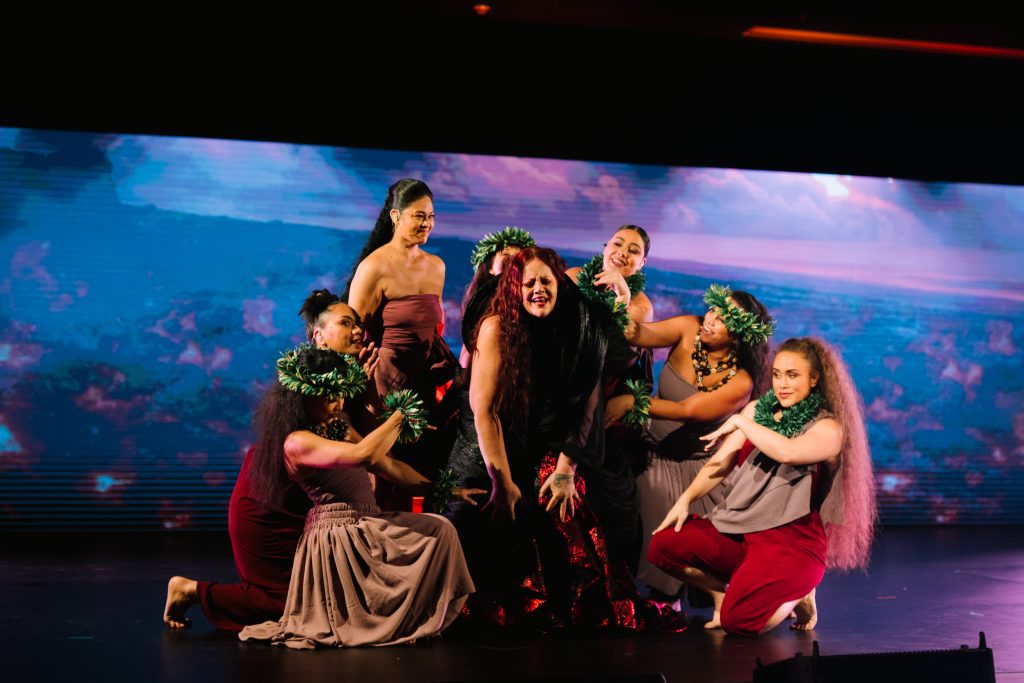
Following the conversations and remarks was when The Epic Tale of Hi’iaka performance commenced, a Broadway-style performance by Tony Award-winning WitzEnd Productions.
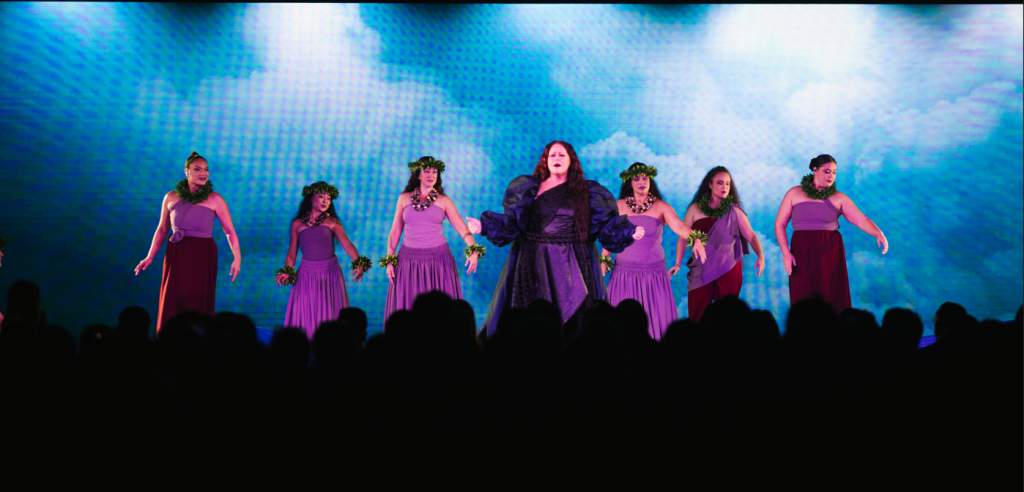
Breakout sessions and workshops Wednesday included topics such as indigenous housing, the Public Land Trust’s impacts on OHA, its resources, and government, rediscovering the soul of Hawaii, economic sovereignty, data reports, more storytelling, gaming, and crafting, among much more.
A focus on Wednesday was where native Hawaiians are in the present, and what the next few years may look like as far as coming together as native Hawaiian people to strengthen connections and form meaningful opportunities beyond the shores of Hawaii.
Day 3: Advancing Our Future
The four-day convention concluded on Thursday, October 9, with a breakfast buffet, closing aloha, remarks by Kūhiō Lewis and cultural exchanges between the Hawaiian Council and the Tulalip Tribes, as well as a Hawaiian Council meeting and annual report, and a closing panel discussion on the topic of ‘Strengthening Native Hawaiian Voices’ featuring Robin Danner, Derek Valdo, and Tulalip Tribe Chairwoman Teri Gobin.
“It was an honor to host the 2025 Native Hawaiian Convention in our homelands here at Tulalip. This year was historic as it is the first time the Native Hawaiian Convention has been held on Native-owned land outside of Hawaii. This was a powerful moment of unity, mutual respect, and cultural exchange,” said Tulalip Chariwoman Gobin. “Our people are connected across the vast ocean by the enduring strength of our ancestors, the wisdom of our elders, and the hopes we carry for our children and grandchildren’s futures. Though our homelands are far apart, we share a common bond, the sacred responsibility to care for our lands, our waters, to protect our culture, preserve our sovereignty, and build a future of strength and resilience for our future generations.”
“As First Nations people, it is important that we uplift and support one another, sharing best practices and knowledge,” Gobin continued. “It fills our hearts with so much love that was shared from our Hawaiian brothers and sisters. We have created strong bonds, and we hope that our children and grandchildren will carry this friendship forward, keeping our traditions and culture alive. It was a true honor to be a part of this conference.”
Why Washington?
The Council for Native Hawaiian Advancement decided to begin holding its annual convention in mainline states to meet Native Hawaiians where they are, as more and more continue to move out of the state. The plan is to hold the convention in a different state, other than Hawaii, every three years or so.
“More than half of our community have left Hawaii because it’s so expensive to live there so they’ve migrated,” said Kūhiō Lewis, Chief Executive Officer for the Council for Native Hawaiian Advancement. “Our concern is that as more families move on and start to relocate, they start to lose connection with Hawaii, which is a very special place mainly for its culture. If they don’t know their culture — where they come from — it’s very hard to be a part of Hawaii’s soul.”
Washington was chosen as the location for this year’s convention due to the state being home to the third largest Native Hawaiian population in the world outside of Hawaii – behind California and Nevada.
There are more than 600,000 Native Hawaiians spread across the United States. More than half of these live outside of Hawaii.
“When you have a unified voice nationally it can be very powerful,” said Lewis. “If you can unify that voice, it becomes a powerful tool to advance our interests.”
The Tulalip reservation was chosen specifically because the council believes it’s important to “band together” with fellow Native Americans through the current political climate. That and there are quite a few similarities between the Tulalip people and the Native Hawaiian people, regarding issues and policy.
Reclaiming Hawaii’s tourism industry
Hawaii’s history with the United States is one steeped in colonialism and exploitation. When American traders and missionaries first arrived at the islands in the early 1800’s they used the islands for harvesting sugar and pineapple while attempting to spread Christianity among the Natives. While originally welcome by the Native Hawaiian people, these American businessmen eventually gained disproportionate wealth and power.
When the country’s last monarch, Queen Liliʻuokalani, attempting to restore power back to her people, she was imprisoned in her own palace – ‘Iolani Palace – by a group of American businessmen and lawyers in 1893.
Since then, and well beyond Hawaii annexing into the United States in 1959, a large portion of Hawaii’s tourism is still owned and operated by non-Native Hawaiians, with most of the resorts and luxury hotels being owned by private equity firms on the mainland.
Even many of the celebrations of Hawaiian culture, such as luaus and hula, are conducted by non-Native Hawaiian people.
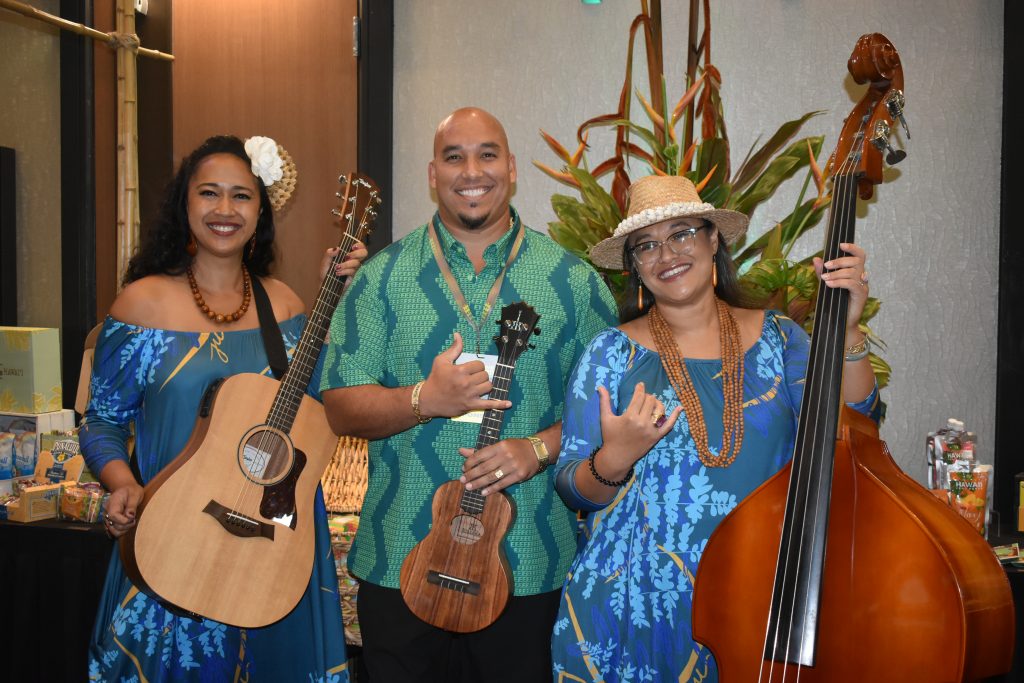
Part of those reclaiming efforts include gaining back economic control of Hawaii’s tourism industry.
In 2023 the state of Hawai‘i signed a multi-year, multi-million-dollar contract with the Native Hawaiian organization that would allow them to manage tourism and better steward the impacts tourism was having in the islands. CNHA also has embarked upon their own initiatives in the tourism industry including launching a hula-themed dinner show and acquiring a stage and lighting company.
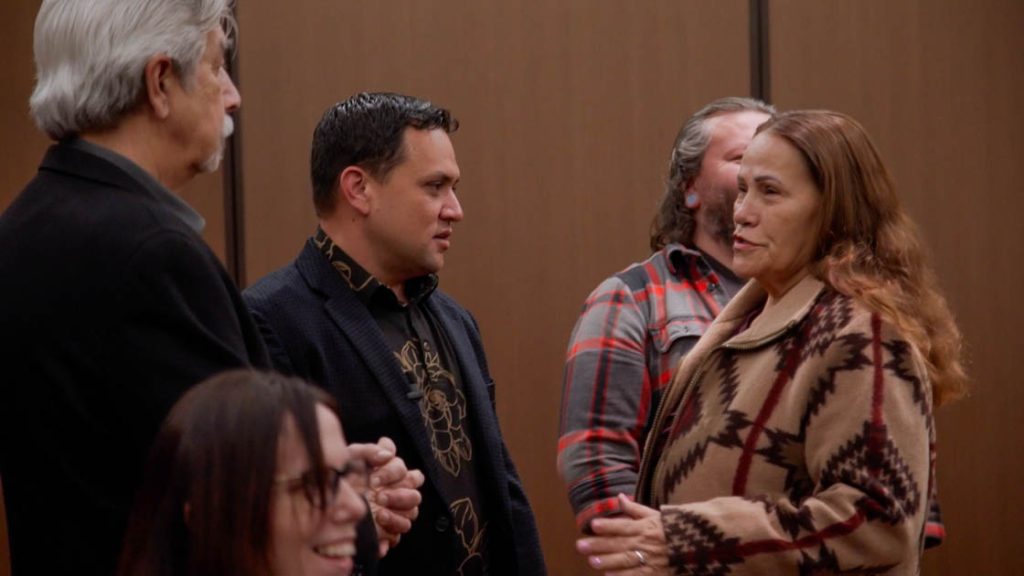
Leading up to this month’s convention, Kūhiō Lewis, joined by the Council for Native Hawaiians Advancement’s Chief of Staff Nicholas Carroll, spent three days, from March 16 through March 19, meeting with Tulalip Tribe leaders to establish a relationship he hopes will continue long after the convention adjourns.

Author: Kienan Briscoe