


LYNNWOOD—In the wake of a Mariner’s playoff-induced parking surge at Lynnwood’s City center light rail station earlier this month, Sound Transit has no plans to add additional parking to the station citing that evening’s abnormal parking volume, Lynnwood’s current zoning codes, and available alternative parking options as the reason.
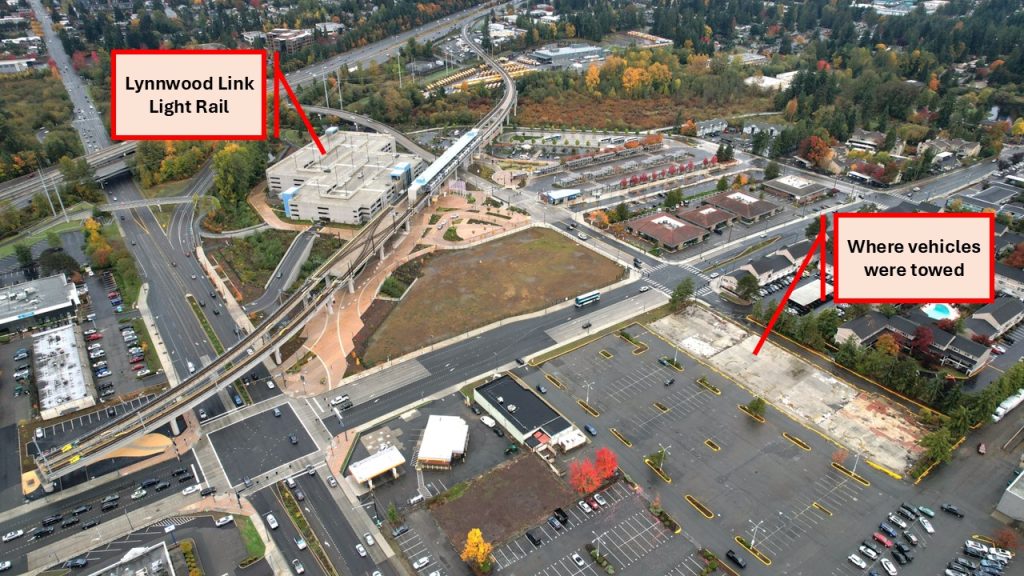
The transportation authority, instead, recommends commuters park in the nearby Ash Way and Swamp Creek park-n-rides, or explore parking at other stations such as Mountlake Terrace in instances in which the parking garage is at capacity.




Karl Almgren Community Planning Manager for the City of Lynnwood confirmed with the Lynnwood Times that he is in talks with Sound Transit to improve signage at Lynnwood Light Rail state for commuters to be aware of alternative parking options in case of a surge.
Monica Spain, Public Relations for Community Transit, added that Community Transit provides frequent service from the park and rides to Lynnwood City Center Station so people can catch light rail.




“Swift Orange Line runs between Edmonds College in Lynnwood and McCollum Park Park & Ride in Mill Creek. It connects with Swift Blue Line at Highway 99 & 196th Street in Lynnwood and shares stations with Swift Green Line on Bothell-Everett Highway in Mill Creek,” said Spain. “If you are within the Alderwood Zip Shuttle zone, that is an option to get to Lynnwood City Center too. Same cost as a bus ride.”
Spain continued that people still need to be mindful that service doesn’t run late at night (with the last bus running at 1 a.m.), so they may need to make alternate plans for their ride home from the station.
The October 15 Mariners mass towing fiasco
Scores of people, already forlorn by a devastating Mariners loss against the Blue Jays on Wednesday, October 15, returned to the Lynnwood light rail station after the game to find their vehicles missing. A quick call to a nearby towing lot would tell them why.
The Seattle Mariners had just returned home after securing two back-to-back wins against the Blue Jays in their home city of Toronto, suffering a 13-4 loss to their momentum that evening. It was game three of a seven game series with both American League teams squaring off for a shot at the World Series, of which the Mariners has never been to.
But to make matters worse, dozens of drivers who had parked at a seemingly vacant lot adjacent to the new Lynnwood City Center light rail station had their vehicles towed while attending the already disappointing (and expensive) playoff game.
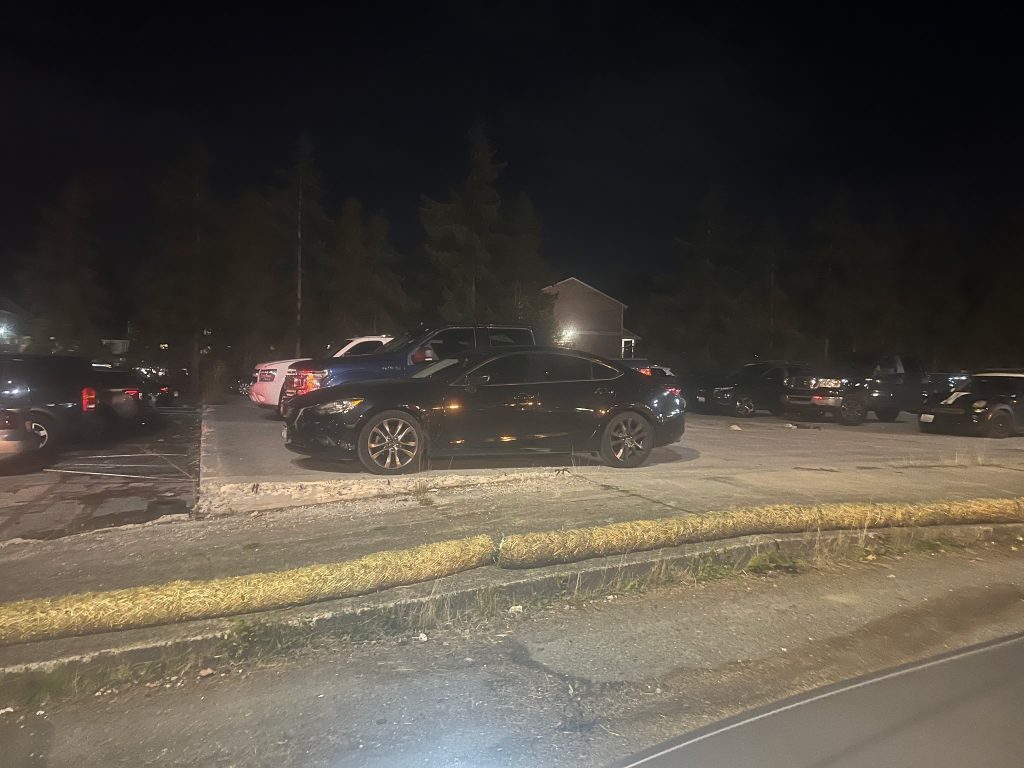
The incident unfolded as the 1,900-space park-and-ride garage at the station reached capacity, prompting fans to seek alternative parking spots across the street. What appeared to be an open lot turned out to be private property, leading to the overnight removal of 45 vehicles by Mary’s Towing, a local company contracted by the landowner, and costing owners up to $600 in fees. Ticket prices for that Wednesday’s game, alone, ranged from $200 to several thousand.
That Wednesday was unique, Sound Transit said, for a couple of reasons. For one the Mariners postseason game drew crowds of nearly 50,000, according to T-Mobile Park’s attendance records, with many attendees relying on public transportation (such as light rail) to alleviate the headache of traffic and parking in downtown Seattle. According to King5 user parking near the stadiums that night ranged from $120 to $400 for the evening.
The second reason was the game started at 5:00 p.m., meaning Mariners fans had to park and secure a spot on a train hours before the typical midweek 9-5ers returned from work, leaving their vehicles occupying a parking space.
It’s a phenomenon Sound Transit considers a “parking surge,” which is a rare occurrence not warranting additional infrastructure, especially considering most surrounding parcels in Lynnwood’s City Center are currently zoned for development leaving few options to build additional parking, and the future Everett light rail extension is expected to loosen the grip on Lynnwood’s parking restrictions long term.
Though the City of Lynnwood does not currently allow paid parking near the light rail station that could also be an option under a special use permit, though this is something Sound Transit is still exploring.
On the evening of October 15, Mary’s Towing was summoned by the property owner to clear the site of the 45 motorists who had parked illegally on private property. Towing fees, which align with Washington state regulations, averaged around $400 per vehicle. Some affected drivers reported up to $650 to retrieve their cars, that included additional storage and release costs.
The plot of land where these motorists parked was a concrete foundation of a once existing strip mall, now torn down to make way for the future development of Northline Village, according to Snohomish County records. The property had a fence, erosion control barriers delineating the property’s boundaries, and no parking signs in place by Mary’s Towing. The fence had been knocked down, King 5, who originally broke the story, reported with many motorists claiming there were no signs indicating they could not park there.
Washington state law prohibits predatory towing, including patrolling lots without a property owner’s request. Mary’s Towing insists every tow that night came only after being contracted by the property manager’s representative.

She pushed back on claims of inadequate warnings and signage. While some fans insist the southwest entrance—facing the transit center—lacked signage and that a perimeter fence was down, Mary maintains all required notices were “legally posted everywhere.”
“I can’t believe that people would just park on a foundation when there’s gravel and whatever is coming up out of the concrete, you know, from a building that was torn down. Common sense, they know that they’re not in a parking lot,” said Mary of Mary’s Towing. “We always make sure that our signage is properly posted so that people are aware, you know, the minute they enter the property that, hey, you know, you need to look at the sign and watch where you park.”
“You have to drive over a gate… a fence starting out to get [into] a whole fence,” Mary said, suggesting physical barriers should have been a red flag.
Mary’s standard protocol includes pre-tow photos to document existing damage.
“It allows us to show them on our computer any damage before we actually hooked up,” the Mary explained.
Every towed owner received an impounded vehicle hearing request form, outlining their right to contest either the tow’s validity or the fees in court within 10 days. Mary’s shared that such challenges are routine and winnable only if signage or procedure was deficient.
What did those affected have to say?
One Mariners fan, Dana, had gotten tickets to the October 15 baseball game against the Blue Jays and was recommended, by her father, to take the light rail down to Seattle. Her father said, according to Dana, that parking can fill up fast though but if it does there would be an abandoned lot across the street she could use.
She got to the Lynnwood light rail station around 3:15 p.m. to make sure she, and her husband, had plenty of time to get to the stadium in Seattle by first pitch. When they got there, the lot was full and the two spent a good 20 minutes, she said, circling around looking for parking.
“So then we drove across and parked with probably about 25 other cars at that point, I would say. So it’s about 3.30. Went across the street, hopped on the light rail, and went to the game,” said Dana.
When the two returned to their car after the game she informed the Lynnwood Times the lot was nearly empty, maybe 10 cars, and a “parking lot attendant” passing out cards for Mary’s Towing and telling them their car had been towed. She assumed this person was the property owner.
“I had to call my parents to come get us to drive us to the tow yard. There were quite a few Mariners fans there picking up their cars. So all said and done, we could be looking at 75-ish cars by October,” said Dana.
Dana, who paid $662.45 (including a $149 after-hours fee), plans to file an $83 dispute in Lynwood Municipal Court. She could have avoided a $150 towing fee if she had waited until the next day, she said, but she needed her vehicle that night to take her daughter to school the next day.
Destiny, another impacted driver who had attended a concert rather than the baseball game, expressed frustration upon discovering her vehicle missing. “I’m pretty pissed! I’ve never had my car towed there before,” she said.
Mark, another driver caught in the sweep, described his surprise at the lack of clear warnings. “I was shocked. I thought at least there would be a sign,” he added.
Ownership of the parcel traces back to MGP XI US Properties, LLC, a San Francisco-based real estate firm that purchased it in 2016 for $41 million from Alderwood Plaza LLC. County records further show that MGP XI US Properties has assembled a larger portfolio in the area, acquiring all adjacent parcels between 44th Avenue West and 46th Avenue West along 200th Street Southwest—excluding the Shell gas station—for a total of $56.5 million.
According to the Lynnwood Police Department, who received several calls that evening presumably from people who thought the towing was them, said no arrests were made that evening. The LPD posted on social media that evening warning people not to park on the private property.

Author: Kienan Briscoe






2 Responses
The folks interviewed in this article don’t sound very smart. Some lady is “responsible” enough to have a kid but needs her dad to tell her where to park?
And Lynnwood doesn’t even allow paid parking? Uh, it’s not 1950.
The Lynnwood light rail parking situation is a maze and access to it is poorly designed from the HWY. Do better Lynnwood, we only paid billions in tax money for it.