
LYNNWOOD [Marines Scaramazza]—The spirit of Día de Muertos, or Day of the Dead for English speakers, once again filled the Lynnwood Library with color and meaning on Saturday, November 1, during a celebration that brought together families, artists, and community members from 11:30 a.m. to 4:00 p.m.
Organized by the WAGRO Foundation in collaboration with The Fat Brush, the event has become one of the most representative cultural expressions of the Latino community in Snohomish County.

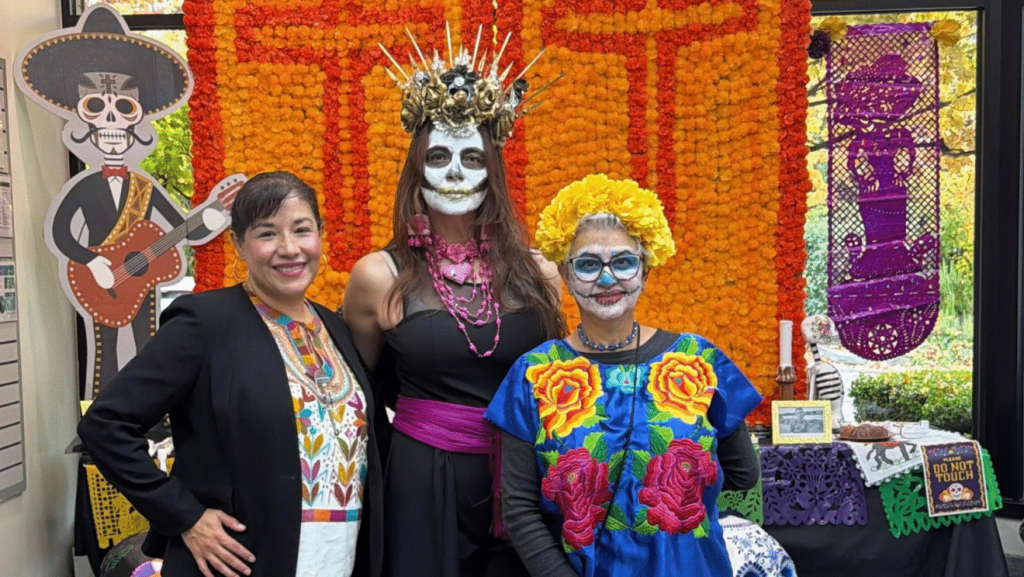
The day began with an opening ceremony led by Mary Gomez-Camba and young Erik González-Castañeda, who welcomed attendees before the Yolihuani Aztec Dance Group performed a traditional blessing that marked the spiritual beginning of the gathering. Around 200 people attended and took part in the Community Altar, where photos and mementos of loved ones were displayed to honor their memory.
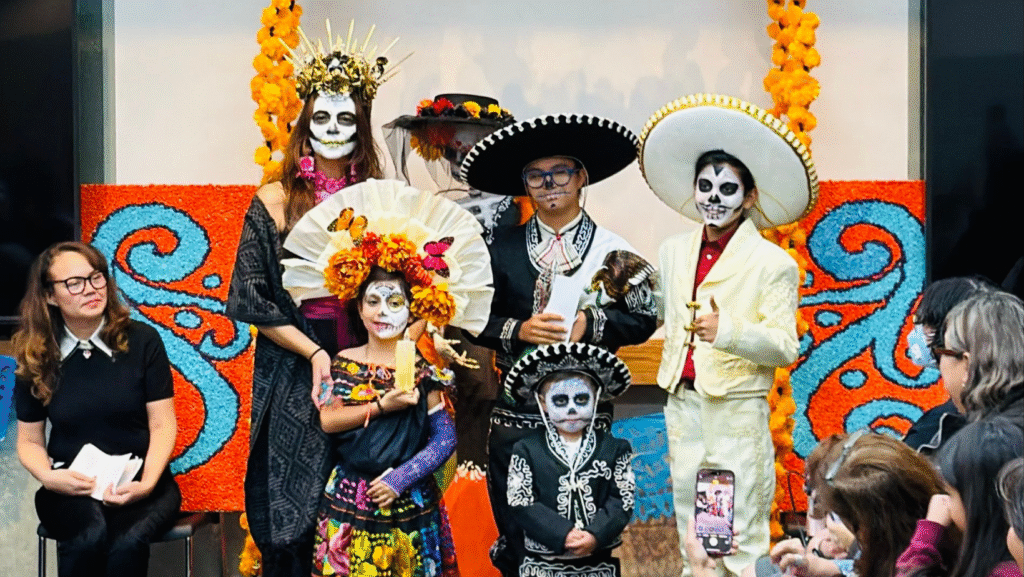
Throughout the day, children also participated in a Catrinas and Catrines Costume Contest, blending creativity and tradition among families. The event continued with a community lunch featuring tamales, coffee, and pan de muerto.



‘Memory Belongs to the Present, Not the Past’
In a message shared with Latino Herald, Julieta Altamirano-Crosby, founder of WAGRO, reflected on the deep connection between tradition and cultural identity:
“Each year, Día de Muertos is a moment to return home—not in distance, but in spirit. It’s a time to honor my ancestors, to remember my grandparents and great-grandparents, and to thank them for the strength, wisdom, and love that continue to guide my path.”
Altamirano-Crosby recalled that the first celebration began 13 years ago at her daughter’s school:
“I didn’t want her to lose her identity or forget her roots. Through her, I wanted the stories of our family and the voices of those who came before us to live on.”
Voices That Unite Cultures
During her remarks, Mary Gomez-Camba shared a reflection on the power of memory and identity within immigrant communities.
She recalled her childhood translating for her parents—an experience that, she noted, reflects a core part of immigrant life:
“It reminds me of when I was a little girl, translating for my mom, for my parents, for my family. It’s something so characteristic of our culture—or of any immigrant culture—where we must learn not only our own traditions, but also how to translate and live them in this other world,” she said.
Gomez Camba also invited English-speaking residents to participate and share their own experiences with this Mexican tradition:
“This is an invitation to our English-speaking community. If Día de Muertos is something new for you, and it has helped you feel connected to loved ones who have passed away, this is the moment to share it. When we share our stories, we become friends. We truly become a community—because we learn to see ourselves in the stories we tell.”
Art, Knowledge, and Community
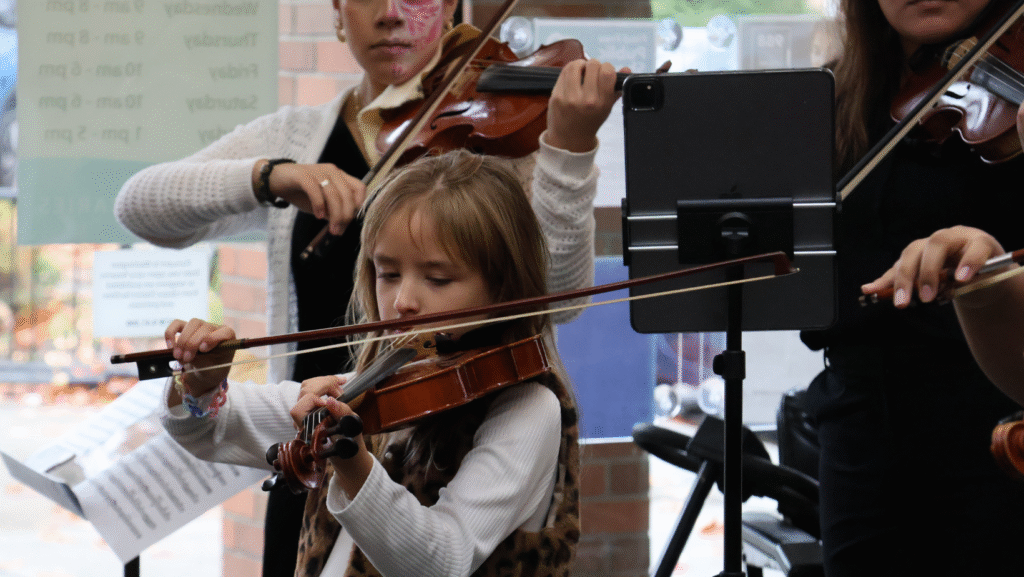
The celebration continued with a musical presentation by the Northwest Orchestra, directed by Paula Madrigal, delighting the audience with pieces that blended art and emotion.
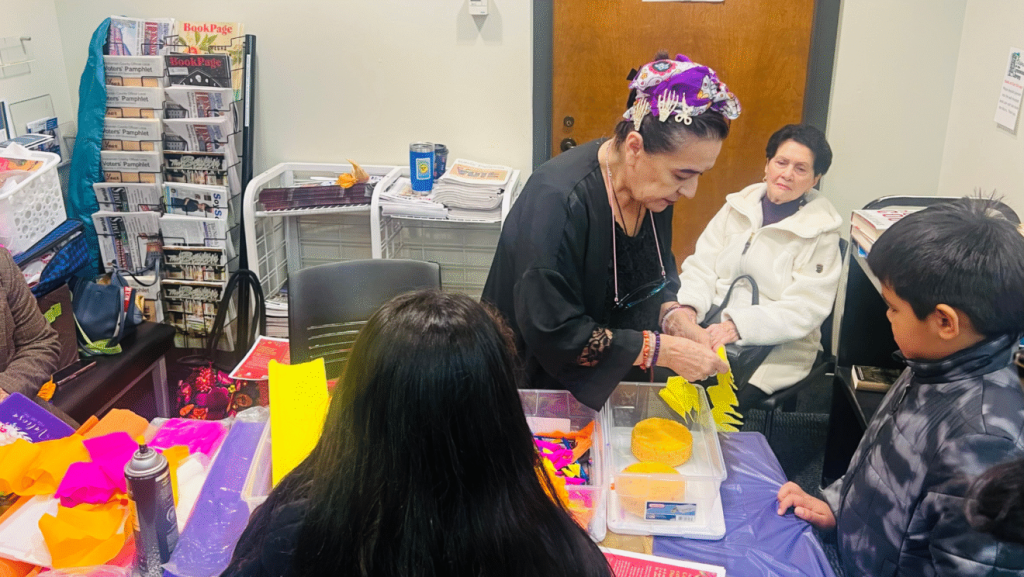
Attendees also enjoyed a series of workshops and cultural talks, including a paper-flower workshop with Estela Carrera; a lecture on identity and community resilience by Dr. Nadiosly de la Caridad from the Autonomous University of the State of Quintana Roo; and a discussion on memory and multiculturalism with Óscar Rodríguez García, director of Aula Instituto Cervantes of Seattle.
The program also featured a recycled-art workshop led by artist María Casey, where participants created decorative skulls from reused materials, as well as children’s activities like face painting with Lupis Guitrón.
The day concluded with raffles and prizes donated by Dave & Buster’s, Fogo de Chão, and the Woodland Park Zoo, among others.
Reflections from the Community
Among the attendees was Bryce Owings, who is currently running for Lynnwood City Council Position 3, a seat presently held by Josh Binda.
In an interview with Mario Lotmore of the Lynnwood Times, Owings shared a personal reflection inspired by the ceremony and the meaning of Día de Muertos. He remembered his grandfather, John Carl Owings, after whom he is named, and his grandmother, Maxine Owings, who passed away earlier this year:
“My grandfather died a week before I was born, so I never had the opportunity to meet him. But I grew up hearing stories about what a good man and leader he was, and I feel like I’m following in his footsteps,” he said. “I also think of my grandmother Maxine, whose name my newborn son, Maxwell, carries in her honor.”
Owings also mentioned his mother-in-law, whom his wife remembers every year with a photo and a candle—a tradition that, he said, made him reflect on the universality of remembrance and the value of family bonds:
“I think this event draws great participation, and it would be wonderful if Lynnwood could offer an even larger space to celebrate it. It’s important to cultivate cultures and give them a place to share their traditions. I’d love to see more of this in our city,” he added.
A Bridge Between Worlds and Generations
The event captured the essence of Día de Muertos as a bridge between the living and those who came before us, where art, faith, and memory intertwine to keep cultural heritage alive.

“Our culture, our values, and our faith endure thanks to the love of those who paved the path we follow today. Because, as popular wisdom says: ‘People die only when they are forgotten.’ And as long as we keep remembering, our loved ones will live forever within us,” concluded Altamirano-Crosby.
Roots of a Tradition That Transcends Time
Día de Muertos has its roots in ancient Mesoamerican civilizations—including the Mexica, Maya, Purépecha, and Totonac peoples—who believed that death did not signify an end, but rather a transformation and a return to the cycle of life. With the arrival of the Spanish in the 16th century, these ceremonies merged with Catholic celebrations of All Saints’ Day and All Souls’ Day, giving rise to a unique tradition: a blend of faith, memory, and popular art.
Each altar, flower, candle, and offering is a dialogue between past and present, between the worlds of the living and the dead—reaffirming family ties and cultural identity. Today, this celebration—recognized by UNESCO as Intangible Cultural Heritage of Humanity—extends far beyond Mexico, taking new life in communities around the world, like Lynnwood, where memory, gratitude, and love remain at the heart of a tradition that reminds us that death does not break bonds—it simply transforms them.

Author: Latino Herald