

When senators discovered they had been subjected to unconstitutional surveillance, they voted themselves half a million dollars each. The rest of us got nothing.
Last month, Sen. Chuck Grassley (R-Iowa) revealed that President Joe Biden’s FBI had spied on eight Republican senators’ phones. Former Department of Justice special counsel Jack Smith, investigating the Jan. 6 attack on the Capitol, secretly monitored who contacted the senators, when, and for how long.



I had hoped this incident would lead to new legislative protections for every American’s privacy. Unfortunately, that didn’t happen. Instead, the senators decided to cut themselves checks using taxpayers’ money.
Current privacy protections for phone “metadata” are weak. Forty-six years ago, the Supreme Court held that recording every number that contacts a phone does not count as a search under the Fourth Amendment. Its logic: Everyone knows the phone company will monitor who they call, so no one has an expectation of privacy with respect to that information.




But that is ridiculous. Privacy law normally says that secrecy can be “waived for one purpose” (such as phone billing) yet retained for every other purpose (such as FBI snooping). Sure, everyone knows that T-Mobile and Verizon computers keep track of your call minutes. But no one thinks that means their calls to a cancer doctor, fortune teller, minister, or extramarital lover is a matter of public record.
The Supreme Court itself has recognized that the Fourth Amendment protects cell phones themselves because these reveal “a wealth of detail” about people’s “familial, political, professional, religious, and sexual associations.” Metadata does the same.
After revealing that Smith spied on the senators, Grassley warned: “If heads don’t roll in this town, nothing changes.” I urged lawmakers to enact one meaningful change: Require the FBI to get a warrant for future phone metadata surveillance. Having seen firsthand the abuse the law can cause, senators could make the law better for everyone.
My optimism was short-lived. The Senate did act quickly, taking up metadata spying in its bill to end the government shutdown. Its fix for what Grassley called the FBI’s “disturbing,” “outrageous,” and “unconstitutional” conduct? Awarding half a million dollars in taxpayer money to any senator affected by illegal spying. The Senate did not even extend relief to the one U.S. representative targeted by the exact same surveillance — much less to ordinary Americans who suffer similar abuses.
For senators, the law also waives several major procedural hurdles that keep other Americans from securing judicial relief for rights violations, including qualified and absolute immunity. The barriers that insulate government officials when they violate everyday Americans’ rights apparently can’t stand in the way of senators.
The law, then, skips over structural changes and meaningful improvements in order to provide a deluxe remedy for precisely 100 of the most privileged people in the U.S. So much for equal protection.
What a contrast the Senate’s approach takes from that of the Constitution’s framers. Like our senators, the Founders knew what it meant to be targeted by their government. They had been harassed by petty bureaucrats, denied due process, and subjected to intense and unlawful surveillance.
But their indignation led them to solidarity with their fellow Americans — not to design special escape hatches. In the Declaration of Independence, they berated King George III for violating the principle “that all men are created equal” — including by blocking “the Administration of Justice” available on equal terms, insulating colonial officials from accountability, and depriving wronged Americans of the ability to secure relief from courts. Then, after winning freedom from Britain, the Founders dedicated much of the Bill of Rights to protecting the accused and the powerless.
They built a government “for themselves and their countrymen,” in the words of Senate Majority Leader John Thune (R-S.D.). Not one for a privileged class of “kings and queens and emperors.”
There is still time to honor Thune’s call to “fulfill our Founders’ promise and pass along the great American spirit for generations to come,” as the House leadership has expressed openness to revisiting the surveillance provision. The choice before Congress is clear. The Senate can award its members half a million dollars while leaving the surveillance state intact for everyone else. Or it can do what the Founders did: Recognize that when government violates constitutional rights, the answer is structural reform, not special privileges.
A metadata warrant requirement would protect all Americans — senators, representatives and citizens alike — from the abuse Grassley rightly called unconstitutional.
One path leads to accountability, and the other only to privilege. We’ll see whether heads actually roll, or senators simply cash in.
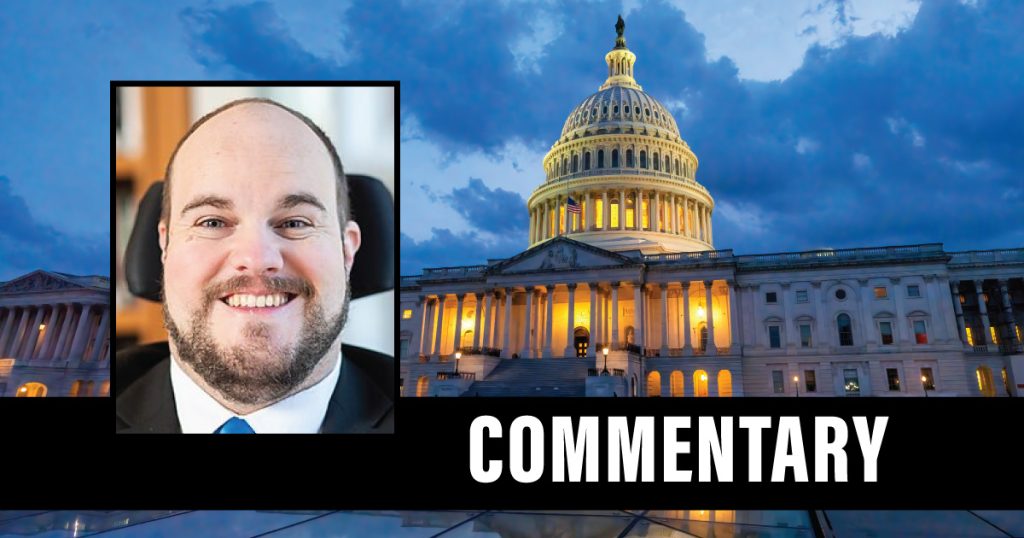
Matt Cavedon, Director of the Cato Institute’s Project on Criminal Justice

Matthew Cavedon is the Director of the Cato Institute’s Project on Criminal Justice. He focuses on reforming plea-driven mass adjudication, ensuring police accountability, and defending constitutional criminal originalism.
Cavedon’s scholarship has been published publications including the Arizona State Law Journal, Cato Supreme Court Review, Seattle University Law Review, and Georgetown Journal of Law and Public Policy. Formerly a Georgia public defender and fellow at the Institute for Justice, Cavedon has taught law school courses on criminal law and procedure, as well as the First Amendment.
Cavedon clerked for a U.S. district court and the Supreme Court of Georgia. He came to Cato following a fellowship at the Emory University Center for the Study of Law and Religion.
COMMENTARY DISCLAIMER: The views and comments expressed are those of the writer and not necessarily those of the Lynnwood Times nor any of its affiliates.

Author: Lynnwood Times Contributor