

EVERETT—Integrated oil and gas company British Petroleum (BP) has located the source of a leak in its Olympic Pipeline, 15 days after the leak was first discovered, and restored service to one, of two lines, that send jet fuel to SeaTac Airport.
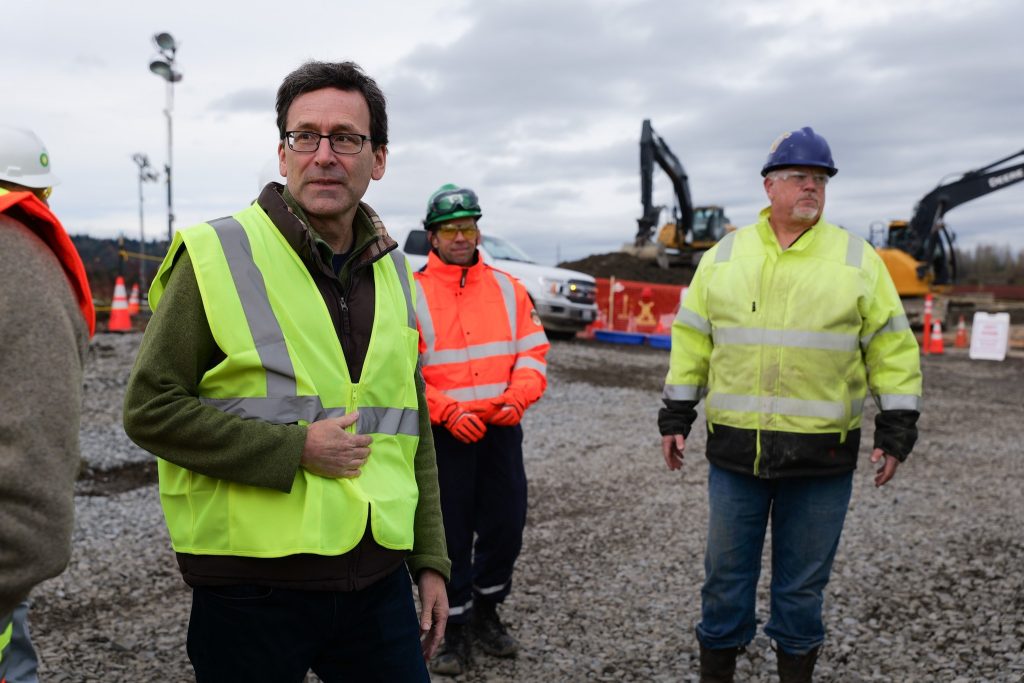
BP’s Olympic Pipeline transfers refined products such as gasoline, diesel, and jet fuel, from its refineries in Anacortes and Whatcom County to terminal sites in Seattle, Sea-Tac, Tacoma, Vancouver, Washington, and as far as Portland, Oregon.
The 400-mile pipeline consists of two separate lines – a 16-inch pipe that carries fuel and a 20-inch pipe that carries gasoline. The leak was discovered in the second pipe but both pipes had been closed due to precaution.
The first pipe (the one that carries fuel to SeaTac Airport) has been reopened while the second pipe remains closed while BP crew continue repairs. As of now there is no estimate of how long these repairs will take. BP said there is no indication there is a leak in the line that transfers fuel to the airport.



The leak was first discovered by BP on November 11 after a sheen was spotted in a drainage ditch in an agricultural field between the cities of Everett and Snohomish. The sheen was discovered by a local blueberry farmer, Komo News first reported, who then alerted BP oil.
Governor Bob Ferguson issued an emergency declaration that allowed more truck drivers to deliver fuel to the airport to not disrupt service.

“We are closely coordinating on the repair and subsequent environmental cleanup, as well as monitoring the impact on gas prices. So far, we have not seen a significant change in gas prices,” said Governor Ferguson.
Still, SEA Airport officials implemented operational adjustments to incoming flights, issuing notifications to inbound airlines to fuel up to capacity prior to arriving, a practice known as “ferrying” fuel. Some airliners, such as DELTA, alerted their passengers to possible schedule changes for long-haul flights while adding technical stops for fuel supply. Major disruptions to flight services, however, were left largely uninterrupted due to the airliner’s contingency plan.
Though the pipe that transports fuel to SeaTac has been restored, some experts say flights could still be impacted as fuel trucks, and the pipeline itself, continue to restore the airport’s reserves.
This comes at a time when the FAA estimates air traffic could be the busiest Thanksgiving travel week in the last 15 years, with a record-breaking six million flyers and 31 million total air passengers from late November to early December.

Both state and federal partners – including the Washington State Department of Commerce, Washington Utilities and Transportation Commission, the Washington State Department of Ecology and the U.S. Environmental Protection Agency – all responded to the leak. There was no impact on regional waters, the Department of Ecology said.
“I want to thank everyone who has been working diligently to respond to the spill and find the leak. I also want to acknowledge all the truck drivers who have stepped up to bring jet fuel to Sea-Tac so families can be together over the holiday,” said Senator Maria Cantwell. “BP has a responsibility to operate this pipeline through our communities safely and I will be monitoring the investigation into the cause of the leak and the corrective actions taken to prevent future leaks closely.”
On Friday, November 21, Cantwell wrote to BP North America Chief Executive Officer Murray Auchincloss demanding immediate answers about the leak, expressing disappointment at BP’s lack of operational awareness about their own pipeline.
Just last month, Sen. Cantwell introduced the bipartisan PIPELINE Act of 2025 to address known safety risks, close gaps in the transportation of underregulated carbon dioxide and hydrogen pipelines and improve the accountability of pipeline operators.
This is the fourth time a leak has occurred in the Olympic Pipeline. The first was in 2020 when BP was fined $100,000 for its pipeline releasing 67 gallons of diesel fuel, the second was in 2023 when a leak near Mount Vernon released about 30,000 gallons of gasoline. BP was fined $3.8 million in the second leak.
Another leak occurred in 1999 spill, under previous ownership, that resulted in more than a quarter-million gallons of gasoline spilled, causing three deaths. This spill resulted in Shell paying $5 million in penalties and the Olympic Pipeline company paying $2.5 million.
So far there has been no announcement on what penalties may exist for BP this time.
BP was also the company who operated the Macondo Prospect off the coast of Louisianna which, in 2010, was responsible for the largest maritime oil spill in world history when an explosion on the Deepwater Horizon oil platform led to an estimate 210,000,000 gallons of oil to spill into the Gulf of Mexico.

Author: Kienan Briscoe