

WASHINGTON, D.C.— The U.S. House of Representatives is poised to vote on the SCORE Act (H.R. 4312), a bipartisan bill aimed at standardizing name, image, and likeness (NIL) rights for college athletes, as early as this week in December 2025. The SCORE Act, introduced by Rep. Gus Bilirakis (R-FL-12), amid ongoing legal challenges and a patchwork of state laws, seeks to provide national uniformity in how student-athletes can monetize their personal brands while granting the National Collegiate Athletic Association (NCAA) limited antitrust immunity to enforce rules on compensation and transfers.
The SCORE Act, formally known as the Student Compensation and Opportunity through Rights and Endorsements Act, would establish federal guidelines for NIL deals, requiring transparency and prohibiting arrangements that conflict with institutional contracts. Its primary purpose is to stabilize college sports by protecting educational opportunities, preserving non-revenue sports like swimming and track, and preventing a “pay-for-play” system that could exacerbate inequalities between major conferences and smaller programs.
Supporters, including over 20 conservative organizations, House Speaker Mike Johnson, and President Donald J Trump, praise the act as a “free market” solution that protects student-athletes from unionization and excessive lawsuits while ensuring Title IX compliance for women’s and Olympic sports. The U.S. Olympic and Paralympic Committee, ACC Student-Athlete Advisory Committee, and NCAA President Charlie Baker have also endorsed the SCORE Act.
Proponents argue that the SCORE Act promotes fair competition and shields the NCAA from lawsuits, allowing for revenue-sharing models where top programs distribute at least 22% of earnings to athletes, potentially amounting to over $20 million per school annually.



For everyday Americans, the bill could indirectly influence college sports as a cultural and economic staple. Fans might see sustained access to diverse athletic programs, potentially stabilizing ticket prices and broadcast deals, while taxpayers could benefit from reduced litigation costs for public universities. However, critics contend it may limit athletes’ earning potential and mobility, affecting young adults pursuing education alongside sports careers.
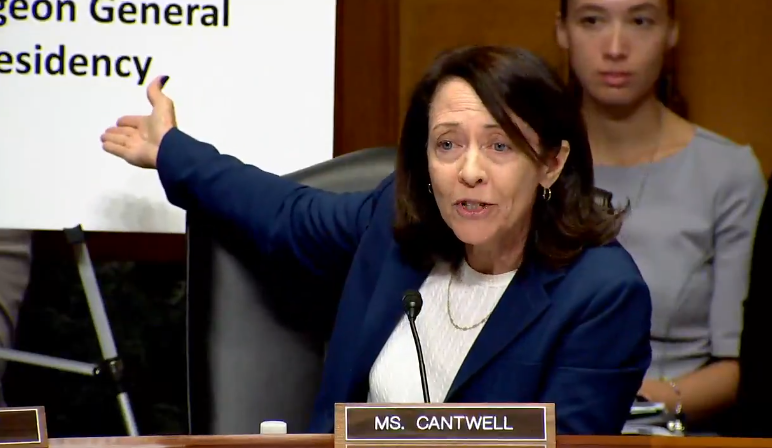
Sen. Maria Cantwell (D-Wash.), has slammed the bill for widening inequities, rolling back athlete rights, fueling a football spending arms race, and shortchanging women’s and Olympic sports.


“This is a David and Goliath fight,” said Sen. Cantwell. “And the power 2 conferences are trying to rewrite the rules for the rest of colleges and universities that dictate playoff berths, control tv revenue and hold back athlete opportunities. Athletes and smaller schools should stop the new SCORE Act because the only ones scoring are private equity, a few big schools within the SEC and Big 10, and a few coaches with ridiculous payouts for nonperformance.”
On September 10th, Sen. Cantwell released a report showing how skyrocketing media rights payments have exacerbated a massive financial gap between traditional power conferences, especially the new Power 2—the SEC and Big Ten—and everyone else. In August, she wrote to the presidents and chancellors of more than 350 Division I universities and their governing bodies, warning about the dangers that the SCORE Act poses to the future of college athletics. And on July 14, Sen. Cantwell and Rep. Michael Baumgartner (R, WA-05) sent a letter strongly opposing the SCORE Act to the chair of the House Energy and Commerce Subcommittee on Commerce, Manufacturing and Trade to delay its July 15 markup of the bill.
Rep. Clay Higgins (R-LA03) has also criticized the SCORE Act as federal overreach, arguing it preempts state regulations and limits congressional amendments.
The SCORE Act does not settle the Name Image Likeness (NIL) debate, I do not appreciate the bill being pushed without allowance for amendment, and many conservatives see SCORE as deep federal overreach… pic.twitter.com/SK7LNZOoOO
The House vote is currently stalled due to objections from some Republicans over the bill’s inclusion without amendments. If passed by the House, the SCORE Act would advance to the Senate, where it faces significant hurdles amid competing proposals like the SAFE Act and College Athletics Reform Act.

Author: Mario Lotmore