

LYNNWOOD—After weeks of deliberation, the Lynnwood City Council passed an ordinance (3405) at its Business Meeting Monday, December 8, recodifying the Lynnwood Municipal Code regarding animal control and what constitutes as a “dangerous animal.” In what the Lynnwood Times is calling Brandy’s Law, the ordinance takes effect on Tuesday, December 16, 2025.

The City of Lynnwood had requests – from two members of the council and members of the community – to review, and update, its animal control ordinance. The requests followed reports that Lynnwood City Councilwoman Derica Escamilla’s dog, Sumo, has been terrorizing her neighborhood without the consequence of being designated as a “dangerous animal.”
Escamilla’s dog has bitten two people, leaving one unable to work, and has bitten at least three dogs, contributing to the death of one—all in less than a year. The survivors of these attacks told the Lynnwood Times that they believe the dog is a “public safety threat” to the neighborhood, and that the Lynnwood City Council is attempting a “cover-up” to protect her.
Despite Escamilla’s personal involvement in council’s animal ordinance update discussions, she did not recuse herself from voting on the matter.



When asked, after Monday’s vote, why she did not recuse herself from the voting process due to conflict of interest she replied she had “lived experience.”
“I think we all have lived experiences when we come up here to vote, you also heard President Coelho talk about his business being broke into and his sales tax,” said Councilwoman Escamilla. “I think us having lived experiences, and having a background in them, actually makes for better votes and different opinions because you’ve actually been through it.”


Brandy’s law and animal justice
Following Lynnwood City Council’s passing of Ordinance 3405, and by extension recodifying its animal control laws, Chona Castillo, the owner of the two, now deceased, Pomeranians who were both viciously attacked by Councilwoman Escamilla’s dog Sumo back in October 2024, told the Lynnwood Times he felt a “bit of closure,” knowing that if a similar incident were to happen again “she [Escamilla] wouldn’t get away with it.”
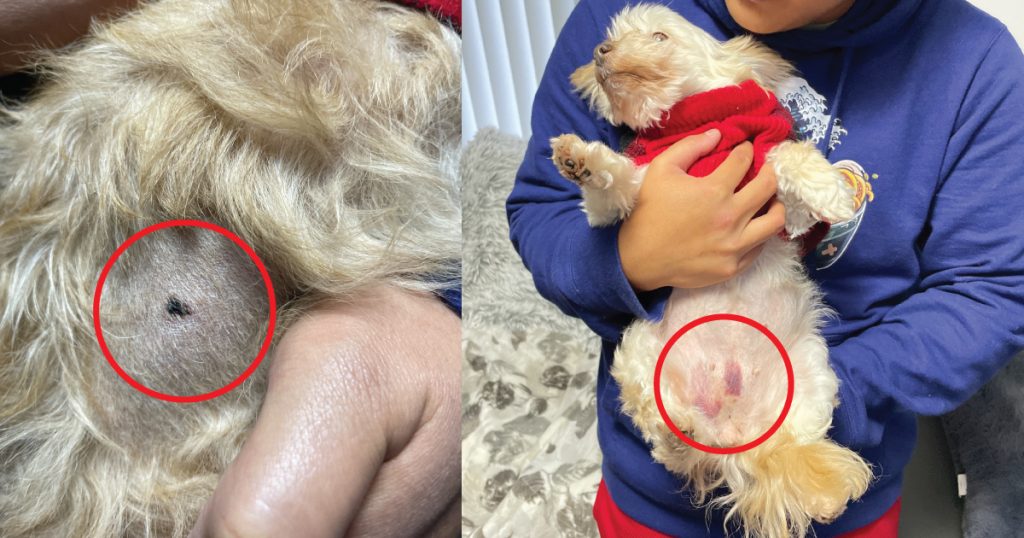
“For me, personally, I’m really happy [Brandy’s law] passed. I’m not pointing fingers at Councilwoman Escamilla – it’s for anyone who, if they have to go through this, there’s a law that will protect them,” said Castillo. “All we’ve been asking for his accountability and responsibility. She was pointing fingers at us when we had done no damage, we actually had to deal with the damage but she was pointing fingers at us as if we caused the damage. That was really painful because at the end of the day, she didn’t lose a dog. She didn’t have to go through this trauma.”
Castillo added that his late dog Brandy was “such a sweet” dog and would never cause anyone, or any other dog, which made her passing “so much more painful.” While Castillo is pleased Brandy’s Law passed, he added that “it sucks” it had to happen now, when he can never see his beloved dog again.
Brandy’s Law is what Castillo, and his family, have come to refer to Ordinance 3405 as – in memory of their 13-year-old 9.5-pound Pomeranian mix who had to be euthanized because of Escamilla’s dog’s attack.

Summary of council’s actions at Monday’s meeting
Ordinance 3405 was an “informal addition” Monday, according to Council President Nick Coelho, who added the item at the end of the meeting during New Business. In other words, the item was not originally scheduled for discussion/vote in the agenda packet.
Coelho moved to adopt the ordinance, which amends sections of the Lynnwood Municipal Code Title 6 – regarding animals, which was seconded by Council member Patrick Decker. Separate to the incidents involving Councilwoman Escamilla’s dog, Decker has mentioned in previous meetings that two close friends of his were also victim of a dangerous dog attack, prompting him to pursue the matter diligently.
Before the vote, however, Councilwoman Escamilla moved to amend the ordinance, striking a passage that states “killed a domestic animal without provocation while off the owner’s property,” seconded by Council member Joshua Binda.

Councilwoman Escamilla spoke to her motion, amending the language, stating “we don’t get to play God.”
“Either the animal was the cause of the death or not. If there’s a chance for the animal to survive, but the owners don’t have money, that’s a fiscal consequence that I don’t think we should be putting into policy,” said Escamilla.
In Escamilla’s personal experience, when her dog Sumo jumped the fence and viciously attacked two dogs while they walked passed her street, one of these dogs had to be euthanized due to the injuries caused by Sumo. Escamilla argued that it was not directly her dog Sumo’s doing, but the euthanasia that killed the dog, and that the dog’s death could have been prevented with proper surgery – a procedure the owners of the deceased dog could not afford to pay for and a procedure Escamilla at first refused to pay for, but later said she could have (after the dog was put down).
Council member Patrick Decker disagreed with Escamilla stating the city code would require the professional opinion of a practicing veterinarian which, he said, is as “definitive as it comes.”
“You can call it an opinion but if a doctor says you should take high blood pressure medicine, yes that’s an opinion but it’s their job to make that opinion and if a vet says that my animal should be put down, as a result of an attack by someone else’s dog, I’m not going to second guess that vet and this is not opinion-forming policy, this is a data-driven decision based on a professional who’s job it is to make those types of decisions,” said Decker.
Decker continued that Escamilla’s argument was unsound because if someone’s dog were to rip another person’s dog to pieces and that dog died due to blood loss, the fact of the matter is that dog died due to the actions of another person’s dog – even though “bleeding out” was the actual cause of death. What’s more, Decker continued, it helps the dangerous dog owner because the owner of the victimized dog can no longer make a claim that the attacking dog was the cause of death, five days later, without a professional determination. In other words, it removes ambiguity and assumption, replacing it with professional opinion.
When the City Attorney chimed in with her legal perspective Councilwoman Escamilla called for a “point of order.”
Escamilla also clashed with Lynnwood Police Department Investigations and Narcotics Commander Justin Gann regarding an email exchange between her and Gann, where Commander Gann didn’t reply to Escamilla’s request to confirm with local veterinarian’s offices whether the new LMC language code would be something they could even enforce.
“I figured you didn’t reply because you know the answer,” said Escamilla, to which Commander Gann corrected: “I don’t know the answer.”
Councilman Decker called Escamilla’s response “ridiculous” and “gaslighting” to which Escamilla called a point of order, repeating this several times over Decker’s remarks. Regardless, Decker continued though her interruptions stating that, since Escamilla is under liability, the city would not give a legal opinion – something email exchanges, obtained by the Lynnwood Times, between Escamilla and Hearing Examiner John Galt confirmed. In those emails, Galt explicitly wrote to Escamilla that he does not discuss his legal opinions with defendants.
“The vet will not tell you that they’re dog needs to be put down, because your dog killed another dog, but they’re able to tell the owners of the dog, and they have,” said Decker. “So, when you say a vet can’t legally give that information it simply isn’t true.”
After some back-and-forth, council went to vote on Escamilla’s amendment, but it failed 2-5 with Escamilla and Binda being the only in-favor votes.
Council then returned to the original motion on the table, adopting the LMC code changes, but Escamilla moved to make another amendment striking the portions that require restraints, but this motion also failed 3-4 with Binda, Escamilla, and Councilman George Hurst voting in favor.
After this amendment failed, Escamilla, again, made a third motion to amend the LMC regarding penalties for unrestrained animals, lowering the maximum fine from $1,000 to $500. This motion failed 3-4 with Binda, Escamilla, and Hurst voting in favor.
Finally, council returned to the original motion – approving the LMC regarding animal control as written. The motion passed 5-2 with Councilmembers Binda and Escamilla voting against Brandy’s Law.
The new language of the LMC applies to incidents moving forward and non-retroactive incidents that happened in the past, as clarified by the City Attorney from a request by Council member Joshua Binda. However, all persons with a “potentially dangerous animal” classification must now comply with LMC requirements as of December 16, 2025.
What are the new animal control laws approved by council?
After multiple requests, from residents and council members alike, to amend the city’s animal control laws, the Lynnwood Police Department reviewed the city’s current Municipal Code, working with nearby Bothell PD as an outside opinion, and, after some presentations to council and multiple deliberations, returned with some suggested edits to the city’s code.
These suggestions were then amended by council during discussions spanning from November 17 through December 1. The new language changes of Lynnwood’s Municipal Code, as approved, are as follows:
- A definitional clarification in LMC 6.02.015.F2 of a “Dangerous Animal” now includes: Killed a domestic animal without provocation while off the owner’s property; or inflicts injuries requiring euthanasia of domestic animal while off the owner’s property. If the animal is euthanized, documentation must be provided that confirms this decision was recommended and supported by a licensed, practicing veterinarian.
- A definitional clarification also in LMC 6.02.015.F3 of a “Dangerous Animal” now includes: Been previously found to be potentially dangerous because of injury inflicted on a human or domestic animal, the owner having received notice of such, and the animal again aggressively bites, attacks or endangers the safety of humans or domestic animals after such notice has been provided under this section.
- Adding a potentially dangerous animal declaration to LMC 6.02.023.C2e: As the LMC currently reads: A statement of any restrictions placed on the animal or owner as a result of the declaration. The new law will read as follows: “2.e. Notwithstanding any other provisions of this chapter, it is unlawful for an owner of a potentially dangerous dog to permit the dog to be allowed or permitted to run free and physically unrestrained or off leash or not otherwise under physical restraint, unless within a fenced yard or similar restraint reasonably designed to prevent the dog from running free and physically unrestrained. The top of such fence shall be at least six feet in height as measured from the ground level, unless there is a secured top – full enclosure – to the fenced-in area, and that such fence or enclosure area shall comply with all applicable city codes. For purposes of this section, a dog solely under voice and/or signal control shall be considered to be “physically unrestrained.” Violation of this subsection shall constitute a misdemeanor, and may be punished by a fine not to exceed $1,000 or imprisonment in jail not to exceed 90 days, or both such fine and imprisonment.”
- LMC 6.02.070A – Animals running at large prohibited: The LMC portion that reads No domestic animal, with the exception of cats, or exotic animal or livestock of any kind shall be permitted to run at large during any hours of the day or night, would has been reworded so that “with the exception of cats” was struck and an addition “cats shall be exempt from this code” added at the end. The language change makes no difference to the code, just adds clarity, the LPD said.
RELATED ARTICLES
- Councilwoman’s Dog Sparks Outrage: Deadly Dog Attack, Alleged Cover-Up, and a City’s Failure to Act
- Lynnwood Councilwoman Derica Escamilla denies the evidence, says her dog never ‘bit a human’
- Lynnwood City Council continues its discussion on recodifying animal control laws

Author: Kienan Briscoe