
SEATTLE—Starbucks union workers brought their ‘Red Cup Rebellion’ picket line to the coffee giant’s SODO headquarters Thursday, December 18, demanding the company resolve hundreds of its ULPs, end its “historic union busting” and return to the bargaining table with new proposals to improve pay, staffing, and scheduling.
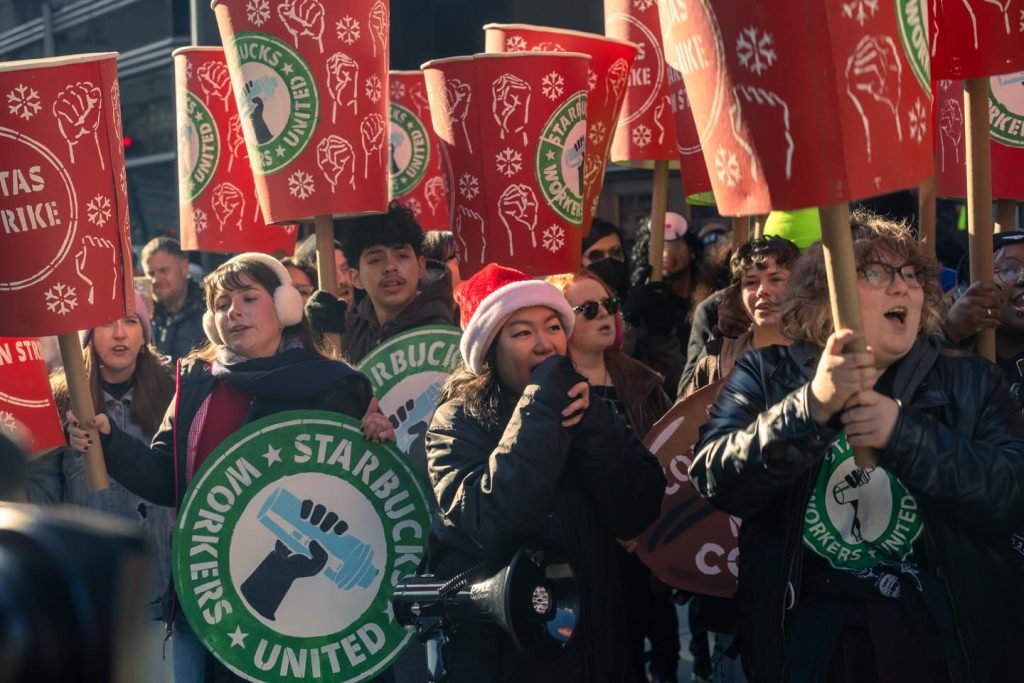
The strike, which launched on November 13 of this year, continues through the holiday season – the busiest time of the year for the Seattle coffee company which reported up to 30% spikes in business from November through December, during promotions such as the Red Cup Day, seasonal holiday beverage offerings, and holiday-related gift shopping.
The Starbucks Workers United union has filed more than 1,000 Unfair Labor Practices (ULPs) against Starbucks – 125 of those since the beginning of the year alone. Of these, 700 are currently unresolves and include alleged bad faith bargaining, unilateral policy changes, and specific ULP’s around retaliatory firings and discipline, the union says.
Since the Starbucks Workers union strike began in November, hundreds of Starbucks workers nationwide have joined their cause, with over 180 state and local elected officials sending a letter to Starbucks on Wednesday, December 17, calling for the company to end union busting and finalize a fair union contract


“For every barista on strike, dozens more allies and customers have pledged to honor the picket line and not shop at Starbucks,” said Seattle barista Brenna Nendel. “Starbucks executives need to know: wherever Starbucks is, our picket lines will be there too until we win a fair contract and an end to union busting. And that includes your corporate headquarters. No contract, no coffee!”
According to the National Labor Relations Board (NLRB), Administrative Law Judges have found Starbucks to have committed over 400 labor law violations, including firing pro-union employees, threatening store closures, spying, intimidating, and creating policies that hinder union activity.

In September, Starbucks closed two iconic locations—the Seattle Roastery on Capitol Hill and the SoDo Reserve inside headquarters—overnight, leaving workers jobless and dependent on unemployment benefits as they refused to place them in other locations. The coffee giant also laid off over 900 corporate employees.
At Thursday’s rally at the Starbucks HQ, Seattle City Councilmember-elect Dionne Foster, King County Councilmember Teresa Mosqueda, Secretary-Treasurer of SEIU Healthcare 1199NW Yolanda King-Lowe, Laura Bolinger, Union Representative of Teamsters Joint Council 28, Shasti Conrad, Chair of the Washington State Democratic Party, and Katie Garrow, Executive Secretary-Treasurer of MLK labor, joined union members, local labor leaders, and community allies and supporters.
Earlier this week, and following approximately 225 new baristas joining the Workers United after winning union elections at seven stores across the country, protests continued at two of Starbucks’ largest distributions centers in York, Pennsylvania, and Minden, Nevada, which led dozens of delivery trucks to turn away from the picket lines.
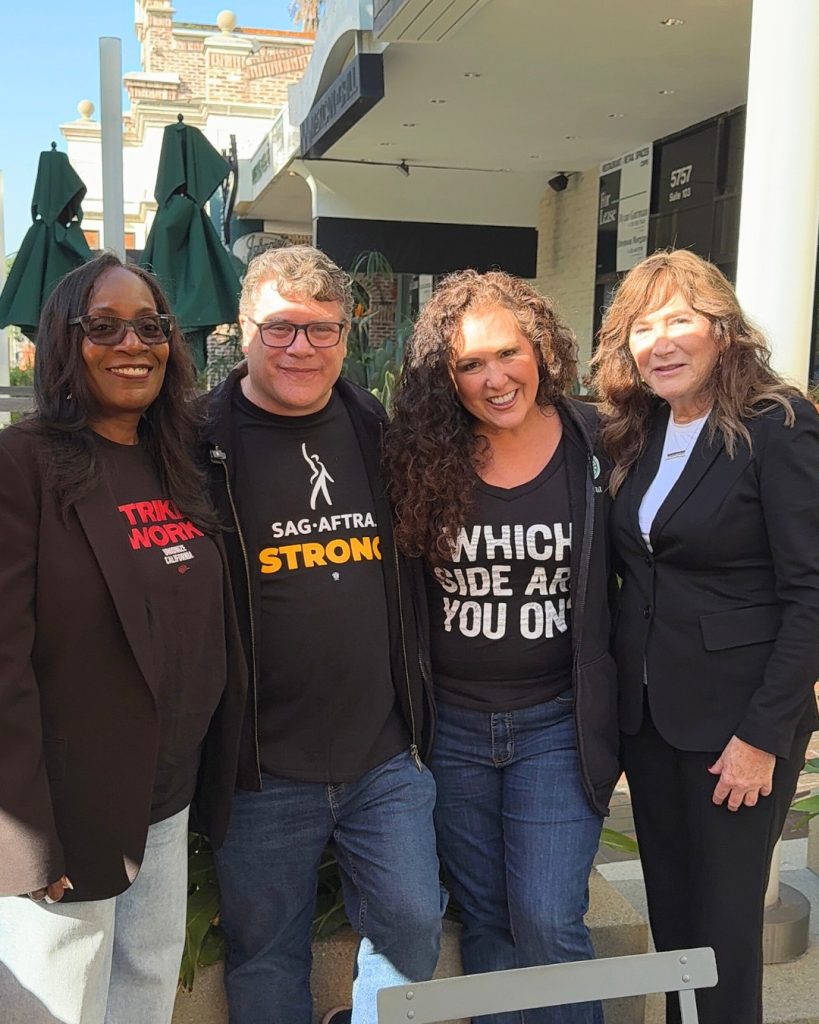
On Tuesday, SAG-AFTRA President Sean Astin (the Goonies, Stranger Things, the Lord of the Rings), Workers United President Lynne Fox and allies from across the labor movement joined striking baristas on the picket line in Los Angeles.

In addition to this rising momentum and bolstered solidarity, more than 225,000 people have signed the “No Contract, No Coffee” pledge to not buy Starbucks until union baristas secure a fair contract.
Elected officials from across the country have also lined up behind union baristas, pledging to not cross baristas’ growing picket lines until Starbucks returns to the bargaining table.
According to the union, finalizing a fair union contract would cost Starbucks less than one average day’s sales and less than Starbucks CEO Brian Niccol’s $96 million compensation for just four months of work in 2024, which is the biggest CEO-to-worker pay gap in the country and 6,666 times the average barista’s salary.
The union’s demands are:
1. Better hours to improve staffing in stores, which can lead to longer wait times for customers and higher stress for workers.
2. Higher take-home pay, with many Starbucks workers struggling to pay bills.
3. Resolution for hundreds of outstanding unfair labor practice charges for union busting.
Back in December of 2021, Starbucks baristas won their first union election establishing the Starbucks Workers Union.
Two years later, in November 2023, the union led what was called “the Red Cup Rebellion” – striking on the company’s annual Red Cup Day, one of Starbucks’ consistently busiest days of the year where they distribute complementary plastic red cups to holiday drink purchasers.
Now, union workers have returned to the picket lines demanding better hours to address understaffing, improved take-home pay, and the protections workers feel entitled to do their job.
Back in November, Chief Starbucks Partner Officer Sara Kelly, issued a letter to all Starbucks Partners (what the company calls its employees due to being issued shares), reinstating the company’s commitment to bargaining with the union, in addition to listing of investments the company has made recently for its employees. Some of those investments include $500 million on Green Apron partner hours to get more workers on the roster, committing to internal promotional opportunities, meeting 85% of its workforce with preferred scheduling, as well as implementing tools that assist workers in working shifts that best suit their schedules and lifestyles.
“We’re disappointed that Workers United, who represents less than 4% of our partners, called for a strike instead of returning to the bargaining table. Less than 1% of our coffeehouses have experienced any level of disruption, and the vast majority of our 240,000 partners are coming to work ready to serve customers,” Jaci Anderson, a Starbucks spokesperson, told the Lynnwood Times. “We’ve been very clear – when the union is ready to come back, we’re ready to talk. The facts show people like working at Starbucks. Partner engagement is up, turnover is nearly half the industry average, and we get more than 1 million job applications a year. Any agreement needs to reflect the reality that Starbucks offers the best job in retail, including more than $30 an hour on average in pay and benefits for hourly partners.”
The average Starbucks barista makes $15 to $16 an hour in the U.S.—or $19.38 per hour in Washington state—according to job site posting boards such as Indeed. Starbucks employees also receive a range of benefits including health coverage (medical, dental, vision), financial and retirement plans (401k match, stock equity), and educational assistance like free college tuition.

Author: Kienan Briscoe