


OLYMPIA – Legislation increasing the accessibility of mifepristone and misoprostol, used for abortion and to manage miscarriages, advanced out of the Washington Senate Feb. 10.
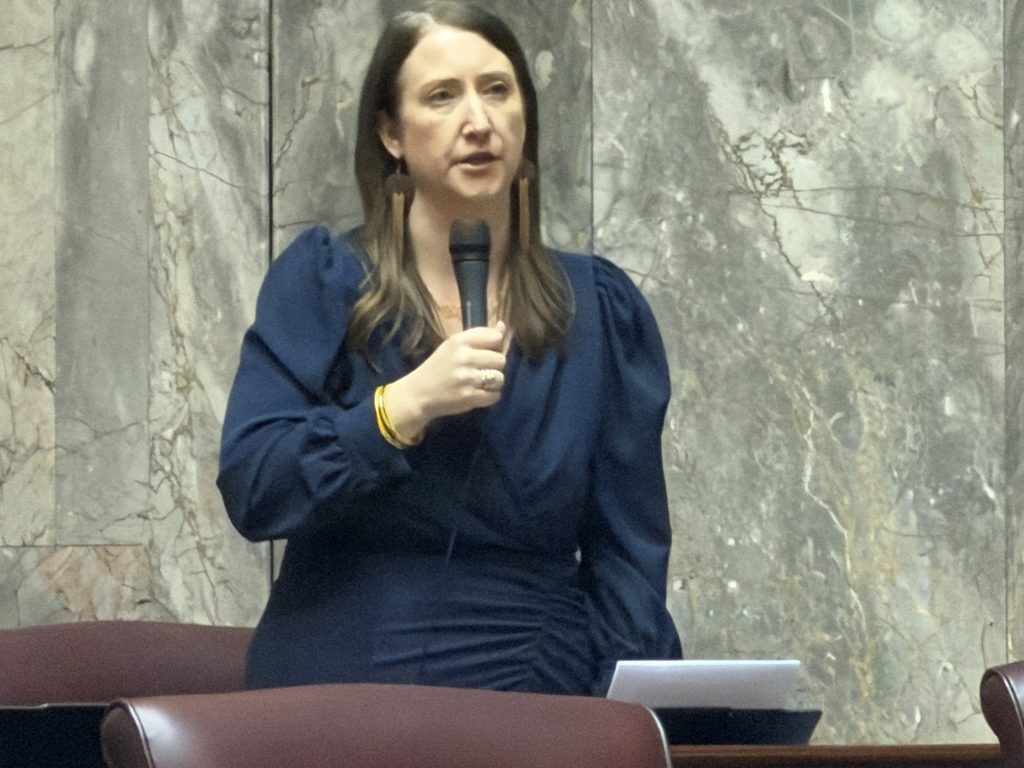
Senate Bill 5917 is a follow-up to Senate Bill 5768, which passed during the 2023 legislative session as a safeguard against potential national bans on abortion access. SB 5768 allows the state Department of Corrections (DOC) to acquire and distribute abortion medications to health care providers.
DOC was selected for this role because it has a pharmacy license and the infrastructure to handle bulk, state-level purchases of medication.
The agency purchased 30,000 doses of mifepristone in 2023 and then an additional 17,600 doses plus 155,000 doses of misoprostol in 2025.




SB 5917 would remove the requirement that DOC sell abortion medication at cost plus a $5 fee per dose. Instead, DOC would be allowed, but not required, to obtain payment for any abortion medication it distributes.
It would also direct the Department of Health to assist DOC with identifying appropriate recipients of the medications.


According to prime sponsor Sen. Jessica Bateman, D-Olympia, making these changes will allow abortion medications to be distributed more quickly.
Bateman said this is especially important given that many doses in the DOC stockpile are set to expire this year.
“Without this stockpile, we cannot ensure that people in Washington can actually get access to this medication,” she said.
Bateman is sponsoring another bill related to abortion this session. Senate Bill 6182 would establish a savings program designed to maintain access to direct abortion clinical care services for individuals in the state.


Under the proposed measure, the Secretary of Health would provide operating grants to any eligible abortion provider to support access for individuals without sufficient resources, such as those who are uninsured or have insufficient abortion coverage.
Money for the program would come from a mandatory annual assessment on health carriers subject to the insurance premium tax.
SB 6182 passed out of the Senate Health and Long-Term Care Committee Feb. 3 and the Senate Ways and Means Committee Feb. 9. It has now been referred to the Senate Rules Committee.
Sen. Noel Frame, D-Seattle, a co-sponsor of SB 5917, said she understands the significance of access to both mifepristone and misoprostol.
In 2023, Frame discovered her pregnancy would not come to term.
Her medical team recommended she take a combination of mifepristone, which stops a pregnancy from progressing, and misoprostol, which induces uterine cramps to expel the pregnancy tissue.
“To my great surprise, despite being a sitting state senator with health insurance and all the resources in the world to manage this situation,” she said, “I could not access mifepristone.”
Without any other option, Frame chose to take misoprostol without mifepristone. This caused her to experience an incomplete miscarriage, and she had to undergo invasive surgery to ensure she did not get an infection.
“This legislation is about women’s health,” Frame said. “It is about the ability of women to control their own bodies and manage their own health care with medication that is safe.”
Sens. Leonard Christian, R-Spokane Valley; Phil Fortunato, R-Auburn; and Jim McCune, R-Graham; proposed a series of amendments to the bill.
This included amendments requiring abortion medication from DOC include a warning that states the drug “causes fetal death,” prohibiting DOC from acquiring medication not necessary to provide medical care for inmates, and requiring abortion medication from DOC only be distributed to health care providers and residents in Washington state.
None were adopted.
Christian said the policy, as written, could force Washington “to become the free supplier of all abortion drugs in the entire country,” which would cost the state money it does not have.
“It doesn’t matter what side of the [abortion] argument you’re on,” Christian said. “You should not be, as a citizen of this state, paying for all the other states’ free abortion pills … That’s what’s hidden inside this bill.”
SB 5917 passed in a 32-17 vote, with two Republicans voting in favor of the measure.
A companion bill, House Bill 2182, passed out of the House Health Care and Wellness Committee Jan. 23 and has been referred to the House Appropriations Committee.
The Washington State Journal is a nonprofit news website operated by the WNPA Foundation. To learn more, go to wastatejournal.org.
Article written by Cassie Diamond

Author: Washington State Journal





One Response
Democrat party is a DEATH cult. The only thing they love more than themselves is the killing of an innocent child in the mothers womb. Following that, they love racism, sexism, pedophilia, criminals, illegals, narcotics. They literally HATE the American people, their constituents proving that they should NEVER have the levers of power. The Fascist left rules and reigns at the head of the demoncrat party.