

SEATTLE — When Nick Brown was sworn in as Washington’s attorney general in January 2025, he not only etched his name in history as the state’s first Black attorney general — he brought a reservoir of experiences in public service, civil rights advocacy and a profound conviction that government can serve as a catalyst for positive transformation.
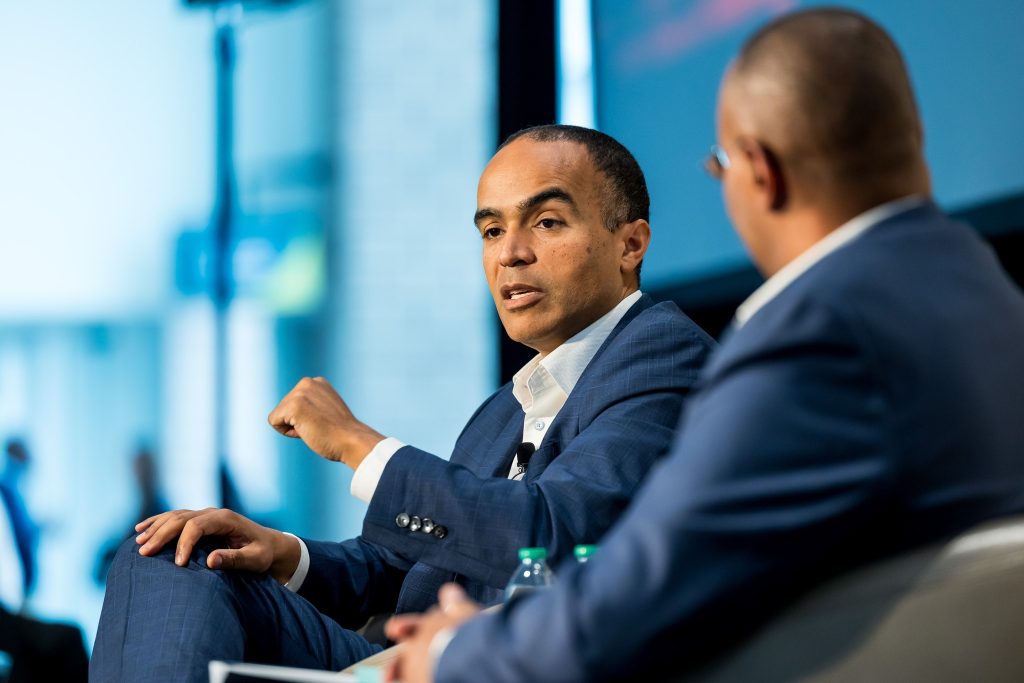
“To advance meaningful change in our communities in our state, you need people who are both advocates, represent the community, march and protest and make the voices of the community heard,” said Brown. “But you also need people in positions to make those changes. I’ve never thought of myself as an advocate, but I’ve felt it’s important to be the person in the room. Now I’m the person in the room with a pen in my hand signing really important things. There’s a lot of different ways a community can have an impact, and we need to think about ways to collaborate and bring all those voices together.”




Brown’s parents, both public servants, instilled these values early. They met in the U.S. military — his father as an Army lieutenant, his mother as an Army nurse.
“The idea of working for the government and the value of public service, and military service, was well ingrained in my experience,” said Brown. “Consciously, and subconsciously, I’ve always wanted to be apart of the government. I viewed the government as a tool to help make people’s lives better.”


In middle school, Brown immersed himself in student government, athletics and ROTC, deriving fulfillment from teamwork.
Brown moved to Atlanta, Georgia — from Washington — after high school to attend undergrad at Moorehouse College. This was an important time for Brown, he said, because it was the first time he was in a largely Black populated city and academic setting.

“Other than maybe Norm Rice, I don’t think I ever saw, in my childhood, Black people who were in positions of authority, both in government and business,” said Brown.
Brown continued his education at Harvard Law School and launched his career in law as a U.S. Army JAG Lawyer.
“I really, really enjoyed both the professional and personal experience of being a JAG. It was sort of a continuation of what I had seen in my parents, and something about military experience – working with people all over the country, serving all over the world,” said Brown. “The diverse experience of being a JAG Lawyer was really informative for me. Doing criminal justice work for the first time, which I never expected to be doing, serving in high intensity environments, that year in Baghdad during the way doing jury trials…The training and leadership experience really grounded me”
Despite these achievements, Brown’s aspirations remained anchored in broader public service. From 2007 to 2013, he served as an assistant U.S. attorney with the Justice Department, followed by four years as general counsel to Gov. Jay Inslee until 2017. At the time of his nomination by President Joe Biden on July 26, 2021, to U.S. attorney for the Western District of Washington — confirmed by the Senate on Sept. 30 that year — Brown was practicing at Pacifica Law Group. He was elected as Washington’s 19th attorney general in November 2024.
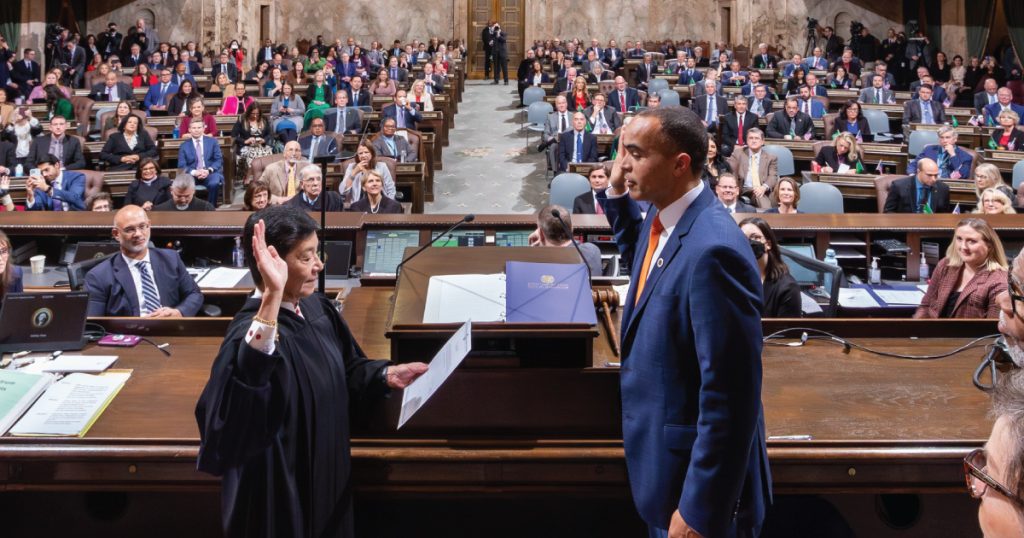
“Being the first Black AG gives me some unique perspective, just based on my own personal experiences, about the issue that concern communities of color that might be unique,” said Brown. “I also think it gives more people in the state that they have access to government in a way they might not have had before. We are most effective when people feel like they can have a connection with their government and it’s important that we have a connection with the people who are going to be impacted by our work.”
Brown noted his parents’ involvement in the civil rights movement. In their era —shortly after the Loving v. Virginia ruling legalized interracial marriage — envisioning him as the state’s preeminent legal officer and law enforcement authority would have seemed inconceivable.
“Through personal experience, and professional experience, I recognize the law can be used as a tool for good, and a tool for harm, especially for communities of color in particular,” said Brown. “As Attorney General, advocating for civil rights cases, environmental cases, I understand the impacts the some of the communities are facing. For me it’s trying to be present, and responsive, in those cases where they’re not easy. It’s easy as an elected person, and a politician, to champion for the things that most people would champion for. It’s much harder to stand up and be an advocate for people who might be less popular, marginalized, or vulnerable.”
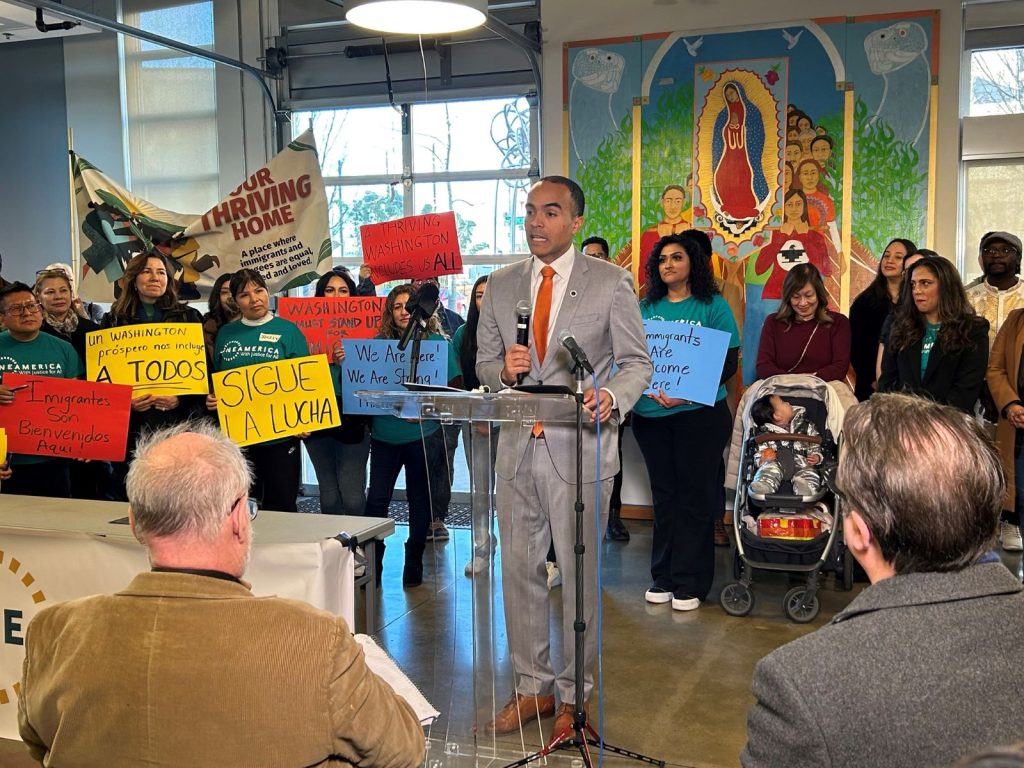
This tenet holds particular salience, Brown added, amid an administration that instills insecurity, targeting and fear among immigrant populations.
In his inaugural year as attorney general, Brown has initiated more than 50 lawsuits against the Trump administration, framing his office as a bulwark against federal encroachments and what he termed “elements of fascism” during a January news conference.
His office has contested measures (and won) it deems unlawful, including the diversion of over $15 billion in congressionally appropriated federal funds from Washingtonians. These allocations supported education, nutrition programs, health care for vulnerable residents, housing for those exiting homelessness, and safeguards against terrorism and environmental calamities.
“We’ve also protected what it means to be a citizen in the United States of America. We’ve saved public health programs, including Washington’s mobile health clinics that take free services into health care deserts. Federally funded programs for survivors of domestic violence and sexual assault will continue, not because of what the administration did but because what we did to oppose their proposed cuts,” Brown during his January presser.
As the state’s paramount advocate for justice, Brown has bolstered law enforcement by assuming over 70 criminal cases from local prosecutors and aiding the Criminal Justice Training Commission in disbursing millions in grants to police and first responders.
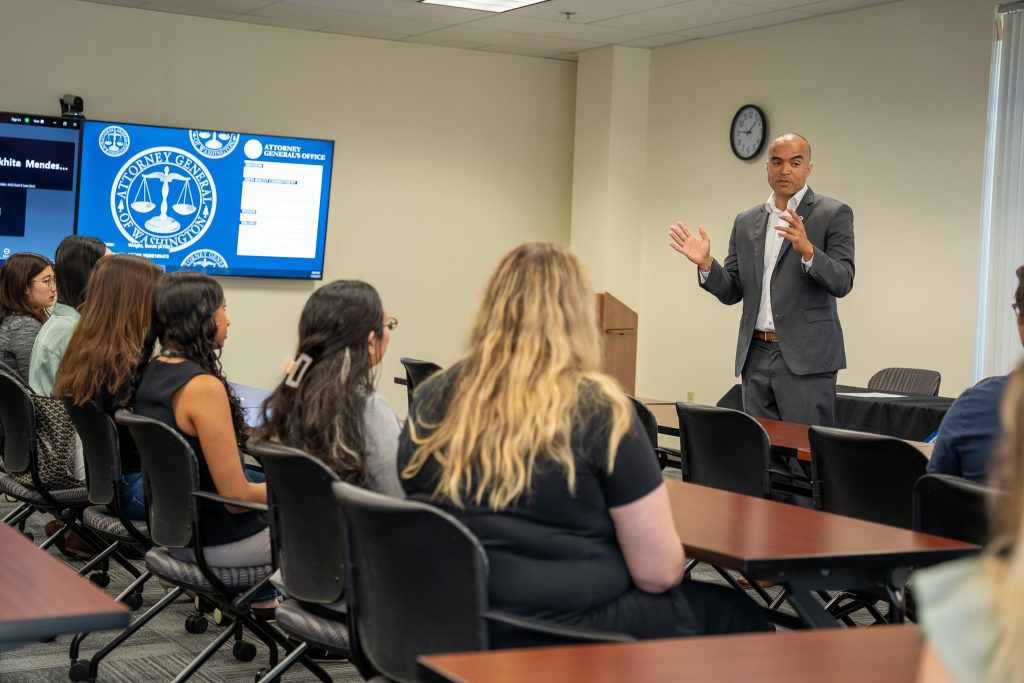
Last year, the attorney general’s office probed and, where warranted, pursued litigation against businesses exploiting workers — securing settlements for farm workers victimized by visa abuses that sidelined qualified local hires.
Under Brown’s stewardship, the office targeted underlying drivers of housing unaffordability, such as monopolistic practices and predatory algorithms, while obtaining refunds for overcharged tenants.
In 2025, his team fielded hundreds of inquiries from young people via the HearMeWA program, addressing stressors like anxiety, violent threats and sexual abuse.
Brown attributes his accomplishments to diligence, unwavering commitment, active engagement and a lifelong pursuit of influential roles — a trajectory he encourages youth to emulate, emphasizing that impact stems from seizing opportunities.
“Sometimes you look at people in positions of authority and think they’re special,” Brown said. “We all bring our own talents and skills but I’m just a kid from Steilacoom, Washington, who went to public schools, did well, worked hard, and engaged.”

His email signature features “fight the good fight,” a mantra echoed throughout the office. Another, “We can do hard things,” originated from a post-fire school visit in Vancouver with former Gov. Inslee, where a student told him, “We’ll be okay; we can do hard things.”
As a father, Brown adheres to the precept that kindness incurs no loss, imparting it to his children. His approach emphasizes encouragement, introspection and compassion, he shared.
“I want my kids to be the kids who are nice to the new kid in school,” said Brown. “Being nice, honest, and being [an] individual is all I ask of my kids.”

Author: Kienan Briscoe