

WASHINGTON, D.C. — President Donald J Trump on Friday lambasted the United States Supreme Court (SCOTUS) ruling curtailing his use of emergency powers for tariffs, labeling it “ridiculous” and “terrible,” while alleging foreign influence on nation’s highest court. He announced that the tariffs will remain in effect and that he will be signing an executive order to impose a new 10% global tariff in addition to current tariffs.
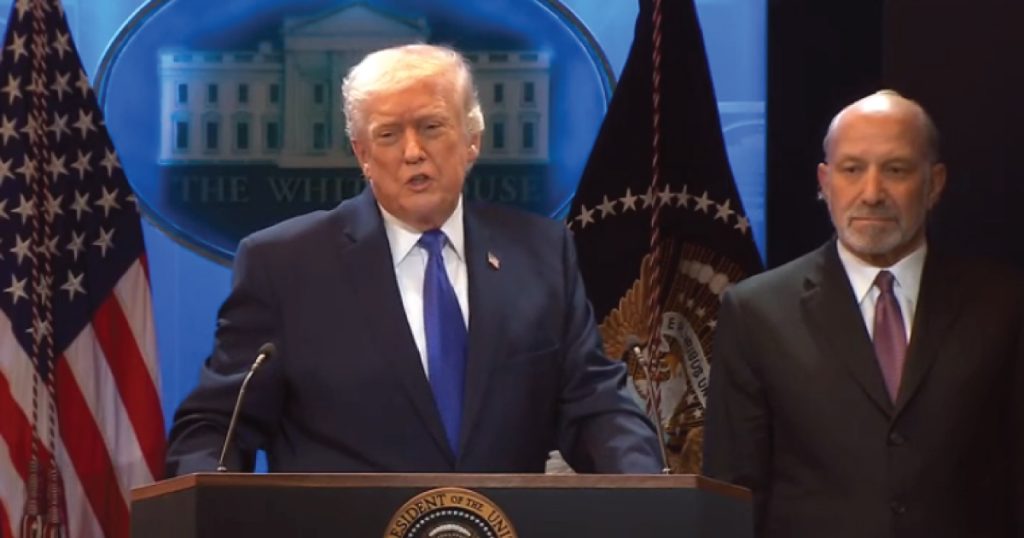
“The Supreme Court’s ruling on tariffs is deeply disappointing, and I’m ashamed of certain members of the court — absolutely ashamed — for not having the courage to do what’s right for our country,” Trump said. He praised the dissenting justices, adding, “I’d like to thank and congratulate Justices Thomas, Alito, and Kavanaugh for their strength and wisdom and love of our country, which is right now very proud of those justices.”
“The ruling against Trump’s tariffs is a resounding victory for the rule of law and for the American people forced to pick up the costs of this illegal scheme,” Attorney General Nick Brown wrote in a statement posted to X. “Congratulations to Oregon AG Rayfield and the coalition of states that led this effort.”
In a 6-3 ruling, Learning Resources, Inc. v. Trump, the U.S. Supreme Court on Friday struck down tariffs imposed under the International Emergency Economic Powers Act (IEEPA), which Trump defended as essential for national security and economic revival. The decision upends a cornerstone of Trump’s America First economic agenda, potentially leading to hundreds of billions in refunds through litigation.



“They [SCOTUS] take months and months to write an opinion, and they don’t even discuss that point… I guess it has to get litigated for the next two years,” said Trump.
Chief Justice John Roberts wrote the majority opinion, joined by Justices Sonia Sotomayor, Elena Kagan, Ketanji Brown Jackson, Neil Gorsuch and Amy Coney Barrett. Roberts wrote that IEEPA does not grant a president the power to levy tariffs, which he described as a core congressional taxing authority.


“The power to impose tariffs is ‘very clear[ly] . . . a branch of the taxing power,’” Roberts wrote, citing historical precedent. “Absent from this lengthy list of specific powers is any mention of tariffs or duties.”
Back in the 2012 Supreme Court case National Federation of Independent Business v. Sebelius, Chief Justice Roberts’ majority opinion back then treated the Obamacare individual mandated “penalty” as a tax for constitutional purposes, which allowed the Court to uphold it as a valid exercise of Congress’s taxing power under Article I of the Constitution — this was key to saving the Affordable Care Act (ACA) in a landmark 5-4 decision.
In Obamacare, Roberts flexibly reinterprets the term “penalty” to fit a constitutional category (taxing power), saving the ACA. In his tariff majority opinion, he rigidly distinguished tariffs as taxes outside IEEPA’s “regulate” language, limiting the authority of President Trump. This flexibility upheld the ACA mandate (though the penalty was later zeroed out by Congress in 2017) and struck down the IEEPA tariffs in the Court’s decision on Friday.
Justices Brett Kavanaugh, Clarence Thomas and Samuel Alito dissented. Kavanaugh argued that IEEPA’s language to “regulate . . . importation” historically includes tariffs as a traditional tool.


“The broad power to ‘regulate . . . importation’ includes the traditional and common means to do so—in particular, quotas, embargoes, and tariffs,” he wrote, referencing precedents like President Richard Nixon’s 1971 tariffs.
The ruling invalidates tariffs imposed under IEEPA only, including a 10% baseline on most global imports and higher “reciprocal” rates up to 34% on China, as well as 25% duties on Canada, Mexico and China tied to fentanyl and border security. It does not affect tariffs under other laws, such as Section 232 national security duties on steel, aluminum and autos.
Despite the setback, Trump shared stronger alternatives in his arsenal to enforce his America First economic strategy.
“The good news is that there are methods, practices, statutes, and authorities, as recognized by the entire court in this terrible decision… that are even stronger than the IEEPA tariffs available to me as President,” Trump said then listing existing statutes, “Trade Expansion Act of 1962 (Section 232)…the Trade Act of 1974 (Sections 122, 201, 301) and the Tariff Act of 1930 (Section 338).”
Trump announced that effective immediately, to replace the invalidated tariffs, he will be imposing a “10% global tariff under Section 122 over and above our normal tariffs already being charged,” and he will also be “initiating several Section 301 and other investigations to protect our country from unfair trading practices of other countries and companies.”
In other words, Trump is actively countering the SCOTUS’ ruling by maintaining existing tariffs under other authorities such as Sections 232 and 301 and will immediately impose replacements for the invalidated tariffs under alternative statutes.
U.S. Trade Representative Jamason Greer, who is leading Trump’s trade policy, echoed Trump’s next steps telling reporters during the briefing that Section 122 will be implemented today and he will be utilizing Section 301 to address unfair trading practices that have contributed “to our huge trade deficit.”
President Trump also accused the majority opinion Justices — Roberts, Sotomayor, Kagan, Jackson, Gorsuch and Barrett — of being “unpatriotic and disloyal to our Constitution,” suggesting political motivations.
“It’s my opinion that the court has been swayed by foreign interests and a political movement that is far smaller than people would ever think,” Trump said alleging that the plaintiffs in the lawsuit were “foreign country centric.”
“Foreign countries that have been ripping us off for years are ecstatic,” said Trump. “They’re so happy. And they’re dancing in the streets, but they won’t be dancing for long. That I can assure you.”
Trump alleged that the Supreme Court was under foreign influence and when asked if there is any evidence of this, responded, “You’re going to find out.”
Reactions from lawmakers
House Speaker Mike Johnson (R-LA) said tariffs “brought in billions of dollars and created immense leverage for America’s trade strategy,” adding Congress and the administration “will determine the best path forward.”
Sen. Patty Murray (D-WA) hailed it as “good riddance to Trump’s erratic tariff regime, nothing short of economic arson,” saying small businesses in her trade-dependent state are “breathing a sigh of relief.”
Sen. Maria Cantwell (D-WA), welcomed the ruling and urged Treasury for a refund plan, stating, “We need to really be concerned about America’s competitiveness and thank God the court has given us some relief.”
Rep. Suzan DelBene (D-WA01) stressed the illegality of the tariffs: “The president is not a king. These tariffs were always illegal. The court validated today that Congress – not an unchecked president – has the constitutional authority over trade policy.”
Rep. Rick Larsen (D-WA02) shared that Friday’s decision was an affordability decision by SCOTUS: “I am glad that the Supreme Court has taken action to strike down President Trump’s tariffs and lower prices for Americans since Republican leadership in Congress refused to do so. I will continue to lead legislative efforts to end pointless tariffs and bring down the cost of groceries, energy and health care.”
Rep. Dan Newhouse (R-WA04) shared that SCOTUS’ decision on Friday reinforced Congress’s constitutional authority over trade and the prevention of executive overreach: “Today’s decision by the Supreme Court reaffirms Congress’s authority under Article I of the Constitution to levy tariffs and restores balance between the legislative and executive branches. Tariffs can be effective in securing new trade deals when used in a targeted manner. I remain committed to working with President Trumps’ administration to secure trade deals that put American farmers, businesses, and consumers first.”
Gov. Bob Ferguson praised SCOTUS decision, “The court agreed with us, and struck down the President’s harmful and illegal tariffs.”

Author: Mario Lotmore