
EVERETT—Refugee and Immigrant Services Northwest (RISNW) teamed up with Lynnwood Food Bank Friday, March 27, to distribute 150 free meals to refugee and immigrant families, ahead of Easter, at the end of Ramadan, and amid ICE crackdowns where many immigrants are fearful to leave their homes.
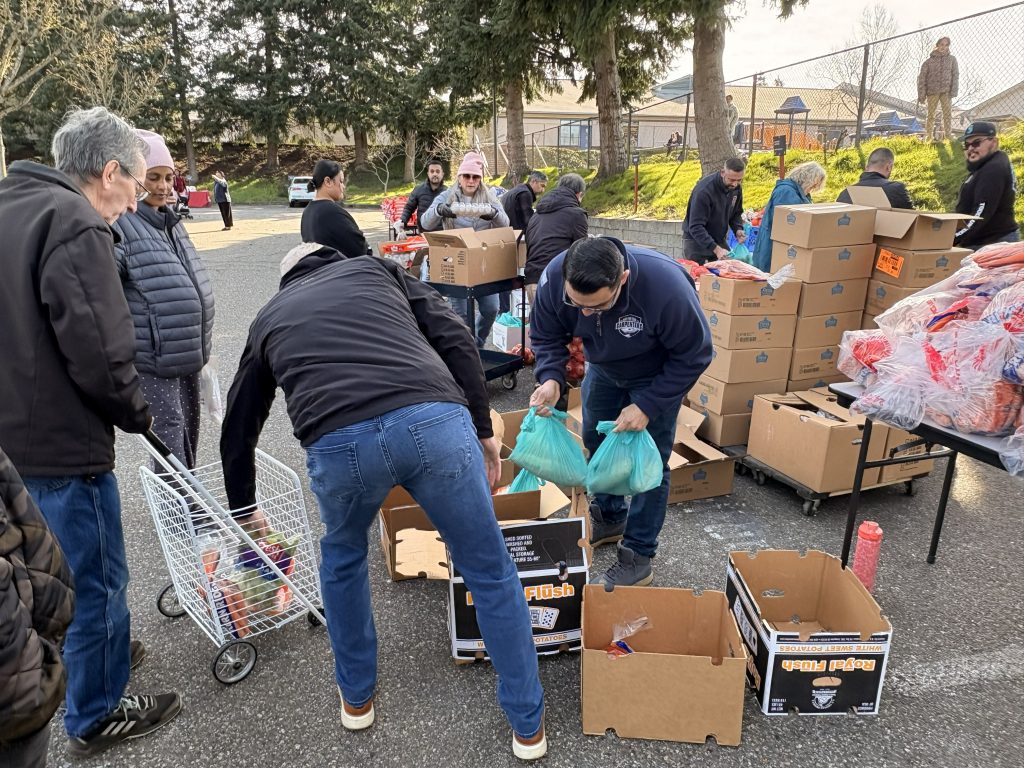
Beginning at 9:30 a.m., outside the Rainier Hall at Everett Community College, approximately 50 volunteers – from elected officials, lawyers, doctors, organizational leaders, to community members – prepared to assist the crowd of immigrants and refugees who had already begun lining up in the parking lot. Distribution spanned until 11:30 a.m., by ticket only.


In total RISNW distributed approximately 10,000 pounds of food.
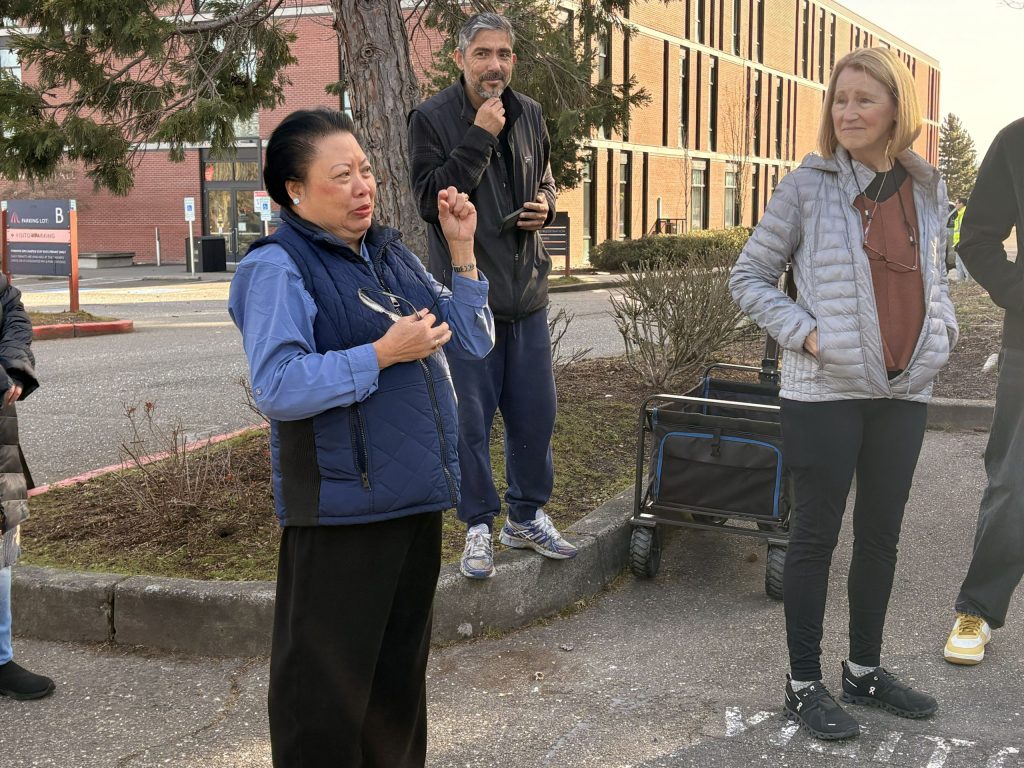
“More people are fearful to get out of the house. More people are getting arrested and detained because of ICE. More people now cannot go to work because they are afraid, so they can’t make money, their children don’t have diapers, so we organized this event today to make sure that we have more stuff for the children,” said Van Dinh-Kuno, Executive Director of RISNW. “Also this time of year people celebrate Easter and they celebrate Ramadan, so that’s why we have halal meat as well as ham and other meat.”
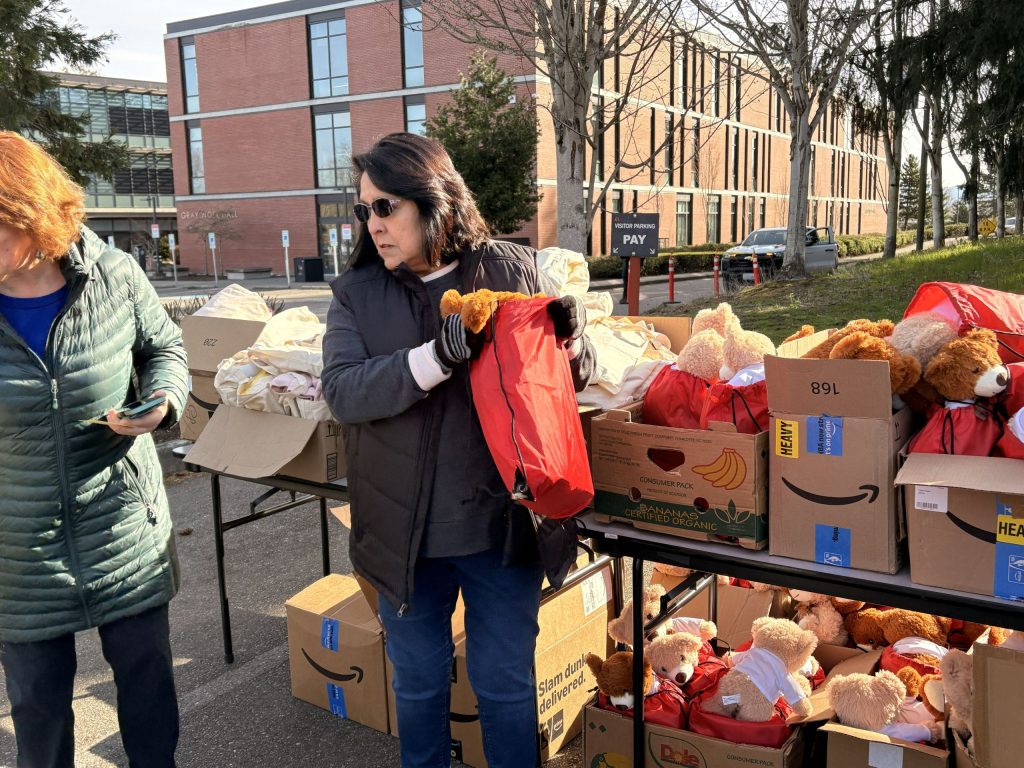
Some of these items of children include school supplies, coloring books, seven palettes of diapers, and giftbags packed with stuffed bears, toys, and blankets.




“Sometimes these children can’t go home. Kids are getting picked up from school and they go somewhere else. I know, because I went through it at a young age when I had to escape. I know how fearful it is, so this bear is a way to comfort them,” said Dinh-Kuno.
Dinh-Kuno continued that she specifically did not advertise the event, and held it in a remote, hard to see from the road, area to deter ICE agents from interfering and for her clients to feel safe picking up necessary food and supplies.
Dinh-Kuno, herself shared a story about how, just a few weeks ago, she had a run-in with ICE agents – despite being an American citizen. While driving in Marysville, an ICE SUV began to follow her. She continued to drive, taking intentional turns and noticed the vehicle would follow keeping a comfortable distance. She prepared herself to be stopped, had her passport ready, and told herself she would roll down the window so that they would not break in her windows, remain calm, and show her I.D.
Luckily for her, however, they abruptly changed lanes and carefully looked at her face while passing. She suspects the agents ran her license plates and saw she was a U.S. citizen but still felt racially profiled.
In addition to diapers, toys, blankets, and food, the American Red Cross made a presence handing out ‘swag bags’ full of hygiene products and discussed their Restoring Family Lanes program – which helps families who have lost connection with one another mostly due to war or conflict, sometimes migration or natural disasters.
Red Cross has been doing this work for more than 150 years when Cara Barton was assigned the task, by President Abraham Lincoln, to locate soldiers who were missing in the battlefield.
“What’s really wonderful is that we have an international Red Cross network of 192 Red Cross societies across the world. We work directly with those societies to try and get help – so let’s say someone is missing in South Sudan, we would work with the International Community of Red Cross and work together to assist the family,” said Dianne Paul, Volunteer Case Worker for Red Cross.
Through this program, Red Cross was able to locate over 1,000 missing family members who were still alive, over 50 years.
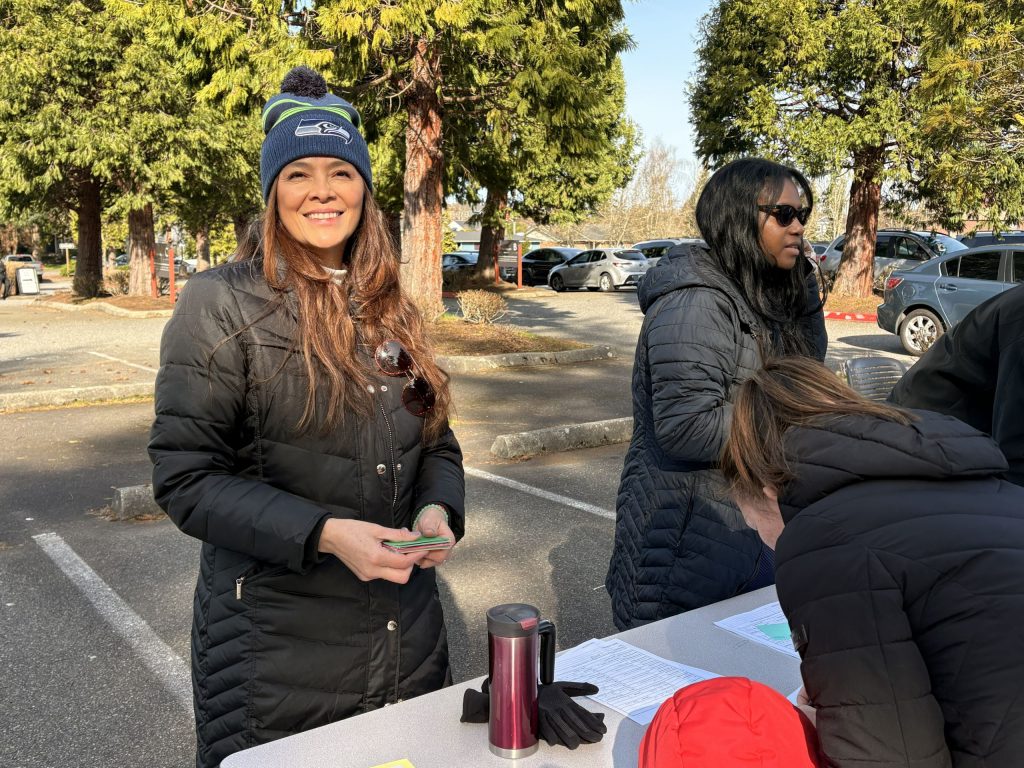
Among the other 50 volunteers assisting the RISNW Friday were Snohomish County PUD Commissioner Julieta Altamirano Crosby who told the Lynnwood Times:
“When times feel uncertain, we keep showing up with care and heart. We’re supporting families with diapers, children’s books, and everyday help that truly makes a difference. These may seem like small things, but they matter,” said Altamirano-Crosby. “This work is about people, dignity, and community. Behind every need, there is a family that deserves to feel seen and supported. We are doing well because we are doing this together and we will keep going, step by step.”
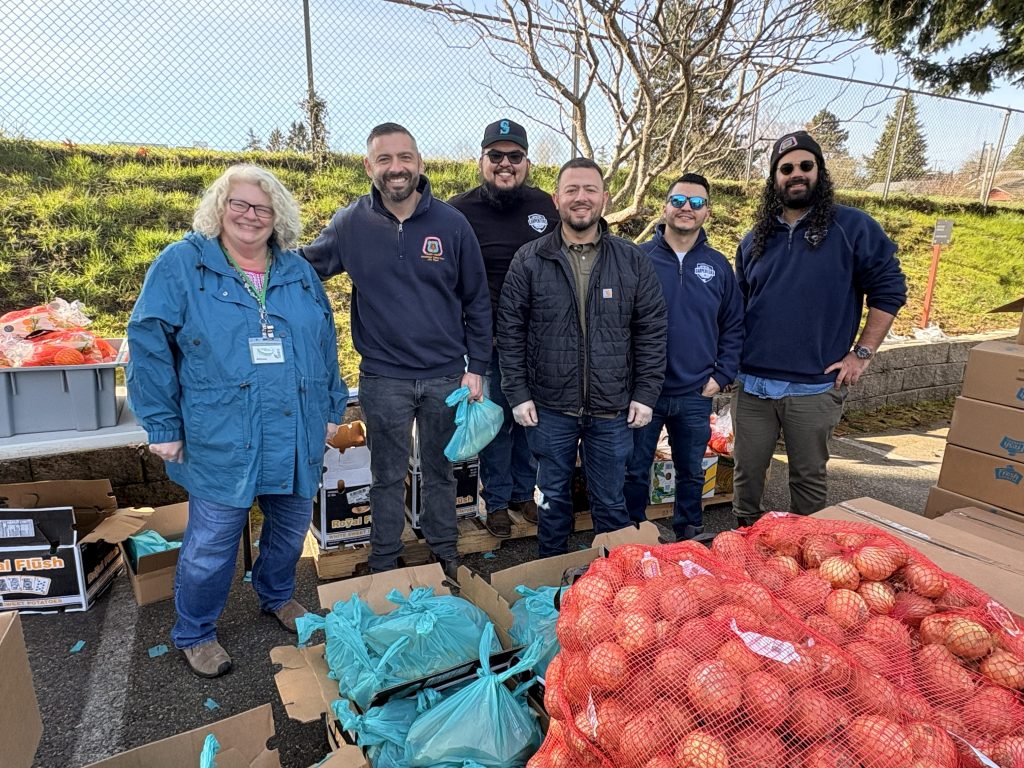
Several members of the Western States Carpenters local 425 also showed up to support the effort.
“The Carpenters are grateful for the opportunity to assist RISNW in this important event, helping to pass out food and much-needed supplies to those in our community,” said Zac McCown, representative for the Western States Regional Council of Carpenters. “We feel blessed to be able to give back to a community that has given so much to our members. Our commitment remains strong: to support neighbors in need and to stand together in moments that remind us of the power of generosity and solidarity.”
Many of the volunteers are also donors to the RISNW.
After the volunteers ended distribution at 11:30, they were provided a “poor people lunch”, which Van Dinh-Kuno told the Lynnwood Times is a dish served in Vietnam consisting of broken rice that people of money historically did not want to eat, reserving it mostly for the poor.
“The dish is related to our clients here because they don’t come here for help because they’re healthy. They come because they couldn’t go to work so they can’t support their family. For our volunteers to try that food, it allows them to live in the poor reality,” said Dinh-Kuno.
The Lynnwood Food Bank and RISNW have been partnering since 2020 when, during the pandemic, the Food Bank wanted to step up to the plate in helping the immigrant and refugee community who were being left behind, as far as testing, vaccine efforts, and government subsidies go.
Executive Director Alissa Jones added that food-insecurity also leads to higher rates of anxiety and depression so the region’s food insecurity problems are directly linked to behavioral health, and by extension housing security and substance abuse.
Aside from health equity, and of course food equity (they are a food bank after all), the Lynnwood Food Bank also partners with the RISNW on its Community Jobs Program where immigrants and refugees offer their volunteer services to the food bank to learn job skills and practice their language skills before initiating their job search out in the community.
The Community Jobs Program has resulted in one full-time employee at the Lynnwood Food Bank, who began as a volunteer through the RISNW. Having a diverse range of people is important for the Lynnwood Food Bank, Alissa Jones said, because when a diverse pool of people come to the food bank they see people that look like them, and speak their language.
Dinh-Kuno said the community can support the RISNW by donating to both the organization, as well as the Lynnwood Food Bank. Cash is the preferred donation method to the food bank, she added, since they know their community, and the people they serve, the best and are able to accommodate their diverse needs and dietary restrictions.

Author: Kienan Briscoe