

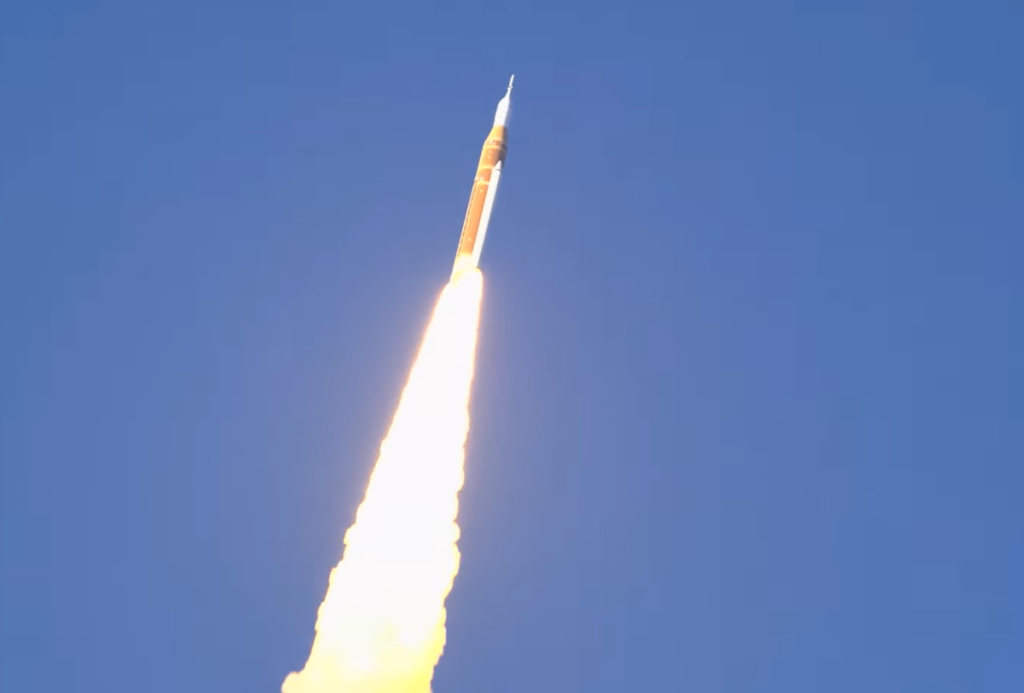
CAPE CANAVERAL, Fla. — NASA’s Artemis II mission lifted off from Kennedy Space Center at about 6:35 p.m. EDT on Wednesday, sending four astronauts on a historic journey around the Moon — the first crewed mission to venture beyond lunar orbit since the Apollo era more than five decades ago.
“The world will be watching in awe as the Artemis II crew pushes the limits of what humanity can do by traveling around the moon. This trip lays the groundwork for returning to the Moon’s surface and staying there,” said Senator Maria Cantwell (D-WA). “And Washington state’s space industry is making it happen – from the thrusters that will guide the Orion spacecraft to and around the moon, to the parachute deployment systems that will return the astronauts safely to Earth.”




On Monday, Sen. Cantwell visited two of the 41 companies in Washington state that are suppliers to the Artemis program.
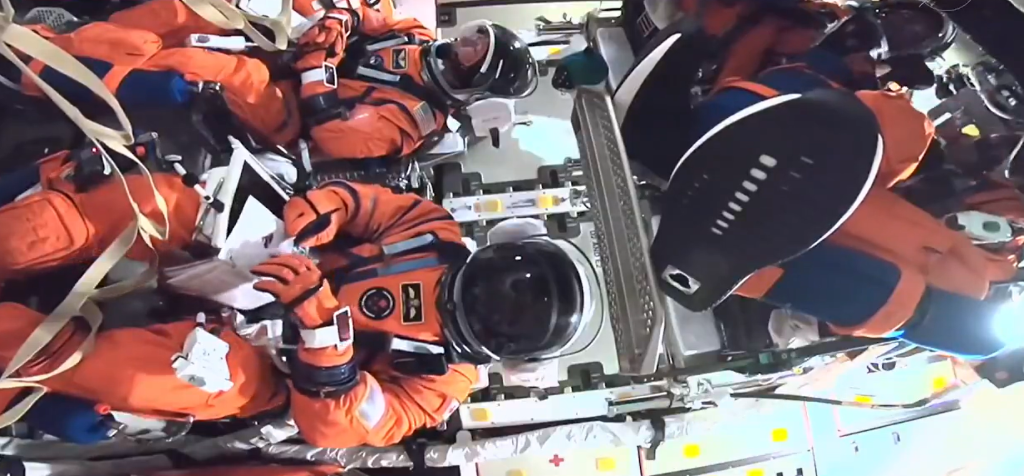
The 10-day test flight, NASA’s first crewed mission in its Artemis program, is designed to validate the Orion spacecraft and Space Launch System rocket for deep space travel. Astronauts Reid Wiseman, Victor Glover, Christina Koch and Canadian Space Agency Col. Jeremy Hansen are aboard, tasked with confirming that the spacecraft’s systems can safely support humans beyond Earth orbit.



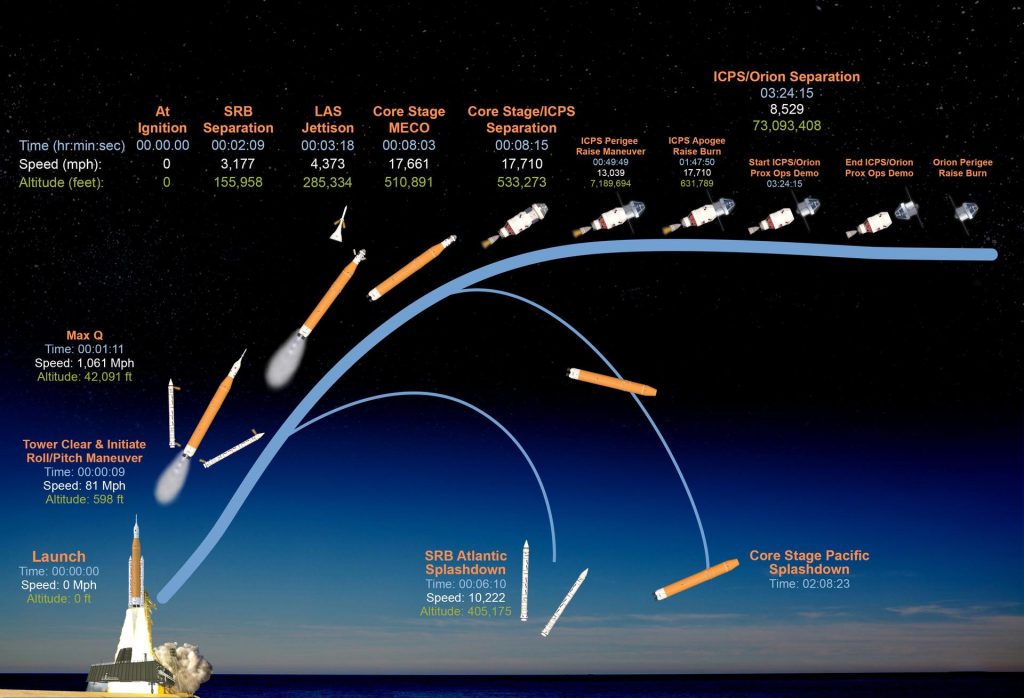
Artemis II builds on the uncrewed Artemis I mission and is a critical step toward returning astronauts to the Moon and eventually sending humans to Mars. During the mission, Orion will orbit Earth twice before heading toward the Moon, allowing engineers to evaluate systems while still relatively close to home.
“History in the making! LFG!” NASA Administrator Jared Issacman took to Twitter to say Wednesday following the launch.


The spacecraft will then travel in a highly elliptical Earth orbit before separating from its upper stage, which astronauts will use as a target for a key manual piloting test. That demonstration will allow the crew to practice critical maneuvers such as rendezvous and docking — operations essential for future missions, including Artemis III, which aims to land astronauts on the lunar surface.
At its farthest point, Artemis II will carry the crew roughly 4,600 miles beyond the far side of the Moon, offering views of Earth from nearly 250,000 miles away. The mission will use a fuel-efficient “free-return” trajectory, relying on the gravitational pull of the Earth-Moon system to bring the spacecraft back home without the need for major propulsion burns.
Orion is expected to splash down in the Pacific Ocean at the end of the mission, where recovery teams, including the U.S. Navy, will retrieve the crew and spacecraft. The mission will also test new recovery procedures.
NASA officials say Artemis II will help verify life-support systems, emergency procedures and overall mission operations needed for sustained human exploration of deep space. The crew is also expected to surpass the distance record set by Apollo 13 for the farthest humans have traveled from Earth.
The Artemis program aims to establish a long-term human presence on and around the Moon, supporting scientific research and future exploration. NASA ultimately plans to use lessons from the program to prepare for the first crewed missions to Mars.

Author: Kienan Briscoe