

SEATTLE — United States Representatives Pramila Jayapal (D-WA07) and Jonathan Jackson (D-IL01) returned from a five-day congressional delegation to Cuba last week and pressed for an immediate end to the Trump administration’s fuel blockade on the island, which they said inflicted unnecessary suffering on civilians including premature babies in hospital incubators.
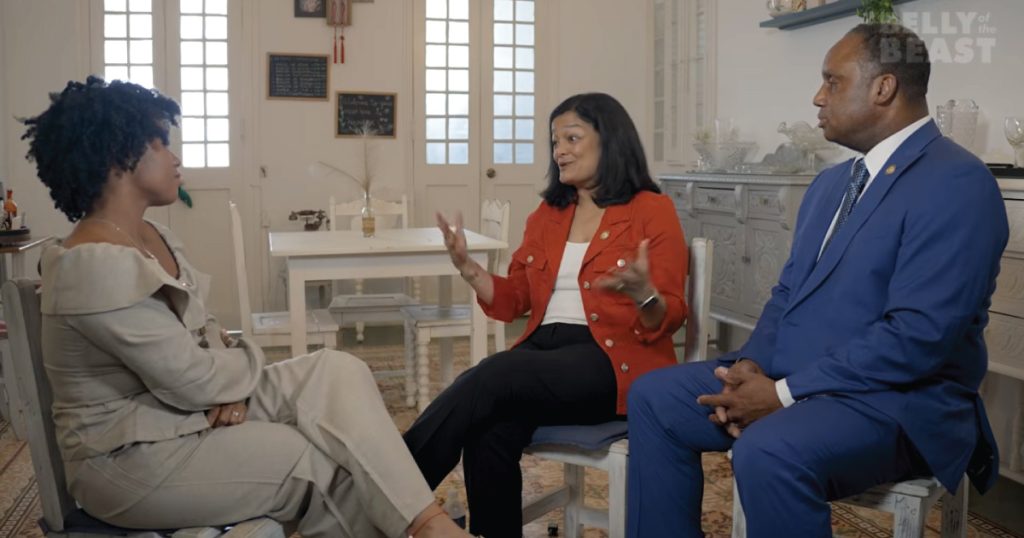
“This is an act of war that our country must stop,” said Rep. Jackson in an interview in Havana with Belly of the Beast.


The Democratic lawmakers gave an exclusive interview to Cuban journalist Liz Oliva of the Havana-based outlet Belly of the Beast while in the capital.
Jayapal, who represents Washington’s 7th District encompassing much of Seattle, recounted touring a maternity hospital’s neonatal intensive care unit where low-birth-weight and premature infants depended on electricity for incubators and ventilators. Power shortages repeatedly threatened the equipment she said.


“It was heartbreaking for me because I don’t think that any American wants to create this kind of devastation for the Cuban children, for the babies, for the moms, for the people,” she said.
Drawing from her own experience with a premature birth, she added that the policy amounted to “almost like bombing the energy infrastructure” and “an act of war.”
“What I believe is almost like bombing, it’s like bombing the energy infrastructure,” Jayapal told Olivia. “It’s like an act of war because we’re refusing to allow fuel to come in to power the generators to get medicines to people, to allow the doctors, the medical professionals to go to the hospital and do their work, to allow the moms to come in and deliver their babies.”
Jackson, a father whose own child once required specialized perinatal care, described seeing pregnant women climb stairs when elevators failed and ventilators idle for lack of power.
The pair released a joint statement upon departing Cuba that detailed how the blockade, layered atop the longest-running U.S. embargo in history, produced blackouts, water shortages, shuttered businesses, canceled school days and halted lifesaving cancer treatments
“The illegal U.S. blockade of fuel to Cuba—90 miles south of the United States—adds to the longest embargo in world history and is causing untold suffering to the Cuban people,” the statement read. “The United States prevented a single drop of oil from entering Cuba for over three months. This is cruel collective punishment—effectively an economic bombing of the infrastructure of the country—that has produced permanent damage. It must stop immediately.”
Jayapal and Johnson met with Cuban President Miguel Díaz-Canel, civil society groups, religious leaders and ambassadors. During their visit, Díaz-Canel released more than 2,000 prisoners as a “humanitarian and sovereign gesture,” a step the delegation viewed as a signal of openness.
Cuba’s energy crisis traces to long-standing infrastructure decay and chronic underinvestment but worsened dramatically after President Donald Trump signed an executive order in late January 2026 that threatened tariffs on any country supplying oil to the island.
Venezuelan shipments, once providing roughly half of Cuba’s fuel, stopped following the removal of its president, Nicolás Maduro by U.S. forces in early January. For more than three months, not a single drop of oil has reached Cuba until Russian-flagged tanker Anatoly Kolodkin delivered approximately 730,000 barrels of crude oil to the port of Matanzas, Cuba’s primary oil terminal, on March 31.
The Trump administration allowed the tanker to proceed on a case-by-case humanitarian basis after it left Russia’s Primorsk port on March 8. Russian officials called the delivery a “humanitarian gesture” and announced a second tanker would follow shortly.
The current Trump administration has maintained a maximum-pressure approach. Secretary of State Marco Rubio, a Cuban American, has led diplomatic outreach while insisting that sanctions will not lift without meaningful political change in Havana.
President Donald J Trump has publicly discussed negotiations with “the highest people in Cuba” and floated potential deals, yet officials continue to cite Cuba’s alliances with nations such as Russia, China and Iran, along with historical U.S. accusations that the island has served as a transit point for drug trafficking linked to groups including Venezuela’s former “Cartel of the Suns” and other black-market operations hostile to American interests.
Jayapal, chair of the Congressional Progressive Caucus and a longtime critic of Trump policies, has frequently aligned with progressive and socialist-leaning causes. She recently introduced legislation with Rep. Gregory Meeks to block federal funds for any unconstitutional military action against Cuba.
During the interview with Belly of the Beast she expressed strong disdain for what she termed decades of failed, cruel U.S. policy that punishes ordinary Cubans rather than achieving political goals.
“And to threaten and to bully the Cuban government and the Cuban people, and to assume that to bring a country and a people to its knees and to destroy lives, to kill opportunity, to kill people is the way to make change, that to us just makes no sense,” Jayapal said.
U.S. policy toward Cuba has remained largely unchanged since President John F. Kennedy imposed a near-total embargo in 1962, months after Fidel Castro’s 1959 revolution and the nationalization of American assets. The measure survived the Bay of Pigs invasion and the Cuban Missile Crisis and was later codified in laws such as the Helms-Burton Act, which ties its lifting to democratic reforms and regime change. Successive administrations, including Trump’s first term, have tightened sanctions while the Obama years saw limited easing that was later reversed.
Both Jaypal and Johnson stressed shared opportunities with Cuba in agriculture, medicine and trade that could benefit Washington state farmers and U.S. patients if relations improved, noting Cuba’s development of its own vaccines during the COVID-19 pandemic and its history of sending doctors worldwide.
“Agriculture, we have, my state is an agricultural state. If we could actually establish ties with Cuba and export our products into Cuba and import whatever there is, you know, there’s lots of opportunities for investment of U.S. Businesses in Cuba,” Jayapal said adding that improved relations “allows the Cuban people to thrive but also benefits the American people.”
Jayapal shared that Washington state is one of the nation’s top refugee resettlement states that has welcomed people from around the world who have enriched Seattle and sees real benefits from stronger ties with the Cuba.
“In my state, we’re one of the top refugee resettlement states in the country,” she said. “We’ve taken people in from all over the world and helped make Seattle and Washington State their home and they’ve contributed so much.”
She added that Washington state has “a very strong Cuban solidarity movement” and that students from the state having travelled to Cuba for medical training and returning are inspired by a system that prioritizes service over profit.
“We have students from my state who have come and studied healthcare here in Cuba and gotten trained and in fact come back to the United States and say I wish I could go back and practice in a place where I don’t have to worry about private insurance companies, where I can actually serve the people,” she said. “That’s what they learn from the Cuban people.”
In concluding her interview, Jayapal portrayed Washington as a state that values deep connections across borders.
“At the core, we are a global people in Washington state, and we believe deeply in the friendship and the solidarity in the shared learning of the Cuban people with the people of our state,” Jayapal ended.

Author: Mario Lotmore