

SEATTLE — Washington Attorney General Nick Brown on Tuesday welcomed a federal court ruling that struck down the Trump administration’s $100,000 “tax” on new H-1B visa petitions, saying it preserves the state’s ability to recruit specialized talent for research, education and health care. Washington state was one of 20 state plaintiffs in the lawsuit against the federal government.
“This win helps keep our state at the forefront of highly specialized research that drives our world’s most dynamic industries,” said Brown. “Unchecked, this illegal tax would have massively increased costs for Washington state agencies, public universities, and public colleges.”

The multistate lawsuit, filed in December 2025 by 20 states including Washington, challenged Presidential Proclamation 10973, signed Sept. 19, 2025. The proclamation required employers to pay a $100,000 supplemental amount on top of existing filing fees — which previously ranged from $960 to $7,595 — before USCIS would process new H-1B petitions filed on or after Sept. 21, 2025. The administration described the payment as a “restriction on entry” under the Immigration and Nationality Act to protect American workers from wage suppression in specialty occupations.
Federal agencies then implemented the EO through memoranda with an updated fee schedule and a dedicated payment portal.



The states argued the requirement functioned as an unlawful tax that exceeded presidential authority and violated the Administrative Procedure Act.

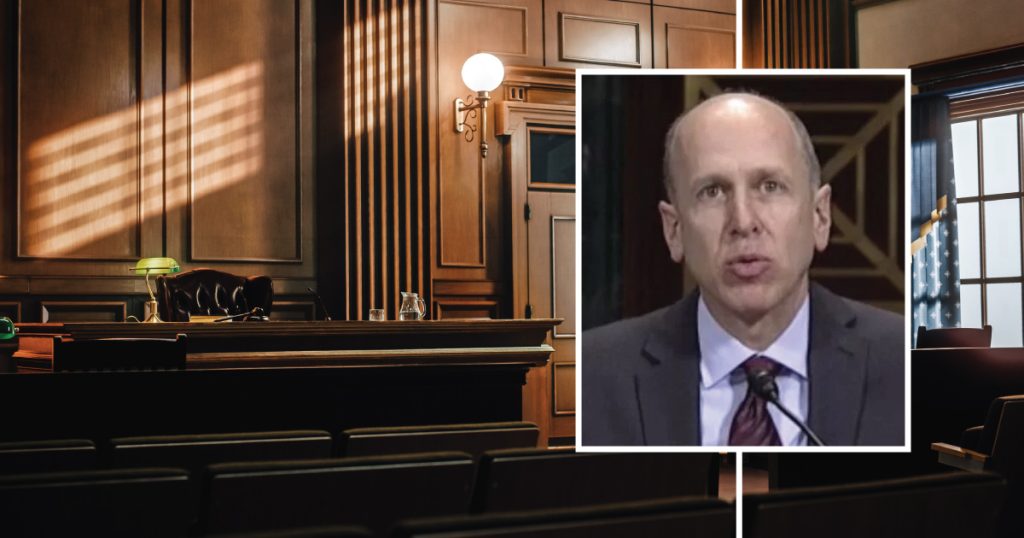
Boston U.S. District Judge Leo T. Sorokin, nominated by Barack Obama, sided with the states in a 42-page ruling issued Monday. He granted their motion for summary judgment in full, denied the government’s cross-motion, and vacated the entire policy nationwide.

The Department of Homeland Security called Judge Sorokin’s decision “blatant judicial activism” in a statement.
“The recent changes to the H-1B visa program, including the increased fee, are intended to address concerns about program integrity and the impact on the U.S. workforce,” the department said. “The policy aims to ensure that employers prioritize hiring U.S. workers, particularly in high-skilled fields. The Trump Administration remains committed to safeguarding opportunities for American workers and maintaining the integrity of employment-based visa programs.”
At the heart of the decision was the court’s determination that the payment is a “tax,” not a fee or regulatory condition.
“The substance and application of the $100,000 payment reveal that it is a tax, regardless of what the payment is called,” Sorokin wrote rejecting the administration’s framing, noting the amount was not tied to processing costs authorized under 8 U.S.C. § 1356(m) and did not punish unlawful conduct.
The judge held that INA Sections 212(f) and 215(a) — which allow the president to impose restrictions on entry — do not delegate taxing power to the executive branch. “These sections allow the President to impose ‘restrictions,’ ‘rules,’ ‘regulations,’ ‘orders,’ ‘limitations,’ and ‘exceptions’ … none of these terms, by their ordinary meaning, include the power to tax,” the opinion stated. Only Congress holds that authority under Article I of the Constitution.
The states also prevailed on APA claims. The policy was issued without notice-and-comment rulemaking, exceeded statutory authority and was arbitrary and capricious because agencies failed to consider reliance interests, impacts on non-tech sectors such as education and health care, or less burdensome alternatives.
The Trump administration had defended the measure as a valid exercise of broad presidential discretion under the INA to safeguard domestic labor markets. It argued the payment was not a tax but a condition on entry, that the claims were barred by consular nonreviewability and that any review should be limited. The government also contended the policy satisfied APA requirements through foreign-affairs and good-cause exceptions.
Sorokin rejected those defenses, finding the challenge was a forward-looking attack on the policy itself rather than individual visa denials.
Nearly 500 H-1B visa holders work across more than 30 Washington state agencies, public universities and colleges, Washington’s AG’s Office shared. Many institutions had stopped filing new petitions after September 2025 because they could not absorb the added cost, threatening programs in artificial intelligence, cybersecurity, medical fields and critical research.

Nationwide, the H-1B program lets employers petition for temporary workers in specialty occupations — physicians, researchers, nurses and others — to fill labor shortages. H-1B workers and their dependents contribute $86 billion annually to the U.S. economy and pay $35 billion in federal and payroll taxes plus $11 billion in state and local taxes, according to the AG’s office.
For companies and visa holders, Monday’s decision restores the pre-proclamation fee structure. Employers no longer face the $100,000 barrier when filing new petitions for workers outside the United States or those requiring consular processing. Public and private employers in Washington state and elsewhere can once again hire without the prohibitive surcharge that had stalled recruitment in universities, hospitals and research institutions.
The administration has said it will appeal the ruling to the 1st U.S. Circuit Court of Appeals and is expected to seek a stay pending review.

Author: Mario Lotmore