

GREENLAND— More than two weeks into a journey no one has ever completed, American Guinness World Record-holding sailor Matt Rutherford is navigating some of the world’s most unforgiving waters to become the first person to sail solo, nonstop and unassisted around the Arctic Ocean. The more than 10,000-mile voyage—made possible only as shrinking Arctic sea ice has opened previously impassable routes—also serves as a platform to collect scientific data and raise funds for his nonprofit, the Ocean Research Project.
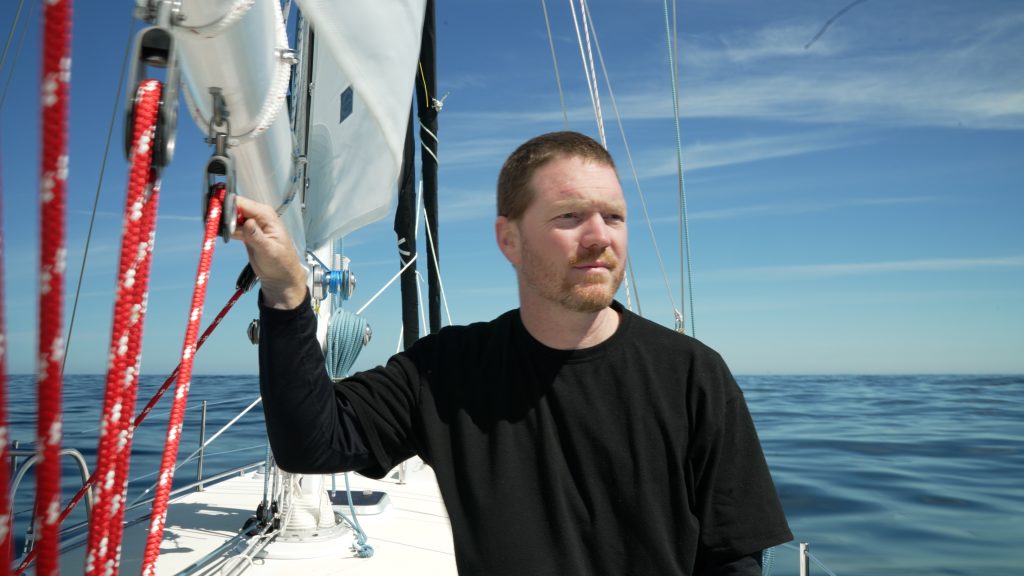
His journey is featured in the Emmy nominated documentary Red Dot on the Ocean, which documents his record-breaking circumnavigation and supported fundraising efforts for Chesapeake Region Accessible Boating (CRAB), raising $120,000 and going on to share his story on a TEDx stage.



Arctic sea ice this summer sits 9% – 15% below the previous record low. He gives himself 75% odds of completing the expedition.
The Lynnwood Times interviewed Rutherford, via Starlink, from his sailboat in the open waters just north of Greenland, beginning with the million-dollar question: “Why?”




Rutherford was inspired by New Zealand mountaineer Sir Edmund Hillary, who with is Sherpa guide Tenzing Norgay, were the first people confirmed to reach the summit of Mount Everest. When a Reporter asked why they did it, Hillary replied “because it’s there.”


“I think that sense of exploration lives inside all of us. Looking back, how are there even Asians, or Europeans, or Aboriginal Australians, or anything? It’s because our ancestors had a spirit of exploration to leave Africa in the first pace and to travel all over the world,” said Rutherford. “We’re all explorers in some level or another.”


Rutherford’s nonprofit, Ocean Research Project, has been sailing the Arctic since 2015 and Rutherford has sailed solo through the northwest passage in 2011 when he did a nonstop circumnavigation through the Americas – a voyage that took 309 days, alone in the ocean. His last attempt at sailing around the Arctic Circle was in 2018 but back then obtaining a permit to sail north of Russia was impossible for recreational vessels.
“It’s a hell of a challenge. It’s interesting trying to do something that nobody has ever done because there’s nobody I can call, there’s no book I can read, I just have to figure it out,” said Rutherford. “I do enjoy being alone in the ocean, I enjoy my solitude, and I think you have to otherwise you might lose it.”
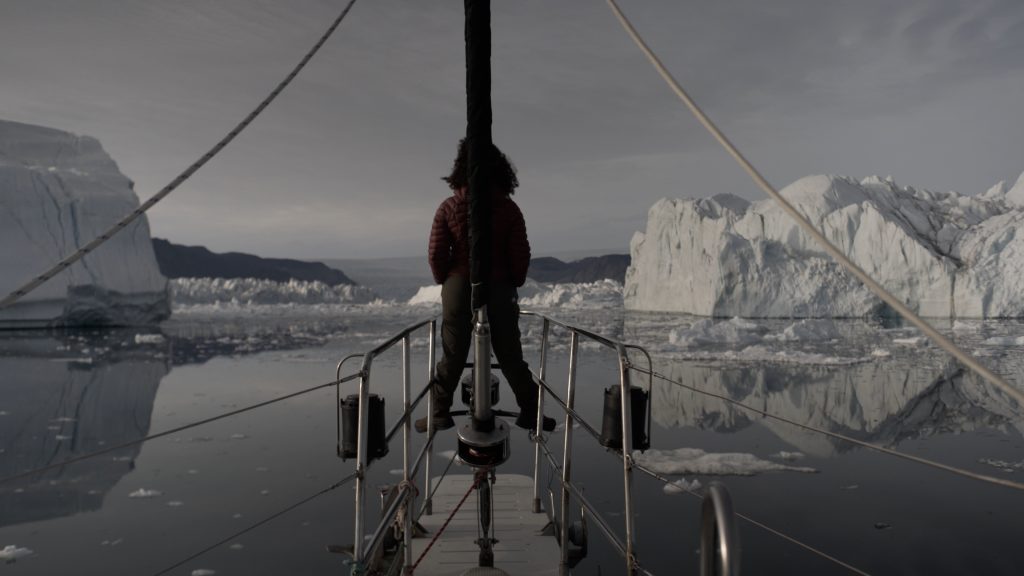
Despite being an avid sailor, Rutherford grew up 500 miles away from the nearest ocean just north of Cleveland, Ohio. He didn’t purchase his first boat until he was in his early 20’s in 2003 – a 20-foot sailboat he bought in Maryland after selling his car. He immediately sailed it to the Florida Keys, making “every mistake you could make,” including running it into the ground his first night out. He also recalls getting hit by lightning and getting caught in a hurricane during that trip.
He eventually took an American Sailing Association (ASA) sailing course in Florida and embarked on his first solo transatlantic voyage from Maryland to England four years later. In England he purchased charts for Ireland, then sailed down to West Africa, and across the Atlantic to the Caribbean.
Shortly after returning from that voyage, he founded the nonprofit Ocean Research Project where he initially used sailboats to conduct research on microplastics, and microfibers, effects on ocean waters.
The bulk of Rutherford’s early sailing experience came from delivering sailboats and spending time on the docks asking seasoned sailors the ins-and-outs of the craft.
Since 2015, Rutherford’s nonprofit Ocean Research Project has shifted its focus to the Arctic, particularly Greenland and the northwest passage. The purpose of his research is to confirm/deny accuracy of glacial models, running tests on the plankton that lives in rivers beneath ice, and to get to the bottom of what’s causing glaciers to melt in general.

“We do a lot of stuff related to glaciers and Greenland is really the only land mass on the top of our planet that has a big chunk of ice. Antarctica, down in the south, is just all covered in ice, but Alaska doesn’t have an ice cap, Russia doesn’t have an ice cap, it’s really just Greenland,” said Rutherford. “We spend a lot of time looking at the relation between healthy glaciers and dying glaciers and how that effects plankton which is the cornerstone of the food chain. Half of the world’s oxygen comes from phytoplankton in the water so you kill all the phytoplankton most everything will die because you lose half our oxygen.”
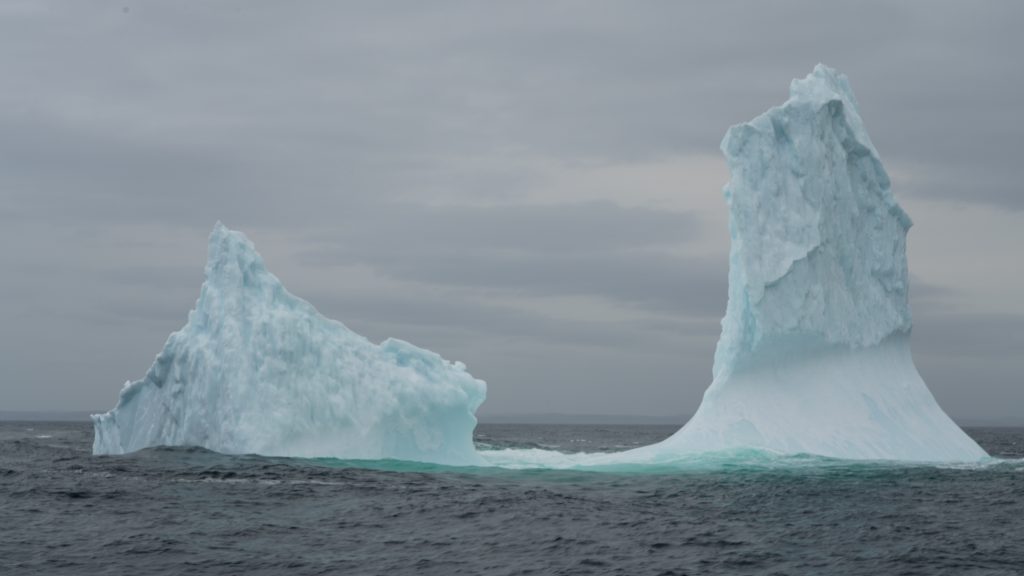
Rutherford is using a catch rig Valiant 42 for his Arctic voyage. Prior to embarking he spent seven months in a boatyard tearing it all apart to rebuild it, from the ground up, to be equipped for cross-ocean travel – replaced the rigging, added brand new electronics, and a brand new 57 Yanmar engine. He even bought brand new sails from a sailmaker in Nova Scotia who still makes sails by hand.
He embarked from Annapolis, Maryland on the 25 of June, sailing 2,008 miles just to get to the start line in Greenland. He expects to return either late September or early October, depending on weather and whether he’s forced to land in Russia given the current geopolitical climate.
“My permit won’t allow me to enter Russian waters until August first, and the first pinch point is still full of ice right now. The reality is it might not open until the seventh or eighth. So, I might take my time getting there,” said Rutherford. “I have to at least get through by October 1 because that’s when it begins to freeze again.”
Rutherford’s day-to-day varies. On days when there’s no wind, he spends his time conducting maintenance investigations on his boat. At night he tries to sleep as much as possible but if there’s ice in the water he sleeps in 20-minute intervals. He begins his day making a cup of coffee and eating a freeze-dried meal.
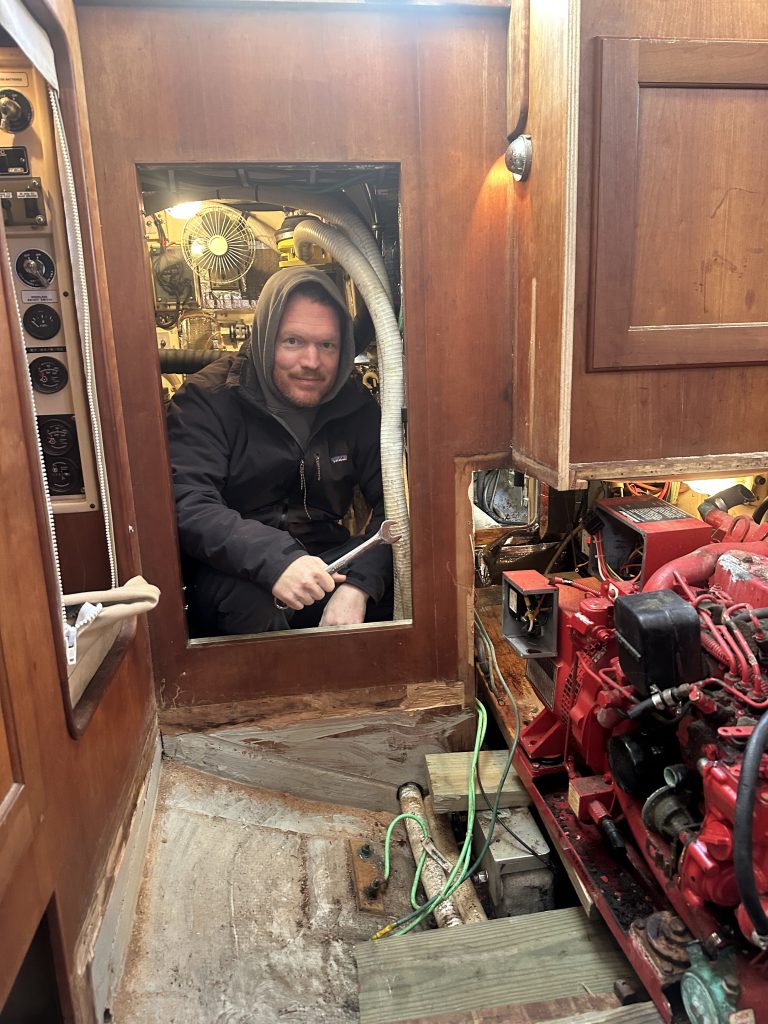
“Your average day is really just balancing time to eat, time to sleep, keeping an eye on the boat. Every day something around here has an issue – it’s usually miner,” said Rutherford. “Weather routing isn’t always about heavy weather. It’s about strategically getting your boat in a location so when the next wind picks up it’ll be optimal for your overall route. I have very little down time, oddly enough.”
When he does have downtime, Rutherford spends his time reading books and watching the science fiction show Pluribus, which he predownloaded to his computer (except, regrettably, the final season).
Since the age of 19, Rutherford has mapped out a series of lifelong goals. He accomplished the first of those – riding a bicycle through southeast Asia – at the age of 21. The second goal was to sail across the ocean, and the third was to start a nonprofit. He has already accomplished these goals.
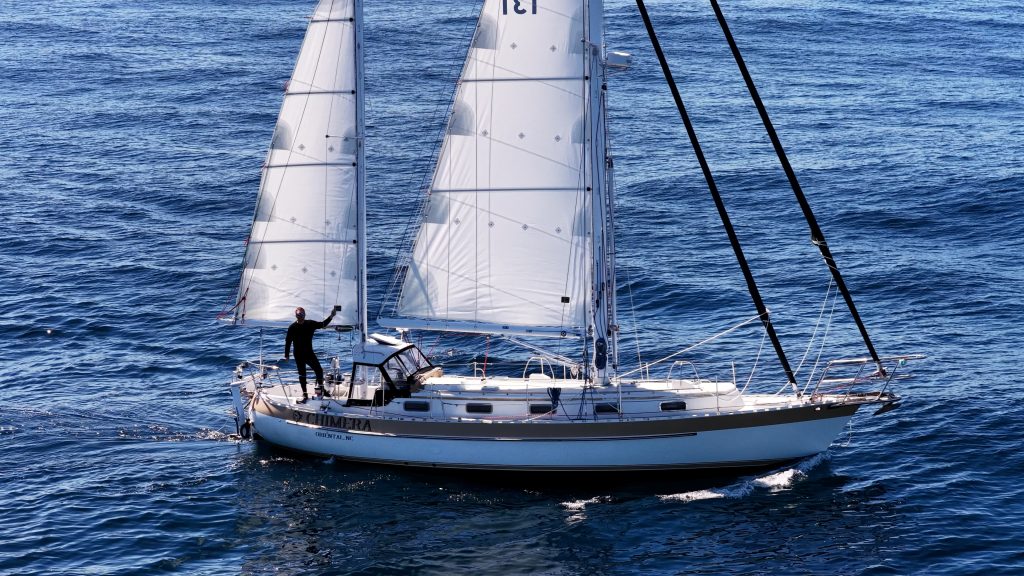
The main purpose of Rutherford’s journey, despite being the first to do it, is to raise funds for his nonprofit to expand his fleet (with a goal of $250,000) – though he’s collecting water samples along the way to be used for research. These samples will be dropped off to his associate, Nicole Trenholm – the Science Director of the Ocean Research Project and the scientific backbone of every expedition the organization runs – at her laboratory in Greenland.
This year Trenholm plans to publish four scientific papers based upon her research with the Ocean Research Project. Her focus on publishing these findings, paired with Russia allowing sailing permits in their waters again, and the ice levels being the lowest they’ve been in record-history all created the perfect conditions for Rutherford’s four-day voyage.
You can track Rutherford’s journey in real time by clicking here.
To donate to the Ocean Research Project’s cause click here.

Author: Kienan Briscoe