


LYNNWOOD—When Julio secured a job laying drywall for Lynnwood’s upcoming multi-family development ENSO, in the city’s bustling downtown core known as City Center, he was ecstatic to have the opportunity and be a part of something bigger for Lynnwood’s vision. But when he received his first paycheck, a little over three months ago, he immediately noticed something wasn’t right.
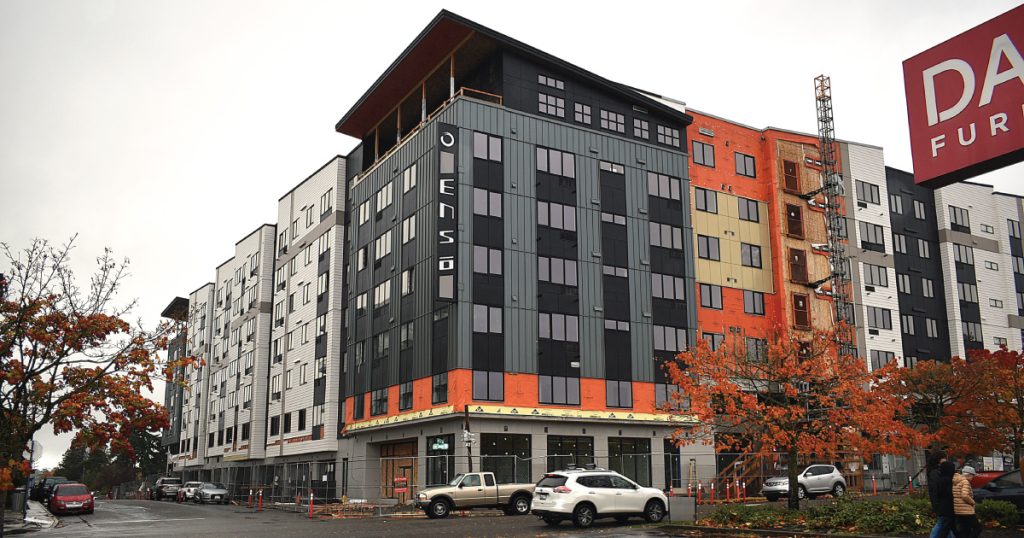
From the first day on the job site, according to Julio, his employer laid the ground rules that there was an expectancy to work 9-10 hours a day and “if you didn’t like it then find a new job.” However, his employers also made it clear that they would not be paid overtime when workers were asked to work 9, or even more, hours a day.


These ground rules materialized in Julio’s paychecks from the start, when he would work 45 to sometimes 50 hours a week without being paid an overtime rate. What’s more, his pay checks during this period read “40” despite his timecards telling a different story.
Julio is a nickname we’ve given to an actual GMH LLC. worker (the subcontractor hired on for multiple construction projects at ENSO) to honor his request for anonymity, fearing there may be consequences for speaking out on the unequitable work conditions he, and many of his co-workers, face daily. It’s the very fear of repercussion, he suspects, that keeps the 50-60 GMH workers currently on the ENSO project from speaking out against discrepancies in their pay despite many, if not all, of them knowing exactly what is going on behind the scenes.




Background on the Enso project
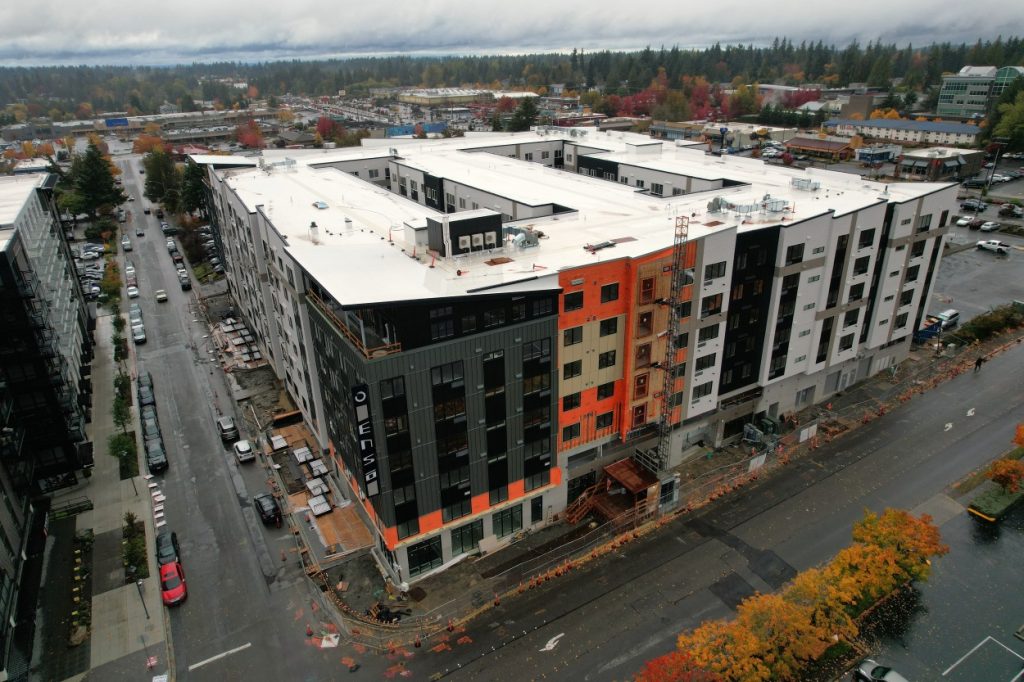
In April, 2024, the Lynnwood City Council unanimously approved Mayor Christine Frizzell to enter into an eight-year, $6.4 million, Multifamily Tax Exemption (MFTE) for American Capital Group LLC (ACG Acquisitions), the developer of ENSO – a new mixed-use building in downtown Lynnwood that will have commercial real estate, parking, and apartments when it opens next year.


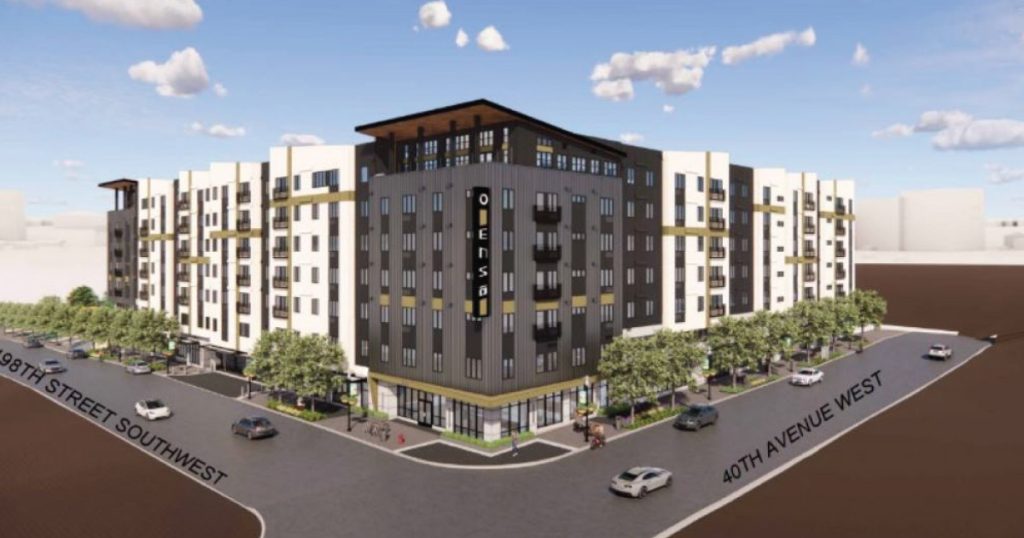
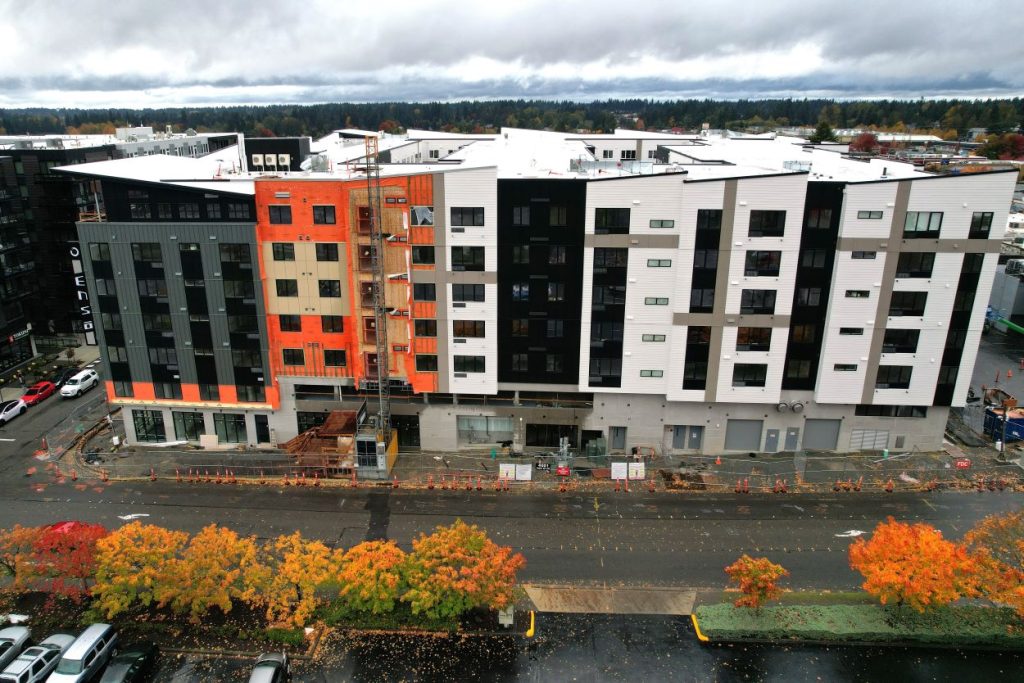
ENSO, formerly Kinect II, is currently undergoing construction at 198th Street Southwest and 40th Avenue West. Once completed, the seven-floor building will have 318 apartments (one-, two-, and three-bedroom units) at market value, 397 parking spaces, and 4,235 square feet of commercial space on its ground floor.
Seven months later, in June 2024, the property used for the project was purchased by ACG for a total of $9.5 million, which brought the total investment of the Bellevue-based commercial real estate agency to a whopping $11.5 million.
The Multi-Family Housing Property Tax Exemption (MFTE) program began in 1995, codified as RCW 84.14, to incentivize residential development in urban centers, designated as “residential targeted areas,” for Washington’s largest cities, according to the Washington State Department of Commerce.
Under these exemptions, a property owner, in this case ACG Acquisitions, LLC, does not have to pay property taxes on the residential improvements for a given number of years. Lynnwood City Council accepted the City’s Business & Development Services’ recommendation of eight years. The property owner will still pay tax on the land and on non-residential improvements like the commercial portion of a mixed-use building for those eight years.
On May 29, 2007, the City Council adopted Ordinance 2681 establishing the MFTE Program to encourage housing and redevelopment in the City Center District.
The Union Carpenters issue a warning ahead of ENSO’s construction
On September 18, 2024, the Western States Carpenters Local 425 union gave a presentation to the Lynnwood City Council warning them of how projects, similar to ENSO, traditionally set themselves up to be susceptible to an “underground economy” in the construction industry.
This “underground economy,” according to union representatives, encompasses a variety of concerning things including misclassifying and exploiting workers, tax fraud, bringing immigrants as far away from the border as possible (i.e. Washington State) to trap them with false promises and cutting off access to home resources, wage theft, unfair labor practices, and then some. Workers subjected to these wage thefts and unfair labor practices often know they are being taken advantage of but choose not to speak out in fear of retribution, deportation, or being locked out of securing future job opportunities in the region.

During this meeting Carpenters Local 425 President Zach McCown suggested to council, one month after ENSO official broke ground, that the project would be an excellent opportunity to monitor the construction of the project through potential joint job site walks (with elected officials and union reps) to ensure it proceeded in accordance with L&I standards.
The Council discussed potentially working with the union to implement community workforce agreements and project labor agreements sometime in the future.
However, two weeks later, the City of Lynnwood removed that September 18 Work Session video from its archives under the direction of the Mayor, according to the union.
The Lynnwood Times can confirm that the September 18, 2024, Work Session is not listed in the City’s Council Meeting Archives. However, Lynnwood Times was able to obtain a copy of the official written minutes of the September 18, 2024, meeting that was removed from the City’s Archives without council approval—the minutes, compiled by the Luke Lonie, City Clerk, were approved by the council on October 14, 2024.
Carpenters Local 425 President Zach McCown challenged the City’s decision to remove the video during a City Council public comments section and multiple emails sent to Mayor Christine Frizzell and City Council members leading up unto that meeting; but as of October 23, 2025, the City has yet to restore the video to its archives. In addition, most of McCown’s email correspondences except for responses from Councilman Patrick Decker and then-Councilwoman Julieta Altamirano-Crosby went ignored.
“It has been 131 calendar days since the carpenters last spoke here at the Lynnwood City Council. In that Work Session held on September 18, 2024, we addressed the ongoing issues of an underground economy that involves the exploitation of workers, wage theft, and tax fraud,” said McCown. “The council members seemed shocked and concerns about the power point and talking points that were brought forward. It was a major letdown and concern when the video posted on the Lynnwood City Council website was removed.”
The Lynnwood Times reached out to the City of Lynnwood to ask why the video was removed and was issued the following statement:
“The City received threats of litigation concerning statements made during the meeting by members of the public against other members of the public. On the advice of our insurance counsel, we’ve removed the video. Please be aware that there isn’t a legal requirement to create a video recording of meetings, so there isn’t a legal requirement for us to allow this video to remain.”
An investigation conducted on the ENSO project appears to reveal that the Carpenters Union’s warning, back in September 2024, had been right.
Alleged wage theft and unfair labor practices at ENSO
The Lynnwood Times heard personal testimonies from three of the 50-60 construction workers currently working on the ENSO project via GMH LLC, which ACG and Clarion Partners – an investment firm backing the project – is using to build the project as a subcontractor. GMH LLC is responsible for ENSO’s drywall, painting, metal stud framing, and other jobs.
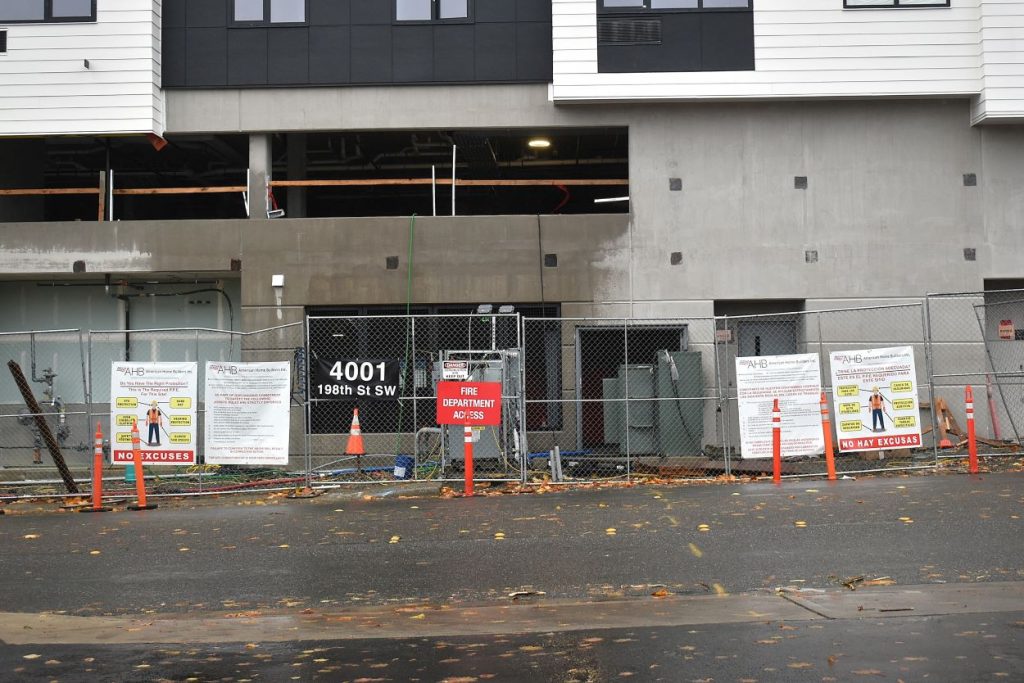
When requesting to interview more workers than the three, many expressed fears of repercussion for speaking out against their employer.
To honor their request for anonymity the workers interviewed shall be referred to as Worker A, Worker B, and Worker C.
The Lynnwood Times reviewed copies of Worker A’s timecards and pay stubs to corroborate his claims. In the pay period dated July 19, 2025, through July 25, 2025, Worker A clocked 44 hours of work but was only paid for 40 hours; this was Worker A being generous and rounding down. His actual total hours worked were more than 45 hours and 15 minutes, working from 6:00 a.m. to 3:15 p.m. Monday, Tuesday, Wednesday, and Thursday (9 hours, 15 minutes), and 6 a.m. to 2:15 p.m. on Friday (8 hours, 15 minutes).
In addition to this, the worker claimed that there is an expectancy to show up 10-15 minutes before 6 a.m., which is unpaid and not reflective on their timecards. This expectancy to begin work 15 minutes early and stay 15 minutes late (which explains the 3:15 p.m. leave time) is to make up for the state mandated 30-minute paid lunch break when working a 5, or more, hour shift. Workers do not receive the two state-mandated paid 10-minute breaks, he said.
In other words, workers were awarded their 30-minute unpaid lunch breaks but were expected to begin work 15 minutes early and leave 15 minutes later to make up for it. The Lynnwood Times has photographic evidence of workers arriving on site prior to their start time but cannot confirm whether workers began working at that time, or not, given it’s a closed construction site.
Worker A’s pay periods in the weeks of May 31 through June 7, June 9 through June 13, July 7 through July 15, August 11 through August 19, August 18 through August 26, September 9 through September 16, all reflected similar wage theft: working 44 hours but being paid for 40. This amounts to a total of at least 29.75 hours of unpaid work in just the examples we reviewed.
But the amount paid was slightly adjusted to compensate. For example, workers with GMH LLC are paid a set rate of $32 an hour. Whenever a worker works more than 40 hours a week this rate increases to $35.20, which is still $12.80 lower than the state mandated time and a half – which in this case would be $48 an hour ($35.20 x 1.5).
Taking into consideration construction at ENSO Began in August 2024, this would amount to $54,840 worth of unpaid work assuming Worker A worked 44 hours a week which in fact, given his timecards, that he didn’t. What is known, from the timecards reviewed, is that Worker A should be entitled to, at the very least, $1,428.
Applying this to all 60 employees of GMH currently working on the ENSO project this number would equate to $85,680 unpaid work. If all 60 workers consistently worked 44 hours throughout the duration of the ENSO project, up until now, this number in unpaid wages (and state taxes) could be well over $3 million.
ENSO is receiving $6.4 million in tax breaks from the City of Lynnwood through 2032.
Both Worker B and Worker C had similar timecards and pay stubs. In just the time cards and pay stubs reviewed, Worker B worked 44 hours the weeks of August 11 through August 19, 45 hours the week of August 18 through August 22, 44 hours the week of June 23 through July 1, 44 hours the week of June 9 through June 13, 44 hours the week of June 16 through June 24, but was only paid for 40 hours of work during these weeks.
“When I first started, I was told I was expected to work 40 hours a week but could work more if I wanted, I just wouldn’t get paid overtime,” said Worker B with the help of a translator. “Whenever I work more than 40 I don’t get paid overtime. There’s no extra charge or anything, it’s like working normal hours.”
Worker B explained that even though EMH slapped a rate of $35 an hour on weeks where he worked more than 40 hours, he would still be paid the rate of $32 an hour. Also included in his, and his co-workers’, pay stubs are deductions for Medicare, Federal Withholding, Social Security, and Labor and Industries Employee Dry (which is an L&I law for calculating insurance premiums for drywall installation). The Lynnwood Times is still investigating whether GMH LLC. actually filed these withholdings.
When Worker B was asked why he, or his co-workers, did not take their concerns to Washington State Labor and Industries (L&I) he replied there is no way to file a formal complaint without their identity being revealed, and they feared in doing so would prevent their ability to secure future jobs.
Worker C worked 47 hours on the week of June 16, 46 hours on the week of June 30, 45 hours on the week of June 9, 46 hours on the week of June 23, and 52 hours in one week that was not dated. Like his co-workers, he was only paid for 40 hours during these weeks.
The Lynnwood Times also has screenshotted text message exchanges between GMH LLC workers and their boss exhibiting an expectancy to work long hours with no expectation to be paid for any hours after the baseline 40. In one text message exchange, a worker asked (in Spanish) “how many hours do you need me to work today.” His boss replied “10. Or more if you can.”
In another text message exchange, a worker asked: “Is it okay if I just work 8 hours today,” exhibiting a culture where working more than 8/day is the expected normalcy.
The Lynnwood Times reached out to GMH LLC multiple times but did not hear back from our request for comment on the allegations of unpaid wages.
Larger implications of Washington’s underground economy
Unfair labor practices at Lynnwood’s ENSO project are just one example of a much larger “underground economy” in Washington State’s construction industry.
In 2022, the Washington State Legislature directed the Washington State Institute for Public Policy (WSIPP) to conduct a study on the nature and scope of the underground economy in Washington’s construction industry. The results of that report found that an average of 14.2% of construction workers in the state are not properly reported to payroll and tax authorities per year. The WSIPP estimates the annual total costs of this to be $142.6 million owed to Washington construction workers, $59.8 million owed to the State of Washington, and $315.4 million to the federal government.
Editor’s note: Article updated Tuesday, October 28, to include a statement from the city of Lynnwood as to why the minutes of the September 18 work session was taken down from the city’s website.

Author: Kienan Briscoe





3 Responses
These people all got a raw deal for actual hard work they performed. They deserve fair compensation and frankly compensatory damages. Ceniza at city of Lynnwood got 80k to go away and retire, which he wanted. Wrong. What a leader.
This is the worst kind of I told you so news to hear. We warned the Lynnwood City Council last year about this very job, and yet the archive of that video vanished. All of this could have been avoided if the mayor had chosen to listen, choosen to care about the people building this city, choosen to do the right thing.
Picture someone choosing to be on the right side of history—standing up for Lynnwood’s workforce, standing up for the community. A community shorted $6 million in tax revenue, money meant to fuel growth but instead feeding greed. This isn’t right. I only hope someone, someday, will care enough to do the right thing. Please help us share this story. Its time we stand up for the working class people.
It’s easy for these companies to take advantage of illegal workers who fear being deported. They are the worst, ICE needs to hold them accountable as they do their workers.