

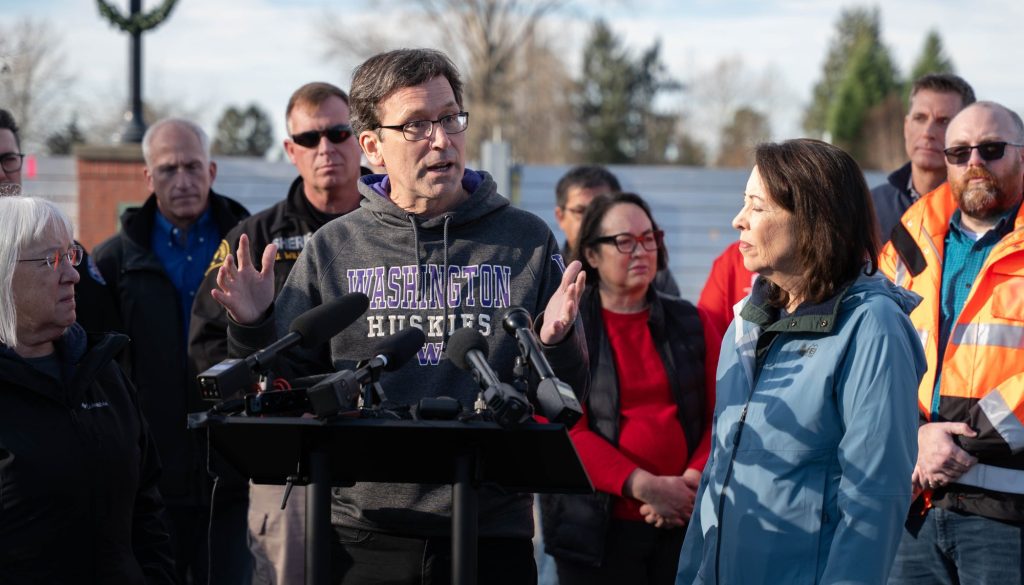
MOUNT VERNON—On the Saturday following record-breaking Skagit River flooding, Mount Vernon Mayor Peter Donovan stood before the city’s 1.4-mile flood wall (a.k.a. The Wall) and declared it a game-changer, as U.S. Senator Patty Murray, Governor Bob Ferguson and local emergency officials gathered to assess response efforts and brace for more rain.
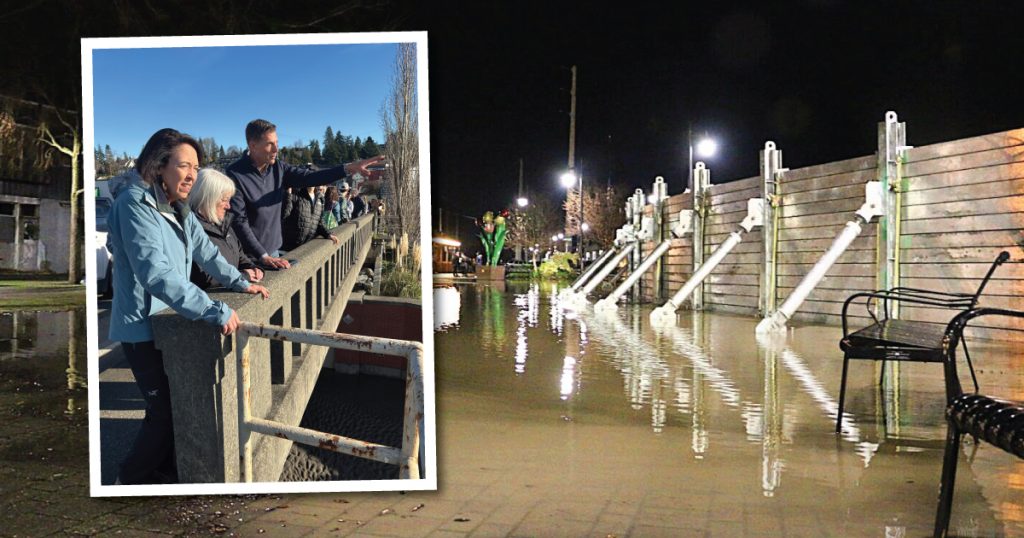
“Downtown Mount Vernon stayed dry this week,” Donovan said. “But more importantly, downtown Mount Vernon residents were saved again. And downtown businesses were saved again.”


The Wall, deployed in about 12 hours by city employees, protected 225 downtown buildings this week, keeping the area dry despite the river’s record crest of 37.73 feet on Thursday and lifting those structures out of the federal 100-year floodplain. The Wall also reduced flood insurance costs for residents and businesses by more than 40 percent, Mayor Donovan shared.

Built through collaboration among local, state and federal governments, Mayor Donovan specifically thanked Senator Murray for championing the initial study and securing funding for “The Wall.”



“I’m grateful to Senator Murray, who championed the initial study and found the funding to get this project off of the ground,” Donovan said.

In past floods, hundreds of volunteers would rush to fill sandbags for makeshift barriers. With The Wall in place, residents could now focus on being good stewards by helping neighbors.
Senator Murray, reflecting on her experience in “knee-deep water” 20 years ago, called The Wall’s performance “really incredible.”
“I saw business owners with tears in their eyes [20 years ago] because they lost so much of their merchandise and [who] had to recover, are now safe,” Sen. Murray said. “The investment in this wall really made a difference for this community in lives and dollars and businesses and in this community it’s a really good example showing you preventive infrastructure makes a difference.”
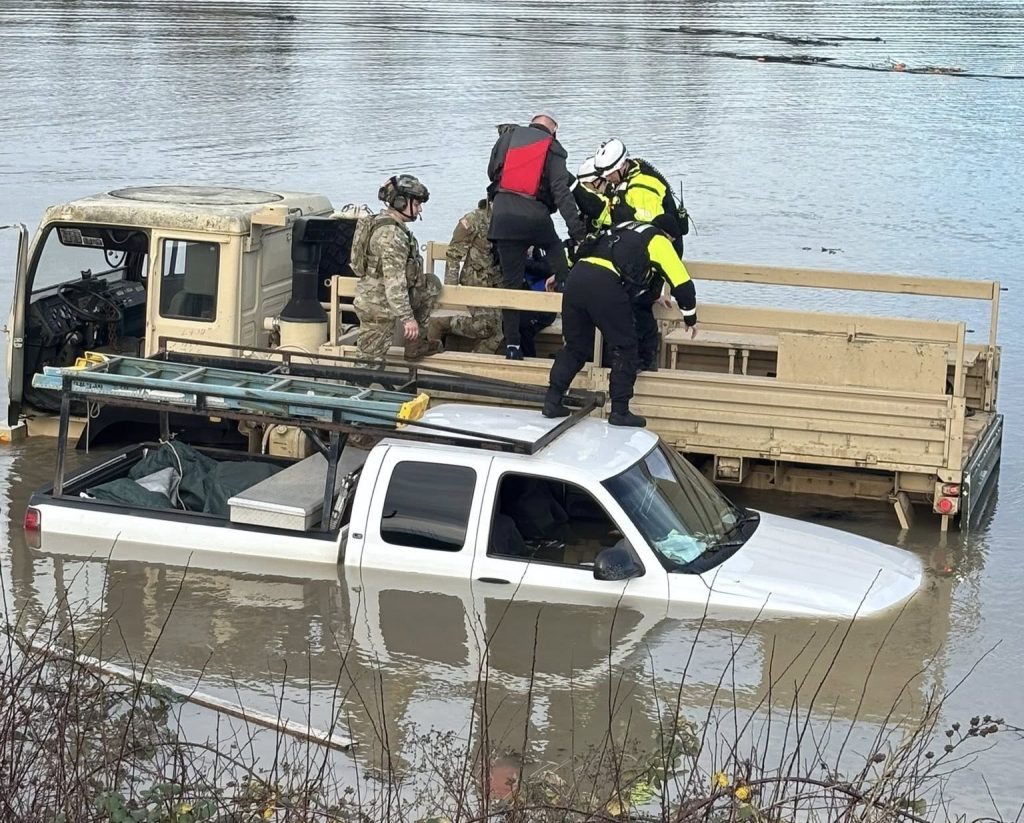
Skagit County emergency officials reported over 20 local rescues, including one Saturday morning, often involving people who ignored warnings or drove into floodwaters.
Statewide, about 250 rescues have been tallied, with no fatalities or significant injuries reported related to the flooding—a relief credited to first responders and community coordination. One person was killed this week near Carnation when a tree fell on her car, but officials attributed that to the ongoing heavy sustained rains and winter storms, not the floods.
Senator Maria Cantwell praised the remarkable interagency and community cooperation seen across affected areas during the flooding response, describing it as a “kumbaya moment” in preparation, planning, and execution.
“It starts with that weather forecasting, having the best weather forecasting, having those people translate that days, if not weeks, in advance,” said Sen. Cantwell. “And that’s the key thing… then everybody else goes into action.”
“From our County Department of Emergency Management to our team at the fairground, to our fire districts, to our volunteer-based service providers like the Red Cross, I am so proud of Snohomish County for how we come together in times of crisis,” Councilman Jared Mead wrote to Facebook. “The fallout from the flood is not over, so let’s all check in on our community members and do what we can to help.”
Governor Ferguson shared his gratitude for the absence of flood deaths.
“Our prayers have certainly been answered so far in some ways, remarkably so,” Gov. Ferguson said.
Ferguson shared he had a productive call with Homeland Security Secretary Kristi Noem after the approval by President Donald J Trump of a bi-partisan request for a federal emergency declaration. Immediate aid will support rescues and debris clearance, while longer-term financial relief for individuals, businesses and governments will follow assessments—a process that could take months.
An emergency declaration aids urgent needs like shelters and road clearance, but full funding requires detailed state requests and a separate federal approval.
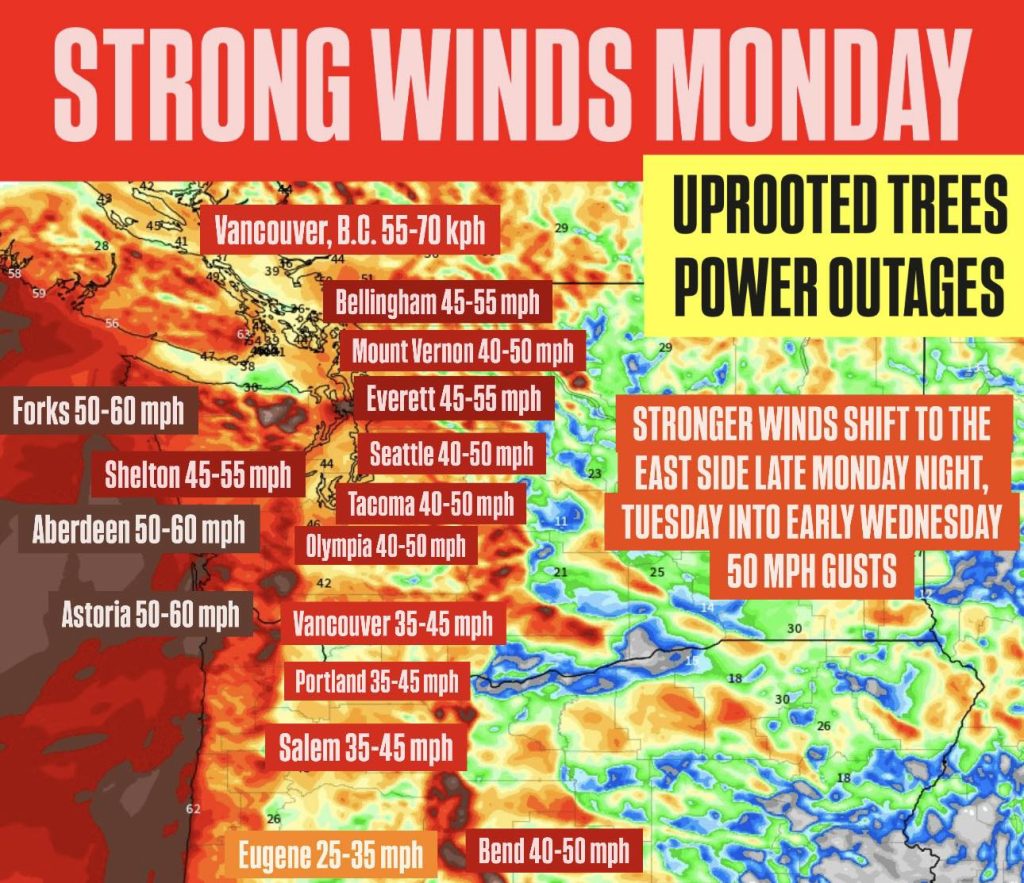
National Weather Service meteorologist Reid Wolcott delivered a sobering forecast of second atmospheric river approaching that is expected to bring four to seven inches of rain to the mountains and push the Skagit River back to at least moderate to possibly major flood stage. Saturated soils and full upstream dams limit water retention, raising risks. Stronger winds— with a 75 percent chance of 45 mph gusts and 50 percent for over 50 mph—threaten power outages and falling trees amid loose ground he said.
“The bottom line is we’re not done,” Wolcott said. “This event is basically partway through at this point in time.”
Cooling temperatures later next week could drop snow levels, complicating recovery in mountain areas, Wolcott added.
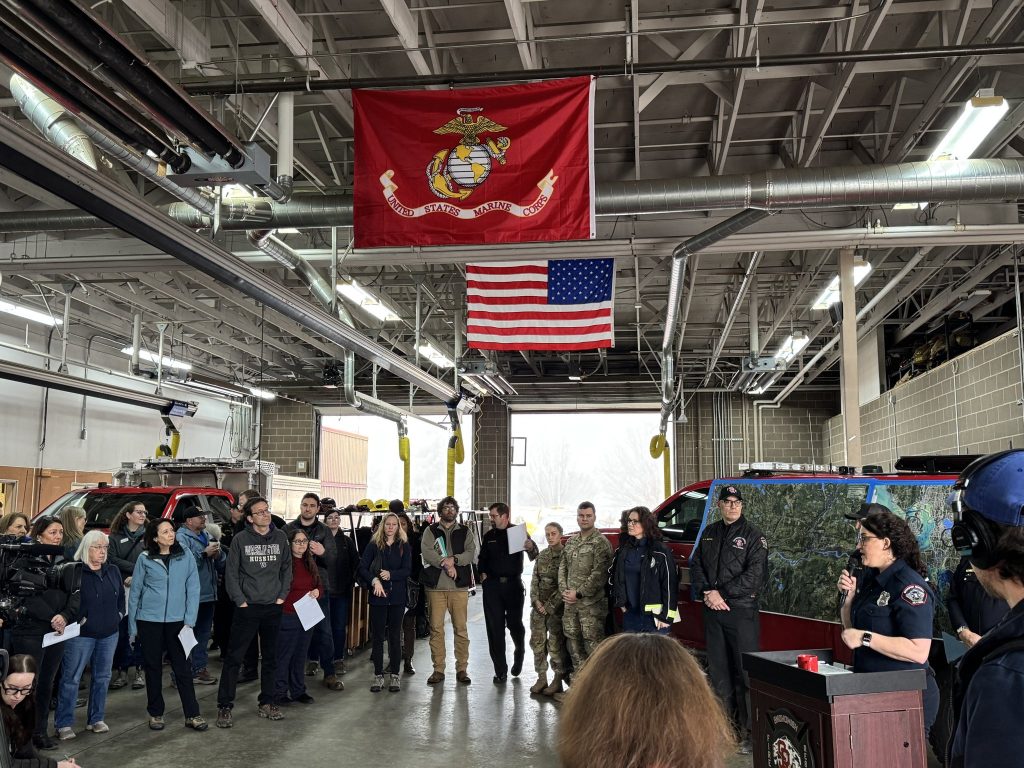
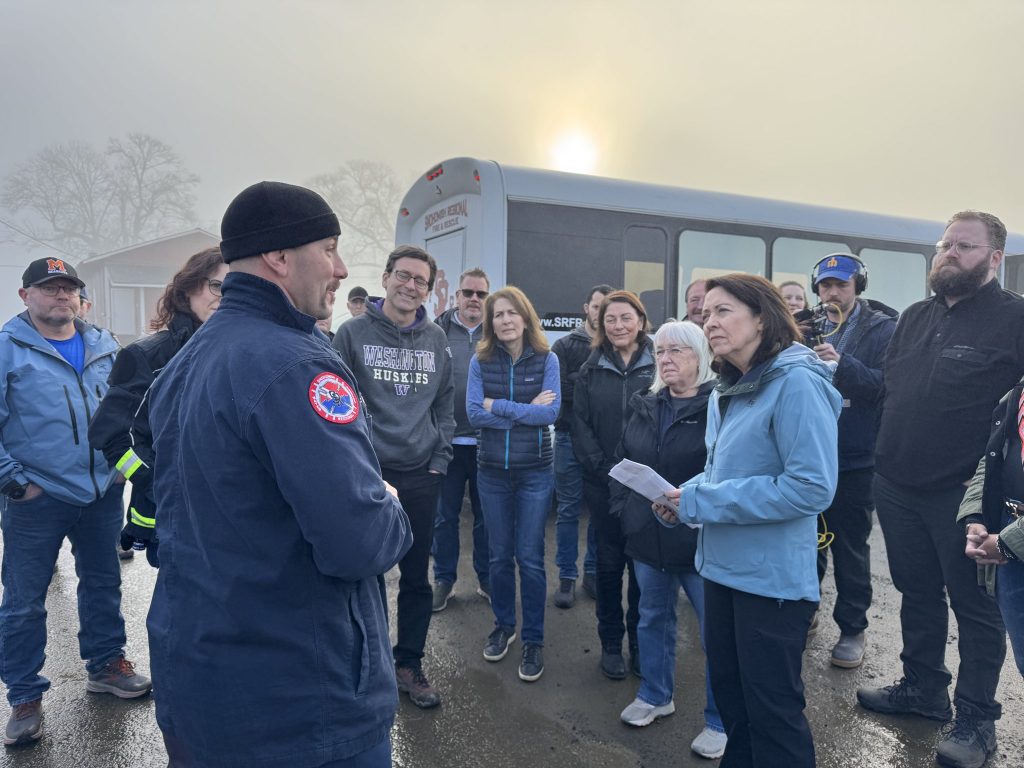
Prior to visiting Skagit County, the Snohomish Regional Fire & Rescue hosted a briefing in Monroe at Station 31 with elected Snohomish County officials joined by Governor Ferguson, and Senators Cantwell and Murray, who then toured affected areas in Monroe.
“It was moving listening to families who were affected by the flooding who are also taking care of their animals at the fairgrounds,” Councilman and State Rep. Sam Low told the Lynnwood Times.
While river levels are receding, Snohomish County Road Maintenance’s road and bridge damage assessment work is just beginning. The crews are assessing possible pavement, embankment, guardrail, and structural deficiencies to roads and bridges. The reopening of dozens of impacted roads will be prioritized based on water levels, transportation priority routes, evacuation routes and road conditions.
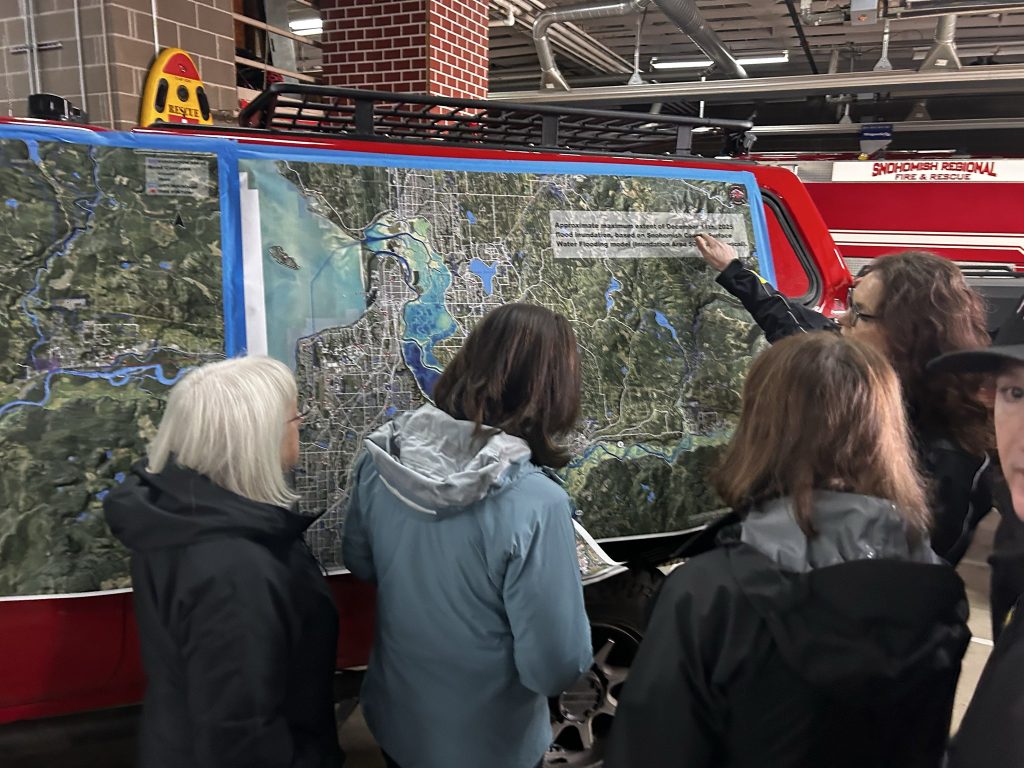
“Water is a powerful force that has a great impact on our infrastructure,” Snohomish County Public Works Director Kelly Snyder said. “Repair work requires a lot of moving pieces. Our staff is well-equipped and ready to tackle these challenges.”
Repairs and assessments will continue throughout the weekend and into the coming months. Initial work included a cleanup of a minor landslide near Shoofly on Mountain Loop Highway. A washout at Index Galena Rd at MP 10.2, east of previous flood repair work at MP 6.4 – 6.9 completed in 2023, will need to be inspected before repairs can be assessed.
“Although roads might look safe after water has receded, subgrade damage and unseen structural issues could be extremely dangerous,” said Snohomish County Engineer Doug McCormick. “Road closure signs will be removed once the road or bridge has been inspected.”
Community members can do their part through repair processes the County says by keeping the following in mind:
- Follow all posted road closure signs. Roads that appear free of water may still be unsafe for travel depending on pavement and soil conditions.
- Do not attempt to pass or alter signage. Driving through road closure signs carries a $437 penalty.
- Reports of water over roadway, including clogged drains, culverts, and other damage, can be shared with our road maintenance team via email at contact.pwrm@snoco.org or by phone at 425-388-7500. More information on our services can be found on our website: bit.ly/RoadMaintenanceResources
- Continue to monitor Snohomish County Department of Emergency Management’s Public Safety Hub: https://bit.ly/snocoflooding

Author: Mario Lotmore