

SEATTLE—Governor Bob Ferguson unveiled a $244 million package of housing investments on Thursday and signed an executive order creating a task force to lay the groundwork for a new cabinet-level Department of Housing, to combat what he calls a housing crisis and to help victims of the fatal floods from last week’s atmospheric river.
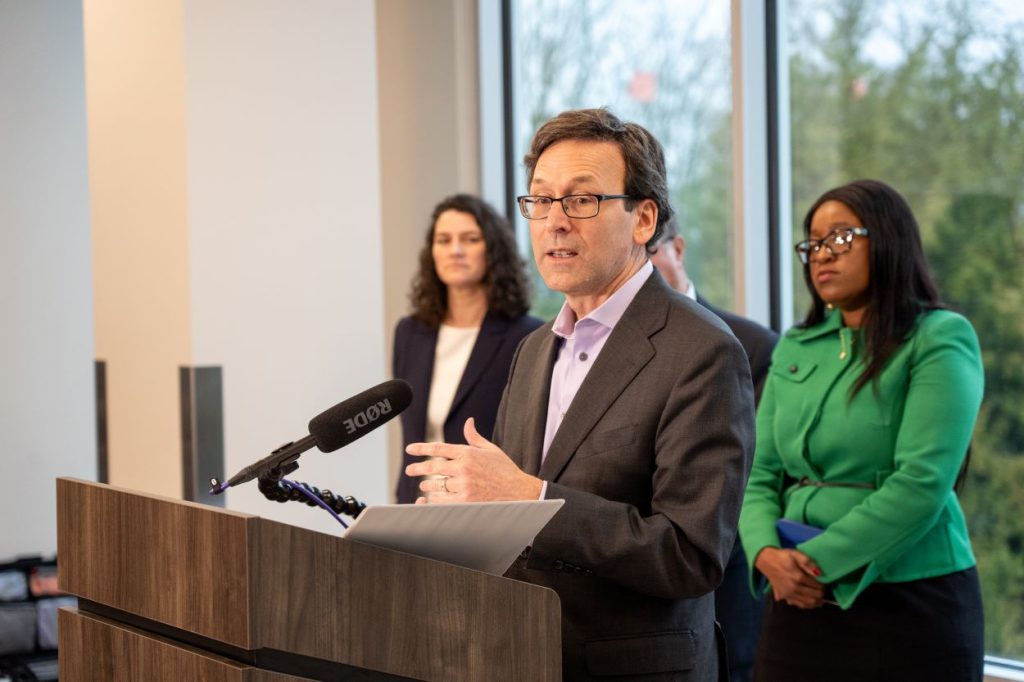
Speaking at Beacon Pacific Village, a recently opened Seattle complex providing 160 units of affordable housing alongside senior care and child care services in Seattle, Gov. Ferguson stressed the urgency of expanding supply amid population growth and high rents. His proposals represent the largest state-funded housing boost in Washington state’s upcoming supplemental budget, that includes $237 million in capital investments to construct and/or preserve over 4,000 units, with $55 million earmarked for flood-damaged homes.


“We have a housing crisis,” Ferguson said during the presser, recounting conversations with residents across Washington’s 39 counties who repeatedly stressed the need for more affordable options. “The need for more affordable housing is urgent. These historic investments will not only help respond to Washington’s housing affordability crisis—they help build a foundation of safety, security and opportunity for thousands of Washingtonians.”
The announcement comes as Washington grapples with rapid population growth, which exceeded 8.1 million in 2025, straining existing housing stock. Nearly half of the state’s renters are cost-burdened, spending more than 30% of their income on housing, while one-quarter devote over 50%, according to a 2025 housing report by the Washington Center for Real Estate Research.



The Washington State Department of Commerce projects a need for more than 1 million new homes by 2044, with half allocated as affordable to those earning 50% or less of the area median income.

Ferguson’s historic plan allocates $225 million in bonds to the state’s Housing Trust Fund, which supports affordable housing development and preservation. This includes $81 million to create about 1,933 new rental units, $73 million for 664 homeownership opportunities for first-time buyers, and $20 million to preserve mobile and manufactured home communities, safeguarding 426 households from displacement. Another $50 million bolsters the Housing Trust Fund Preservation Program, doubling the current biennial investment to fund repairs and upkeep for existing affordable homes.
In response to historic flooding that has displaced thousands and damaged properties across the state, Ferguson directed $55 million toward rehabilitation and preservation efforts. This encompasses the $50 million Housing Trust Fund allocation, now expanded to cover flood-damaged homes, and $5 million in grants for low-income rural homeowners affected by the disaster. Priority for grants will go to families with young children, seniors and veterans. Ferguson described this as “early action legislation” to expedite aid through the upcoming legislative session, serving as a bridge while pursuing federal disaster relief.
“No state can handle a disaster on this scale,” Gov. Ferguson said. “We’re going to have a lot of conversations in the coming weeks about what’s going on around our state.”
An additional $6 million in grants will help cities and counties modernize permitting systems to accelerate housing construction, addressing administrative bottlenecks that slow development.
All of these new investments build on over $700 million committed earlier this year for housing development, preservation and infrastructure; and complement more than 20 bills signed in the previous sessions that streamlined regulations, stabilized rents and encouraged building near transit.
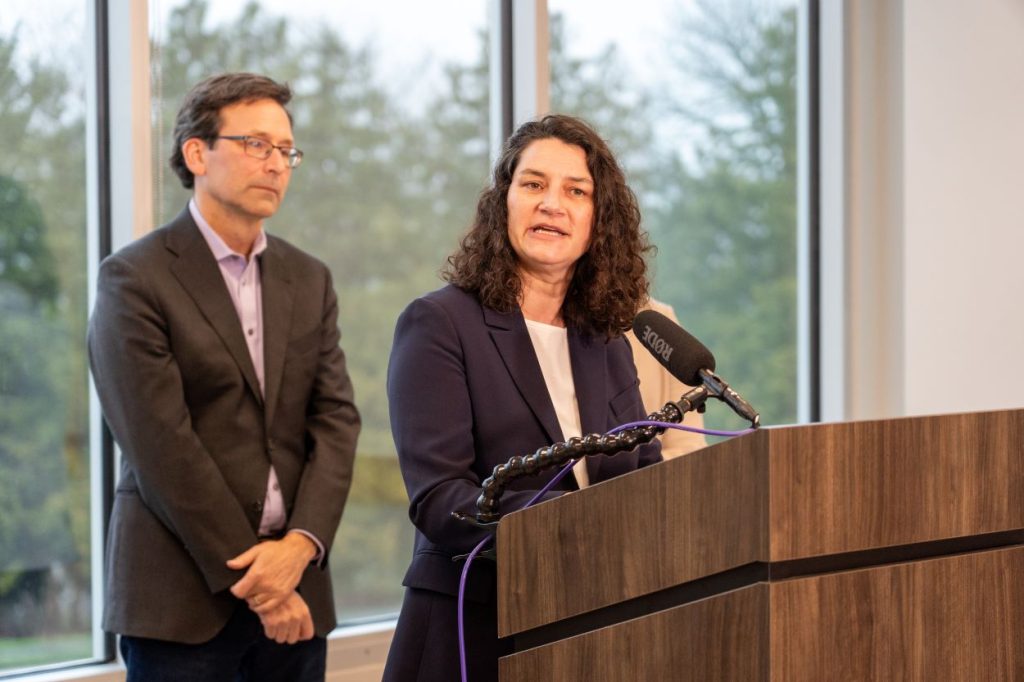
State Sen. Emily Alvarado (D34-West Seattle) is partnering with Ferguson on new legislation to require cities and counties under the Growth Management Act to allow residential and mixed-use development in commercial zones. The proposed bill aims to transform underused sites like vacant strip malls into housing and remove barriers to boost supply.
“We want more homes built in Washington to ease price pressures, to help families have more options, and to grow our economy,” Sen. Alvarado said.
Former Gov. Chris Gregoire, who attended the announcement, has advised on the zoning reform, drawing from her experience in housing policy. Rep. Strom Peterson (D21-Edmonds), who serves as the Chair of the Housing Committee, was also in attendance at Thursday’s press conference.
To commence his state’s housing efforts, Ferguson signed Executive Order 25-12, creating the Washington State Task Force on establishing the state’s first Department of Housing. He argued that the crisis demands a dedicated agency focused solely on expanding supply, integrating programs and minimizing red tape.
“The idea of a separate agency devoted to housing is what I feel strongly about,” Ferguson said. “If you’ve got a crisis, act like it’s a crisis, and have dedicated folks that that is their job—to create more housing.”
The 19-member task force includes 10 gubernatorial appointees, such as representatives from the Governor’s Office, Department of Commerce, Office of Financial Management, Washington State Housing Finance Commission, and two from federally recognized tribes. Legislators from both chambers and major caucuses can appoint four members, while representatives from county and city associations, housing authorities, and nonprofit and for-profit developers round out the group.
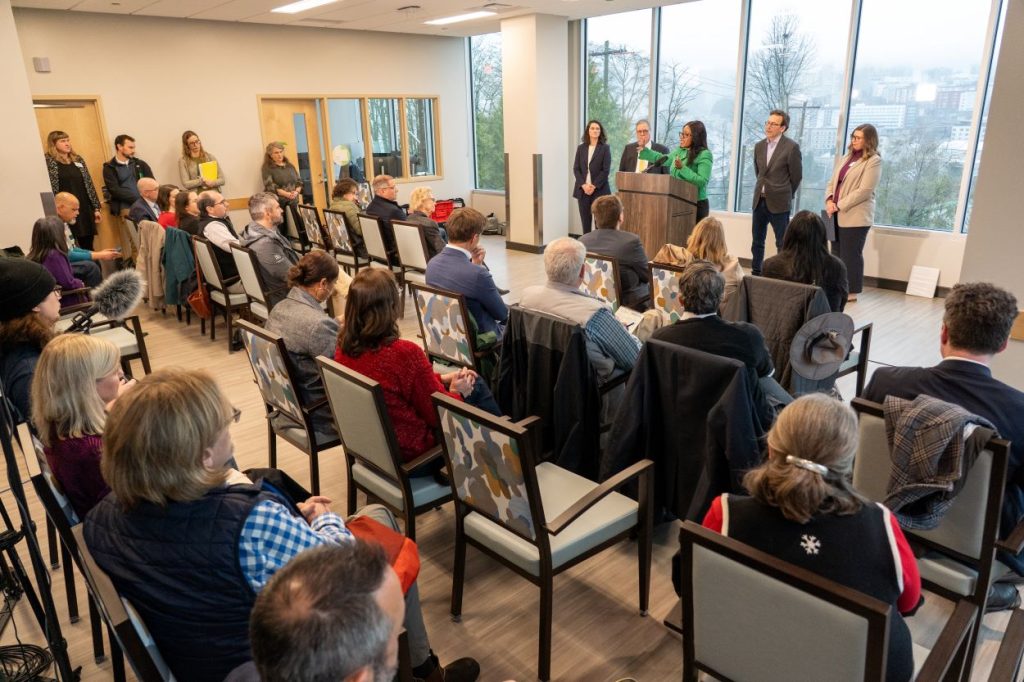
Chaired by a gubernatorial nominee confirmed by members, the task force must develop a mission emphasizing housing expansion across all types—affordable, workforce, middle and market-rate—while protecting natural resources and ensuring measurable outcomes. It will consult tribes through the Governor’s Office of Indian Affairs and may hire an independent consultant for community engagement.
Key milestones for the 19-member Washington State Task Force include a first meeting within 60 days of the executive order’s signing on Dec. 18, 2025. It must deliver a report by November 15, 2026, outlining organizational structures, operational plans, program improvements, costs, timelines and performance benchmarks of the upcoming Washington State Department of Housing. This timeline aligns with preparing legislation for the 2027 session.
Lt. Gov. Denny Heck praised Ferguson as a “housing governor.”
“We’re not going to address this problem sufficiently unless there is someone in state government whose job it is to increase the supply and production of housing,” Heck said.
He shared a report titled “Commercial to Residential: A Powerful Tool to Help Our Housing Crisis,” produced by his office in 2025 at the request of the Washington State Legislature through the 2025 operating budget.
The report, aligned with Sen. Alvarado’s legislative goals mentioned earlier, explores the potential for redeveloping underutilized commercial properties into residential housing across the state without sacrificing greenspace or displacing existing homes.
Analysis in the report estimates “significant potential” for 674,958 housing units across King, Pierce, and Snohomish counties alone, with similar opportunities in other areas like Clark County. Recommendations to achieving this “significant potential” focus on policy changes to facilitate these conversions, such as statewide zoning reforms to allow housing on commercial land, streamlined permitting, flexible affordability mandates, infrastructure financing tools, and adjustments to building codes to reduce costs and barriers.
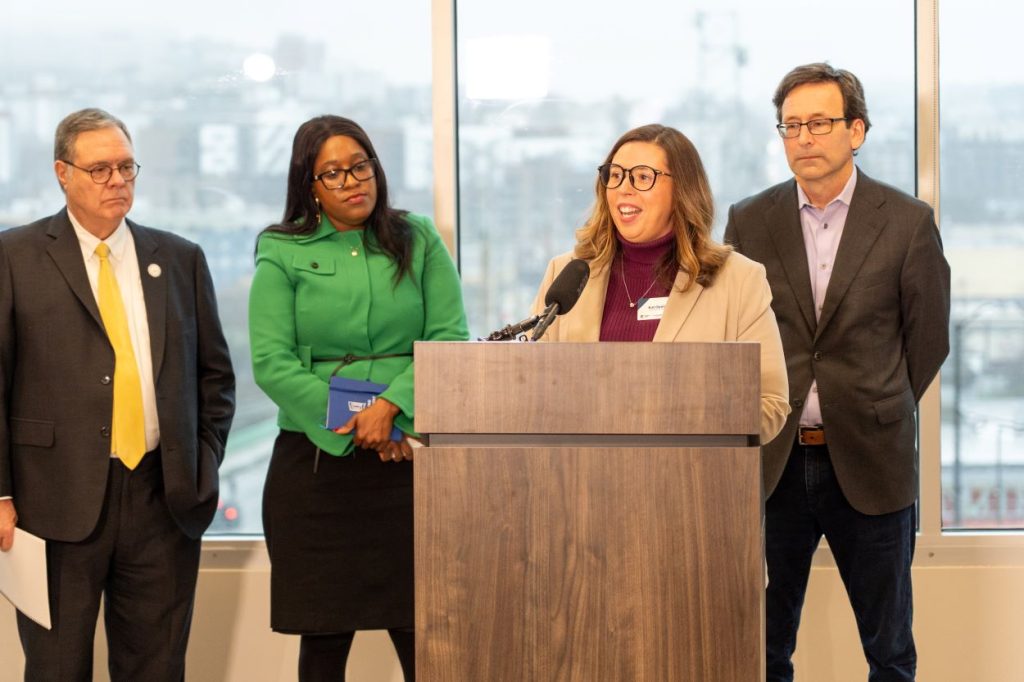
Community leaders echoed the urgency. Kathryn Opina, CEO of Housing Hope, thanked Ferguson for supporting projects like Alliance Place in Snohomish County, which will provide 160 affordable units near Lynnwood’s Transit Center. Patience Malaba, executive director of the Housing Development Consortium, called the proposed housing investments “historic” and urged continued public-private partnerships—such as with Microsoft—to sustain progress amid rising costs and potential cuts to federal funding.
The $244 million investment draws primarily from bond capacity in the capital budget, with smaller portions from dedicated funds from the Climate Commitment Act and the general fund, Katie Chapman-See, Director of the Office of Financial Management shared.
As the 2026 legislative session approaches, Gov. Ferguson expressed optimism for bipartisan support.
“Whether you’re a Democrat or Republican, whatever your political philosophy is, you are hearing from your constituents about the need for more housing,” he said.

Author: Mario Lotmore