

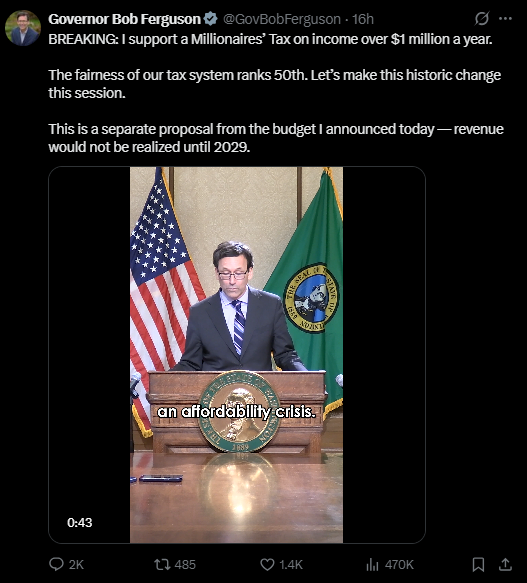
OLYMPIA [JERRY CORNFIELD]—Washington Gov. Bob Ferguson made a splash Tuesday with his full-throated endorsement of taxing the earnings of millionaires.
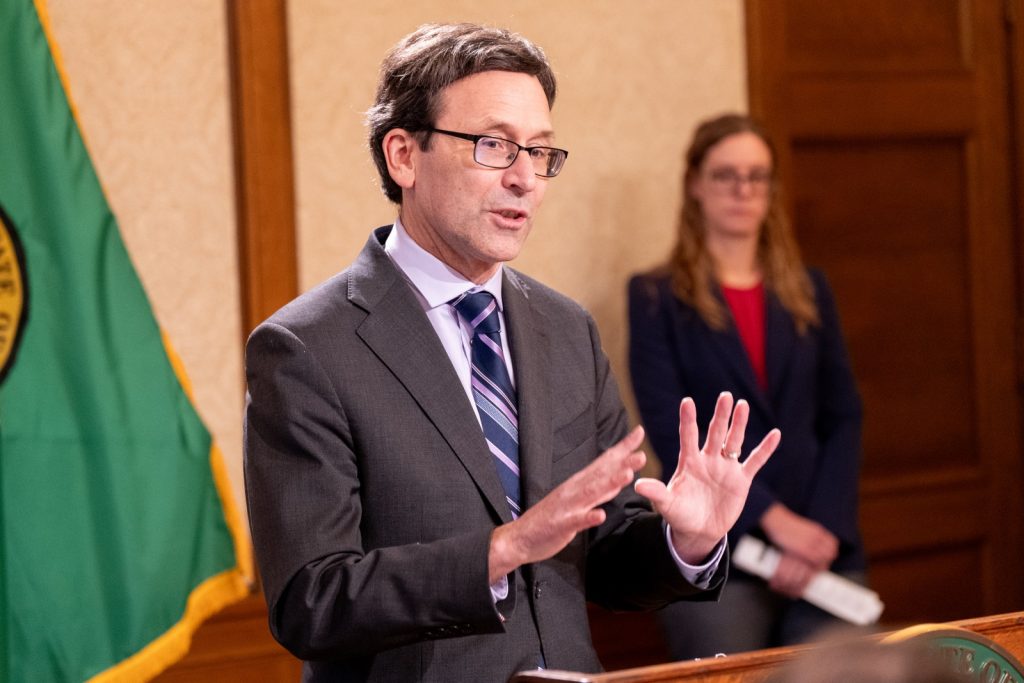
The surprise declaration from the first-term Democratic governor nearly drowned out his newly released plan to erase a multibillion-dollar shortfall in the current state budget.

He made “super clear” that if Washington taxes millionaires, the money won’t start flowing into state coffers until 2029 at the earliest. In the meantime, he said, the state must deal with the immediate problem of the $2.3 billion budget hole.
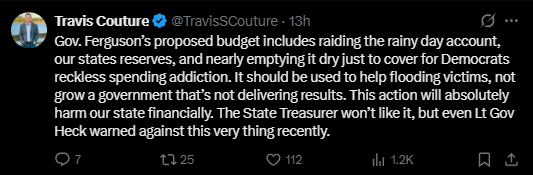
Ferguson proposes to patch it by trimming $800 million in spending, withdrawing $1 billion from the state’s rainy-day fund, and making an unprecedented use of nearly $600 million in revenues from the state’s auctions of air pollution allowances.



The proposal also contains $1.2 billion of increased spending to cover costs of inflation in existing programs, greater demand for public services and complying with new federal requirements under Republicans’ so-called “Big Beautiful Bill,” which he calls the “Big Betrayal Bill.”

🚨BREAKING: THE AGE OF 'AMERICA FIRST' IS CEMENTED WITH THE PASSAGE OF THE 'ONE BIG BEAUTIFUL BILL,' WHICH PRESDIENT TRUMP IS EXPECTED TO SIGN ON JULY 4, INDEPENDENCE DAY
At 2:31 p.m. EST (11:31 a.m. local time), the U.S. House of Representatives passed President Donald J… pic.twitter.com/ugQpJvD0fF— Lynnwood Times (@LynnwoodTimes) July 3, 2025
The budget plan is balanced through June 30, 2027 and does not raise taxes, keeping a pledge Ferguson made earlier this month. The plan does eliminate tax breaks related to data centers and prescription drug wholesalers.
“We are facing falling revenue, rising costs, and budget cuts and chaos coming from the Trump administration,” he said. “I’m providing a road map for the Legislature. This is, of course, the first step in a conversation about how best to balance our budget.”
Nitty gritty
The spending plan released Tuesday makes adjustments to the two-year budget Ferguson signed in May and that took effect July 1.
It is the third and final piece of the budget package Ferguson will send to lawmakers for their consideration in the 60-day session that begins Jan. 12.

Last week, he proposed pumping an additional $244 million into housing development programs through the capital budget, and $3 billion into preserving highways and bridges and building three new ferries through the transportation budget. Those sums would largely come from borrowing money through the bond market.
The current operating budget called for $77.8 billion in spending over two years across government. It relied on about $4 billion from new taxes and transfers from other accounts into the general fund, the central pot of money used to pay for most state spending. It projected the state would end the fiscal cycle with $225 million in cash reserves and $2 billion in its emergency, or rainy day, fund.
What Ferguson proposed Tuesday lifts total spending to nearly $79 billion while leaving the state with $140 million in cash reserves and $1 billion in emergency savings at the end of the budget cycle in mid-2027.
While Ferguson’s embrace of a millionaire’s tax will please progressives, his avoidance of new revenue streams to close the current gap will not, as some are pressing ahead with legislation to impose new and higher taxes on large corporations.
Overall, Ferguson’s plan does boost state spending. Of the total, $165 million is to deal with the effects of H.R. 1, the major federal legislation, which imposes new and stricter eligibility rules for food assistance and Medicaid programs.

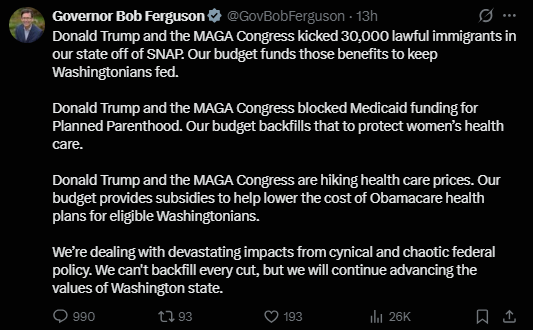
For example, nearly $50 million will be spent to provide an estimated 30,000 refugees, asylees, and other immigrants with state-funded food assistance after they were cut from the federal Supplemental Nutrition Assistance Program, or SNAP.
The single largest new sum in Ferguson’s plan confronts the state’s growing lawsuit payouts. The premiums state agencies pay into a liability account haven’t kept pace with these legal expenses.
Without a permanent fix, the state Department of Enterprise Services, which oversees the self-insurance fund, has warned the gap could grow to more than $1.3 billion by mid-2027, and increase further from there.

Ferguson commits $955 million to resolving the problem, with a portion penciled in for use in the next budget.
In other areas, the budget would invest $55 million to maintain subsidies for health care premiums for the Cascade Care program. It would also restore $2.9 million in funding for Capitol Campus Security and $8.5 million pared from the Abortion Access Project.
And Ferguson funds new contracts for 5,300 general government and higher education workers represented by the Washington Public Employees Association. These workers did not ratify a contract in time to be included in the budget approved this year.
State government employees would get a 3% pay hike retroactive to July 1, 2025 and a 2% increase on July 1, 2026. Under their deal, community college employees working on July 1, 2026 would receive both increases.
Erasing the shortfall
One of the biggest — and controversial — maneuvers is Ferguson’s redirecting of $569 million of proceeds from carbon auctions under the Climate Commitment Act into the Working Families Tax Credit program, an idea first pushed by Senate Republicans last session.
The program provides credits ranging from $325 to $1,290 to low- to moderate-income families. It has historically been funded out of the general fund. Ferguson said this one-time move would free up general fund dollars for other uses. This move is explicitly allowed under the 2021 law.
House Majority Leader Joe Fitzgibbon, D-West Seattle, an architect of the Climate Commitment Act, said the state needs to spend the money to make the state more resilient to climate damage.
“He had difficult choices in drafting this budget,” he said. “We have difficult choices ahead of us to pass a budget.”
Meanwhile, the governor’s budget slices spending throughout the state government.
For example, he calls for across-the-board cuts of 3% to the University of Washington and Washington State University, and 1.5% to the other regional universities and community and technical colleges.
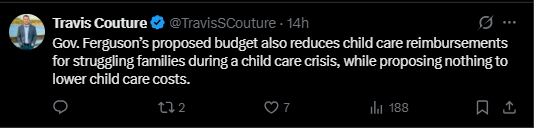
He also halts a planned increase in per-pupil funding for school districts that struggle to raise money from local levies due to lower property values. And he proposes capping signups for the Working Connections child care program and removing 1,816 slots for the Transition to Kindergarten program starting in the 2026-27 school year.
The hits to education drew fire from Larry Delaney, president of the Washington Education Association, which is the state’s largest union for public school employees, and Superintendent of Public Instruction Chris Reykdal.
“Schools and colleges are currently underfunded; our students have extensive unmet needs and additional cuts to the Local Assistance Program, Transition to Kindergarten, and more exacerbate the situation,” Delaney said.
Republican alternative
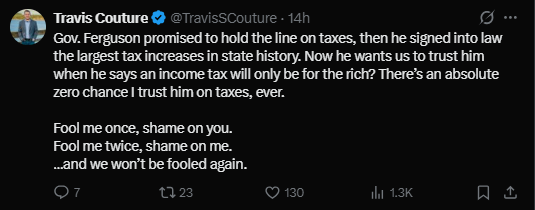
Rep. Travis Couture, R-Allyn, the lead Republican budget writer in the House, said he thought Ferguson’s proposal was a “prank.”
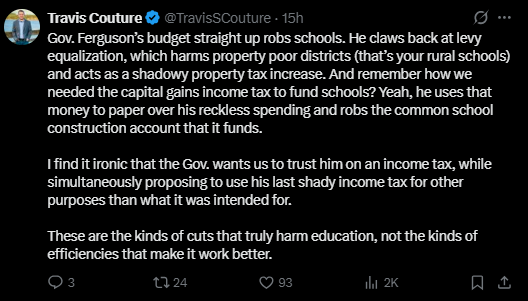
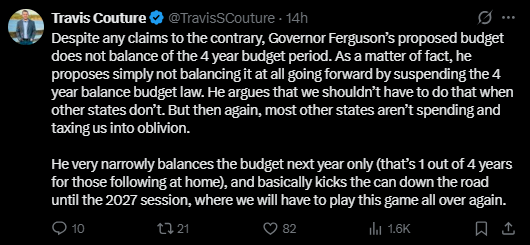
“Instead of fixing the problem, this budget relies on accounting tricks, raids dedicated accounts, shifts school construction money to paper over holes, and keeps using one-time cash to pay for permanent programs. Meanwhile, it cuts back child care help, delays care for seniors, shortchanges schools, caps support for working families, and ends tax breaks,” he said
Last week, Couture put out his own plan that he says will trim state spending by $3.7 billion over the next three years while protecting core services and avoiding cuts to public schools.
He said his “Affordability First” plan would restore funding for programs cut or underfunded in the current budget, including Medicaid services, hospitals, food assistance, wildfire prevention, medical care for drug-exposed newborns, and law enforcement hiring.
The WA House Republican Affordability First budget framework completely restores wildfire funding that was cut by Democrats last session. And we do so without raising taxes! @CPL_Dave pic.twitter.com/2ZwKFjVzwT
— Travis Couture (@TravisSCouture) December 24, 2025
It would also reimpose voter-backed spending limits tied to inflation and population growth and require what’s known as zero-based budgeting for agencies. To save money, it would end free health care for immigrants in the country without legal status, trim management payrolls in community colleges and universities and require public employees to pay a greater share of their benefits.
The budget problem is a result of the state spending more than it collects, Couture said. Democrats’ passage of $12 billion of new and higher taxes last session between the operating and transportation budgets “didn’t solve it, so we’re right back where we were,” he said.
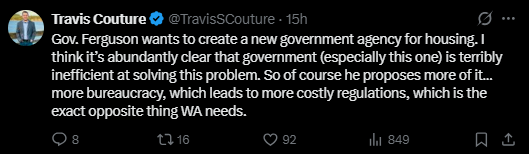
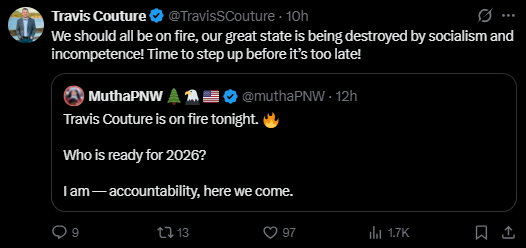
Below is Rep. Couture’s 4-hour and 19-minute nonstop X blitz criticizing the Governor’s proposed Supplemental Budget:





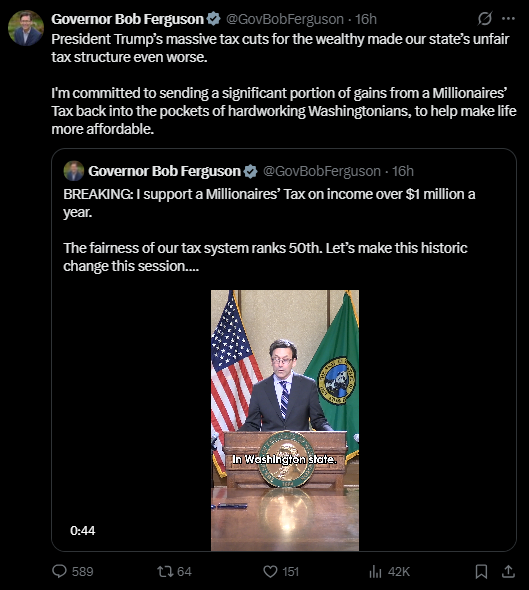
Below is Gov. Ferguson’s s 3-hour and 10-minute nonstop X blitz promoting his proposed Supplemental Budget:

SOURCE: This article was authored by Jerry Cornfield with contributions by Jake Goldstein-Street of the Washington State Standard part of States Newsroom, a nonprofit news network supported by grants and a coalition of donors as a 501c(3) public charity. The Lynnwood Times added X posts and snapshots from X of Governor Gerguson adn Rep. Couture.

Author: Washington State Standard