


LYNNWOOD—Ten candidates vied to fill the Lynnwood City Council Position 6 vacancy, on Tuesday, January 20, bringing an array of professional backgrounds, personal stories, and visions for the City’s future.
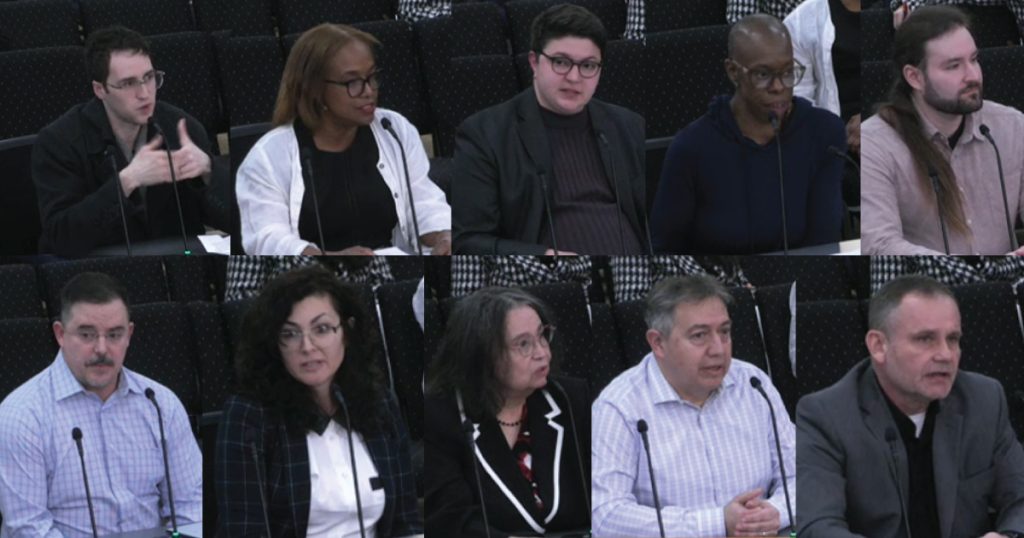
The interviewees—Jacob Berger, Han McDonald, Paula Ferreira-Smith, Quinn Van Order, Chelsea Wright, Noel Baca, Richard Wright, Cathy Baylor, Dorina Katro, and Brandon Molina—each delivered opening and closing statements and fielded six-pointed predetermined questions from council members Isabel Mata, David Parshall, Robert Leutwyler, Nick Coelho, Bryce Owings, and Derica Escamilla.


The questions probed unique perspectives missing from the council, familiarity with city departments, understanding of budget readiness, aspects of Lynnwood’s character, reasons for not running in the last election cycle, and experiences with public criticism and resilience under pressure.
The council will vote on Monday, January 26, to select the candidate to fill the Position 6 vacancy who will be sworn in and seated on February 2, 2026.



Jacob Berger
Jacob Berger, a Boeing engineer and union officer, presented himself as an advocate for working-class renters and laborers. He called for practical solutions to fiscal and urban challenges through analytical skills and community involvement. His core message centered on advancing workers’ rights, improving walkability, and preserving cultural diversity while navigating budget constraints without simple fixes.
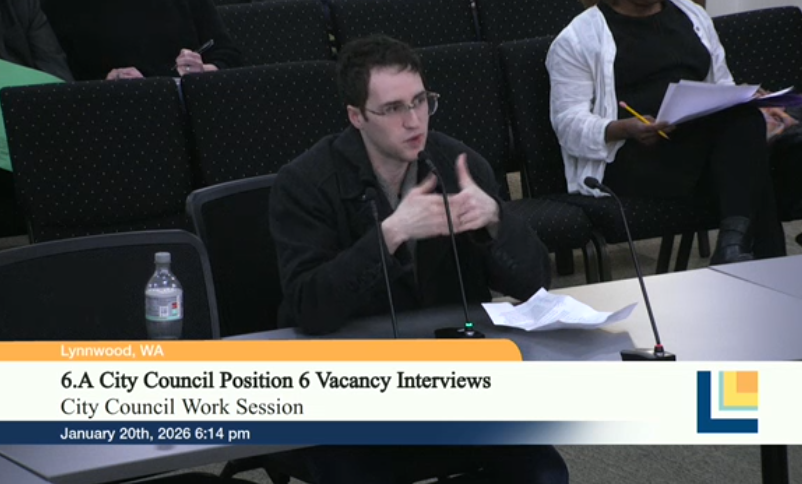
Opening statement: Berger introduced his engineering role at Boeing Everett and membership in the SPEEA IFPTE 2001 union. He clarified that his remarks represented personal views without union endorsement, as the union avoided local political positions. He planned to apply his experience from the union council to informed governance.
What unique perspective do you bring to the council? Berger cited two underrepresented perspectives. He pointed to his active union membership to champion workers’ rights as the city’s backbone. He also noted his renter status to represent many residents, especially relevant with property tax measures proposed to address the budget deficit.
Which city department are you least familiar with, and how would you learn more? Berger identified Development and Business Services because of zoning’s complicated legal and interrelated regulations that shaped city life, such as housing types affecting families. He planned self-study drawing from his FAA regulation experience in aircraft certification, plus one-on-one meetings with department experts for full understanding.
Describe your understanding of the city’s budget challenges and how you’re prepared for decisions. Berger recognized a $4.8 million deficit that impacted essential services and access to external funding like grants or loans. He advocated targeted cuts that least affected livelihoods and thorough audits of spending. He drew on his engineering math background but stressed no easy fixes existed.
What aspects of Lynnwood’s character are worth protecting or not? Berger valued the city’s diversity for a healthier and more enjoyable community, citing the Asian American population and new markets like TNT supermarket. He criticized the spread-out amenities that required driving everywhere and favored increased density to create more walkable connections between parks, theaters, and dining.
Why didn’t you run in the last election cycle? Berger attributed his absence to intensive preparations for the union contract expiring October 6. This involved negotiation team work, white papers, and member surveys on contract issues. He planned to step back, but applied here when the vacancy appeared.
Describe a time you faced public criticism for doing what was right and how you handled it. Berger recounted denying union budget for a member’s event per bylaws, despite personal friendship and her activity. The decision caused upset, a quick scramble, and lost trust. He handled it with calls and meetings, then spearheaded policy documentation for future clarity to rebuild relationships.
Closing statement: Berger thanked the council for the opportunity and pledged continued community engagement, such as attending meetings after his union step-back. He expressed strong belief in Lynnwood’s potential as a cultural center and mentioned plans to buy a home there.
Han McDonald
Dr. Han McDonald, a non-binary scientist and philanthropy manager, structured their candidacy around evidence-based equity, fiscal stewardship, and inclusive growth. They integrated scientific rigor with lived experiences to address Lynnwood’s budget deficits, housing pressures, and public safety holistically.
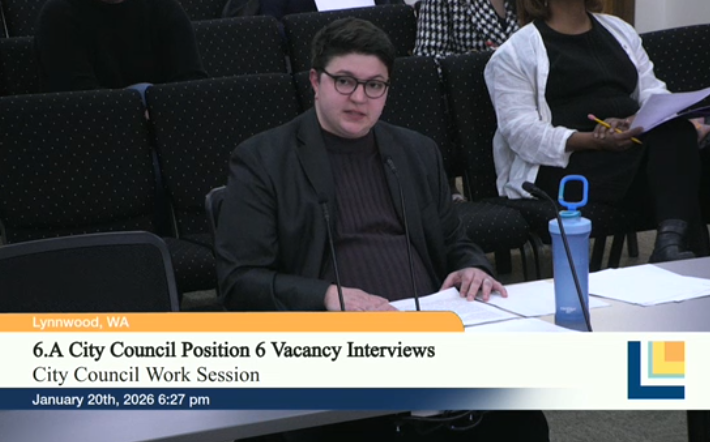
Opening statement: McDonald shared they/them pronouns and thanked the council and fellow applicants for their commitment. As a park user, local business supporter, and transit rider with science and portfolio management experience, they prioritized data-driven solutions for budget, safety, equity, economy, and transparent decisions amid light rail and redevelopment.
What unique perspective do you bring to the council?McDonald combined a scientific mindset focused on evidence, systems, and outcomes—framing problems, testing assumptions, measuring success, and ROI—with management of a $120 million portfolio balancing ambition, accountability, partnerships, and tracking. They added non-binary lived experience grounding equity in practical questions like who was affected or heard.
Which city department are you least familiar with, and how would you learn more? McDonald selected Development and Business Services for zoning and permit intricacies shaping housing, business locations, neighborhood character, affordability, accessibility, and budget revenues. They planned staff meetings on codes and challenges, reviews of reports and plans for alignment with equity and sustainability, and community engagement with developers, renters, and homeowners.
Describe your understanding of the city’s budget challenges and how you’re prepared for decisions. McDonald described a structural $10 million gap by budget end from underperformed sales tax and development fees despite rate hikes. This required genuine decisions on services, staffing, and investments this year. They drew on $120 million philanthropy for priorities and outcomes, data analysis distinguishing structural from cyclical issues, and transparent communication for long-term stability.
What aspects of Lynnwood’s character are worth protecting or not? McDonald valued resilience, diversity enriching schools, markets, and culture, neighborliness in events, businesses, and parks, and retail/transit hubs for jobs and affordable housing. They rejected static car-dependent models resisting density and redevelopment amid housing crisis, and complacency on safety or equity eroding trust. They urged adaptation.
Why didn’t you run in the last election cycle? McDonald cited commitment to planning and executing a large multi-stakeholder project—their wedding. It was now completed with honeymoon and thank-yous. Family remained priority, but they had time and energy for service.
Describe a time you faced public criticism for doing what was right and how you handled it. McDonald shared coming out and living openly as queer non-binary, which strained family relationships and created isolation in public spaces challenging safety and dignity against others’ comfort. They chose openness and advocacy, grounded in respect values, stayed in relationships with boundaries and patience, and engaged queer/trans community support for broader change.
Closing statement: McDonald thanked the council for thoughtful questions and the opportunity to share vision. They positioned themselves as the right addition for the pivotal moment with light rail, growth, and structural gap requiring tough choices. They brought science and portfolio rigor for data, outcomes, and trade-offs transparently, holistic safety with prevention, and equity as action hearing marginalized residents. They promised to be a prepared collaborator bridging divides.
Paula Ferreira-Smith
Paula Ferreira-Smith, a Dominican-born real estate and right-of-way specialist, centered her candidacy on empathetic infrastructure expertise, regulatory knowledge, and community ties. She sought to steward public funds while fostering Lynnwood’s economic vitality and diversity.
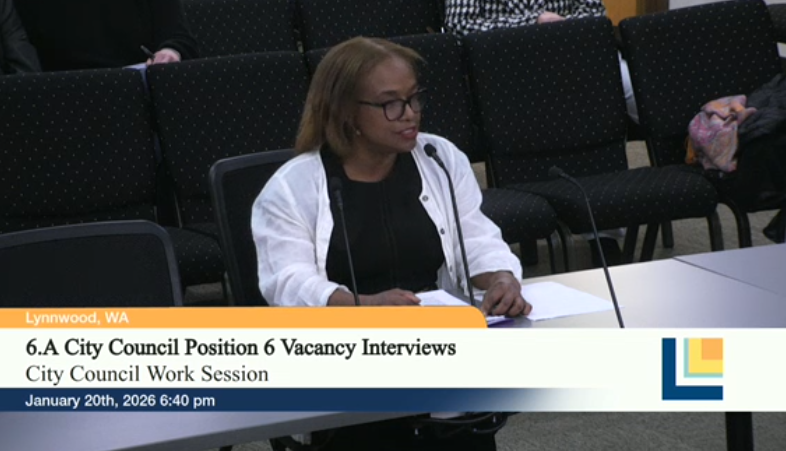
Opening statement: Ferreira-Smith recounted her Dominican birth and life in the Bay Area before Washington and Lynnwood, where she lived, loved, and played. She detailed her right-of-way association membership and designation, Washington real estate broker status, and Seattle senior property agent role in acquisitions, relocations, and occupancy for homeless and transport projects. She noted Spanish fluency, diverse clientele, 20+ years in regulations across states and agencies, volunteering abroad, family school ties, and eagerness for positive impact.
What unique perspective do you bring to the council? Ferreira-Smith offered right-of-way expertise in managing federally funded projects with taxpayer responsibilities and community impacts. She provided one-on-one connections and resources. She added empathy from relocating agricultural workers and 53 low-income families to temporary housing and back. She viewed government programs as transforming lives and treated files as unique people with dignity.
Which city department are you least familiar with, and how would you learn more? Ferreira-Smith selected Parks and Recreation. She planned to study and analyze needs and use of public spaces, parks, and community centers. She praised the city’s beautiful parks and open areas as a strength. She suggested involving high school youth in community service projects to feel important and part of the process, and expressed interest in such initiatives.
Describe your understanding of the city’s budget challenges and how you’re prepared for decisions. Ferreira-Smith drew from preparing, analyzing, and administering federal, state, and local project cost estimates and expenditures presented to councils. She shared that she understood public fund stewardship. Infrastructure and life did not always follow plans, so she learned adaptation, efficient workflows, and prioritization. Challenges invigorated her for team vision completion. She ensured expenditures were actual, reasonable, and necessary.
What aspects of Lynnwood’s character are worth protecting or not? Ferreira-Smith loved the city’s diversity and welcoming nature. It served as a key connector between Seattle and north Snohomish with a growing economy, new housing, employees, shopping, and revenue. She pushed to protect the community to attract and retain happy residents through location, workforce for Boeing and others, apartments and transit reducing car needs, intercity connections, and fostering belonging for investment in time, money, and future generations.
Why didn’t you run in the last election cycle? Ferreira-Smith was working for a Lynnwood contractor, responsible for two major local parcels.
Describe a time you faced public criticism for doing what was right and how you handled it. Ferreira-Smith noted frequent unhappiness in property acquisitions and relocations for projects, infrastructure, easements, or unsafe homes. A waterfront owner resisted sale for a sidewalk, causing media scrutiny and domino effects on others. She deferred to outreach protocols, later explained community and personal benefits, and resolved positively without personalizing criticism.
Closing statement: Ferreira-Smith thanked the city and panel for the interview opportunity. She pledged to continue focus on city projects and give back from her Seattle job rather than consulting for multiple cities. If selected, she would provide 100% knowledge, time, integrity, and honesty to the city and citizens. She emphasized making home a happy house.
Quinn Van Order
Quinn Van Order, a systems engineer and parks board member, incorporated humor and enthusiasm. He promoted technical scrutiny, privacy protection, and fiscal realism to sustain civic engagement and adapt Lynnwood to economic conditions.
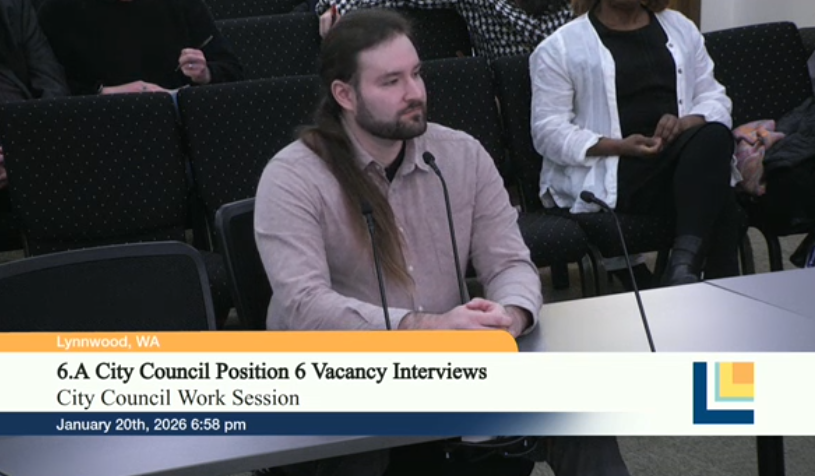
Opening statement: Van Order recounted his political awakening after 9/11, enjoyment of volunteering for Obama campaigns, and work on a state race. Disillusioned with federal politics, he shifted focus to local matters after buying property in Lynnwood. He joined the parks board and enjoyed it. He viewed the vacancy as a chance to bring energy and enthusiasm to serve the community further.
What unique perspective do you bring to the council? He provided technologist expertise for wrangling infrastructure and vendors with rigorous questioning, such as helping with city email spam issues. He advocated strongly for citizen privacy, ensuring government respected boundaries and minded its own business in residents’ lives.
Which city department are you least familiar with, and how would you learn more? He selected Development and Business Services for its impact on revenue and development and enjoyed their Lynnwood University presentation. He planned direct staff engagement on concerns and complaints, plus a historical dive into city records and council submissions for trends in unmet asks and priorities.
Describe your understanding of the city’s budget challenges and how you’re prepared for decisions. Van Order explained a fiscal cliff from grants funding operations that expired, jail cost overruns and revenue shortfalls due to suicide litigation, and healthcare withdrawal. Optimistic light rail forecasts went unmet by high interest rates and tariffs slowing construction like Northline Village. He would advocate conservative assumptions and realistic budgeting to avoid ambitious budget forecasts.
What aspects of Lynnwood’s character are worth protecting or not? Van Order valued high civic engagement and volunteerism, such as applicant turnout and ivy removal events showing visible impact and pipeline to more involvement. He supported walkability with sidewalks and shielded bike lanes for safety. He rejected mass surveillance as culturally and financially unwise.
Why didn’t you run in the last election cycle? Van Order planned for upcoming or later election cycles, having bought a website domain long ago. Recent parks board engagement prompted an earlier attempt to add his technologist and privacy perspective. If not selected, he would run next election, balancing college commitments.
Describe a time you faced public criticism for doing what was right and how you handled it. Van Order detailed leading an HOA board in crisis with no reserves or records for a 2000 build needing roofs, siding, porches, and concrete. He raised dues from mid-200s to high-800s amid unpopularity. He researched fiscal recovery with litigation, loan, and rebuild payoff over 20-30 years. He was able to get HOA budgets passed unanimously, because people trust his sound reasoning.
Closing statement: an Order thanked the council for interviews and service in challenging finances. He enjoyed his own mini-budget crisis work and found tough calls rewarding. He contrasted politicians focused on reelection with statesmanship that focused on generational wellbeing.
Chelsea Wright
Chelsea Wright, a state equity specialist and DEI commission chair, focused on honesty, balance, and community equity. She drew from personal and professional paths to support governance that included all for a better and more prosperous Lynnwood.
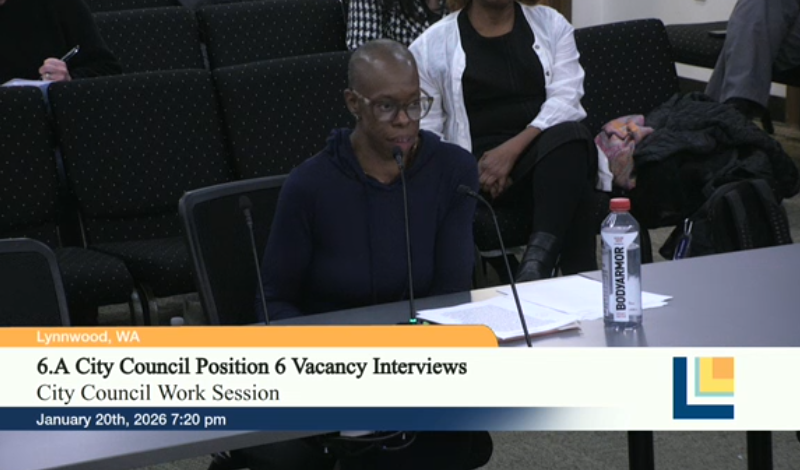
Opening statement: Wright shared her residency since 2009 and home purchase in 2012. She described her state Labor & Industries role in safety, health, and equity research as project manager. She chaired the DEI commission motivated by family experiences. She served as sorority president running meetings. She emphasized equity and community focus.
What unique perspective do you bring to the council? Wright questioned council self-reflection on complements and cohesion. She listed essential traits: honesty in actions and intellect, balance in environment/economy/transport/staff independence, commitment in time/energy/preparation/family, motivation in public interest over agendas/power/special interests with integrity/vision, and experience in contracts/Lean Six Sigma/Robert’s Rules/IDI administrator for nuanced diverse viewpoints and listening/compromise.
Which city department are you least familiar with, and how would you learn more? Wright selected Public Works for extensive infrastructure from Adopt-A-Street to traffic cams, capital projects, permits, and utilities. Three principal areas included internal services, operations, and engineering construction with 12 sub-departments. As a hands-on learner, she planned tours like the wastewater plant, stalled project progress checks, and meetings with Director Bond and principals for resident concerns.
Describe your understanding of the city’s budget challenges and how you’re prepared for decisions. Wright identified a possible multi-million deficit by year-end excluding new sales tax revenue, amid county and state shortfalls affecting all. She planned deep financial dives into online docs, questions on forecasting errors and project budget swells, regular neighbor feedback and public comment encouragement, and impartial/equitable/realistic program reviews.
What aspects of Lynnwood’s character are worth protecting or not? Wright valued the evolution from chicken farm to walkable “little big city” with eateries, retail corridor, and best mall. Neighbors knew each other by name with families and sports. Diversity and Edmonds schools accommodated her deaf son. She rejected over-policing of vulnerable groups and unheard tax burdens. She committed to small businesses, unions, trades, and DEI for true welcome to residents, visitors, and businesses.
Why didn’t you run in the last election cycle? Wright made a personal decision after last year’s appointment process. She read all comments assuming her politics and leanings from DEI, state work, and Black woman identity as “diversity applicant” without knowing her. She wanted the community to see her. She noted appointed members ran successfully and the new mayor brought desired change.
Describe a time you faced public criticism for doing what was right and how you handled it. Wright encountered early state colleague questioning supervised team decisions and open criticism in meetings, even her directives. She handled with grace and respect publicly, addressed demeanor privately with team and receipts. She could not tolerate disrespect. A failed directive was documented with reasons. She always brought research and reasoning to unpopular decisions.
Closing statement: Wright appreciated questions and opportunity despite judgment and misunderstanding risks. She recognized the hard decision with exceptional candidates and urged doing best for council and city. She noted challenging self-exposure and encouraged citizen voices as important in the grand city. She thanked family, especially her father encouraging and watching.
Noel Baca
Noel Baca, a civil engineer residing in Lynnwood nearly three decades, concentrated on technical infrastructure insights and analytical problem-solving to balance growth with community essence based on development experience.
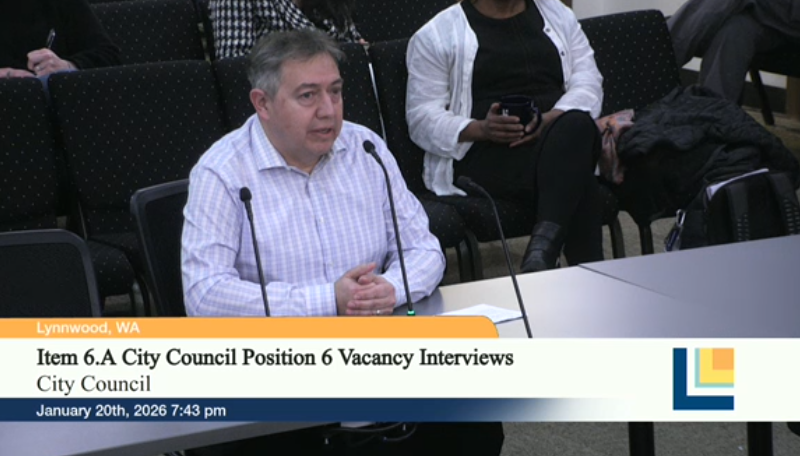
Opening statement: Baca thanked for selection and opportunity. He was a nearly 30-year resident from New Mexico, with his wife at Boeing and himself in Bellevue. They stumbled on Lynnwood. He loved the community, participated in youth sports and school volunteering with Habitat. His civil engineering experience focused on communities and infrastructure. He looked forward to council team if selected.
What unique perspective do you bring to the council? Baca provided civil and structural engineering education and practice centered on cities and infrastructure like roadways, maintenance, facilities, utilities, and development. He added analytical nature for unwrapping and processing complex problems to useful solutions. He viewed community development through multifamily and infrastructure projects.
Which city department are you least familiar with, and how would you learn more? Baca indicated finance. Construction project management understood budgets but not city-level fluid taxation and cycles hard to quantify. He interfaced with finance committee members and learned the process for developing, evaluating, and forecasting income.
Describe your understanding of the city’s budget challenges and how you’re prepared for decisions. Baca attributed the large deficit to difficult income forecasting and external impacts on sales and property taxes. He focused on current expectations through the year and beyond, systematically prioritized essential and deferrable items, and sought innovative ways to maximize budgets for the greater good.
What aspects of Lynnwood’s character are worth protecting or not? Baca esteemed the hybrid community and rural feel—downtown bustling but residential middle-class family-oriented with parks and open spaces unique amid density and urban push. He balanced with shopping, proximity, and light rail amenities.
Why didn’t you run in the last election cycle? Baca thought the planning commission best fit to lend effectively, applied, and served. It proved eye-opening to greater opportunity molding Lynnwood growth. It was not on radar at political season start but participation drew him in.
Describe a time you faced public criticism for doing what was right and how you handled it. Baca faced early career development panels often hostile as the “bad guy” for new facilities or changes. He approached from education and information perspective with sympathy, finding common ground and sincerity to understand even if not changing minds.
Closing statement: Baca thanked the council for having him and felt fortunate to be considered. Other candidates were genuine helpers too with strong competition, he said. He looked forward to the decision and hoped to be selected.
Richard Wright
Richard Wright, a construction manager with lifelong Lynnwood ties and planning commission service, stressed institutional history and citizen representation. He committed to caretaker service focused on revenue diversification and service levels.
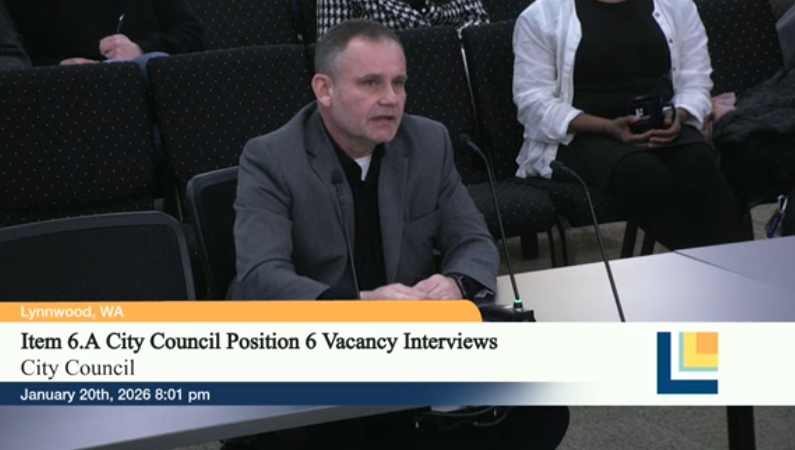
Opening statement: Wright thanked the mayor and council for time and service. He had lifelong area ties since 1981 with grandparents boarding horses on 164th two-lane road. He worked as construction project manager residential and commercial. His education was in construction management and finance. He served planning commission terms and chair under two mayors.
What unique perspective do you bring to the council? Wright sought to embody ordinary residents guided by extensive municipal familiarity. It was difficult without working together as he watched meetings and spoke to some. He brought institutional history and background knowledge.
Which city department are you least familiar with, and how would you learn more? Wright focused on public safety with large general fund share given current situation and steps taken. He met the department and did ride-alongs to see daily dealings and needs.
Describe your understanding of the city’s budget challenges and how you’re prepared for decisions. Wright cited revenue adjustments but shortfalls meant discussions on service levels and qualities for next years depending on forecasts. Past similar issues existed. He recommended line-by-line per department beyond hiring freezes and diversified revenue to break the economy-flu cycle.
What aspects of Lynnwood’s character are worth protecting or not? Wright acclaimed welcoming and diverse retail base at major freeways. It evolved from rural to suburb with most residents commuting out. He encouraged improving character addressing problems and missing links. Amazing events attracted beyond shopping.
Why didn’t you run in the last election cycle? Wright lacked interest in being a candidate despite political organizing experience. He had greater interest in serving. He was exceptionally qualified for appointment and committed as caretaker with open election next cycle if selected.
Describe a time you faced public criticism for doing what was right and how you handled it. Wright confronted a mayor on campaign and ethics violations within his own party and candidates. He filed a complaint, met attorneys, and arbitrated settlement with penalty and ethics training to stop office campaigning.
Closing statement: Wright thanked the council again for their time and consideration. Day-one ready with history and citizen best interest, he hoped selected. He joked on M&Ms for pay.
Cathy Baylor
Cathy Baylor, a music educator with Native American heritage and over five decades in Lynnwood, rooted her approach in justice, equity, and cultural arts informed by family governance and caregiving experiences.
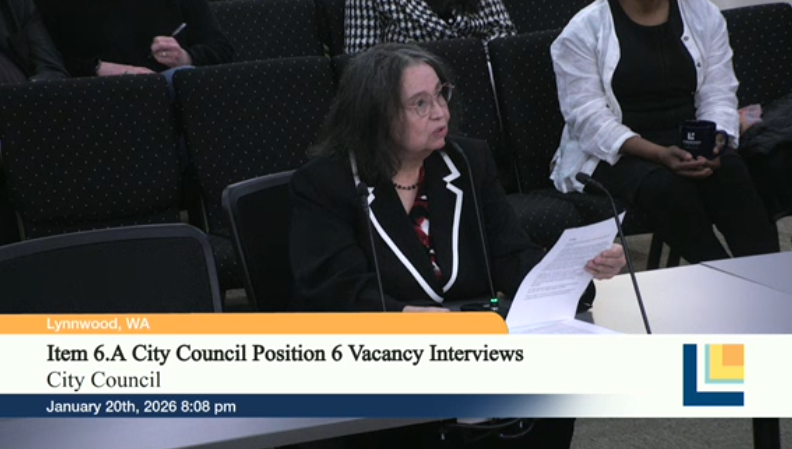
Opening statement: Baylor felt thrilled with the process and impressed by the council. She asked why seek office and answered with justice, equity, fairness, and rule of law guiding resources, land use, services, and government working for everyone. Her family belonged to Confederated Salish and Kootenai with her dad serving tribal council. She presented on intergenerational trauma. She moved to Lynnwood in 1968, graduated UW first in extended family, raised daughters, and purchased two homes. Capacity brought responsibility to serve and advocate.
What unique perspective do you bring to the council? Baylor incorporated arts and music educator background for cultural and arts fair building community. She added discernment and communication skills for viewpoints and concepts. Relationships spanned education, caregiving, and civic (wastewater alert example). Senior and caregiver navigation, NOW legislative analyses, and native/feminist equity lens lived and professional including education and Title VI.
Which city department are you least familiar with, and how would you learn more? Baylor selected Public Works for day-to-day operational, capital, and utilities infrastructure. She understood policy goals but wanted deeper knowledge on sequencing, funding, and management. She planned staff talks on plans, rates, and priorities, reviewed council materials and audits, and used MRSC, AWC, and PAW trainings. As citizen body, she brought perspectives while building systems understanding collaboratively with staff and council.
Describe your understanding of the city’s budget challenges and how you’re prepared for decisions. Baylor mapped mid-2025 general fund $5.1 million gap plus $4.2 million 2024 carryover. The 2025-2026 biennium shortfall reached $10-11 million from sales tax, development, and photo revenues underperformance. Reserves fell below policy. Freezes, overtime restrictions, and reductions helped short-term. She prepared reviewing documents, forecasts, and policies, working with mayor, council, and finance on timelines, trade-offs, transparency, accountability, and long-range planning.
What aspects of Lynnwood’s character are worth protecting or not? Baylor admired the shift from monolithic high school culture to 130+ languages. Examples included Mexican circus with Latin audience, TNT Asian market with lion dance, diverse neighbors like Ethiopian, Hopi-Cambodian, Mexican, Muslim with mariachi band—mixed cultural salad. Infrastructure like 196th/44th sidewalks enabled senior walkers, and youth in apartments used light rail, wishing more local activities.
Why didn’t you run in the last election cycle? Baylor stepped back two years ago as primary caregiver for elderly and ill mother. This deepened understanding of government effects on families in health, housing, and services. The chapter closed with her passing. She now had capacity and focus to serve responsibly, filling a time hole happily with learning like Public Works.
Describe a time you faced public criticism for doing what was right and how you handled it. Baylor led endorsements for two organizations and supported a better-prepared candidate despite unpopularity in parts of community. She revisited facts, reflected openly to change if warranted, listened and acknowledged concerns, distinguished disagreement from respect. Mentors helped pressures and consequences. Public service often required best available decisions rather than perfect or popular, made thoughtfully, transparently, and in good faith.
Closing statement: Baylor regarded good local government as stewardship not ideology—listening, weighing trade-offs honestly, making decisions standing ethically and legally, remembering effects on real people like families staying housed, workers getting by, elders aging with dignity, youth building futures.
Dorina Katro
Dorina Katro, an accountant and planning commission member with immigrant roots, she emphasized fiscal discipline, transparency, and balanced growth. She leveraged budgeting expertise for responsible decisions.
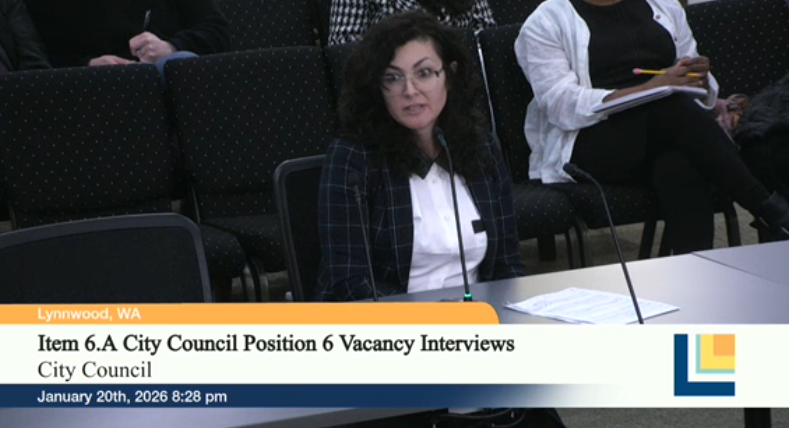
Opening statement: Katro thanked for opportunity. Lynnwood balanced increased development, housing needs, and challenging fiscal environment. Careful financial overviews are important. If appointed, she focused on understanding city budgets, asking clear constructive questions, supporting fiscally responsible and transparent decisions. Growth affected residents, so she approached with careful listening, thorough review, fair/responsible/inclusive solutions.
What unique perspective do you bring to the council? Katro was born and raised in a different country and chose Lynnwood with her family. She focused on connected decisions as mother, wife, daughter, friend seeing budget/growth daily impacts. She brought over 15 years accounting between countries, currently cost accounting/budgeting, managed highly-volume projects up to $500 million.
Which city department are you least familiar with, and how would you learn more? Katro indicated Public Works particularly technical and capital planning. If appointed, she would meet with department representatives to review current plans/performance metrics, understand near-term priorities and long-term infrastructure needs due to growth. Council could not be technical experts but respect staff’s opinions.
Describe your understanding of the city’s budget challenges and how you’re prepared for decisions. Katro faced structural budget pressures, rising costs, limited revenue flexibility, difficult trade-offs addressed this year. She prepared reviewing adopted budget, understanding decision timelines, carefully evaluating staff recommendations. Approach emphasized fiscal discipline, transparency, protecting essential services mindfully on resident/business impacts. 15+ years accounting experience to dive deep on deficit origins to work with other councilmembers to devise long-term fixes.
What aspects of Lynnwood’s character are worth protecting or not? Katro protected openness, diversity, sense of opportunity where people from many backgrounds live, work, and contribute. Not worth protecting is resistance to change. Growth was necessary but needs to be managed thoughtfully. Protecting character meant guiding changes responsibly.
Why didn’t you run in the last election cycle? Katro felt she contributed more effectively serving planning commission focusing directly on land use, development, long-term planning shaping Lynnwood future. The role provided hands-on experience reviewing projects, understanding trade-offs, working with a team within a public decision-making process. Now she feels she is ready for the city council.
Describe a time you faced public criticism for doing what was right and how you handled it. Katro supported system implementation/procedure upgrades not always popular with stakeholders but aligned to fairness/long-term responsibility. She handled it by remaining calm, listening respectfully, clearly explaining reasoning, acknowledging concerns without defensiveness. Transparency and respect helped maintain trust when disagreement existed.
Closing statement: Katro viewed appointment as responsibility to serve with care, collaboration, and sound judgment. If selected, she will work closely with council and staff, come prepared and open to new ideas. She will supported decisions that are transparent, fiscally responsible, and in the long-term best interest of Lynnwood.
Brandon Molina
Brandon Molina, a software leader and current brewery owner, highlighted curiosity, team unity, and business-building to bridge technology gaps and foster community connections in an evolving Lynnwood.
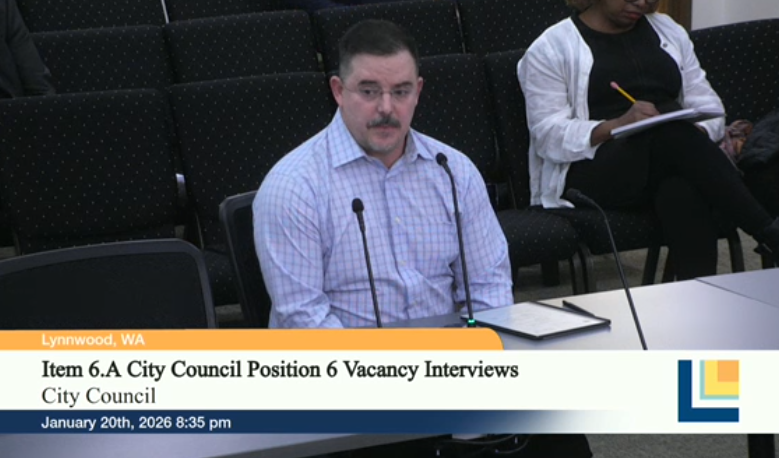
Opening statement: Molina thanked for invitation and learned from other candidates. He moved to Lynnwood in 2001 from Colorado, married 28 years with three adopted children and two grandchildren schooled here. He had 25 years in software leadership across industries and county. He started Peace of Mind Brewing for community safe space, connections, and third place. He emphasized lean management, curiosity, and hard questions.
What unique perspective do you bring to the council? Molina provided technology gap filler with 25 years software engineering. He was glue teammate unifying groups and creating psychological safety for hard conversations. He facilitated large events with 120+ people. He served as transformation agent and builder from brewery startup.
Which city department are you least familiar with, and how would you learn more? Molina admitted broad unfamiliarity but prioritized finance. He asked council focus and priorities for quick catch-up. He would meet with key contacts to understand scorecards and success barriers. He would set recurring check-ins to track progress and alignment.
Describe your understanding of the city’s budget challenges and how you’re prepared for decisions. Molina advocated for collaborative learning to prevent recurrences. He would manage costs and check for changes via insights and dashboards. Unlike the federal government, the city could not print money. He would focus on proactive oversight.
What aspects of Lynnwood’s character are worth protecting or not? Molina emphasized hub status with highways, light rail, and thriving mall. He supports executing city center development. He acknowledged and embraced suburban change to density as natural progression while maintaining parks.
Why didn’t you run in the last election cycle? Molina cited his commitment to recently starting and running a brewery. The idea sparked from customer chats over coffee and/or beer.
Describe a time you faced public criticism for doing what was right and how you handled it. Molina promoted to director in his software career during the pandemic and the end of flexible 4/10 or 9/80 schedules hurt his team’s effectiveness (only his department). He held individual talks understanding impacts like family time but prioritized the team. Productivity rose despite unpopularity.
Closing statement: Molina acknowledged his hard last spot. He thanked candidates and the council for the opportunity to interview. Partnering and coalition are key priorities for him. He will serve as a glue on the council to be a teambuilder. His brewery provides an opportunity for community connections and insights that can benefit council decision making.

Author: Mario Lotmore




One Response
I vote Dorian Karri. On the surface, her statements made sense to me.