

OLYMPIA [CASSIE DIAMOND]—A bill establishing a regulatory structure for automated license plate reader (ALPR) cameras advanced out of the state Senate Wednesday, Feb. 4.
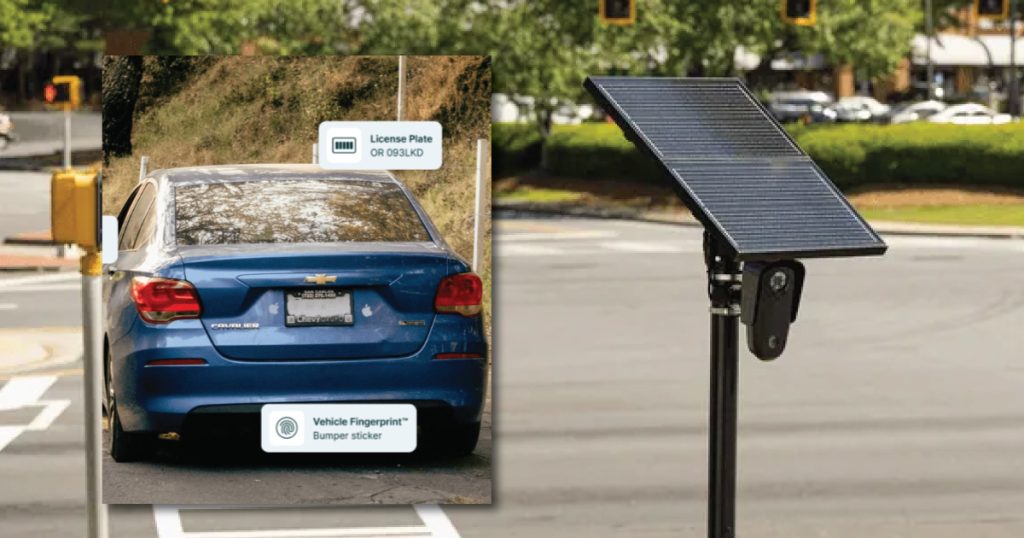
Senate Bill 6002 would restrict the use of ALPR cameras by state and local agencies, set a retention period for the data collected and limit the sharing of data.



ALPR cameras, also commonly called Flock cameras, capture and store vehicle license plate information along with time and location. They are often used by law enforcement to compare license plates against those on lists of stolen vehicles or wanted individuals, allowing them to identify and track suspects.
However, critics of these cameras say they can be used to violate the privacy of individuals. For example, there have been several reported incidents where law enforcement officers used ALPR cameras to stalk their former partners and spouses.




During Wednesday’s floor debate, Sen. Yasmin Trudeau, D-Tacoma, the bill’s prime sponsor, highlighted that the Washington State Constitution grants a broader privacy protection than the Fourth Amendment of the U.S. Constitution.

“We tried to make sure that we were rooting this in that protection of privacy and the expectation of the values that Washingtonians hold, whether you live in one part of the state or another,” she said.
Trudeau emphasized that privacy concerns are a non-partisan issue, and noted her appreciation for the expertise co-sponsor Sen. Jeff Holy, R-Spokane, brought to the measure as a former law enforcement officer.
“A bill like this is needed to prevent the evolution of an Orwellian surveillance state,” Holy said.
Holy proposed a floor amendment that would further ensure the utility of ALPR cameras for law enforcement use is preserved, which was adopted.
Law enforcement leaders, however, have expressed concerns about the restrictions the policy puts on their ability to use ALPR data for investigations.
The original draft of the measure required that all ALPR data be deleted within 72 hours, which law enforcement officials criticized during a public hearing Jan. 20 as being inadequate.
A substitute bill for SB 6002 proposed by Holy increased the data retention period to 21 days. It was adopted in the Senate Law and Justice Committee during an executive session Jan. 22.
Sen. Keith Wagoner, R-Sedro Woolley, proposed a floor amendment that would allow ALPR cameras to be used by law enforcement for investigations of gross misdemeanors of escape in the 3rd-degree, which is when a person knowingly escapes from custody and they have at least one prior conviction for this same crime, and driving under the influence.
While the amendment was not adopted, Wagoner said he would give “cautious, but optimistic support” to the bill.
He cited the need to provide guidance for local governments on how to use their ALPR cameras and the improvements made to the policy by Holy’s substitute bill as reasons to move the legislation forward.
Not all Republicans agreed.
Sen. Leonard Christian, R-Spokane Valley, expressed skepticism towards the idea that people should expect privacy outside of their own homes.
“I don’t expect privacy driving down a public road to go to Walmart,” he said.
To highlight the merits of the technology, Christian pointed to instances where license plate readers have been used by law enforcement to solve and respond to crimes.
SB 6002 passed the Senate with a 40-9 vote.
While focus was primarily put on broad privacy issues during the floor debate, Trudeau also noted there are many privacy concerns specifically related to immigration enforcement.
A recent University of Washington report found that federal immigration enforcement agencies had accessed the ALPR databases of several Washington law enforcement agencies.
The bill explicitly prohibits the use of ALPR systems for immigration investigation or enforcement, as well as the collection of data near protected immigration facilities.
A companion bill, House Bill 2332, received a public hearing Jan. 20 in the House Civil Rights and Judiciary Committee. It now awaits an executive session.
If passed by the House and signed by the governor, the measure would become the first law in Washington to regulate ALPR cameras and their data.
“I think it’s an opportunity for us to say to all Washingtonians that we’re going to care about what your privacy concerns are,” Trudeau said. “[And] we’re going to expect to meet the expectations of trust and transparency and accountability [that] are all baked into the bill that’s before us.”
The Washington State Journal is a nonprofit news website operated by the WNPA Foundation. To learn more, go to wastatejournal.org.

Author: Washington State Journal