


Republicans still seem to be alone at the state Capitol when it comes to knowing what “affordability” truly means.
The proof is in the nearly 70 bills proposed or reintroduced by majority Democrats over the past several weeks that would make living in our state even more expensive.
This long list of legislation would increase property taxes, the sales tax, energy costs, cellphone taxes, the cost of health care, the cost of doing business in Washington, taxes specifically on employers and employees, and more.
Some of these bad ideas are familiar, like Senate Bill 5798, which would triple the 1% cap on the annual growth rate of property taxes.


Many are new, however, such as the fee of 10 cents per recyclable container enabled by Senate Bill 5502; the huge expansion of taxpayer-supported Medicaid coverage in Senate Bill 5946; and the secret fee authorized in Senate Bill 6119 that could reach $6 per tire— which would be added on top of the tire-disposal fee that was quintupled to $5 in 2025.

One of the Democrat proposals, Senate Bill 6294, is a triple threat: It would allow for local property tax, sales tax and utility tax increases.

The majority’s apparent lack of concern for affordability also shows in many of the policy bills moving forward this session. A prime example is Senate Bill 6045, which would open the door to increased farm-labor costs and translate to higher food prices.
In contrast, affordability has been a top Senate Republican priority for years — and never more so than now, after Democrats in Olympia approved a state-record $12 billion-plus package of local and state tax increases less than a year ago.
In our view, the most direct route to affordability is to lower tax rates or eliminate certain taxes and fees altogether. This year’s examples include two bills to provide significant property tax relief.
Senate Joint Resolution 8205 would exempt $250,000 of a home’s value from state property tax, plus provide an equivalent credit for renters; Senate Joint Resolution 8209 would provide a $500,000 exemption.

This is “progressive” tax relief, because either would do more for the owner of a $500,000 home than owners of homes valued at two or three times as much. As such, the so-called progressives in the Legislature should support this proposal. The fact that they don’t is very revealing.
Senate Bill 5151 takes a hybrid approach to restoring affordability. By indexing the growth of state spending to the average wage growth in our state, over a 10-year lookback, it would force legislative budget writers to prioritize more. Tax revenue that comes in above the spending limit would be returned to the people as property tax relief.
For Republicans, bills that lower or at least control the cost of government by promoting savings and efficiencies are another viable path to affordability.
An example is Senate Bill 6163, to improve how the state provides individual and family services for Washingtonians with intellectual and developmental disabilities. I filed this bill because it’s better overall for such vital services to be provided to these citizens in their homes, rather than other settings, and it has the added benefit of being more cost-effective.
It’s very disappointing that Democrats haven’t engaged on this bill, as there has historically been strong bipartisan support for these residents and their families. There’s still time to consider it, however, as the Senate’s supplemental operating budget takes shape.

Another good Republican idea is Senate Bill 5145, which would require regular reviews of new programs to determine whether they’re delivering as intended. It would be patterned after the system used for many years to review tax exemptions and would be a good way to root out government waste and fraud. Ensuring that the revenue already collected is spent wisely should help avoid new and increased taxes.
Our side’s ability to identify sensible opportunities for savings also shows in Senate Bill 5499, which is about keeping illicit drugs out of state prisons through the purchase of body scanners. This would be less costly than the approach being advocated by Gov. Bob Ferguson, and more effective from a safety standpoint.
Knowing how smuggled drugs also have led to costly legal claims against the state, Senate Bill 5274, which I introduced to require the use of body cameras within our juvenile facilities, could save money in the long run as well.
While Democrats have yet to join with Republicans to advance any of these proposals, it would be unfair to accuse our colleagues on the other side of being silent about affordability.
After all, they do talk about making Washington more affordable – but unfortunately it seems to be contingent on the passage of Senate Bill 6346, their income tax bill, which wouldn’t bring in any revenue for another three years even if it passes and survives a constitutional challenge.
Here’s the message Democrats are sending to the people of this state: if you want relief, let us impose a state income tax and wait until 2029. By then, at least one Democrat has hinted, what’s being marketed today as a tax on the wealthy could already have become a universal income tax.
What a bad deal this is for the hardworking families who are already struggling with the cost of living. Republicans know what affordability means, and we believe the people of our state deserve it now. Democratic legislators must do better.
Sen. John Braun (R-Centralia)
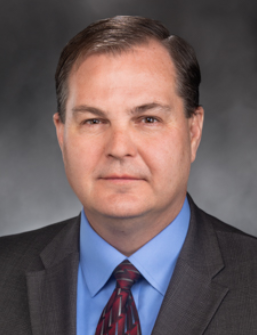
Senator John Braun was first elected to the Washington State Senate in 2012 to represent Southwest Washington’s 20th Legislative District, which includes most of Cowlitz and Lewis counties along with parts of Clark and Thurston.
John is leader of the Senate Republican Caucus and a member of the Senate Ways & Means Committee, the Labor & Commerce Committee, and the Housing Committee.
Prior to his business career, John served on active duty in the U.S. Navy. He holds a bachelor’s degree in electrical engineering from the University of Washington and master’s degrees in business administration and manufacturing engineering from the University of Michigan.
He and his family reside on a small farm in rural Lewis County, outside Centralia.
COMMENTARY DISCLAIMER: The views and comments expressed are those of the writer and not necessarily those of the Lynnwood Times nor any of its affiliate

Author: Lynnwood Times Contributor



One Response
John is a lying POS like the imposter in the White House and this “article” has more BS than a cattle farm.