

LYNNWOOD—The Lynnwood City Council voted unanimously on Monday, February 22, to terminate its contract with Flock Safety, scrapping a controversial network of automated license plate recognition cameras that had drawn months of fierce community backlash over privacy invasions and potential misuse for immigration enforcement. The Council’s decision was a swift reversal for a program once hailed as a crime-fighting tool but ultimately undone by eroded public trust and lapses in data security.
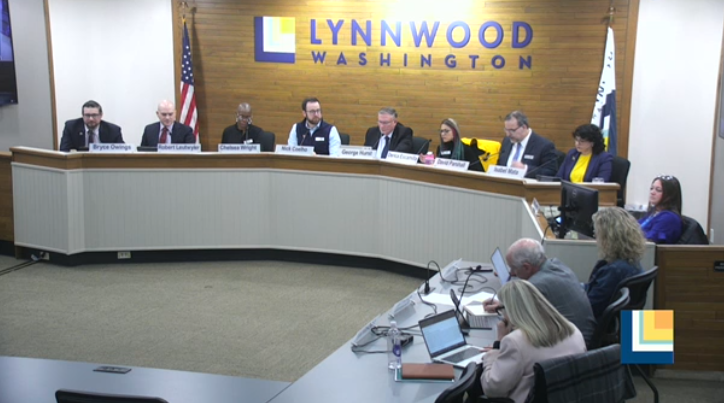
“Tonight was a victory for privacy, but more importantly, for civic engagement,” Quinn Van Order, a spokesman for Deflock Lynnwood, provided in a statement to the Lynnwood Times. “The community spoke up overwhelmingly in favor of privacy and the council heard their voices. I’m extremely grateful to council for their actions this evening in restoring privacy to our community.”



Monday’s meeting saw overwhelming pushback: All written communications and in-person comments — about 20 total — urged cancellation, with no support voiced. Speakers warned of perpetual AI training on data, contract changes favoring Flock under Georgia law, and ineffective state oversight. “This technology is fundamentally flawed,” resident Quinn Van Order said. “Please restore privacy to the city.”
Council members casted their vote as a matter of principle, prioritizing resident concerns and local values over the system’s touted benefits in curbing auto thefts.




“Public safety is important, and I support the thoughtful use of tools that help solve crimes,” Council Vice President Derica Escamilla said. “However, broad, always-on surveillance that logs the movements of everyone who drives through public streets without strong legal protections for privacy and accountability is out of step with community expectations [and] Lynnwood’s values.”


Councilwoman Isabel Mata, who spearheaded the motion to add the cancellation to the consent agenda, in a shrewd parliamentary maneuver, pointed to patterns that fueled public doubts about oversight.
“The contract with Flock has failed on its most basic requirement, trust,” Councilwoman Mata said before her vote. “Council was not promptly informed of a data access breach. Promises that the system would not be used for immigration enforcement were broken. Safeguards we were told were in place did not work.”
The council’s action to cancel the Flock Safety contract came despite Mayor Goerge Hurst’s plea to delay the vote to cancel the Flock Safety contract until the state legislature passes a bill regulating such cameras, with the session set to end March 12.
“Amendments to that bill, are still coming in, and one of those votes happens tomorrow,” Mayor Hurst shared. “I believe it would be prudent for this council to wait and see what the state legislature has decided regarding the use of flock cameras.”
Monday’s vote capped a tumultuous saga that began more than a year earlier. In January 2025, the council unanimously greenlit a two-year pilot program for 25 Flock Falcon cameras, positioning them at high-traffic and high-crime spots to scan plates around the clock and flag vehicles tied to crimes. The setup aimed to tackle soaring motor vehicle thefts, with cameras generating “vehicle fingerprints” — details like make, model, color and plate number — and alerting officers in real time via machine learning. Data would be deleted automatically after 30 days, and the system avoided facial recognition or speed tracking.
The ALPR system supported Lynnwood’s public safety efforts by aiding in the recovery of stolen vehicles, assisting with AMBER Alerts and missing person cases, supporting violent crime investigations, and to enhance officer safety.
Funding came largely from a $132,700 grant by the Washington Auto Theft Prevention Authority, with the city chipping in $38,453.50 for a total cost of $171,153.50 over the lease. The cameras went live on June 29, 2025, and early results showed promise: Over four months, car thefts dropped 58.7%, with 10 stolen vehicles recovered, some containing firearms, and arrests linked to theft, robbery and assault.
A University of Washington Center for Human Rights report titled, “Leaving the Door Wide Open: Flock Surveillance Systems and Immigration Enforcement in Washington State,” suggested that Lynnwood’s ALPR data may have been accessed for immigration-related queries. The Lynnwood Police Department confirmed that no federal law enforcement agencies accessed Lynnwood’s ALPR data during June 29, 2025 (date the system became operational) and July 8, 2025, (date the root cause and Corrective Action Plan was determined).
By July 2025, unauthorized access by out-of-state agencies, including Pennsylvania’s Franklin County Sheriff’s Office and Florida’s Jacksonville Police Department, exposed vulnerabilities in Flock’s nationwide search feature.
LPD then disabled the tool on July 9 and on July 10 limited sharing of data only to Washington state law enforcement agencies with agreements.
Community opposition swelled through the Fall 2025. At an October 27, 2025, meeting, nine of 16 public comments railed against the cameras, decrying privacy erosion, warrantless tracking and risks to marginalized groups. Residents argued the system created a “mass surveillance state,” logging innocent drivers’ movements without cause and handing control to a Georgia-based vendor beyond local reach.
On October 30, the council paused the program to bolster safeguards, citing compliance with the Keep Washington Working Act, which bars local aid to federal immigration enforcement. During this pause, all system access was disabled, and cameras turned off.
Then-mayor Christine Frizzell defended the use of flock cameras stating they continue to play a vital role in the city’s public safety efforts, granting valuable insights on criminal activity taking place within the city, and allowing the city to “strategically deploy” its resources.
While active between July to October 2025, the ALPR system contributed to numerous successful investigations and public safety efforts, including:
- Averaging 66 alerts per month for stolen vehicles or license plates — the equivalent of nearly 800 alerts per year.
- Assisting in the recovery of 10 stolen vehicles and the arrest of suspects involved in child sexual assault, narcotics investigations, theft, and identity crimes.
- Locating a missing elderly male, helping ensure his safe return home.
- Providing critical leads to regional law enforcement partners in ongoing criminal investigations.
The termination of the Flock Safety contract, under Section 7 of the master services agreement, now means that the City may forfeit the remaining value from its $38,453.50 investment, though exact unrecouped amounts depend on the lease’s early exit terms.
“Now that Council has provided direction related to the contract with this vendor, we will be working with the city attorney on this action, which should allow us to have a better understanding of potential fiscal impacts,” Chief Cole Langdon told the Lynnwood Times after Monday’s vote. “We should have more information in the near future.”
Lynnwood now aligns with cities like Mountlake Terrace and Olympia, which axed similar deals over privacy and trust issues, while others like Edmonds, Redmond, Skamania County, Stanwood, and Sedro Woolley suspended use.
Successes of Flock Safety Cameras in Washington State
Flock Safety’s automated license plate recognition (ALPR) cameras have been deployed by several law enforcement agencies in Snohomish County, including the Snohomish County Sheriff’s Office (2), Arlington (26), Everett (74), Lake Stevens (5), Mill Creek (18), Monroe (18), Mukilteo (10) and Marysville (30).
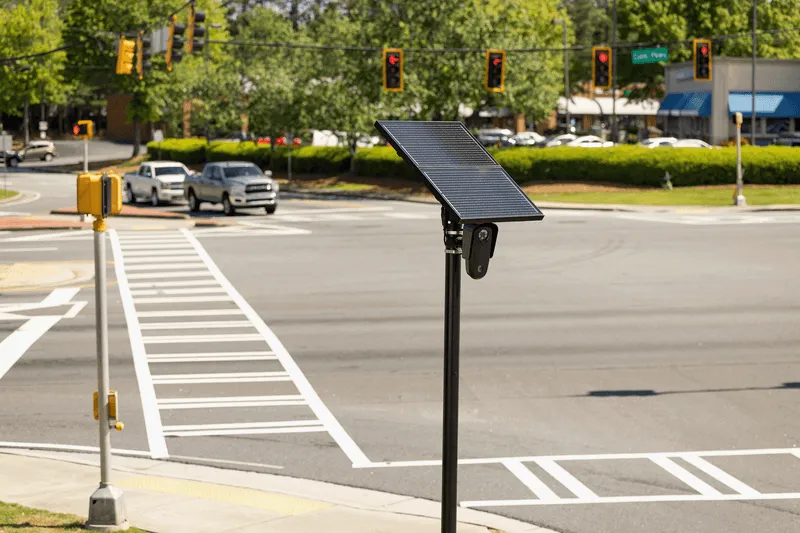
Since installing 57 Flock cameras at the time in October 2024, Everett saw a 67% drop in monthly stolen vehicles in 2025 compared to the previous three-year average. From September 2024 to August 2025, the system contributed to 183 arrests, 95 vehicle recoveries, and 386 investigative assists. The City of Everett currently has 77 Flock Safety cameras in operation, according to the department’s official transparency portal last updated on February 17, 2026.
Yakima was among the first Washington cities to adopt Flock cameras in 2022, installing them to combat vehicle thefts and other crimes. It was instrumental in 688 investigations overall, with specific contributions to 392 stolen vehicle recoveries, 11 homicides, 78 hit-and-runs, 56 assaults, 52 eludings, 24 robberies, and 17 fraud cases.
Since 2022 with widespread installation and use of Flock Safety cameras in Auburn, Airway Heights, Black Diamond, Bonney Lake, Centralia, Chehalis, Cheney, Des Moines, East Wenatchee, Eatonville, Ellensburg, Federal Way, Grandview, Kent, Lakewood, Liberty Lake, Medina, Mount Vernon, Normandy Park, Prosser, Puyallup, Renton, Richland, SeaTac, Spokane Valley, Sunnyside, Tukwila, and Wenatchee, the Washington Auto Theft Prevention Authority (WATPA) reports a 36.3% reduction in auto thefts as of the end of 2024 that peaked at 679.2 per 100,000 residents in 2023.
Nationally, Washington ranked seventh in vehicle theft rate for 2024, with 432.7 thefts per 100,000 residents—above the U.S. average of about 250 but down from its third-place spot in 2022.
WATPA issued approximately $2.7 in grants to 45 agencies between April – July 2024. Most of the grant
money went towards Automated License Plate Reader (ALPR) technology along with Drone technology and
technology aimed at reducing pursuits.
As of the first half of 2025, Washington had slipped to 10th place to an auto theft rate of 115.2 per 100,000 residents according to the National Insurance Crime Bureau.
How to reduce your chances of being an auto theft victim
Below are suggestions by Puget Sound Auto Theft Task Force (PSATTF) to lessen your risk of becoming a victim:
- Remove or hide all valuables
- Lock your car
- Don’t leave keys or fobs inside
- Don’t leave your vehicle running unattended (exhaust in cold months makes these vehicles easy to spot)
- Use anti-theft devices (alarm, kill switch, steering wheel lock)
- Park in well-lit areas
It is encouraged that residents who live in apartment complexes to make it priority to invest in an anti-theft device. Steering wheel locks are strongly recommended for owners of Hyundai and Kia models that are vulnerable to theft as these are a visual deterrent to auto thieves.
PSATTF also suggests placing a GPS tracker, such as an Air Tag or Tile, in the vehicle so that it can be tracked if it is stolen.
Lastly, drivers should not leave their vehicles running unattended—it only takes seconds for a car thief to steal a running vehicle.

Author: Mario Lotmore