


OLYMPIA [By: Cassie Diamond] – An effort by Washington legislators to introduce tighter regulations on cryptocurrency kiosks as these machines increasingly become sites of fraud is dead for this session after failing to pass out of committee Feb. 25.
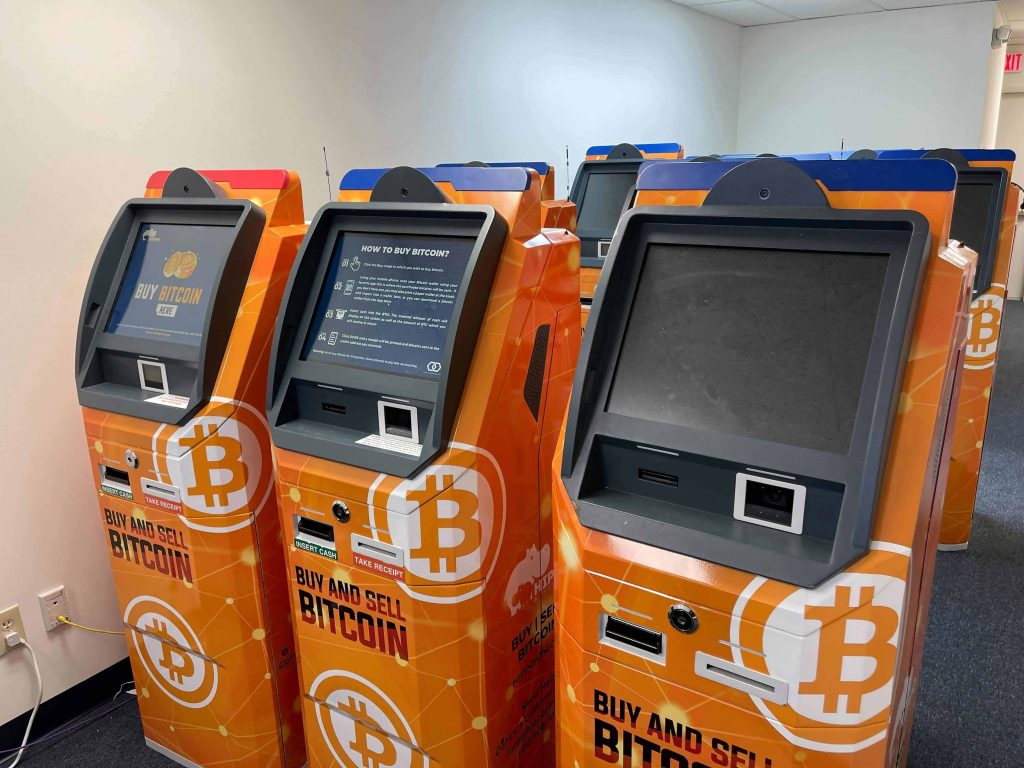
According to bankrate.com, a cryptocurrency kiosk lets a user buy — and in some cases, sell — bitcoin using cash or a debit card. They don’t connect to a bank account; instead, they transfer cryptocurrency to a digital wallet.

They can typically be found in supermarkets, gas stations, restaurants, malls, and other convenient locations.
However, this new technology has also become one of the latest tools used by scammers to target vulnerable community members.



Senate Bill 5280 aimed to implement stricter regulations on crypto kiosks in order to protect consumers from the rising rates of fraud associated with these machines


New requirements proposed in the bill included a $2,000 daily transaction cap per consumer, limits on transaction fees, clear fraud warnings on every kiosk, and receipts for all transactions.
“We must continue to close gaps that allow bad actors to exploit emerging financial technologies, and this bill helps ensure innovation does not come at the expense of consumer safety,” prime sponsor Sen. Claudia Kauffman, D-Kent, said in an email statement.
The FBI found scams involving crypto kiosks led to an estimated $246.7 million in reported losses in 2024.
Older people are especially vulnerable to these kinds of scams. The same FBI report found that about 72% of the victims in crypto kiosk scams were over 60.
A common tactic for scammers exploiting these machines is to create a “crisis” by tricking a potential victim into believing something is wrong with their bank account or that they are in legal trouble.
To remedy this false crisis, victims are instructed to deposit cash into a crypto kiosk, where the money is then routed directly into the scammer’s crypto wallet.
Because crypto kiosk transactions are rapid, irreversible, and anonymous, scammers are able to evade being caught by law enforcement and retain any stolen money.
Andy Caldwell, the police chief of Centralia, supported the measure, describing the current situation regarding crypto kiosk scams as “heartbreaking.”
“We see schoolteachers losing $20,000, we see elderly folks losing their entire $10,000 life savings, and we have no way to recover those funds,” he said. “There’s nothing we can do to help them.”
According to the Washington State Department of Financial Institutions (DFI), there are currently 482 crypto kiosks operating in the state.
This bill isn’t the first effort by Washingtonians to restrict crypto kiosks.
In 2025, Spokane banned all crypto kiosks within the city following a rise in crypto scams in Washington that cost consumers in the state $141 million in losses in 2023.
This ban was one of the first of its kind in the United States, with several other cities across the nation going on to adopt bans of their own.
However, DFI policy director Drew Bouton emphasized that SB 5280, which was requested by DFI, does not intend to shut down crypto kiosk businesses in the state. Rather, he said it only seeks to apply reasonable regulations that protect consumers.
“We think this is a convenience, we acknowledge it as such, and we can see certain reasons why it can be used,” Bouton said. “We also know that because it’s highly anonymous, there is a lot of crime associated with it … So we’re trying to strike a balance.”
Crypto kiosk operators said they were opposed to the bill as drafted, but suggested they may be open to supporting it if certain changes were made.
Larry Lipka, the general counsel for CoinFlip, said one area of concern is the $2,000 daily transaction limit.
He explained that while this limit is a good idea for new users who may be more susceptible to scams, those who have been using these kiosks for longer should be able to purchase larger amounts of cryptocurrency.
Lipka pointed to other states such as Illinois, Maryland, and Colorado that have different transaction caps for new and existing users as examples of how Washington could implement a similar approach.
SB 5280 was introduced during the 2025 legislative session, passing the Senate but failing to reach the House floor.
It was brought back this session and voted out of the Senate in a 37-12 vote. It received a public hearing in the House Consumer Protection and Business Committee Feb. 24.
The measure was scheduled for an executive session Feb. 25, but action was deferred. The cutoff for policy committees to pass bills from the opposite chamber was the same day, meaning the bill is dead for the session.
An amendment proposed by the committee chair, Amy Walen, D-Kirkland, would have increased the daily transaction limit to $2,500 for people who have been customers for less than 72 hours, and added a daily transaction limit of $10,500 for people who have been customers for 72 hours or longer.
If the legislation had passed out of committee, Washington could have joined a growing number of states that have enacted regulations aimed at protecting consumers from crypto kiosk scams.
The Washington State Journal is a nonprofit news website operated by the WNPA Foundation. To learn more, go to wastatejournal.org.

Author: Washington State Journal



One Response
I was in a very terrible place after all i ever saved was stolen from me by my girlfriend, She claimed she invested all of it in Forex not knowing it was a Ponzi Scheme , everything was taken from me until I hired the Best Recovery Agency I could find Treqora , I saw a post rom the F1 sportswoman Danica Patrick talking about them and how they helped her recover her lost crypto currency. So i had to tell them the state I was and they attended to me with swift , I was never asked for an upfront payment. But the whole recovery took 2-3weeks before my savings was recovered.Reach out to the Best Crypto Recovery Agency Treqora, if you want to get back your cryptocurrency from hackers , ponzi schemes, Investment platforms. Recover lost Bitcoins with Treqora. via Email:support@treqora. com,WhatsApp: +1 (7 7 3) 9 7 7 – 7 8 7 7 ,Website: Treqora. com.