

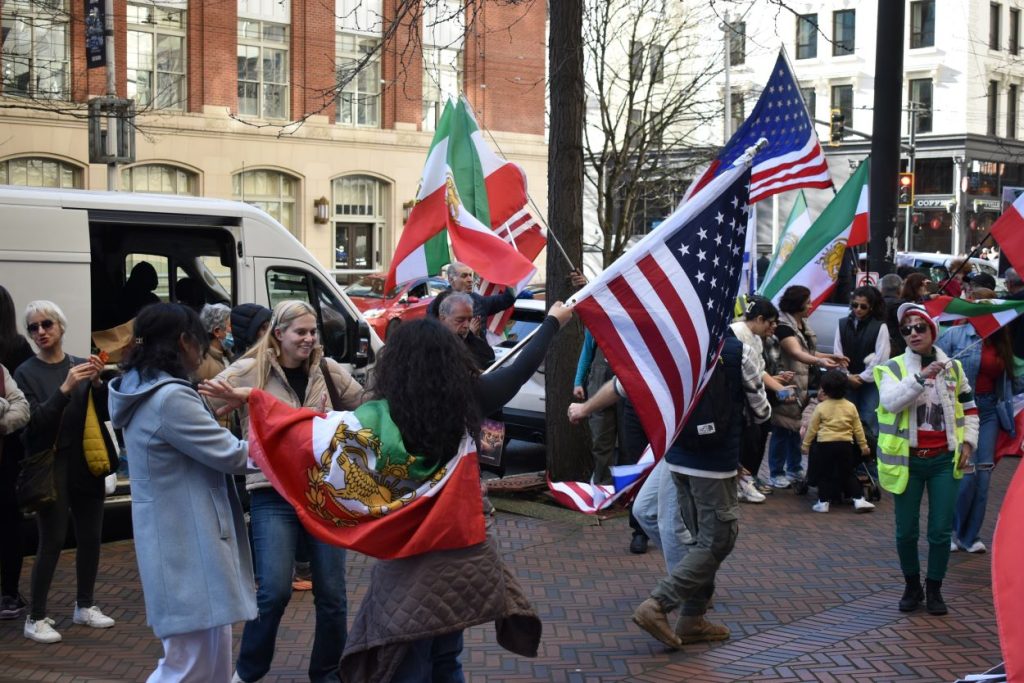
SEATTLE — Iranian Americans and supporters gathered Sunday at the Federal Building in downtown Seattle to celebrate the death of Iran’s Supreme Leader Ali Khamenei and press for the collapse of the Islamic Republic, hailing U.S. and Israeli actions as the catalyst for a new, democratic Iran.
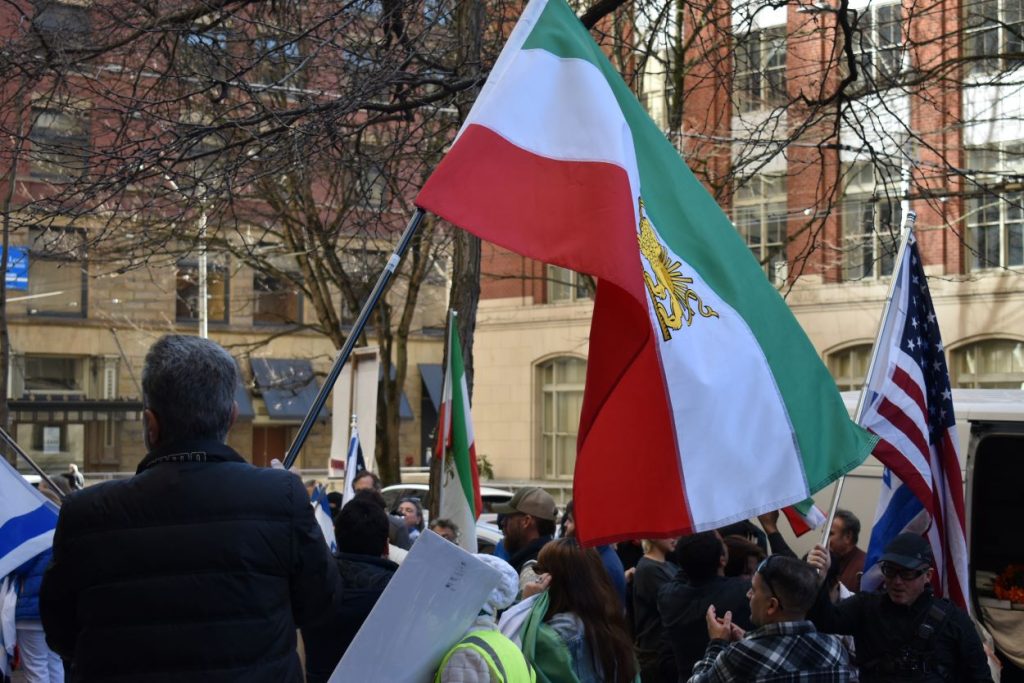
Organizers billed the event as the Stand with the Iranian People for Regime Change rally. Waving Iranian flags from the Shah Pahlavi era, attendees cheered “USA! USA!” and listened to several speakers who described the moment as the fulfillment of years of weekly protests that began after the 2022 death of Mahsa Amini in morality police custody.


Iran’s morality police, officially the Guidance Patrols (Gasht-e Ershad), are a specialized unit of the national police (NAJA) created in 2005. Their role is to enforce strict Islamic moral codes, focusing on women’s compulsory hijab and public modesty. These morality police patrolled streets, stopped people, issued warnings, arrested and/or detained violators, and refer cases to courts, that were backed by Sharia-derived laws and surveillance. Violations range from fines to flogging, to detention or re-education classes to death for “corruption on earth” in extreme cases.
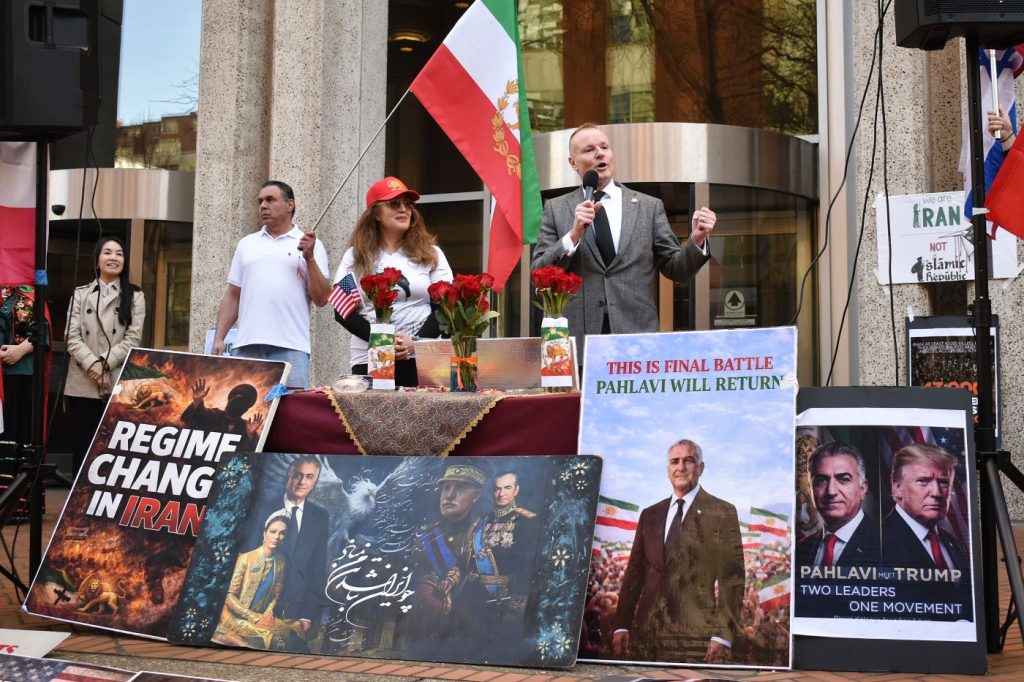
Homera, one of the rally’s organizers thanked everyone adding, “I pray with all of my heart that everything moves forward, and we see a free Iran soon.”



Matthew Patrick Thomas, a member of the Republican National Committee, recalled how the Seattle gatherings calling from regime change started with roughly 20 people on a street corner to grow to crowds sometimes topping 1,000.
“You guys kept the faith,” he told attendees. “Regime change in Iran will bring peace in the Middle East, it’ll bring commerce to the Middle East, and it’ll stop exporting terror from that country.”
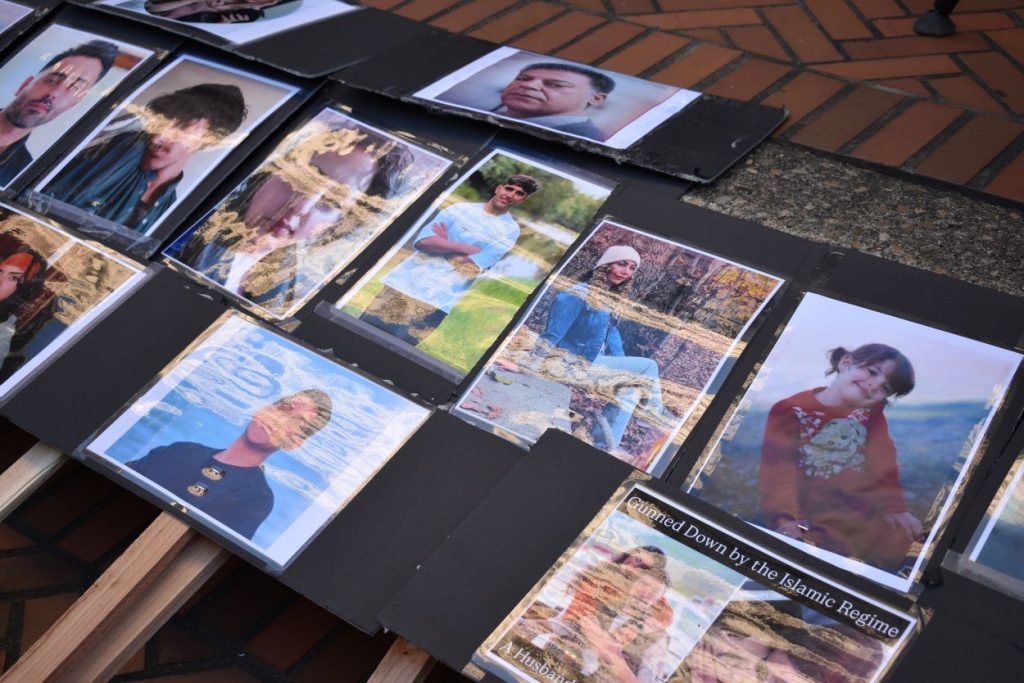
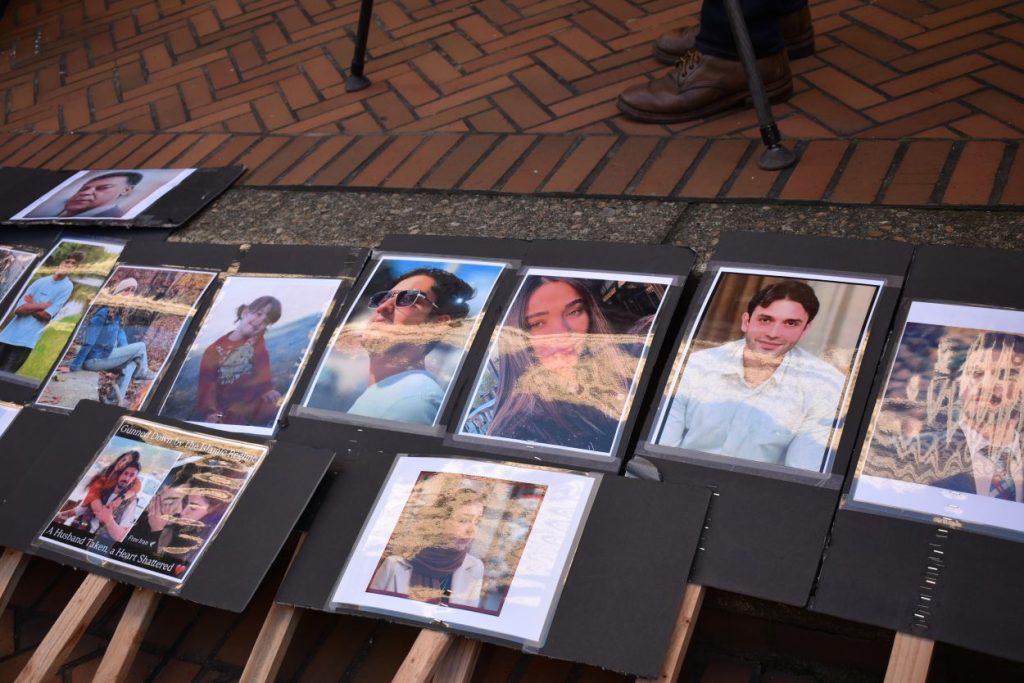
Shayan Arya, who is an engineer, an expert on Iran, and a human rights political activist, declared the day “wonderful” after years of waiting for Ayatollah Ali Khamenei’s removal. Less than 50 days earlier, he said, Khamenei had ordered the massacre of tens of thousands of Iranians during anti-regime protests.
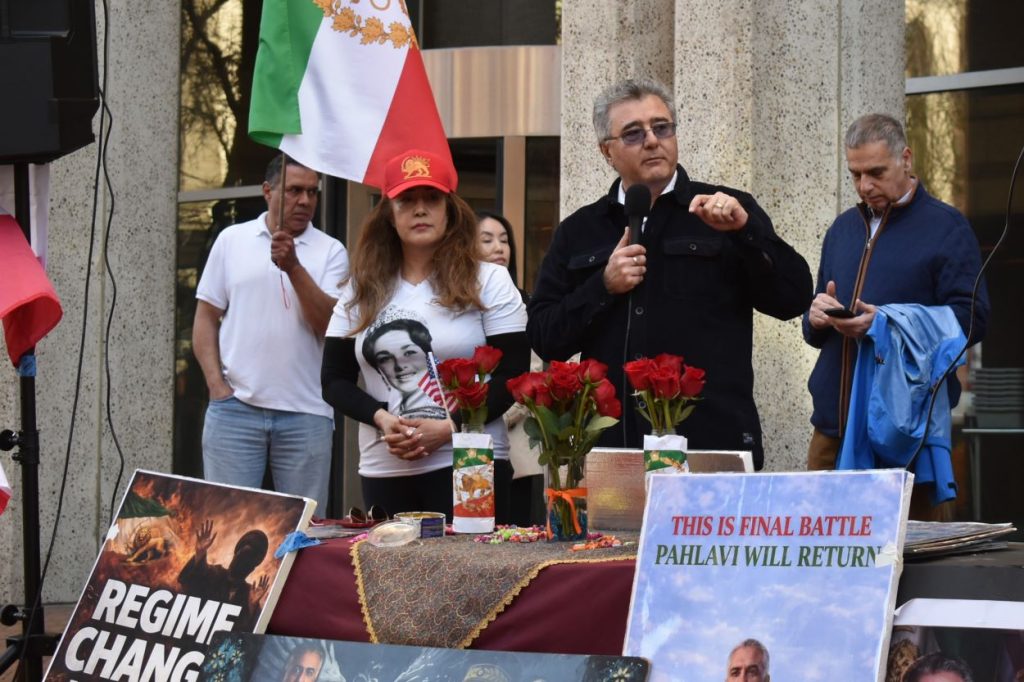
“Thanks to the U.S., thanks to President Trump, thanks to Israel and Prime Minister Bibi Netanyahu, he [Khamenei] is no longer with us,” Arya said.
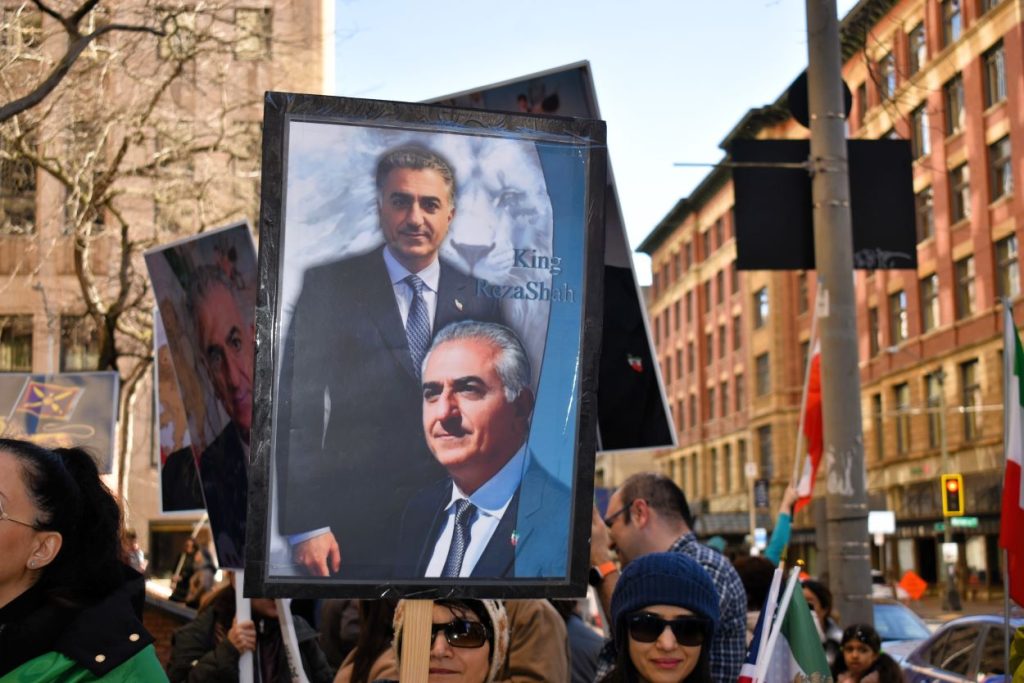
He urged support of exiled Crown Prince Reza Pahlavi as the leader of a future secular Iran that would ally itself with the United States and Israel, cooperate with Arab neighbors and end Tehran’s support for terrorist groups.
“This is not the end,” Arya added. “This is just the beginning of a long journey.”
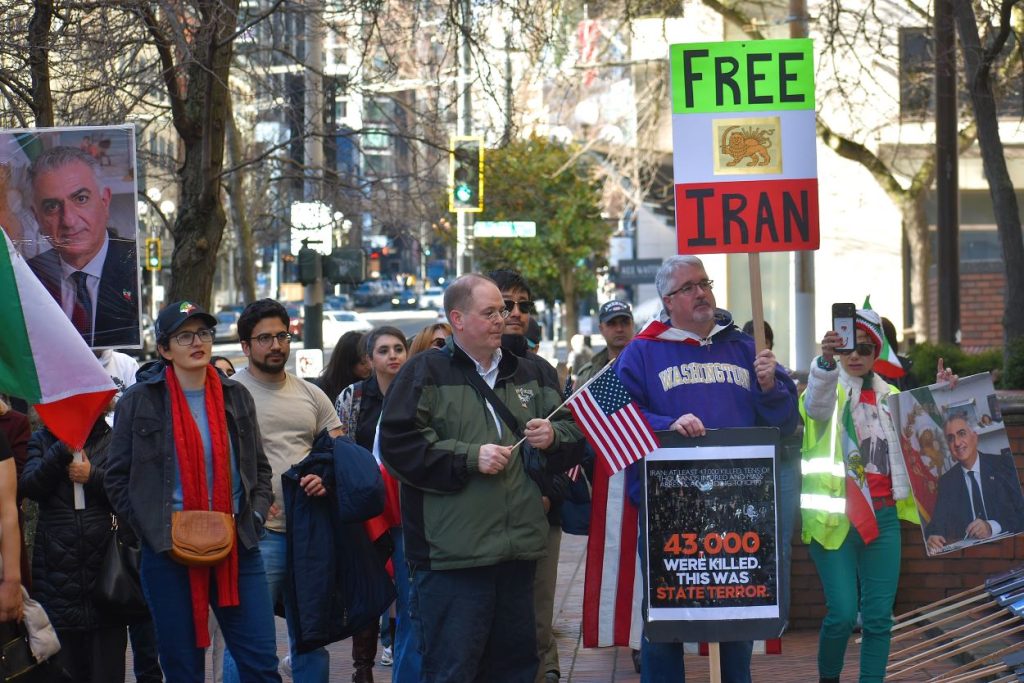
Arya asked attendees with contacts inside Iran to reinforce Pahlavi’s call for calm and readiness.
“Be ready for the time that he calls for the action,” he said, adding that there are videos already emerging of Iranians dancing in the streets despite the recent bloodshed.
Congressional candidate Trinh Ha, speaking on behalf of Vietnamese Americans who fled communist rule, drew parallels to her father’s imprisonment for supporting the United States during the Vietnam War.
“When I see the people of Iran, I see the same courage, I see the same sacrifice, I see the same longing for liberty,” Ha said.
University of Washington student Arvin, who had planned to wear black in mourning for the recent dead, told the crowd he changed his mind after news of Khamenei’s death. He paid tribute to the Iranian students, shopkeepers and teenagers killed in the crackdown earlier this year by the Iranian regime, then shared some Persian poetry and history — from the flag of resistance against the tyrant Zahhak to the legacy of Cyrus the Great — to argue that the Iranian people have rebuilt their nation before and will do so again.
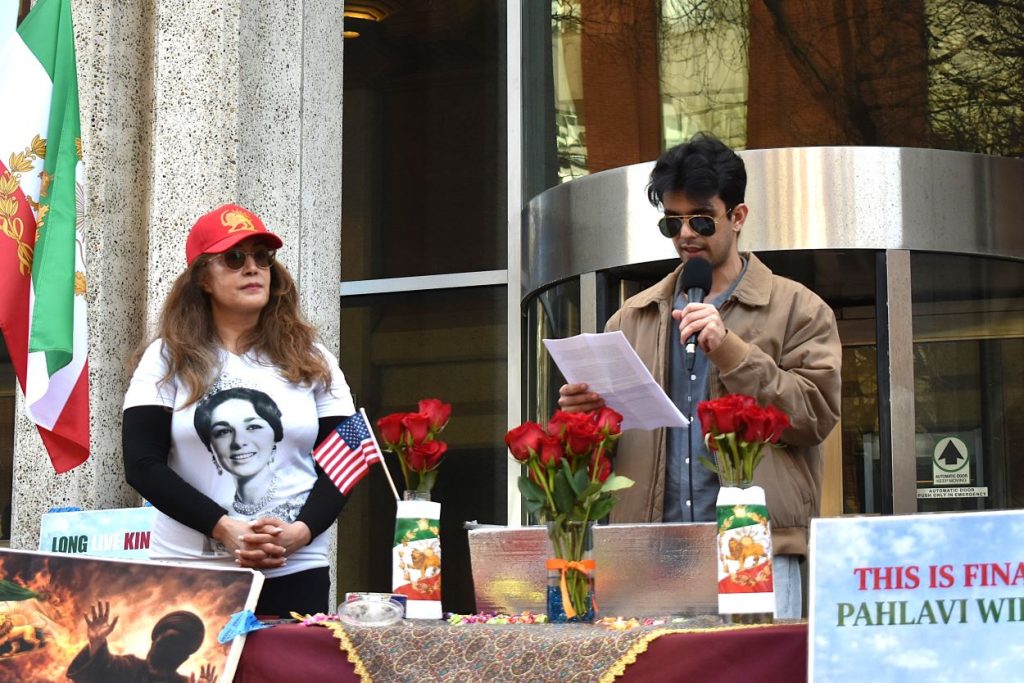
“The road ahead is not simple,” Arvin said. “The IRGC [Iranian Revolutionary Guard Corps] is still there, and the regime structures remain.”
He thanked the United States and Israel for acting when Iranians were “being slaughtered in the streets.”
Speakers repeatedly stressed that toppling the regime serves not only Iranians but global security. Several shared the 2,700 years of historical ties between Iranians and Jews, forged anew through shared struggle.
Jews first arrived in large numbers after the Babylonian Exile (586 BCE). In 539 BCE, Cyrus the Great—the founder of the Achaemenid Persian Empire—conquered Babylon and issued the famous Edict of Cyrus, freeing the Jews, funding their return to Jerusalem, and enabling the rebuilding of the Second Temple.
Persian Jews lived continuously under Achaemenid, Parthian, Sassanid, and later Islamic rule, and contributed to Persian culture, language, medicine, trade, and poetry. After the 1979 Islamic Revolution, fear of persecution, executions, and anti-Jewish policies triggered a mass exodus of approximately 80,000 Iranian Jews to mostly Israel and the United States.
The 47-year Iranian Dark Age
For more than 2,500 years, the Persian people forged one of history’s most influential civilizations, exporting ideas that still shape the modern world while the current theocratic regime stands accused of hijacking political power and dragging the nation into a dark age of isolation and control.
Cyrus the Great, founder of the Achaemenid Empire in the sixth century B.C., created the ancient world’s largest and most diverse realm.
After conquering Babylon in 539 B.C., he issued decrees inscribed on the Cyrus Cylinder — widely regarded as the first charter of human rights — freeing slaves, allowing displaced peoples including Jews to return home, and guaranteeing freedom of worship and racial equality.
Persian rulers built the Royal Road, an efficient postal system and gardens that gave the world the word “paradise.” Their model of tolerant governance inspired thinkers from ancient Greece to America’s Founding Fathers.
Persian scholars powered the Islamic Golden Age. Mathematician Al-Khwarizmi developed algebra — his name lives on in the word “algorithm” — while polymath Ibn Sina (Avicenna) wrote “The Canon of Medicine,” Europe’s standard medical textbook for 600 years. Poet Ferdowsi spent three decades composing the Shahnameh, preserving Persian language and identity after Arab conquest.
Yet that luminous legacy dimmed sharply after the 1979 Islamic Revolution that led to the uprising of Shah Mohammad Reza Pahlavi’s rule initially by a unification of secular democrats, leftists and Islamists around promises of freedom and justice.
Ayatollah Ruhollah Khomeini, returning from exile, seized leadership of the movement, sidelining allies, purging opponents and enshrining absolute clerical power through the doctrine of velayat-e faqih, or guardianship of the Islamic jurist.
Under successive supreme leaders, the Islamic Republic imposed strict religious rule, curtailed human rights —especially that of women — suppressed dissent through mass arrests and executions, and diverted resources to regional proxies—Hezbollah and Hamas—and a costly nuclear program.
Chronic economic mismanagement, international sanctions and cultural restrictions have left the past 47 years as a dark age that reversed decades of modernization.
The Persian people’s record of resilience and creativity endures as a powerful reminder of what Iran has given humanity — and what many attendees told the Lynnwood Times, believe it can and will reclaim.

Author: Mario Lotmore