
SELMA, Ala.— Washington state Attorney General Nick Brown joined civil rights leaders and elected officials in Selma, Alabama, this weekend to commemorate the 61st anniversary of Bloody Sunday, participating in a panel discussion on voting rights and marching across the Edmund Pettus Bridge to honor the sacrifices that led to the Voting Rights Act of 1965.
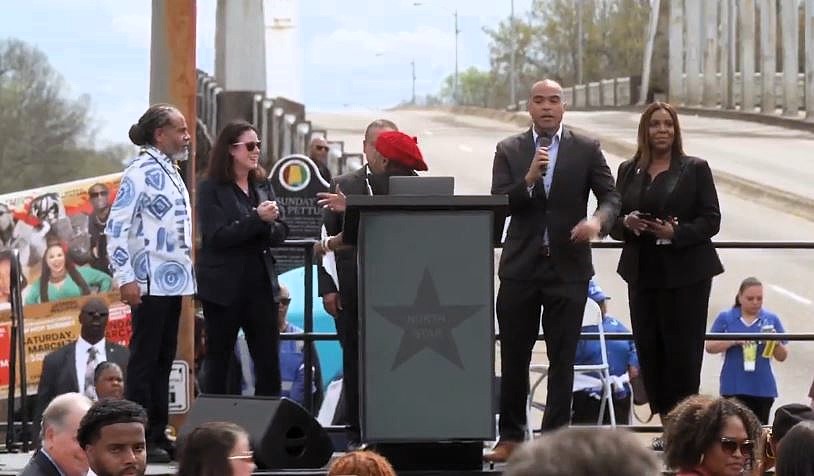
Brown, the first Black attorney general in Washington’s history, centered his involvement around the ongoing fight for democracy and equality, emphasizing his role as “the people’s lawyer” during events that drew thousands to the historic Edmund Pettus Bridge, one of the Civil Rights movement’s pivotal moments.



On March 7, 1965, in Selma, Alabama, about 525 Black demonstrators, led by John Lewis and Hosea Williams, gathered at Brown Chapel AME Church to march for voting rights. They aimed to walk to Montgomery but were stopped at the Edmund Pettus Bridge by Alabama state troopers and possemen.
Major John Cloud, commander of the Alabama State Troopers, gave the order to disperse and then declared the gathering an “unlawful assembly” and instructed the protestors to “go home or go to your church.”




After refusing to disperse, the peaceful protestors were brutally attacked with billy clubs, whips and tear gas broadcasted on national television, resulting in a national outcry and exposed Southern racism. At least 17 people were hospitalized, including Lewis with a fractured skull, and dozens more injured.

This violent confrontation, called Bloody Sunday, prompted President Lyndon B. Johnson—a Southern Democrat—to urge action on the Voting Rights Act in his March 15 speech. The act passed with bipartisan support but faced opposition from Southern Democrats (Dixiecrats), who largely voted against it, and was signed into law by President Johnson on August 6, 1965.
The annual Bridge Crossing Jubilee, held from March 6-8, 2026, featured a mix of panels, rallies and a symbolic march, to recognize both progress and persistent threats to voting rights.
Brown, as part of a delegation of Democratic attorneys general, took part in the “Our Selma Moment: Fighting and Building” panel discussion on Saturday at the historic Brown Chapel AME Church, co-hosted by the Lawyers’ Committee for Civil Rights Under Law and the New Jersey Institute for Social Justice. Moderated by Damon Hewitt, the committee’s president and executive director, the discussion included Minnesota Attorney General Keith Ellison, New York Attorney General Letitia James and Illinois Attorney General Kwame Raoul.
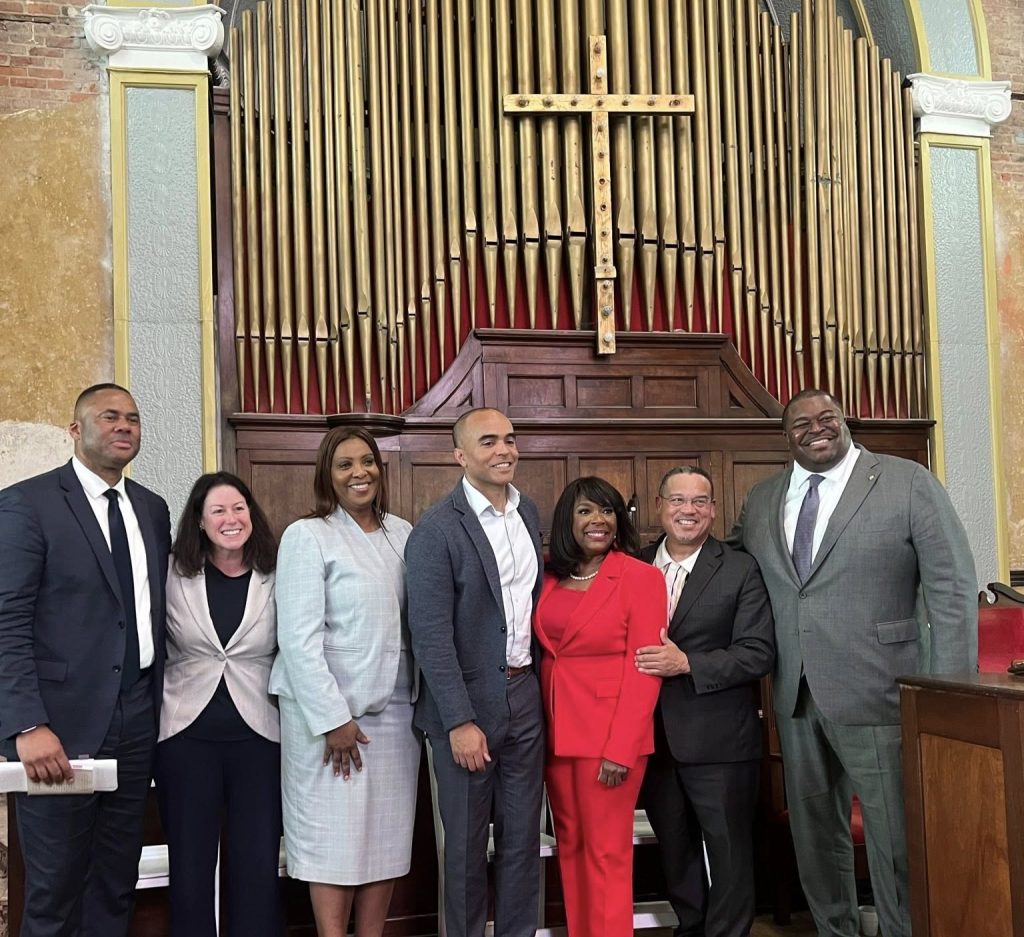
Panelists reflected on lessons from past freedom fighters and strategies to counter modern assaults on democracy from the Trump administration, such as legal challenges to voting laws and diversity initiatives.
As a former U.S. attorney appointed by President Joe Biden, Brown has positioned himself as a defender of marginalized communities, aligning with the Jubilee’s themes of resilience and action.
The following day, March 8, thousands marched across the Edmund Pettus Bridge, including notable figures like former U.S. Transportation Secretary Pete Buttigieg, U.S. Rep. Terri Sewell of Alabama and civil rights activist Rev. Mark Thompson.
Prior to the march Brown joined the pre-bridge crossing rally, where speakers urged continued vigilance.
U.S. Rep. Jim Clyburn of South Carolina, a longtime civil rights advocate and former member of the Southern Christian Leadership Conference (SCLC), opened with a nod to history, noting that only 3% of African Americans in Alabama were registered to vote in 1965.
“We will not give up. We will not give in. And we will keep our eyes on the prize,” Congressman Clyburn said.
He invoked Thomas Paine’s “The [American] Crisis,” warning against “summer soldiers and sunshine patriots” in the fight for democracy as the nation approaches its 250th anniversary.
Civil rights activist Rev. Al Sharpton followed, framing the commemoration as a call to action rather than mere remembrance.
“No justice…No Peace! No justice…No Peace! No justice…No Peace! No justice…No Peace!,” Sharpton opened.
He warned of current threats to the Voting Rights Act, including the Supreme Court challenges to Section 2 of the act, and criticized efforts of the Trump administration to undermine diversity, equity and inclusion (DEI) programs.
Section 2 of the Voting Rights Act of 1965 prohibits voting practices that discriminate based on race, color, or language minority status. In Louisiana v. Callais, SCOTUS is examining whether race-conscious redistricting under Section 2 violates the 14th or 15th Amendments, potentially limiting or invalidating this provision.
“We’re here today not to commemorate, but to continue,” Sharpton said. “We cannot sit here and act like we’re walking down memory’s lane. We are here in the drill room, practicing for the fact that we’re going to have to do a lot more marching and a lot more registering voters.”
Sharpton drew parallels between past segregationists and modern figures, declaring, “There’s no difference between bigots in their dungarees and their overalls and bigots on Fifth Avenue with manicures.” He urged resistance, chanting, “We won’t go back!”
Illinois Gov. JB Pritzker then spoke, honoring Rev. Jesse Jackson, who passed away the previous month and had long ties to Selma. Pritzker praised Jackson’s role in the movement and called on attendees to recommit to civil rights amid rising racism and efforts to erode voting protections.
“We are the inheritors of theirs,” Pritzker said of the Bloody Sunday marchers. “It’s now on us to bend the arc of the moral universe toward justice. It’s on us to keep hope alive.”
Minnesota Attorney General Keith Ellison introduced Washington AG Nick Brown, New York AG Letitia James, New Jersey AG Jen Davenport, and Illinois AG Kwame Raoul, sharing their collective legal efforts against “lawbreaking” figures.
“We are here with you in this sacred place because we are committed to being with the people,” Ellison said on behalf of the attorneys generals.
“Each one of us have sued Donald Trump about 50 times,” Ellison said. ” We’re in court with this guy because he’s breaking the law. We don’t wake up in the morning looking to sue Trump, but he wakes up in the morning breaking the law, so we sue him and that’s what we do.”
Ellison began by praising the courage of his colleagues, saying: “Now you all may not know about Nick Brown, but you will. He is the Attorney General for the state of Washington. He is killing it out there.”
Earlier in the rally, Ellison was commended for his support of the National Voting Rights Museum which he rescued from financial troubles that kept the “museum alive” which was “about to die.”
Brown expressed to rallygoers his love for being “the people’s lawyer,” and his daily efforts to protect individual rights, freedoms, and the rule of law.
“I love being the people’s lawyer because we fight every day for your rights and your freedom and to keep this country the way it’s supposed to be for people on the ground and the rights and the rule of law,” Brown said.
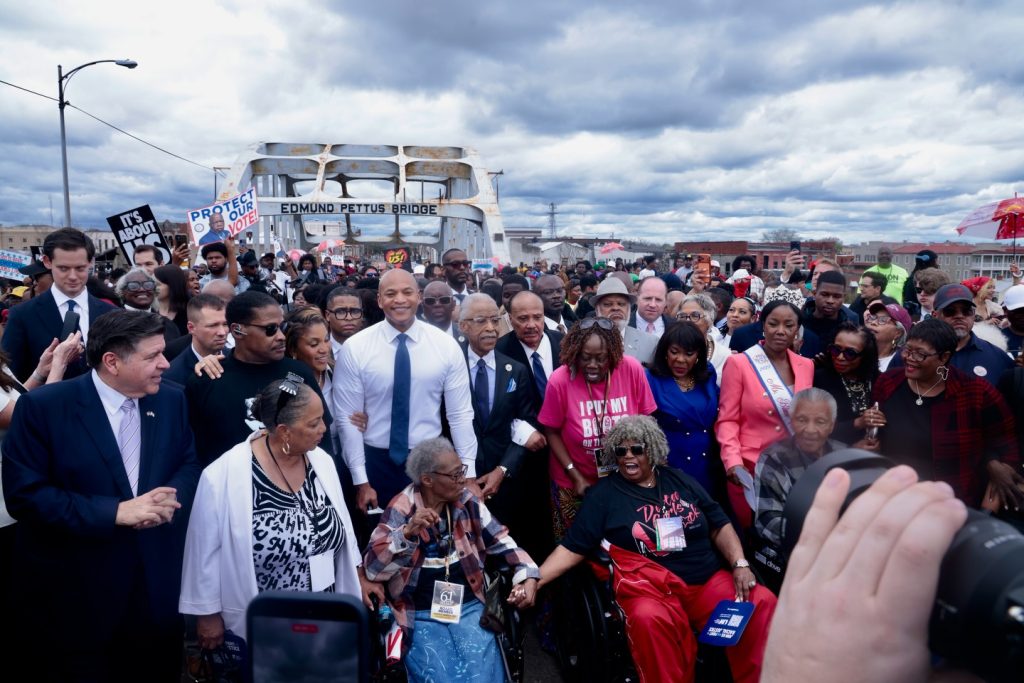
The Jubilee is organized by The Bridge Crossing Jubilee, Inc., and has drawn luminaries over the years, including former Presidents Barack Obama, Bill Clinton and George W. Bush, as well as activists like Rosa Parks and Coretta Scott King. This year’s events also included a warrant clinic, a public conversation on civil rights progress, a documentary screening by Black Voters Matter and an HBCU student teach-in.

Author: Mario Lotmore