


SEATTLE — Federal agents in Washington state arrested 87 people and pulled 54 kilograms of fentanyl, 151 kilograms of methamphetamine, 16 kilograms of cocaine and 114 firearms off the streets during a 30-day blitz that removed more than 2.8 million potentially deadly doses (adjusted for impurities) of fentanyl from Washington state communities, the U.S. Drug Enforcement Administration announced Wednesday, March 19.
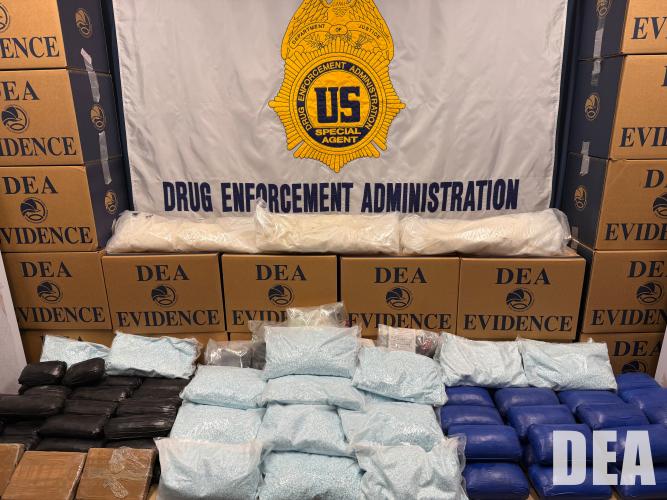
“These results demonstrate DEA’s relentless commitment to dismantle the cartels driving the fentanyl crisis and to reduce the availability of these deadly drugs as we work toward a Fentanyl Free America,” said Robert A. Saccone, Special Agent in Charge, DEA Seattle Field Division. “DEA is leveraging our expertise in cartel operations, illicit finance, and intelligence sharing to save American lives. By removing millions of deadly doses from our communities and holding these criminal networks accountable, we are striking directly at the heart of their operations. DEA will not let up until fentanyl no longer threatens our communities.”


The operation marked Phase II of the DEA’s Fentanyl Free America initiative, a nationwide push launched to dismantle transnational criminal organizations blamed for fueling the synthetic opioid crisis. From Jan. 12 to Feb. 10, agents seized more than 4.7 million counterfeit fentanyl pills and nearly 2,396 pounds of fentanyl powder equivalent to 57 million deadly doses officials said.
The Seattle division’s takedowns were part of a broader effort that netted 3,080 arrests, 1,577 firearms and almost $83 million in cash and assets across the country. Agents also seized nearly 21,000 pounds of methamphetamine powder, more than 26 million methamphetamine pills, 147,797 pounds of cocaine, 1,183 pounds of heroin and 65,142 pounds of illicit marijuana.




Nationwide highlights included:
- A Louisville Field Division operation in Chattanooga, Tenn., that seized 17 kilograms of fentanyl and two industrial pill presses, preventing nearly 9 million lethal doses from reaching the public.
- A Baltimore enforcement action that resulted in 43 arrests, 7 kilograms of cocaine, 2 kilograms of a heroin-fentanyl mixture and more than $200,000 in cash.
- A Tucson, Ariz., seizure of nearly 600,000 counterfeit fentanyl pills.
- A New York task force that removed 60,000 fentanyl pills linked to cartel distributors.
DEA Administrator Terrance Cole said the cartels operate like multibillion-dollar corporations that have “weaponized fentanyl with the clear objective to increase America’s dependence on illicit drugs.”
“The drug poisoning epidemic has been cultivated by designated terrorist cartels,” Cole said in a statement. “Drug seizures in the United States strike directly at cartel profits, while efforts to disrupt supply chains and dismantle money laundering networks deliver consequences far beyond our borders.”
The initiative targets the entire supply chain — from clandestine laboratories in Mexico that use precursor chemicals and pill presses to the street-level distributors who move the drugs into Washington communities. Synthetic opioids such as fentanyl are often mixed with methamphetamine and cocaine in poly-drug operations, officials said.
Fentanyl-related overdose deaths in Washington state surged dramatically from 2020 to 2023 before declining in 2024, according to Washington State Department of Health data:
- 2020: 672
- 2021: 1,214 (81% increase)
- 2022: 1,850 (52% increase)
- 2023: 2,642 (peak; 43% increase)
- 2024 (preliminary): 2,250 (approximately 15% decline)
For context, total drug overdose deaths statewide followed a parallel pattern, rising from roughly 1,731 in 2020 to a high of about 3,459 in 2023 before falling to approximately 3,086–3,137 in 2024 (an 11% drop). In 2019, the baseline year before the sharp acceleration, synthetic-opioid deaths stood at 337.
Phase II followed a similar surge in October 2025 that produced slightly lower but still substantial seizures. Officials said the operations are designed to disrupt both supply and demand through enforcement, education and partnerships with state and local agencies.
The DEA is urging the public to report suspicious activity and learn more about the “One Pill Can Kill” awareness campaign at DEA.gov/fentanylfree.
Editor’s Note: Article updated on 3/24/26 at 11:51 a.m., to update the fatal doses of fentanyl seized by the Seattle DEA office from 27 million doses to 2.8 million doses of fentanyl which now accounts for impurities.

Author: Mario Lotmore






One Response
Thsts so crazy thst there was that much of an amlunt of drugs but im glad that it was siezed.