


The former president of GLAAD has said the prominent LGBTQ advocacy group erred in supporting the medicalization of children who identify as trans, calling for an end to such treatments even if it means admitting the approach was misguided.
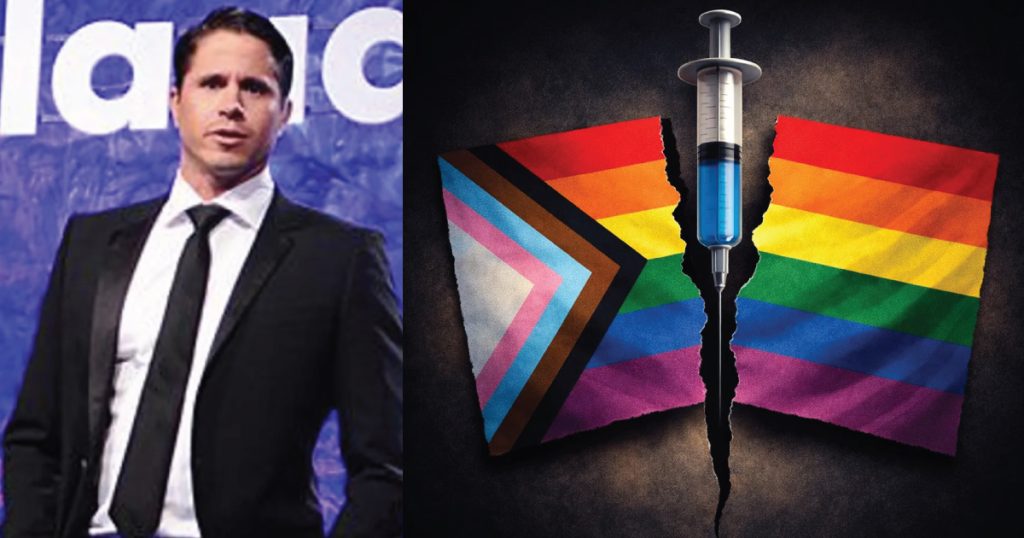
Herndon Graddick, who led GLAAD from 2012 to 2013, made the comments in the third episode of the podcast series “Strange Bedfellows: When LGB met T,” which debuted Friday on Longview’s Reflector podcast. The series examines the evolution of the gay rights movement into the broader LGBTQ movement.


“I think we need to correct what’s wrong first. And so that’s a big thing. I mean, particularly the medicalization of children,” Graddick told reporter Ben Kawaller and co-host Andy Mills.
Graddick, who joined GLAAD in 2010, added: “Teenagers and kids should not be given the power to make these life-altering decisions that medicalization causes.”



He continued: “I just think that we should completely stop doing anything that might harm children, even if it means we admit that we got something really wrong, and my understanding is that we have. … I think that there’s been a lot of fear about discussing things openly for fear of being called transphobic, and I think that we’re at a place that we can really have those conversations without that fear.”

Kawaller and Mills were surprise at the remarks during the episode.
Graddick’s comments came amid discussion of how GLAAD’s approach to transgender issues shifted after Sarah Kate Ellis became president and CEO in 2014.
Graddick described the organization’s earlier strategy for public figures who made missteps on trans issues as one of healing and finding a path forward rather than permanent condemnation, ridicule and vitriol.
Ben Appel, writer, LGBT activist and former GLAAD intern, in his Substack article on the podcast wrote that Graddick’s comments felt “vindicating” given his own discomfort with the organization’s later direction. A former GLAAD employee also contacted Appel to express similar feelings about the shift under Ellis, Appel added.
Appel shared that GLAAD, originally the Gay and Lesbian Alliance Against Defamation, dropped its full name under Graddick’s leadership to be more inclusive of the “T” community. In 2013, Graddick introduced two trans-identified children — 12-year-old Jazz Jennings and 6-year-old Coy Mathis — onstage at GLAAD’s annual awards gala. He told the audience that both children had inspired him.
GLAAD under Graddick, then worked on media campaigns around trans issues, including filing complaints over bathroom access for a transgender child and publishing guidelines for reporting on transgender people and violence against them.
Graddick’s remarks last Friday come as debates over youth gender medicine have intensified, with some European countries restricting puberty blockers and cross-sex hormones for minors following reviews of the evidence. In the United States, more than 20 states have enacted laws limiting such treatments for those under 18.
Jazz Jennings, who publicly transitioned as a child, Appel mentioned, began puberty blockers at age 11, cross-sex hormones at 14 and underwent genital surgery at 17, which required revisions due to complications. Jennings has since faced reported mental health challenges.
One of Jazz’s surgeons was Dr. Jess Ting, Appel stated, the same Dr. Ting reported in the Epstein files who allegedly performed personal favors for Jeffrey Epstein.
The United States Department of Health and Human Services (HHS) on December 18, 2025, announced it will terminate Medicare and Medicaid to any hospital that performs sex-rejecting procedures on minors, taking action to remove gender dysphoria as a disability, and sending “warning letters” to breast binder manufacturers.
U.S. District Judge Mustafa Kasubhai in Oregon on March 19 said he would grant a summary judgment in a lawsuit filed by Washington and 20 other states against the declaration ruling that it exceeded the secretary’s statutory authority and failed to follow required administrative procedures.
HHS Secretary Kennedy, Jr. in December of 2025 also signed a declaration, based on an HHS peer-reviewed report, finding that sex-rejecting procedures do not meet professionally recognized standards of health care for minors. Under the declaration, practitioners who perform sex-rejecting procedures on minors would be deemed out of compliance with those standards.
HHS published a 14,000-person peer-review study of minors who received sex-rejecting procedures between 2019 and 2023, that current evidence does not support claims by health care providers, families, and policymakers that puberty blockers, cross-sex hormones, and surgeries are safe and effective treatments for pediatric gender dysphoria.
Andy Mills’ podcast is part of a full three-part series “Strange Bedfellows” exploring tensions between gay rights and trans advocacy.
The push to ‘drop the T’ from LGBTQ movement
A growing number of lesbians, gay men and bisexuals are calling to separate trans and queer issues from the broader LGBTQ movement, arguing that the push for gender identity policies conflicts with same-sex attraction, women’s rights, and the acceptance of gender-nonconforming youth.
The “Drop the T” effort dates to at least 2015, when a Change.org petition signed by about 850 people urged major groups like GLAAD and the Human Rights Campaign to dissociate from trans advocacy. Major LGBTQ organizations rejected it at the time. But the idea has since taken institutional form through breakaway groups such as the LGB Alliance USA.
“We have long argued that lesbians, gay men and bisexual people have little in common with those who identify as TQ+,” LGB Alliance UK says on its website. “We believe that the forced teaming of same-sex attracted and TQ+ people, through the use of the aggregate term LGBTQ+ suggests, wrongly, that these distinct groups have common objectives. We don’t, and this umbrella term serves both groups badly.”
Britain’s LGB Alliance, founded in 2019 as a registered charity, explicitly focuses on same-sex attracted people and opposes what it calls the “confusion between sex and gender” promoted by groups like Stonewall.
In 2025, LGB groups from several countries launched LGB International, declaring independence from the “trans and queer movement” to reclaim a focus on sexual orientation.
In the United States, Gays Against Groomers has highlighted similar tensions, describing itself as fighting radical gender ideology that it says harms children and same-sex attracted adults.
Advocates within the LGB separatist movement are critical of allowing biological males, who identify as women, into women’s prisons, shelters and sports teams arguing that it infringes on female privacy and safety.
Lesbian dating apps have become another battleground of the LGB separatist movement.
The popular app HER, which markets itself to women, has suspended or banned users who state they are seeking biological females only, describing such preferences as discriminatory. In 2023, HER sent a push notification telling “transphobes” to delete the app. Some lesbians, including British activist Jenny Watson, reported being kicked off platforms for writing in their profiles that they wanted same-sex relationships. Watson later created her own app L’App using facial recognition to verify biological sex.
On the other side, some trans-identified men—trans men—have joined male-oriented hookup apps like Grindr. Gay male users have complained that the apps’ policies sometimes prevent them from filtering out biological females, while trans men have reported rejection or fetishization when gay men seeking same-sex partners decline to match with them. Grindr has allowed filters for trans users but faced criticism from some gay men who say the platform no longer prioritizes biological males.
Proponents of dropping the T also contend that the trans movement harms gender-nonconforming children arguing that masculine girls once accepted as “tomboys” and feminine boys as “effeminate” or potentially gay are now encouraged to identify as the opposite sex and pursue medical transition—a genocide of homosexuality.
Detransitioners and some clinicians have pointed to “rapid-onset gender dysphoria” and social influences as factors, with concerns that this path medicalizes what could be ordinary variation in gender expression or early signs of same-sex attraction.
European countries including Sweden, Finland and the U.K. have restricted puberty blockers and cross-sex hormones for minors following evidence reviews, citing weak benefits and risks including infertility and bone loss.
Mainstream LGBTQ organizations reject the “Drop the T” push calling it divisive and harmful.
GLAAD and the Human Rights Campaign have long maintained that trans rights are intertwined with LGB rights and that discrimination based on gender identity stems from the same prejudice against those who do not conform to gender norms. The orgs argue that excluding transgender people weakens the coalition that fought for marriage equality and anti-discrimination laws.
LGB Alliance and similar groups say their goal is not to oppose transgender adults living as they wish but to protect sex-based rights, same-sex spaces and the ability of young people to grow up without rushing into irreversible changes.

Author: Mario Lotmore




3 Responses
Trans women are not “biological males.”
Uh, yes they are biological males… AMAB
“ On the other side, some trans-identified men—trans men—have joined male-oriented hookup apps like Grindr.” Did you men trans-identified women-trans men”