
LYNNWOOD— The Lynnwood City Council convened for a focused meeting about expanding the city’s participation in the federal Opportunity Zone program during its Business Meeting Monday, April 6.
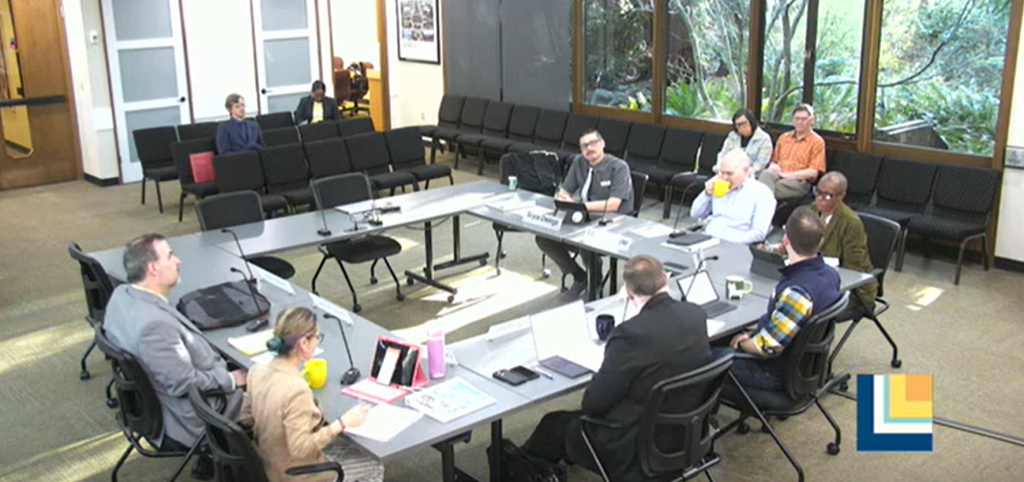
The meeting began with a brief round of council comments, where Councilwoman Derica Escamilla shared her recent experience at the Hero’s Café, Council member Bryce Owings shared his experience on a recent tour of the Enso Project (which has begun to lease), Council member Chelsea Wright reminded the public of Deaf Awareness, and Council member Isabel Mata – currently out of town for Passover, tuning in remotely – shared her experiences touring the Wastewater Treatment Plant.

Lynnwood Mayor George Hurst, and Council members David Parshall and Chelsea Wright, also congratulate former Lynnwood Public Information Office Nathan McDonald for his most recent promotion to City Clerk.
Diving into the one, and only, agenda item of the evening, City Center Program Manager Sarah Cho and Ben Wolters, Development and Business Services Director, led council through a presentation on a potential new opportunity zone near City Center, which provide federal tax incentives to encourage private capital investment in qualifying census tracts to support economic development and job creation.




Opportunity Zones were created under the Tax Cuts and Jobs Acts in 2017, and revised under the One, Big, Beautiful Bill in 2025.
Washington State currently has 139 designated opportunity zones across 36 counties.
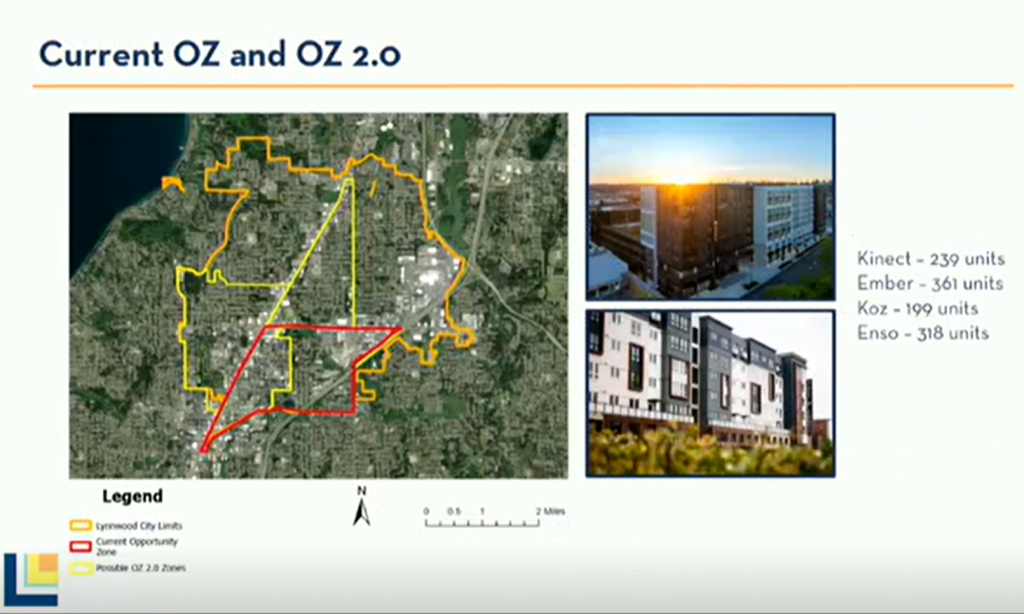
The City of Lynnwood currently includes a designated Opportunity Zone under the original program which contributed to the recent development of City Center. The City partnered with the Economic Alliance of Snohomish County (EASC) for this designation.
A forthcoming, updated Opportunity Zone (2.0) will provide new guidelines and requirements for future participation in the program. The Washington State Department of Commerce is leading the State’s process for identifying and selecting qualifying applications to be submitted to the U.S. Treasury department for approval.
According to Cho, the new program would feature permanent changes to the policy’s geographic targeting criteria, incentive structure and reporting requirements. It would narrow future opportunity zones (OZ’s) to more distressed communities, to direct capital int truly underserved areas, she continued.
“Based on what we are currently seeing in development in the city, initially our recommendation will be to reapply to two of the same census tracks that are currently in our current opportunity zone. We are still waiting for additional guidance from the Department of Commerce and the federal government whether these four tracks will be eligible as they are making some tweaks in what the eligibility requirements will be,” said Cho.
Cho continued that Lynnwood is essentially asking for two census tracks this time around, so double the original. In its application they will include major development projects the city has undertaken within the last five years, and other developments anticipated within the next decade.
Council member David Parshall was first to ask a question, following the presentation, asking if there was anything council needed to know about making Lynnwood more competitive throughout the process.
Wolters answered that it’s a great question, and the team have been attending a series of learning sessions and webinars. The process was originally set for April 1, he said, but it was delayed pending information from the Department of Treasury and which census tracks would be eligible. As of now it seems the eligibility requirements align with designations with “real development opportunities”, Wolters continued.
“If that’s the criteria they’re using then Lynnwood stands out because we have demonstrated forcefully, and significantly that the market is interested in our area,” said Wolters. “One might ask, well if you’ve already proved that the area is attractive to investment then why do you need this incentive? The fundamental value, for the community, is that having this additional incentive really expands the number of potential developers and the quality of development. There’s less financial pressure, and as a result it has helped us get to a place with these developers where they feel real confident building a better product. But we’ll know more hopefully in the next several weeks.”
Council President Nick Coelho asked what will be done in the interim.
Cho replied that Governor Ferguson is expected to submit nominations for Washington State some time in July and then the U.S. Treasury would designate final OZ’s beginning January, 2027.
Council member Mata shared some concerns about wanting to specifically target underserved communities, adding that, to her, it sounds a lot like “gentrification.”
She continued that OZ’s, and the Multifamily Tax Exemption (MFTE) program are similar in that they both incentivize development but with the MFTE the city can “add guardrails and affordability requirements whereas with opportunity zones it doesn’t seem those same guardrails are in place,” she said.
“Are we actually making more opportunities for those who already live here or are these incentives that could price them out,” asked Mata. “Investment is only a win if our residents can stay to see the benefits.”
The short answer, according to Wolters, is no there are not similar guardrails. However, he continued, the city can implement their own requirements through its land use plan and development plans, as well as additional incentives layered on top of it.
“The concern about gentrification and displacement is real. In the case of city center, past Cit Councils and Mayors have really, very consciously, and deliberately, identified City Center to develop. If you already have buildings there, by definition, is displacement,” said Wolters. “One of the ways we do control is which census tracks we submit for approval. If you don’t want to incentivize redevelopment where you don’t want it, is to limit the census tracks you’re submitting.”
Wolters continued that this is a consideration Council can have a more in-depth conversation about, in regard to which census tracks to support.
Council will consider signing a resolution of support sometime next month.
Executive Session
Following the presentation on opportunity zones, council broke away for an Executive Session to interview candidates for the Assistant City Administrator position.
Memos for future action
Council memos that will return at future meetings include:
- Waiver of competition: WWTP Biological Sludge Deodorizing Agent
- Final Contract Acceptance: 40th Avenue Water Tank Improvements Phase 2
- Contract Award: Small Works Roster: ITB 4021 – WWTP Primary Clarifier Diamond Plate Support and Chlorine Tank Ladder Replacement
- Contract: Scriber Creek Corridor Sewer Main Improvement Project
- Agreement: Opioid Settlement Agreement Participation Form

Author: Kienan Briscoe