

LYNNWOOD—The Lynnwood City Council is set to take up several notable policy discussions and public hearings during its upcoming business meeting Monday evening, including proposals related to interim paid parking regulations, streamlined mobile food vendor permitting, and the city’s support for a renewed federal Opportunity Zone designation near City Center.
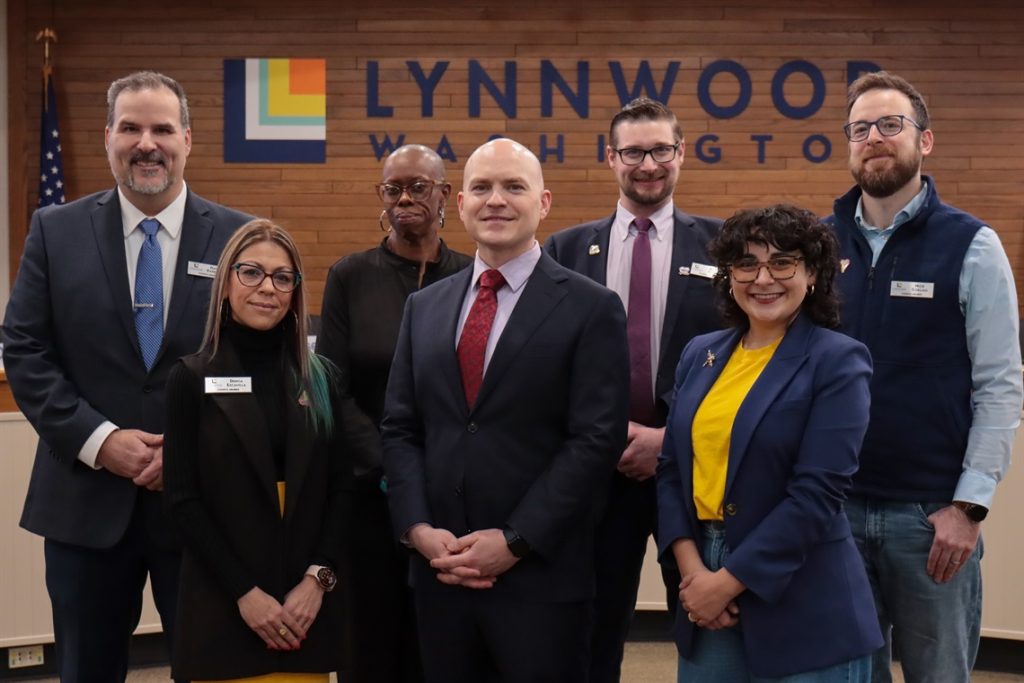
The meeting begins at 6 p.m. Monday, May 11, at Lynnwood City Hall. Residents may attend in person or virtually through the city’s website. Agenda materials and livestream information are available through the city’s meeting portal.
The evening’s agenda includes proclamations recognizing Asian American, Native Hawaiian and Pacific Islander Heritage Month, Memorial Day and National Public Works Week before transitioning into several business and legislative items expected to generate public discussion.
Interim Paid Parking Ordinance Heads to Public Hearing



One of the most significant items scheduled Monday is a public hearing regarding a proposed interim ordinance that would temporarily allow paid surface parking lots citywide for six months.

According to public hearing documents released by the city, the ordinance would amend portions of Lynnwood’s Unified Development Code to permit surface public paid parking on an interim basis while the city evaluates longer-term parking policy needs. The proposal does not authorize construction of new parking lots but instead regulates the use of existing privately owned paved areas.

Under the draft ordinance, paid parking would only be permitted on sites where a principal use already exists. Operators would be required to maintain compliance with accessibility, paving and development standards, and the business operating the parking facility would need to hold a valid city business license. Public transit park-and-ride facilities operated by transit agencies would be exempt.
The ordinance would also explicitly allow operators to offer hourly parking, monthly leases or event parking depending on business needs. The proposal comes amid increased regional discussion surrounding parking demand associated with transit-oriented development and the expansion of light rail service into Snohomish County.
The city previously issued a Determination of Nonsignificance under the State Environmental Policy Act, concluding the temporary code amendment would not create probable significant adverse environmental impacts.
Public testimony will be accepted during Monday’s hearing before council members deliberate possible next steps.
Council Expected to Consider Mobile Food Vendor Ordinance
Another major item on Monday’s agenda is consideration of a proposed ordinance intended to overhaul Lynnwood’s permitting system for mobile food vendors.
The proposal follows months of city staff review and public outreach after officials determined the city’s existing regulations were outdated, contradictory and difficult for vendors to navigate. According to city staff presentations discussed during an April 27 council meeting, the current code often sent applicants through conflicting approval processes that made obtaining permits unnecessarily difficult.
Planning staff told council members many food truck operators have either abandoned the permitting process or operated without permits because of confusion within the code.
The proposed ordinance would consolidate and modernize mobile food vendor regulations by moving portions of the code into Lynnwood’s land-use regulations and establishing a clearer permitting framework. The draft proposal would create multiple permitting pathways, including site-specific permits and non-site-specific permits, while also exempting vendors participating in city-approved special events.


Additional provisions in the ordinance would prohibit food vendors from operating within public rights-of-way unless participating in approved festivals or special events and would require vendors to visibly display permits while operating.
The city also conducted a public survey regarding the issue, receiving more than 140 responses.
The proposed permit fee under the draft ordinance is approximately $410, intended to offset staff review, inspections and enforcement costs.
Monday’s meeting is expected to include further council discussion and possible action on the ordinance.
Opportunity Zones 2.0 Resolution Also Scheduled
The council is also expected to consider a resolution connected to “Opportunity Zones 2.0,” a revised federal economic development initiative intended to encourage private investment in designated economically distressed areas through tax incentives.
Lynnwood officials discussed the updated federal program during an April 6 council work session, where city staff recommended seeking designation for two census tracts within the City Center area.
The original federal Opportunity Zone program, established under the 2017 Tax Cuts and Jobs Act, previously helped incentivize redevelopment in Lynnwood’s City Center district. City officials say the designation contributed to major mixed-use and residential development in the area over the past several years.
Under the revised Opportunity Zones 2.0 framework, federal and state agencies are expected to place greater emphasis on distressed communities while requiring additional reporting and accountability measures. Washington State’s Department of Commerce is currently coordinating applications before forwarding recommendations to the U.S. Treasury Department.
During the April presentation, council members questioned staff about balancing redevelopment incentives with concerns surrounding displacement and affordability. City officials acknowledged those concerns while arguing the city retains control over zoning and development standards even when participating in the federal program.
The resolution scheduled Monday would serve as a formal expression of council support as the city continues pursuing eligibility under the revised program.
Lodging Tax Advisory Committee Appointment Scheduled
Council members are also expected to interview and potentially appoint a candidate to the city’s Lodging Tax Advisory Committee, which advises the city on tourism-related funding allocations generated through hotel and lodging taxes.
The committee plays a role in reviewing tourism promotion proposals and recommending how lodging tax revenues are distributed to support events, tourism marketing and related economic activity within Lynnwood.
Consent Agenda Includes Routine Financial Business
Monday’s consent agenda includes approval of routine voucher claims and administrative items, in addition to the Opportunity Zones resolution.
Consent agendas are typically approved in a single vote unless council members request separate discussion on individual items.

Author: Kienan Briscoe