
Every May, something quietly powerful happens across the United States. In schools, community centers, government buildings, and living rooms, Asian American, Native Hawaiian, and Pacific Islander communities pause to celebrate who we are, where we came from, and what we have contributed to this great nation. It is called AANHPI Heritage Month — and for millions of Americans, it is far more than a calendar observance. It is a moment of recognition that has been a long time coming.
For me personally, it is also something I have needed my entire life.

A History Worth Knowing
AANHPI Heritage Month did not happen overnight. Its roots trace back to 1977, when Congressmen Frank Horton of New York and Norman Mineta of California — the first Japanese American elected to Congress from the continental United States — introduced a resolution to recognize Asian American contributions to the United States. The effort faced resistance and delay, but in 1978, President Jimmy Carter signed a proclamation designating the first ten days of May as Asian/Pacific American Heritage Week — chosen deliberately to coincide with two landmark dates: May 7, 1843, when the first Japanese immigrant arrived in the United States, and May 10, 1869, when the transcontinental railroad was completed — a monumental achievement built in significant part on the labor of Chinese immigrants who received little credit and even less recognition for generations.
It was not until 1992 that Congress formally expanded the observance to the full month of May, and not until 2009 that the name was officially expanded to include Native Hawaiian and Pacific Islander communities — a long-overdue acknowledgment that our communities span an extraordinary breadth of cultures, languages, histories, and experiences.




Today, AANHPI Americans number more than 24 million — representing the fastest-growing racial group in the United States. We are doctors, engineers, teachers, soldiers, artists, athletes, entrepreneurs, elected officials, and community leaders. We are, in every meaningful sense, woven into the fabric of this country.
And yet — for too many of us, for too long — our stories have been told incompletely, or not at all.
Why This Month Matters to GSKA
The Greater Seattle Korean Association has served the greater Seattle region for more than 60 years. Since our founding in 1967, GSKA has been a home — a place where Korean immigrants and Korean Americans could find community, support, advocacy, and belonging in a new land.
But over the decades, our mission has grown beyond the Korean community alone. Today, GSKA proudly serves a broad coalition of AANHPI families and communities of color — including Ethiopian, Somali, Latino, Filipino, Chinese, Taiwanese, Vietnamese, and many other communities — because we understand something fundamental: the immigrant experience is not uniquely Korean. It is universal. And the struggles, the dreams, and the contributions of every immigrant community deserve to be seen, celebrated, and supported.
AANHPI Heritage Month is one of the most important tools we have to make that happen. It is a time to educate, to elevate, and to remind our broader community that diversity is not a challenge to be managed — it is a strength to be celebrated. At GSKA, we use this month to deepen partnerships, expand programming, amplify voices, and remind the communities we serve that they belong here. Fully. Completely. Without apology.
Growing Up Between Two Worlds
I will be honest with you. AANHPI Heritage Month did not always mean what it means to me now. As a child growing up in America as the son of Korean immigrants, I spent years struggling with something I did not have words for at the time — the quiet, persistent ache of not fully belonging anywhere.
I was not “full Korean.” I had grown up in America, shaped by American schools, American friendships, American culture, American dreams. I spoke English without an accent. I thought in English. I dreamed in English. But when I walked into a room, I was seen as Korean — as foreign, as other, as somehow not quite American enough.
And yet, when I went back to Korea, or when I was among Korean elders in our community, I was not Korean enough either. I had grown up here. I did not fit neatly into that world either.
I was neither one thing nor the other. And for a long time, that felt like a loss.
What I have come to understand — and what I wish someone had told me as a child — is that it was never a loss. It was a gift.
The Dual Identity Is Not a Burden — It Is a Bridge
The children of immigrant families occupy a unique and extraordinary space in American life. We are Korean American. Vietnamese American. Filipino American. Ethiopian American. Mexican American. The hyphen in those identities is not a dividing line — it is a bridge. It connects two worlds, two cultures, two ways of seeing and being in the world. And that dual perspective is one of the most valuable things a person can possess.
Our parents came to this country with a singular belief — that America was a place where hard work and determination could build a life worth living. That belief is the original American dream. And it was not naive. It was visionary. Because the immigrants who came to this country — who worked the railroads, who built the farms, who opened the restaurants and the corner stores and the small businesses, who sent their children to school with the fierce conviction that education was the path to something better — they did not just pursue the American dream. They helped build it.
Immigrants have always been what makes America America. Our diversity is not a vulnerability. It is the source of our strength, our creativity, our resilience, and our greatness. Every wave of newcomers — every family that arrived with little more than hope and a willingness to work — has added something irreplaceable to the extraordinary, ongoing, unfinished project that is the United States of America.
The Value of Being Bicultural
Being bicultural is not about being caught between two identities. It is about being enriched by both. It is about carrying the wisdom, the values, the traditions, and the resilience of your heritage — while also embracing the freedom, the opportunity, and the promise of the country you call home.
A bicultural person sees the world in wider focus. They can build bridges that monoculturalists cannot. They can translate — not just languages, but experiences, values, and ways of understanding the world. In a global economy, in a diverse democracy, in a world that desperately needs more empathy and understanding across difference — bicultural Americans are not just assets. They are essential.
This is something GSKA believes to its core. We do not ask our communities to choose between their heritage and their American identity. We celebrate both. We honor both. We believe that a Korean American is not less Korean and not less American — they are fully, proudly, beautifully both.
A Closing Thought
AANHPI Heritage Month is not just a time to look back. It is a time to look forward — to the generation of young Korean Americans, Vietnamese Americans, Filipino Americans, and the children of immigrants from every corner of the world who are growing up right now, navigating the same beautiful, complicated space between two worlds that I once navigated alone.
I want those young people to know something I wish I had known sooner:
You are not between two worlds. You are the bridge between them. And this country — this extraordinary, diverse, imperfect, striving nation — needs you exactly as you are.
Happy AANHPI Heritage Month. Let us celebrate who we are, honor where we came from, and build together the future we all deserve.
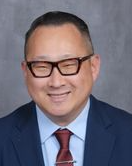
Sam Sim is the chairman of the Greater Seattle Korean Association (GSKA), founded in 1967. GSKA is one of the oldest and largest Korean American community organizations in Washington State, focused on strengthening civic engagement, promoting cultural exchange and building bridges across diverse communities throughout the Puget Sound region. Sim is a community leader committed to fostering collaboration, leadership development and inclusive community initiatives.
He can be reached at sam@seattle-ka.org.
COMMENTARY DISCLAIMER: The views and comments expressed are those of the writer and not necessarily those of the Lynnwood Times nor any of its affiliates.

Author: Lynnwood Times Contributor