

As the King and Snohomish Counties prepare to welcome soccer fans from around the globe for the 2026 FIFA World Cup, King County Metro has released a limited-edition ORCA card that fuses the region’s Indigenous artistic traditions with the thrill of the game.
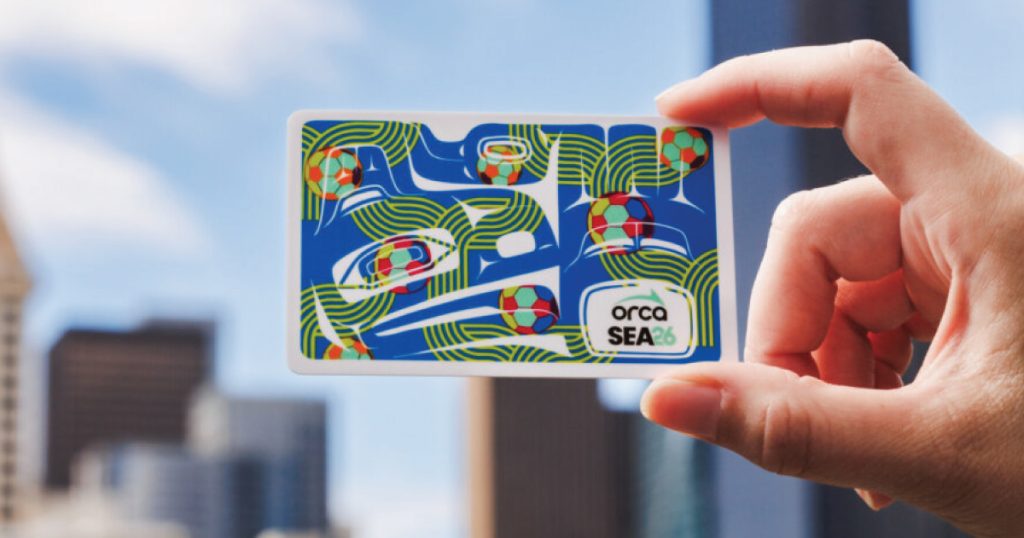
The collectible card, dubbed the SEA26 ORCA, marks Seattle’s status as one of 11 U.S. host cities for the tournament, which will bring six matches to Lumen Field between June 15 and July 19. Produced in a run of 27,000, the cards arrived just ahead of the international spotlight turning to the region. They serve as both practical transit tools and pocket-sized celebrations of local culture, created through a partnership between ORCA — the regional fare system led by King County Metro — and 4Culture, King County’s agency dedicated to arts, heritage and public programs.



At the heart of the design stands the work of Alison Bremner, a Tlingit multidisciplinary artist born and raised in Southeast Alaska and now based in King County. Bremner, who once played soccer herself, drew on Northwest Coast formline traditions to craft imagery alive with motion. A vibrant blue raven anchors the composition, joined by a green whale-tail pattern echoing the SEA26 branding and a flurry of multicolored soccer balls. The elements flow together in a continuous swirl that evokes the energy of the pitch against the backdrop of the Pacific Northwest.
“This card is meant to capture the joy and movement of soccer in the Pacific Northwest,” Bremner said of the piece, which also nods to her broader practice exploring themes of continuity, identity and humor while honoring Tlingit visual language.




Bremner studied under Tsimshian master carvers David A. Boxley and David R. Boxley and remains deeply involved in the revitalization of Tlingit art, language and culture. Her pieces appear in collections at the Burke Museum, Frye Art Museum, Portland Art Museum and the British Museum, and she creates work for both contemporary galleries and traditional ceremonial use within her community. The collaboration with ORCA offered a natural fit, merging her heritage with a sport that has long been part of her life.


The ORCA system, short for One Regional Card for All, functions as a reloadable smart card that simplifies travel across the Puget Sound region’s public transit network. Riders tap the card to board and transfer seamlessly among buses, Link light rail, Sounder trains, streetcars, water taxis and ferries operated by seven major agencies, including King County Metro, Sound Transit, Community Transit, Everett Transit, Kitsap Transit and Pierce Transit. Some services, such as certain Washington State Ferry routes or special trips, carry minor exceptions, but for everyday commutes and tournament travel alike, the card remains the region’s go-to payment method.
The special-edition SEA26 cards are now available in limited quantities at transit events and customer service centers run by participating agencies across the region.
Everett Transit, King County Metro, Kitsap Transit, Sound Transit, the City of Seattle and the Seattle FIFA World Cup Local Organizing Committee will handle distribution, often tying releases to match-day activities and community gatherings throughout the tournament period. Officials encourage fans to check agency websites and social channels for pop-up opportunities, as the cards are expected to move quickly.
Both Seattle and regional leaders have emphasized sustainable transit options to move the anticipated influx of visitors, aligning with broader goals of reducing congestion around Lumen Field and showcasing the area’s multimodal network. For locals and visitors alike, loading value onto an ORCA card — whether the commemorative version or a standard one — offers an easy way to navigate from stadium to downtown, or from neighborhood stops to ferry terminals.
All of your FIFA transit information can be found in these two links below:
- Snohomish County Focus: Everything you need to know about FIFA World Cup in Lynnwood
- Navigating Seattle: ALL YOU NEED TO KNOW: Regional leaders roll out ambitious No-Car Transit Plan for Seattle World Cup

Author: Mario Lotmore