

SEATTLE — Governor Bob Ferguson signed an executive order Monday, June 1, directing Washington state agencies to strengthen workplace support for employees experiencing menopause and perimenopause, framing the move as a practical step to retain experienced workers and reduce economic losses tied to a natural life stage that affects millions.
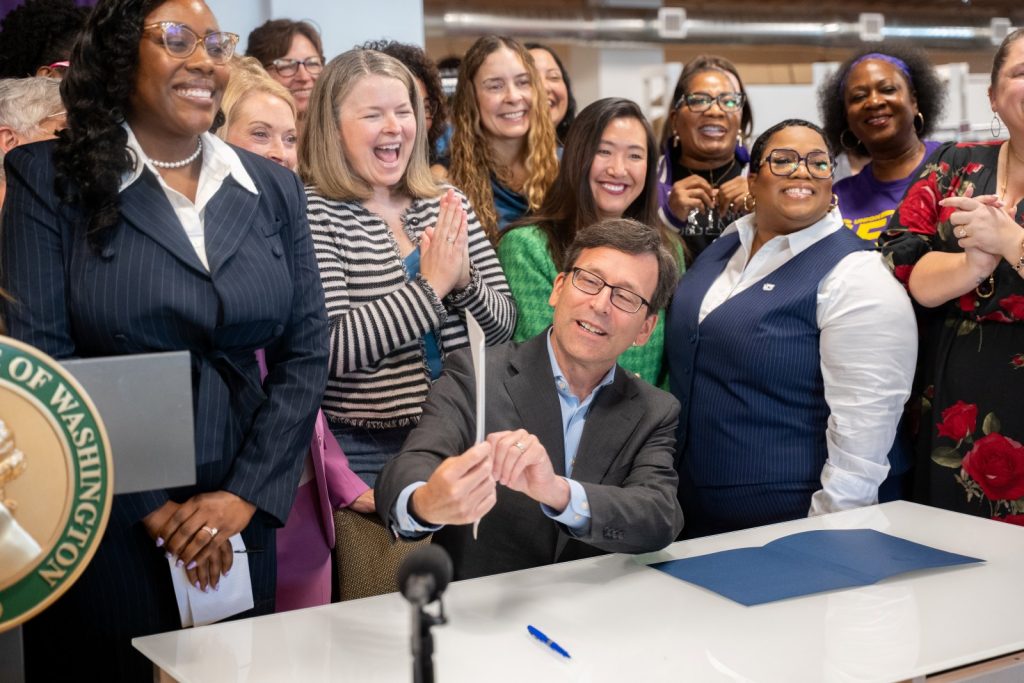
“We are losing women in the workforce with tremendous knowledge and experience because we are not doing enough to prepare for a natural stage of life,” Gov. Ferguson said. “As governor, my Administration will be a place where the best, most experienced workers can come serve the people of Washington, and know that they will be supported. We must do more to support women, and to support employers who want to keep their experienced staff in the workforce. This Executive Order ensures Washington will remain a leader in supporting our workers.”



Executive Order 26-01 invokes the Washington Law Against Discrimination, which already requires reasonable accommodations for medically cognizable impairments. The order calls on the Washington State Women’s Commission to partner with the Office of Financial Management and all executive and small cabinet agencies to review existing policies, identify best practices, and update reasonable-accommodation procedures tailored to each agency’s workforce. It also directs development of training materials, guidance for public and private employers, and recommendations for continuing-education credits for health care providers on menopause care.
The order takes effect immediately and applies primarily to state government operations while offering a model for the private sector. It does not alter collective-bargaining agreements or create new legal entitlements.




Roughly 38 percent of working women in Washington fall between ages 40 and 59, an age range when perimenopause and menopause symptoms often surface. Many women in that group contend with hot flashes, insomnia, brain fog and other effects that can disrupt concentration, attendance and career progression. Without support, those symptoms have contributed to premature exits from the workforce and missed leadership opportunities.


Brittany Gregory, executive director of the Washington State Women’s Commission, welcomed the governor’s commitment to women’s health.
“Menopause has been invisible in workplace policy for too long,” she said. “These are not burdensome changes; they are smart workforce policy that ensure experienced workers can stay, grow and lead.”
The Women’s Commission and Office of Financial Management will further collaborate with the Department of Health, the Bree Collaborative, the Health Care Authority and the Attorney General’s Office to create training for employees, human-resources staff and managers. The commission will also explore professional licensing credits for menopause education with various health-profession boards and draft broader guidance that other public and private employers can use. All agencies must share their existing reasonable-accommodation policies with the commission within 12 months. A progress report is due to the governor’s office by April 30, 2027.
According to the executive order, approximately 1.3 million women in the United States enter menopause each year of which 34 percent of those with symptoms go undiagnosed. New studies suggest many women begin perimenopause in their 30s. Black, Asian and Latina women often experience earlier onset than white women, while rural women report more severe psychological and physical burdens. A Mayo Clinic study estimates that menopause-related productivity losses cost the U.S. economy $1.8 billion annually in direct losses.
Washington joins a small but growing list of jurisdictions addressing menopause explicitly in employment policy.
Rhode Island became the first state to require reasonable accommodations for menopause and related conditions when it amended its Fair Employment Practices Act in 2025. The law obligates employers to accommodate symptoms such as vasomotor effects unless doing so would impose undue hardship.
In December 2025, Philadelphia became the first major U.S. city to add menstruation, perimenopause and menopause to its protected classes under the Fair Employment Practices Ordinance, with the measure taking effect Jan. 1, 2027.
Lawmakers in California introduced Assembly Bill 1940 in February 2026 to fold perimenopause, menopause and postmenopause into the definition of “sex” under the state’s Fair Employment and Housing Act. Similar proposals have surfaced in Illinois, Pennsylvania and other states, though none have yet matched Rhode Island’s enacted mandate.
Public-health experts and workforce analysts have long noted that menopause symptoms affect an estimated 90 percent of women age 35 and older, according to AARP surveys, with two in five considering leaving their jobs because of them. The Society for Women’s Health Research has reported that one in four women have stepped back from leadership opportunities for the same reason. By directing agencies to prepare model policies and training, Ferguson’s order seeks to normalize conversation around the issue and equip managers to respond with common-sense adjustments such as flexible scheduling, temperature control or modified dress codes.

Author: Mario Lotmore