

Codename Operation Neptune, Tuesday, June 6, 1944, commenced the largest known seaborne invasion in world history that took place at the beaches of Normandy to liberate Nazi-occupied France in World War II — D-Day. The seaborne operation followed a 1,200-plane airborne assault, codenamed Operation Overlord, that ended on August 30, 1944, and involved the countries of the United States, United Kingdom, Canada, France, Australia, Czechoslovakia, Poland, Belgium, Netherlands, Norway, New Zealand, Greece, and South Africa.
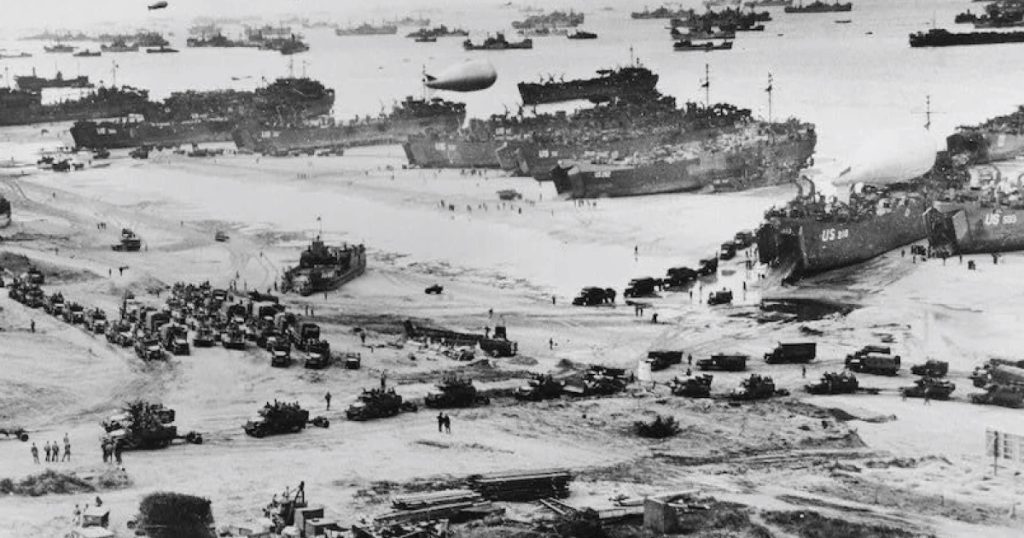
“Today, we remember the heroes of D-Day – June 6, 1944,” The White House released in a statement. “Through extraordinary courage and sacrifice, American troops stormed the beaches of Normandy, defeated tyranny, and helped secure freedom for generations to come. Their legacy lives on. America remains forever grateful.”



Operation Neptune involved more than 5,000 vessels and nearly 160,000 troops—132,000 men transported by sea alone—crossing the English Channel on 6 June. The decision to cross the English Channel was taken at the Trident Conference in Washington in May 1943. General Dwight D. Eisenhower was appointed commander of Supreme Headquarters Allied Expeditionary Force, and General Bernard Montgomery led the 21st Army Group, which comprised all the land forces in the invasion.
An estimated 4,000 to 9,000 German men were killed, with allied casualties estimated at least 10,000, with 4,414 confirmed deaths on D-Day alone. For the entire 2-month, 3-week and 3-day operation, American armies suffered 124,394 casualties, of whom 20,668 were killed, and 10,128 were missing. Casualties within the First Canadian and Second British Armies were estimated at 83,045: 15,995 killed, 57,996 wounded, and 9,054 missing. Between 13,632 and 19,890 French civilians were killed during the liberation of Normandy.




German forces in France reported losses of 158,930 men and by the end of the Normandy campaign, 55 German divisions (42 infantry and 13 panzer) had been rendered combat ineffective; seven of these were disbanded.


On May 8, 1945, the European Theatre of World War II ended with the surrender of Nazi Germany to the Allies in Karlshorst, Berlin. Many consider D-Day as the beginning of the end of European Theatre of World War II. Adolf Hitler, the man who lead the Nazi’s to the brink of a Nazi World Order, is alleged to have committed suicide on 30 April 1945.


With the defeat of Nazi Germany, the world saw the horrors of war — Nazi concentration camps, the attempted genocide of the Jewish people and others the Nazi’s considered “unworthy of life,” unprecedented unethical medical experiments, slavery, mass unmarks graves, and countless cases of rapes and torture by occupied Nazi forces.
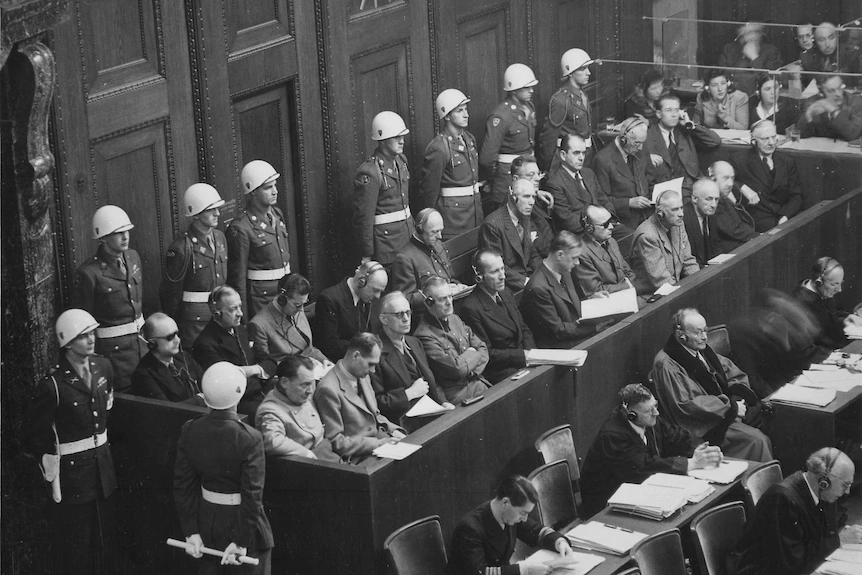
Known as the Nuremberg Trials, Allied powers—United States, Great Britain, France, and the Soviet Union—form the International Military Tribunal (IMT) where Nazi leaders stood trial for crimes against peace, war crimes, and crimes against humanity. Of the 199 defendants tried, 161 were convicted, and 37 were sentenced to death.
Resulting from the aftermath of the Nuremberg Trials, the Nuremberg Code is essentially a code of ethics regarding medical experimentation.

The first clause of the code states that “The voluntary consent of the human subject is absolutely essential” in medical experiments. The clause continues by saying that any person involved must have a legal capacity to give consent “without the intervention of any element of force, fraud, deceit, duress, over-reaching, or other ulterior form of constraint or coercion.”
The European Theater which started on September 1, 1939, with the invasion of Poland, resulted in tens of millions of civilian and military deaths, a majority of which were Russian; and the fall of the European powers with the rise of a bi-polar geopolitical world divided between the communists led by the former Soviet Union, and the democracies led by the Republic of the United States of America.
Secretary Hegseth Commemorates 82nd Anniversary of WWII
Secretary of War Pete Hegseth, joined by Joint Chiefs Chairman Gen. Dan Caine, delivered remarks on Saturday at the Normandy American Cemetery in Colleville-sur-Mer, France, marking the 82nd anniversary of D-Day—honoring the Allied troops who landed at Normandy to liberate Western Europe from Nazi control.
“Eighty-two years ago today, the survival of Western civilization hung in the balance. Dark forces had swept across Europe. Hitler boasted that his [coastal defensive] Atlantic Wall was impenetrable. But our enemy made a fatal miscalculation: they underestimated the unbreakable will of the American fighting man,” Hegseth said.
In his speech, Hegseth recognized the bravery of the American fighting men and women, and the importance of strong, committed alliances.
“Each nation pulled its weight; each nation bled. America will lead — and we must — but capable allies must be right there with us, shoulder to shoulder, in the breach, when it matters,” Hegseth said.
Twenty-nine World War II veterans attended the ceremony, including 107-year-old Navy veteran Art Rose, who read a letter he wrote to his parents five days after the invasion.

Author: Mario Lotmore