

PICNIC POINT—Every time a toilet is flushed, a shower drains or a washing machine empties, wastewater begins a journey through an underground network of pipes before arriving at a treatment facility designed to protect public health and the environment. At the Alderwood Water & Wastewater District’s Picnic Point Wastewater Treatment Facility near Edmonds, millions of gallons of sewage are processed each day through a series of mechanical, biological and ultraviolet treatment stages before the cleaned water is safely discharged into Puget Sound.
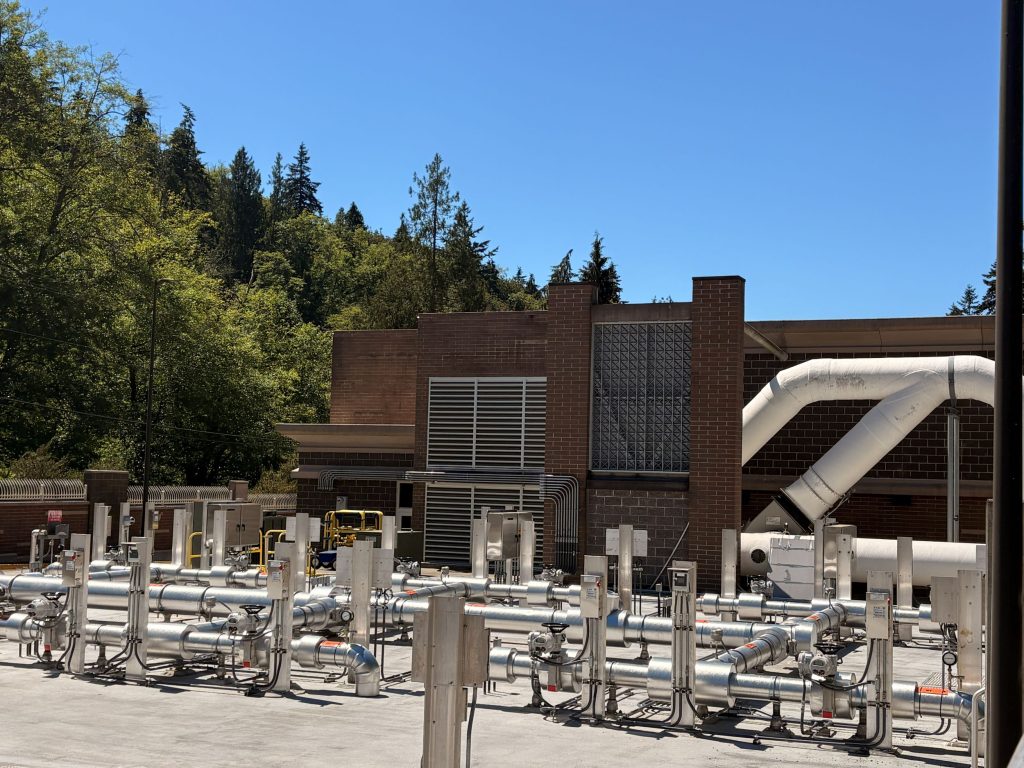
While most residents never see what happens after wastewater disappears down a drain, the treatment process is a highly regulated operation governed by federal and state environmental standards.

The Clean Water Act establishes the NPDES (National Pollutant Discharge Elimination System) permits, which creates limits for TSS (total suspended solids) and BOD (biochemical oxygen demand).
In simpler terms, the sewage that comes into the treatment plant must be treated to certain thresholds before it goes out into the sound – regarding TSS and BOD – without having a harmful effect on aquatics.




In the year 2000 the Alderwood Wastewater District began planning for the next phase of sewage demand, due to projected capacity restraints. The Commissioners at the time voted in favor of moving forward with implementing a Membrane Bioreactor which allows the Treatment Center to get close to 0 detectable TSS/BOD’s…far below the 30/30 (30 mg per liter) permit limit most conventional activated sludge plants measure.


An on-site lab technician conducts daily tests for BOD, the samples of which are constantly monitored by the Washington Department of Ecology.
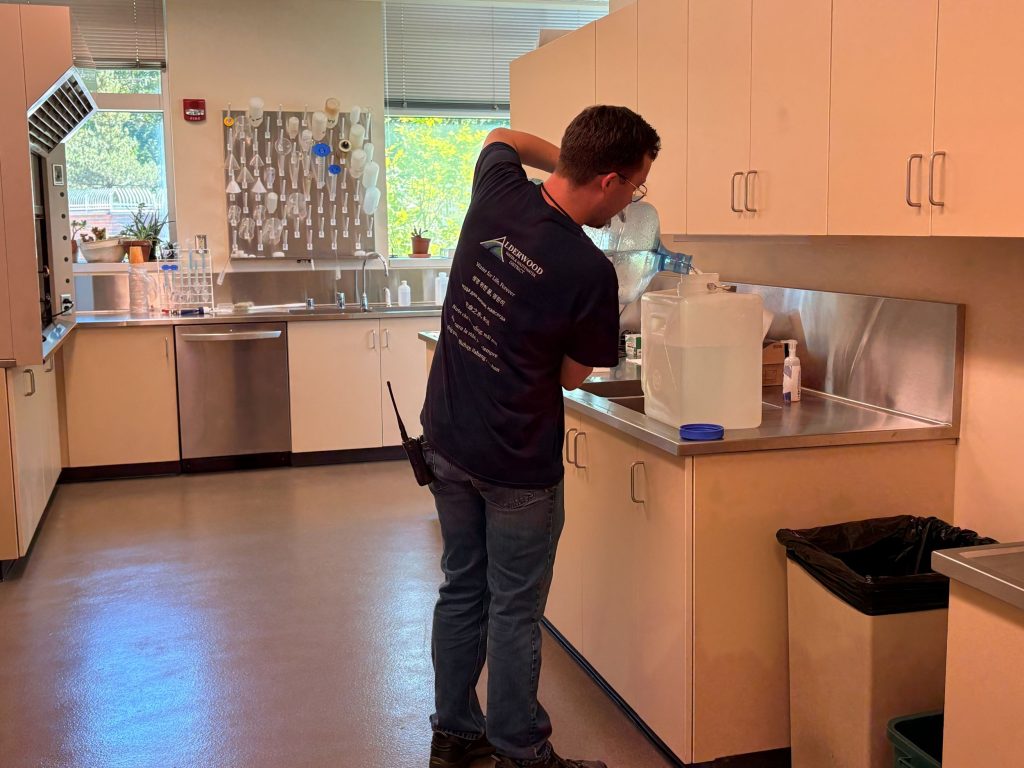
“The inspection process and monitoring of things is much more regulatory than a home septic system. In Snohomish County there are a lot of people on septic systems, which are nowhere near the quality of effluent what we’re providing here partially because we have a bioreactor tank, in addition to our UV disinfection, but also constant monitoring by the state,” said Michael Kundu, Communications and Resiliency Planner for Alderwood Water.
The first step of wastewater treatment is what’s called ‘preliminary treatment’ — essentially a screening process. When raw sewage first arrives at the Wastewater Treatment Plant, by way of an elaborate pipe system beneath the cities of Lynnwood and Edmonds, this preliminary treatment step removes the fine particles and solids by using fine band of three-millimeter screens. Following the preliminary treatment the water is then left in a “clarifier” to allow any residual solids to separate.
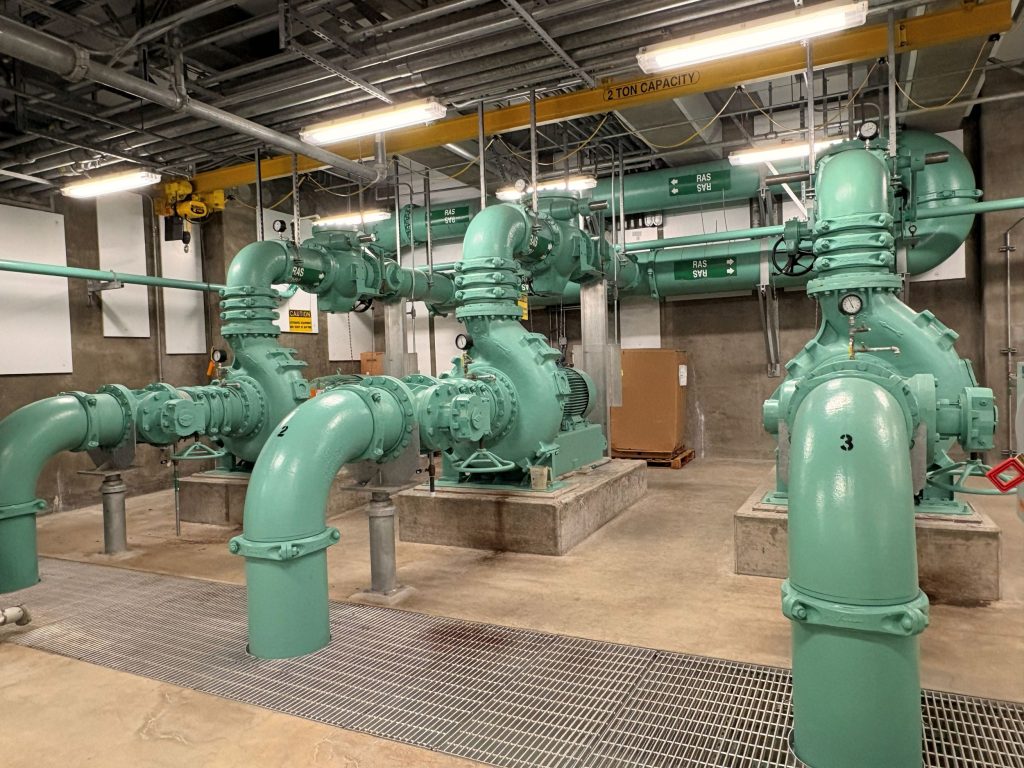
“Anything that is greater than that size [three millimeters] is stopped there. The whole goal is to take out as much solid material as we can through a mechanical process so mainly the liquid – ammonia, carbon – is able to get through to our biological process,” said Josiah Hartom, WWTF Manager.
After clarification, the resulting liquid is then sent to a bioreactor. This breakdown process essentially works by introducing, or in some cases taking away, air. Some biological processes require air; others are affected by it – this is done by an aeration process before being sent to a membrane filtration process.
The Wastewater Treatment Plant has six tanks of membranes, which need to be replaced about every eight years. Membranes are placed in what’s called “activated sludge” (concentrated selective biology that can break down carbons and nutrients), before the clean water can be extracted through the filters as clean water (or membrane effluent).
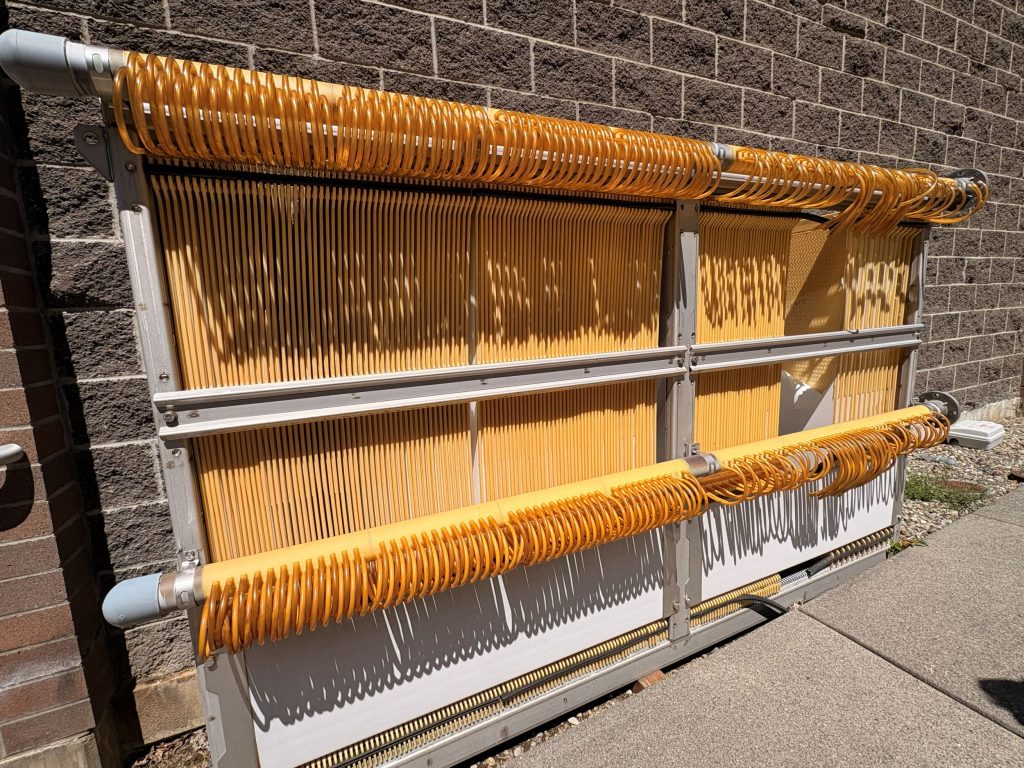
“It’s pretty incredible. Because of the cleanliness of our effluent, we are actually able to reuse it as process water, for things like cooling, or cleaning, or to mix chemicals to be fed elsewhere,” said Hartom.
Lastly, the Wastewater Treatment Plant utilizes UV light for a final disinfection process. The UV light damages any bacteria that was able to get through the membrane filtration process so that it can no longer reproduce.
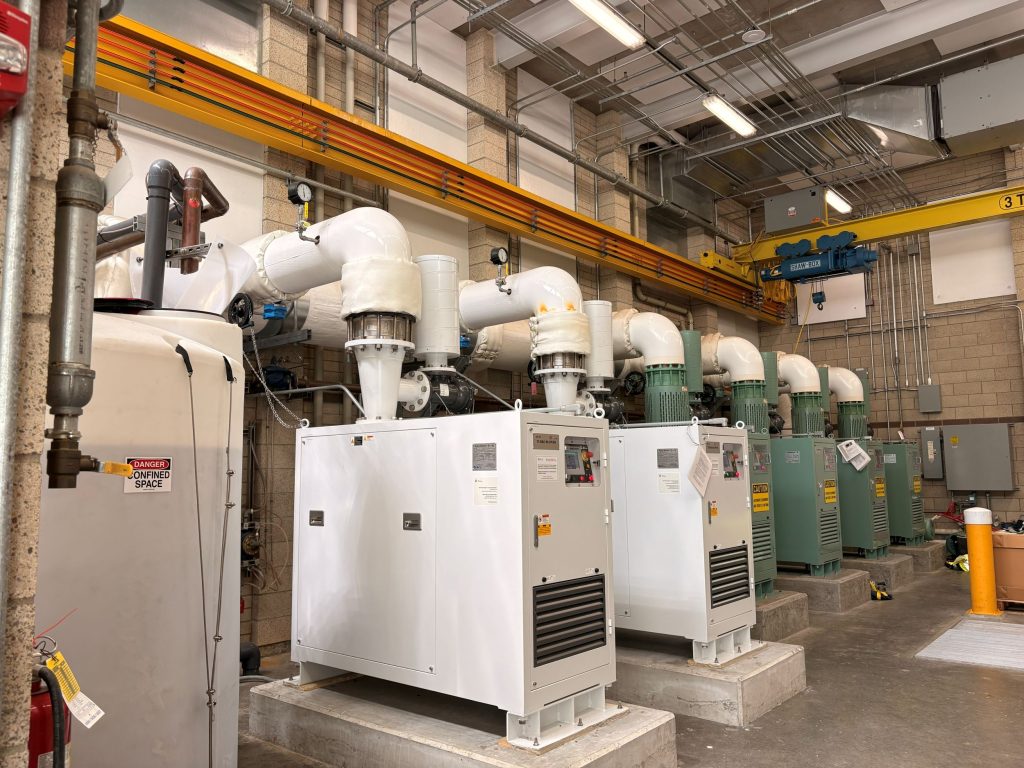
The final stage is introducing the effluent into the Puget Sound, by way of pipes, about 15-feet offshore.
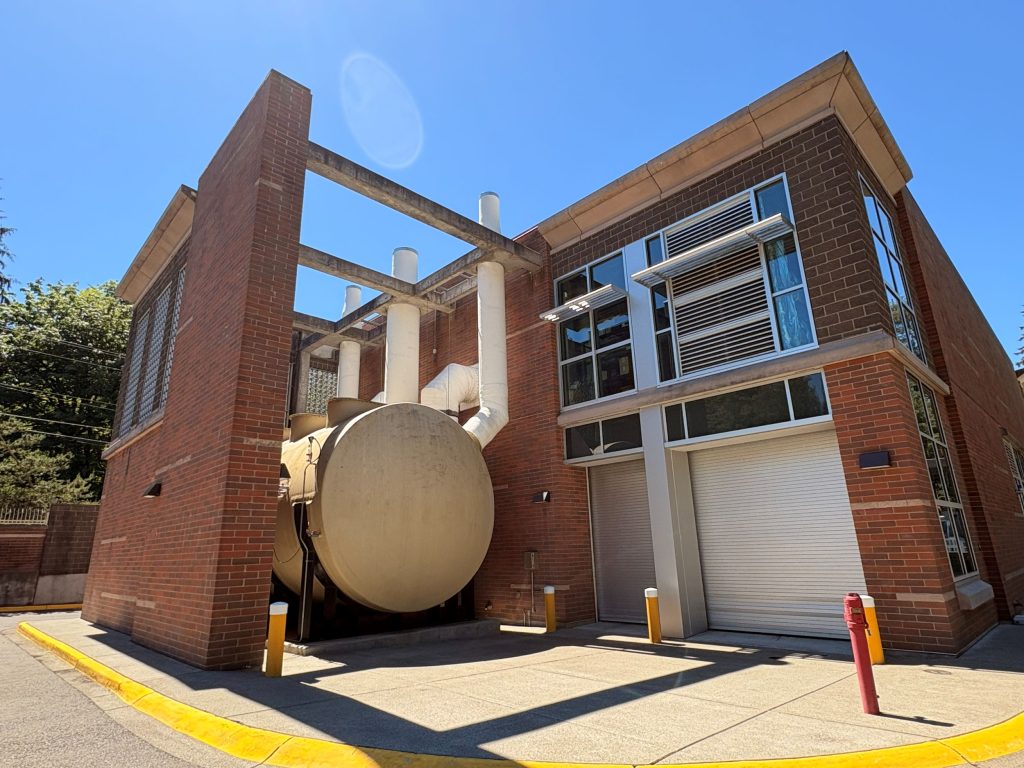
While wastewater treatment is often associated with unpleasant smells, Alderwood’s Picnic Point Wastewater Treatment Facility utilizes enclosed treatment systems and specialized odor-control equipment to minimize impacts on surrounding neighborhoods.
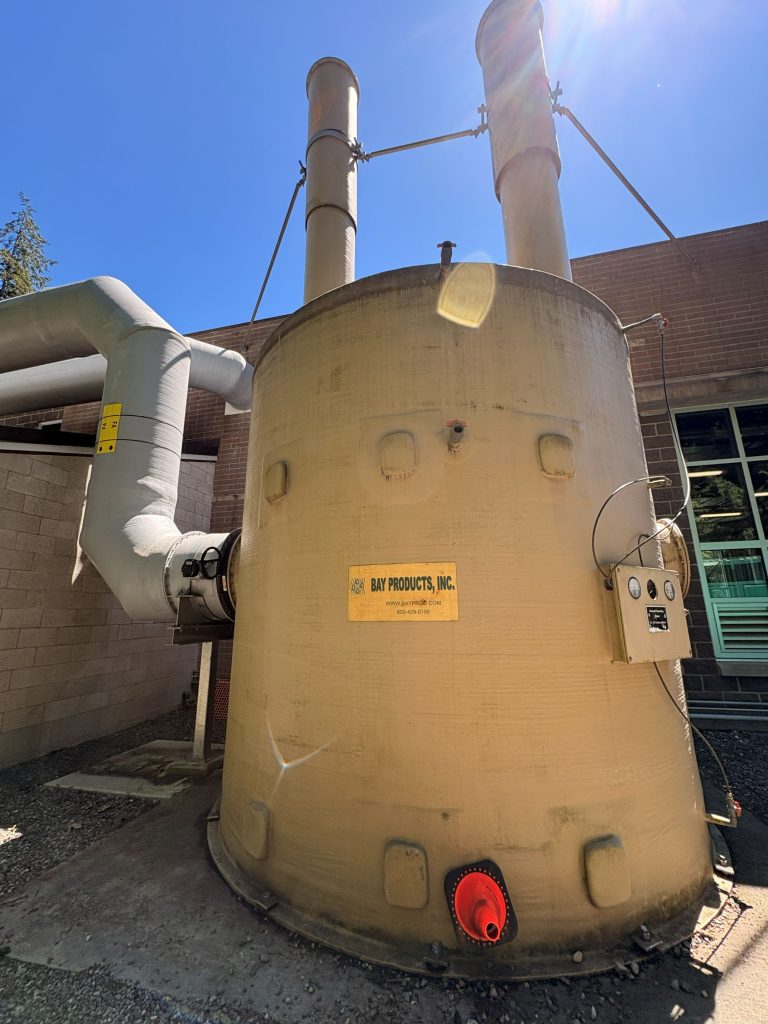
The treatment plant does not use any chemicals to treat its water, which results in lower costs, alleviates safety concerns from working with chemicals, and is ultimately better for the environment.
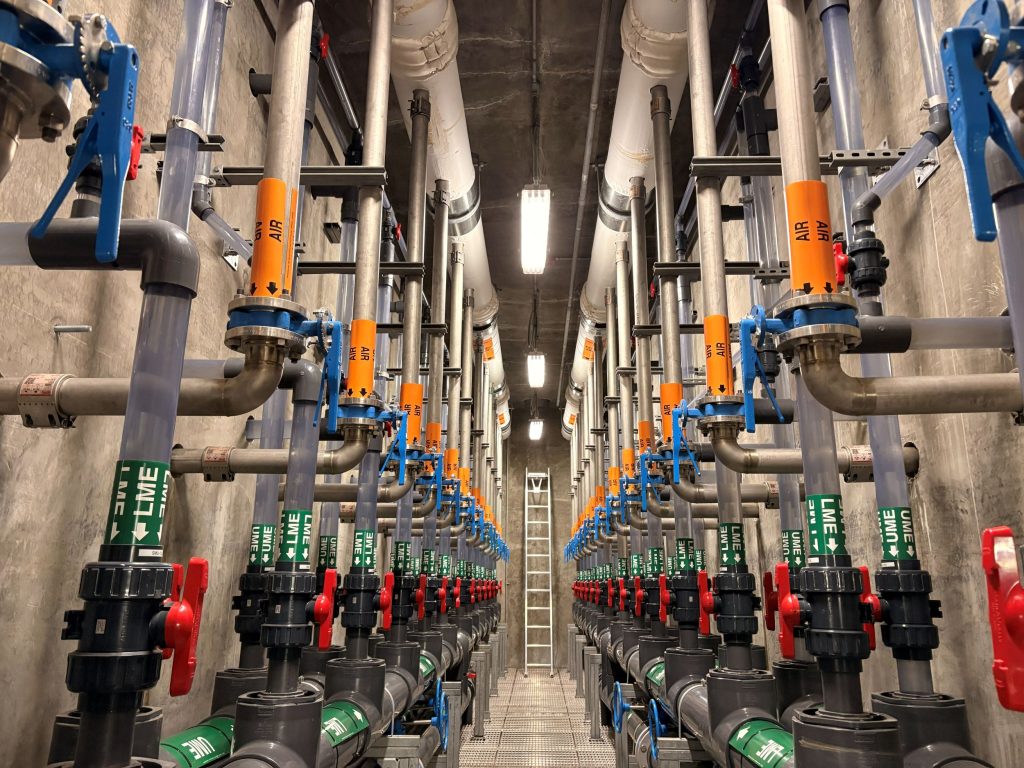
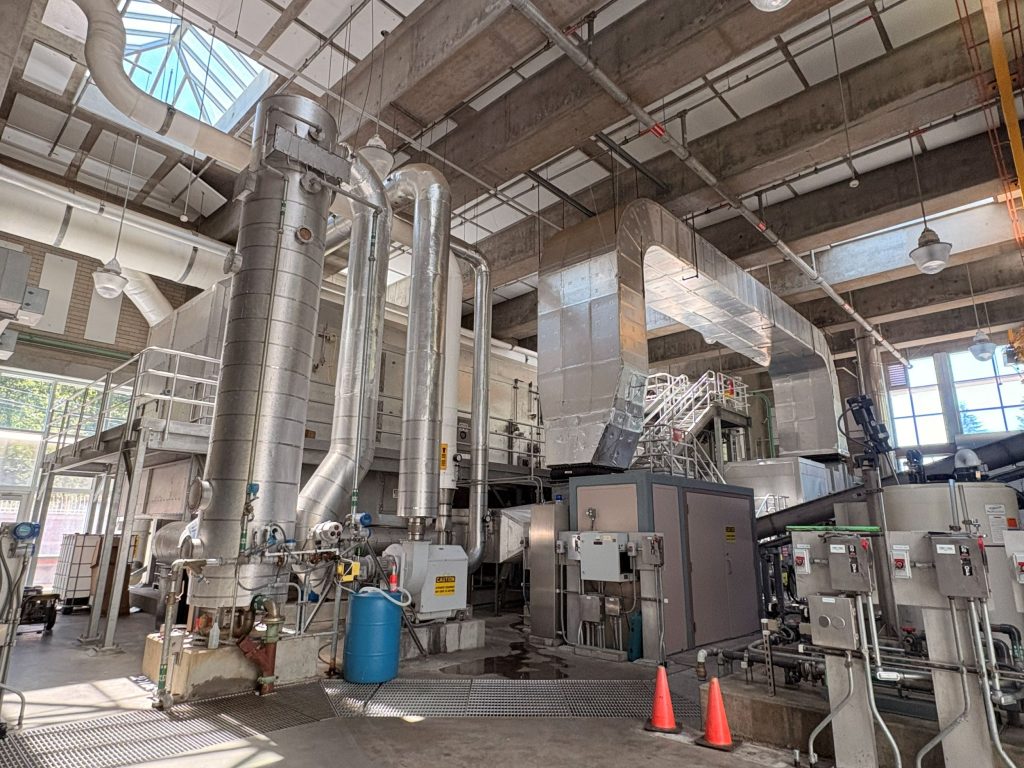
The leftover solids are transported to the biosolids treatment plant, where it is dried by a large “oven” until dehydrated – at a temperate of 350 degrees for two hours. These pellets are then donated to Boulder Park, who land applies it as a Class A biosolid. These solids cannot be used for anything that results in direct human consumption, but it can be used for fertilization for products like wheat used for feeding cattle, for example.
The Wastewater Treatment Plant also plays a big role in helping the Department of Health with its disease research – by reporting the presence of certain viruses in the sewage through water samples. Most recently, the Alderwood Water District played a pivotal role in the state’s COVID-19 data reports.
As the largest special purpose district in the State of Washington, the Alderwood Water District provides water and sewer from Mukilteo all the way down to Bothell, though it contracts with King County and the City of Everett to cover the entirety of its service area.
The Wastewater Treatment Center processes about 2.5 million gallons of sewage a day but this number is growing exponentially as population continues to grow.
“A lot of that has to do with more multi-family dwellings being built, the transit line coming in, so we’ve been seeing a study increase not only in sewage coming in but also water – it’s substantial,” said Kundu.
Kundu added that, as a special purpose district, the Alderwood Water District does not make a profit – all the money it receives goes directly back to the services it provides. He encourages the public to attend weekly Board Meetings to engage in the transparency process and learn where exactly their money goes.
The Alderwood Water & Wastewater District has provided water and wastewater services to southwest Snohomish County since 1931 and is the largest water and sewer district in Washington state. Today, the district serves approximately 305,000 customers across a service area stretching from Mukilteo south to Bothell, providing both drinking water and wastewater collection services to a rapidly growing population.
The district’s Picnic Point Wastewater Treatment Facility, located near Edmonds, treats wastewater generated by residential, commercial and industrial customers throughout the district.

Author: Kienan Briscoe