

WASHINGTON, D.C. — In a 6-3 decision, the U.S. Supreme Court ruled on Tuesday, June 30, that children born in the United States to parents who are unlawfully present or temporarily in the country are citizens at birth under the Citizenship Clause of the 14th Amendment.
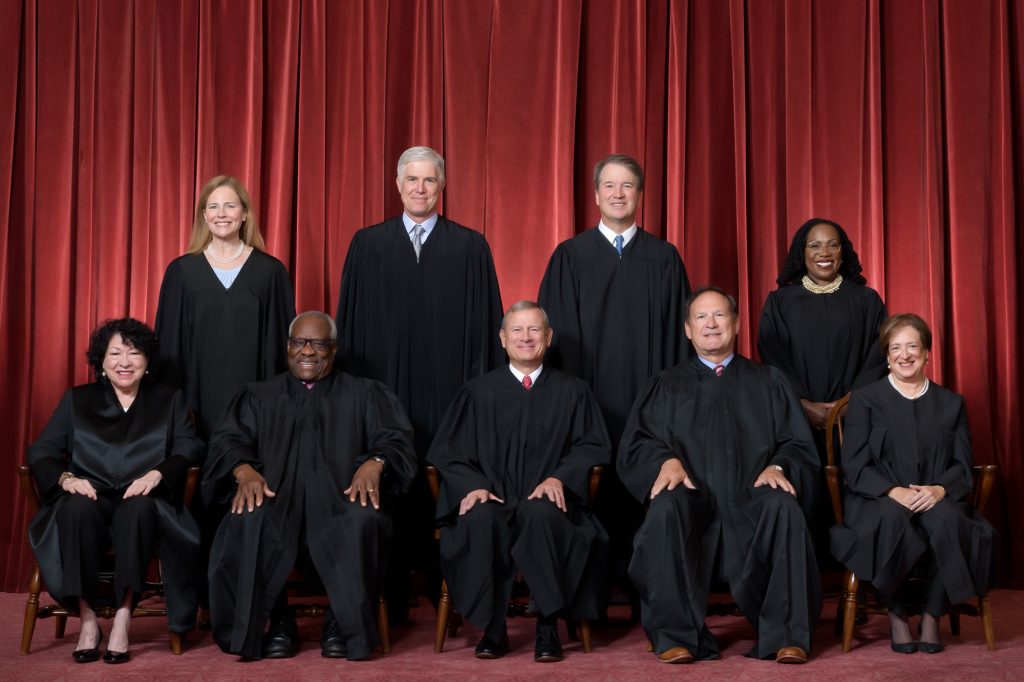
“The Fourteenth Amendment’s Citizenship Clause mirrored the common law’s criteria for citizenship, starting with territory (a child must be ‘born . . . in the United States’) and ending with sovereign power (a child must be ‘subject to the jurisdiction’ of the United States). A child born on American soil and subject to American law was made an American citizen,” Chief Justice John Roberts Jr. wrote for the majority opinion of the Court in Trump, President of the United States, et al. v. Barbara et al., No. 25-365.


Chief Justice Roberts’ opinion grounded the decision in the historical understanding of citizenship that the 14th Amendment codified. Under English common law, which the American colonies and early states adopted, children “born within the [sovereign’s] dominions” owed natural allegiance to the sovereign who protected them at birth, regardless of how “momentary and uncertain” the parents’ presence. This jus soli rule—right of the soil—applied even to children of parents subject to expulsion, with narrow exceptions only for children born in lands the sovereign did not control, areas temporarily outside control, or children of foreign ministers by extraterritoriality fiction.
Chief Justice Roberts was joined by Justices Sonia Sotomayor, Elena Kagan, Amy Coney Barrett, and Ketanji Brown Jackson. The decision affirmed a preliminary injunction and provisional nationwide class certification issued by the U.S. District Court for the District of New Hampshire. That court had blocked enforcement of President Donald J. Trump’s Executive Order No. 14160, issued January 20, 2025, titled “Protecting the Meaning and Value of American Citizenship.”



The order directed federal agencies not to recognize U.S. citizenship for children born in the United States after February 20, 2025, in two categories: (1) when the mother was unlawfully present and the father was neither a U.S. citizen nor a lawful permanent resident, or (2) when the mother’s presence was lawful but temporary and the father was not a U.S. citizen or lawful permanent resident. The order rested on the claim that such children are not “subject to the jurisdiction” of the United States within the meaning of the 14th Amendment or the parallel language in the Immigration and Nationality Act.

The Supreme Court rejected that interpretation. It held that the children are “subject to the jurisdiction” of the United States and therefore citizens at birth. The ruling leaves in place the nationwide injunction preventing the order from taking effect.
Attorney General Nick Brown applauded the U.S. Supreme Court’s affirmation of birthright citizenship.
“Today’s ruling reaffirms one of the most important principles in our democracy—there is no hierarchy to American citizenship,” AG Brown wrote in a statement. “The Constitution is clear on who enjoys that right, and the privileges, freedoms, and opportunities that come with it. It is affirmation that the truth is more powerful than President Trump’s lies, hate, and authoritarianism…. It was impossible to bear the thought that thousands of babies born in Washington each year would be denied the key to full participation in American society. Not only that, but they would have been rendered stateless at birth with no country to claim as home.”
Senator Maria Canwell (D-WA) also applauded SCOTUS’ ruling: “Our country has long held that children born on U.S. soil or U.S. territories are citizens. Today they no longer have to worry about an administration who tried to deny them this right.
Senator Patty Murray (D-WA) called the ruling, “Democracy in action.”
“Today’s decision is a victory but also a reminder that our constitutional values are under fierce attack by far-right extremists,” wrote Sen. Murray on X. “Democracy is an action. Use your voice and your vote to protect American democracy.”
“Thanks to the 14th amendment, birthright citizenship is a cornerstone of American history, culture and law,” Rep. Rick Larsen released in a statement. “I stand with proud U.S. citizens in Northwest Washington and across America celebrating this decision.”
In response to the ruling, President Donald J Trump posted to Truth Social: “Trump’s efforts to reverse birthright citizenship may succeed with or without SCOTUS” with a link to Just the News article titled, Trump’s efforts to reverse birthright citizenship may succeed with or without SCOTUS. From the article, it identifies the following means to reverse or limit birthright citizenship through congressional action:
- Birthright Citizenship Act (introduced by Sen. Lindsey Graham, R-SC)
- It would amend the Immigration and Nationality Act (INA) to reinterpret the 14th Amendment’s “subject to the jurisdiction thereof” clause.
- It would limit birthright citizenship to children who have at least one parent who is:
- A U.S. citizen, or
- A U.S. national, or
- A lawful permanent resident (green card holder) living in the U.S., or
- A lawful permanent resident serving in the U.S. military.
- Ban Birth Tourism Act (introduced by Sen. Marsha Blackburn, R-TN)
- Would make foreign visitors inadmissible on B visas if the purpose of their trip is to give birth in the U.S. to obtain citizenship for the child.
- BACK OFF Act (introduced by Sen. John Cornyn, R-TX)
- Would impose criminal penalties on people who facilitate “birth tourism” and create a dedicated enforcement task force.
The Supreme Court’s decision does not alter the traditional narrow exceptions to birthright citizenship for children of foreign diplomats or those born in Indian tribes under their own dominion. It does not affect the immigration status or deportation proceedings of parents nor does it address or change rules for naturalization or other forms of citizenship acquisition.
Families of undocumented immigrants and individuals present on temporary visas (such as tourists, students, or certain workers) whose children are born in the United States are granted access to citizenship documentation and federal benefits tied to citizenship status for the child.

Author: Mario Lotmore