

TACOMA — Washington fish and wildlife officers have charged an Oregon man with multiple counts of unlawfully targeting protected sixgill and sevengill sharks after a months-long investigation prompted by online posts and public complaints, Washington Department of Fish and Wildlife Police said.
Connor Seifert, 27, faces nine counts of second-degree unlawful recreational fishing, a misdemeanor, and one count of making a false or misleading statement to a public servant, a gross misdemeanor, in Pierce County. The charges stem from an investigation by Washington Department of Fish and Wildlife Police into repeated incidents involving sixgill and sevengill sharks in Puget Sound. Each misdemeanor charge carries a maximum penalty of a $1,000 fine and 90 days in jail. The gross misdemeanor carries a maximum of a $5,000 fine and one year in jail.


Officers conducted the probe over several months after receiving a total of 14 incident complaints about an individual, alleged to be Seifert, posting fish and wildlife activities online. Eleven of those complaints specifically involved the targeting of sixgill and sevengill sharks. Many originated from the Seifert’s social media accounts, which included photos and videos showing the sharks being caught and handled in ways that violate state law.
Investigators identified a pattern of illegal activity and established surveillance at a pier in Puget Sound. After monitoring the suspect and his companions for several hours as they fished from the pier, an officer observed the suspect drag a sixgill shark out of the water to pose for a trophy photo before releasing it.



Fishing for sixgill and sevengill sharks is unlawful in Washington marine waters. Officers shared that they are seeing a growing number of online posts depicting people targeting the animals and then removing them fully or partially from the water.

“Puget Sound acts as a nursery for the young sharks before they journey into the oceans and eventually return to Puget Sound to repeat the cycle,” Washington Department of Fish and Wildlife Police says. “This is one of the primary reasons why it is unlawful to target these sharks locally, as the anglers fishing for these creatures are targeting them during a highly volatile era in the animals’ lives.”
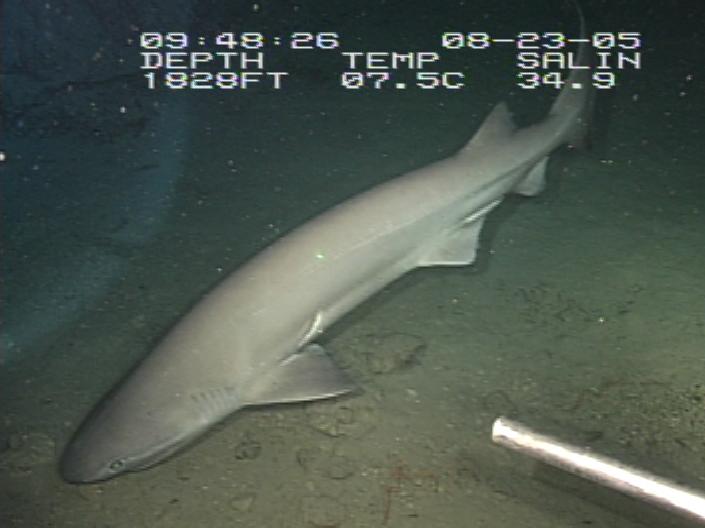
In Puget Sound, bluntnose sixgill and broadnose sevengill sharks move into relatively shallow nursery areas to give birth making the large animals accessible from piers and the shore. Sixgills can grow as big as 18 feet and weigh over 1,000 pounds; whereas sevengills can reach up to about 10 feet.
Recently, content creators seek out these sharks for trophy photos, to be used in videos with them “wrestling” or posing with the animals. The videos Seifert posted—holding mouths open, sitting on their backs, dragging them by the tail—fit that pattern of generating online attention. The stress of capture and air exposure can kill the shark or its unborn pups.
Bluntnose sixgill and sevengill sharks are generally not dangerous to humans. Divers often describe them as curious but docile and typically swim away rather than approach humans in the water. When hooked or handled, these sharks can become aggressive.
Both the bluntnose sixgill and broadnose sevengill sharks are listed as Species of Greatest Conservation Need under Washington’s State Wildlife Action Plan. The Committee on the Status of Endangered Wildlife in Canada classified sixgills as a species of Special Concern in 2007. The International Union for Conservation of Nature Red List categorizes bluntnose sixgills as Near Threatened (2020 assessment) and broadnose sevengills as Vulnerable.

Author: Mario Lotmore