

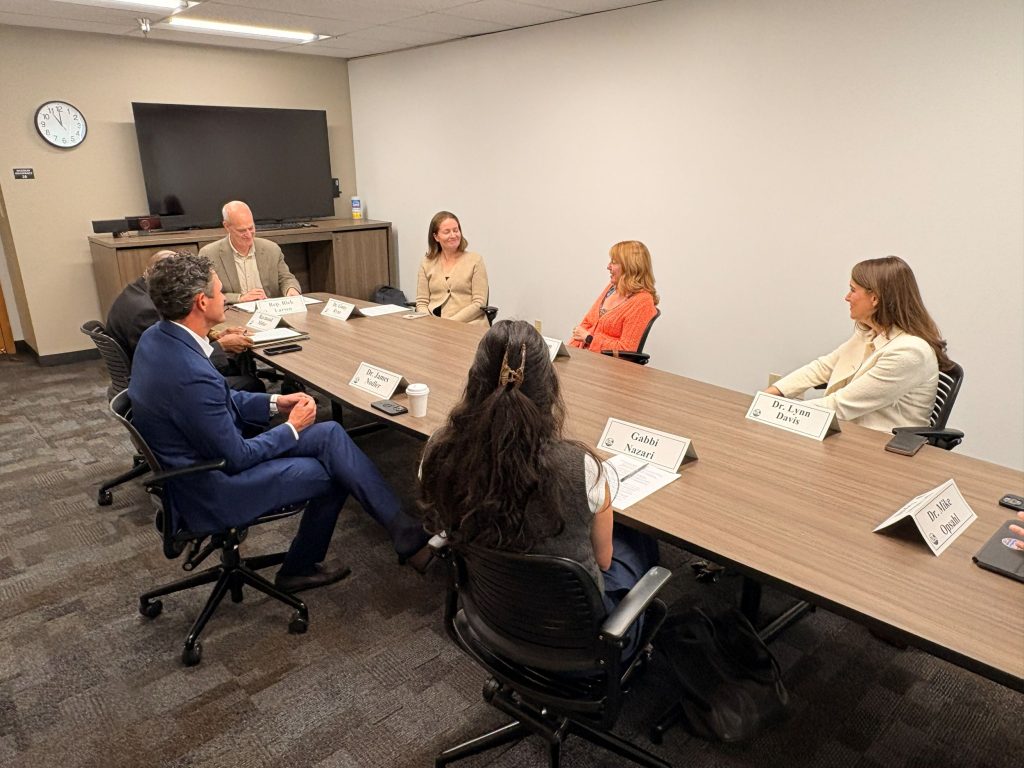
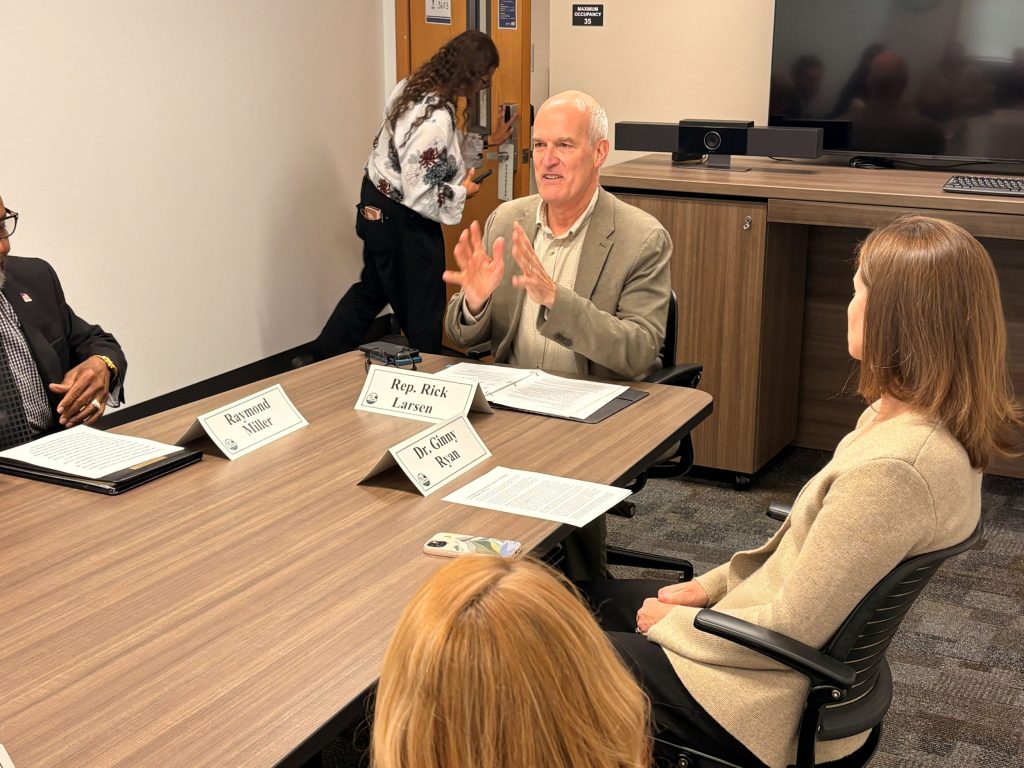
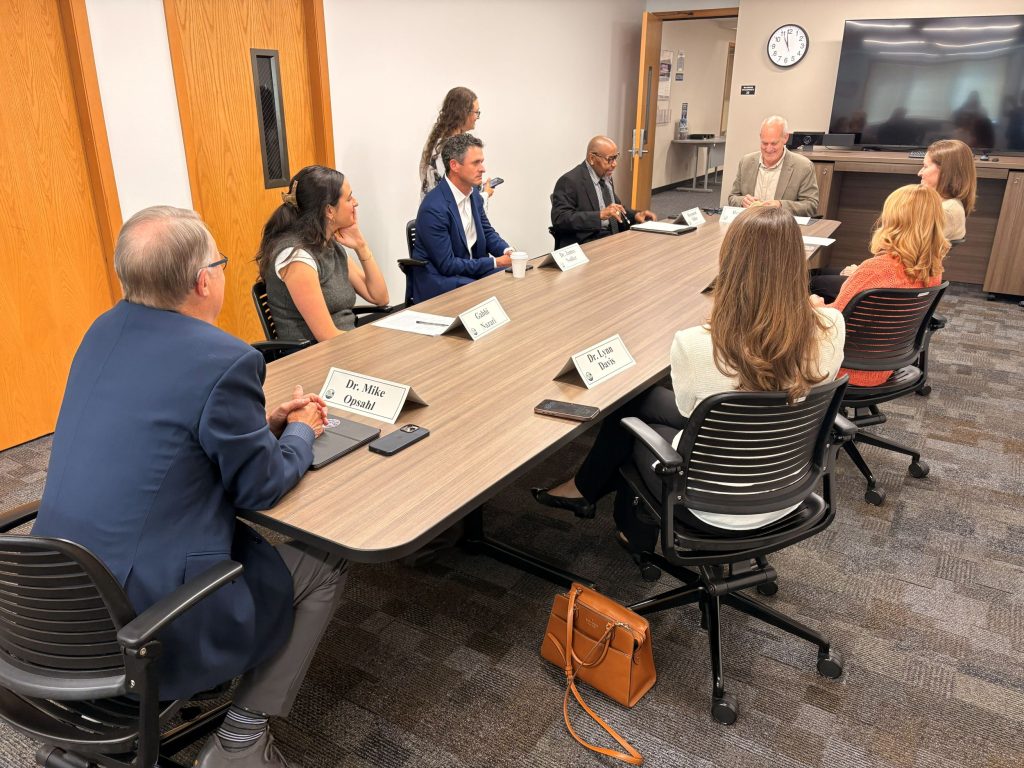
EVERETT—U.S. Representative Rick Larsen (WA-02) hosted a roundtable with local fertility doctors and advocates at the Snohomish County Health Department on Monday, July 27, to discuss the importance of expanding access to IVF and the Right to IVF Act.
Larsen introduced legislation on July 23 to expand affordable options for families to access IVF nationwide with his colleagues in the House and the Senate called the ‘Right to IVF Act of 2026’.


The Right to IVF Act establishes a nationwide statutory right to access in vitro fertilization (IVF) and other assisted reproductive technologies, lowers treatment costs, and expands insurance coverage for families.
“For many Americans, fertility treatments like IVF are essential to start families of their own,” said Congressman Larsen. “This comprehensive legislation will guarantee access and expand coverage for IVF and other fertility services. The legislation also includes my bill with Senator Murray, the Veteran Families Health Services Act, to ensure fertility treatments are included in servicemembers’ and veterans’ health benefits. I will keep working with my colleagues in the House and the Senate to make sure that women and men in uniform and working families do not have to sacrifice their dreams of having a family.”



Back in August of 2025, Larsen introduced the Veteran Families Health Services Act of 2025, which is include in the Right to IVF Act and would ensure that fertility treatments are covered in the health benefits provided to U.S. servicemembers and veterans.
Senators Tammy Duckworth (D-IL), Patty Murray (D-WA) and Cory Booker (D-NJ) introduced companion legislation in the Senate. The Right to IVF Act of 2026 is cosponsored by 119 House members and 46 Senators.
The legislation is supported by the American Society for Reproductive Medicine (ASRM), RESOLVE: The National Infertility and Family Building Association, Center for Reproductive Rights (CRR), Planned Parenthood Federation of America (PPFA), National Women’s Law Center (NWLC), American College of Obstetricians and Gynecologists (ACOG) and GLBTQ Legal Advocates and Defenders (GLAD).
IVF (or In Vitro Fertilization) is an assisted reproductive technology (ART) where an egg and sperm are fertilized outside the body in a laboratory setting. It is a primary treatment for infertility, genetic disease prevention, and family-building for single individuals and LGBTQIA+ couples.
Monday’s roundtable included Dr. Mike Opsahl, Medical Director and Owner of Poma Fertility, Dr. Lynn Davis, Partner Physician at Seattle Reproductive Medicine, Dr. Shannon Bailey, Obstetrician-Gynecologist with Overlake Hospital Medical Center, Gabbi Nazari, Government Relations Director with Pro-Choice Washington, Dr. James Nodler, Vice President of Clinical Strategy and Policy with CCRM Fertility, Raymond Miller, Founder, President, and Chief Executive Officer at Vets Place Northwest, and Dr. Ginny Ryan, Reproductive Endocrinologist and Infertility Specialist at Fred Hutch at University of Washington Medical Center.
Larsen said that his bill revolves around a simple premise: that folks who want to start a family should have access to healthcare and support, they need to do just that.
“But too often those treatments are not covered by insurance or are too expensive if they are. For example, service members and veteran healthcare does not cover IVF or adoption assistance, or other forms of fertility treatments or family building services,” said Rep. Larsen. “Nobody should be forced to choose between serving their country or starting a family.”
In the second congressional district, Larsen represented a total of 50,000 veterans, which is about 8.1% of the district’s entire population. Through his veteran’s town hall, he has consistently heard from his constituents that access to fertility and family building assistance is a top concern.
Dr. Ginny Ryan noted Monday that infertility is recognized as a disease by the World Health Organization (WHO) and one in six people will experience infertility in their lifetime.
“The disease causes profound medical, psychological, social, and economic harm. It’s truly an existential crisis, yet it’s a disease that we have treated inadequately in the United States throughout history,” said Dr. Ryan noting that it’s estimated that less than one quarter of infertility is being treated in the country, especially those seeking IVF.
The inaccessibility is driven even further, Ryan continued, by cost, and felt particularly by rural Americans, people of color, and LGBTQ communities (who often rely upon IVF to have genetically related children).
Ryan was Principal Investigator on a five-year study looking at sexual assault and combat-related trauma and the reproductive health outcomes in many women and has worked with veterans at the VA for the last decade. Through her work, she said, she has seen a significant increase in infertility while also observing a significant increase in barriers.
Dr. Shannon Bailey shared a personal connection to fertility care, confiding that she would not have her three children if it weren’t for IVF – following her husband’s cancer diagnosis.
“I have many, many, connections with patients, families, and my children now that show exactly how important [these services are],” said Bailey.
Though Dr. Bailey’s children (who have now given her two beautiful grandchildren) are a blessing, it came at a tremendous cost, she said, having to pay for IVF on a resident income which, at the time, encompassed one fifth of her annual salary for a single session.
From Dr. Lynn Davis’ perspective, every day she shows up to work she sees people who are suffering from a disease.
Dr. Mike Opsahl chimed in with the unique perspective that Larsen’s current bill should be structured to have new technologies in mind which, he said, is something insurance agencies often neglect.
For example, Dr. Opsahl graduated medical school in 1978 – the year the first IVF baby was born.
“My job didn’t exist when I was going to medical school. I did my REI [Reproductive Endocrinology and Infertility] fellowship in the 80’s. We did not have IVF. I was trained to be a surgeon, now I don’t do surgery at all I work I assisted reproduction,” said Dr. Opsahl. “That’s how the field has really changed.”
Dr. Opsahl said ultimately, he wants to see healthy babies at a reasonable cost, but he foresees some pushback from insurance agencies as it pertains to multiples. Multiples since the 90’s, according to Dr. Opsahl, have been reduced to approximately 7% today, but comprehensive mandates (or at least 3, or 4, IVF cycles – at least 100,000 with benefits) would be much better than limited mandates where you only get a single IVF, he said.
The other thing he requested Larsen include in his bill is PGT coverage (Preimplantation Genetic Testing), which is a laboratory procedure used in in IVF to screen embryos for genetic or chromosomal problems before transferring them into the uterus.
From a political perspective, Gabbi Nazari, claimed recent criticisms of IVF are part of a “larger coordinated attack to restrict bodily autonomy from the right” and “dismissal of science as a whole”, especially targeting the LGBTQ community and people of color.
“In the abortion movement we’ve known for a long time that personhood laws, mentorship and healthcare services would eventually be weaponized against infertility and contraceptive care. We are really seeing attacks against reproductive healthcare at every level, whether it’s from the current administration or policies coming from hostile states or the discriminatory restrictions to care that our hospitals, including Washington where over 50% of our hospitals have discriminatory restrictions to care,” said Nazari. “Accessing any type of reproductive healthcare has become increasingly more difficult.”
Dr. James Nodler had a more optimistic take, celebrating how far endocrinology and fertility care has come over recent years.
“Even since I began training, we were doing five, seven, sometimes nine embryos at a time. Now we’re doing single embryo transfer. Even with those five, seven, embryos we were happy to get 20/30% success rates, now with single embryo transfer we’re able to get a live birth rate at times that are greater than 70%,” said Dr. Nodler. “So, you’re taking home a baby more than 70% of the time and that’s incredible.”
Dr. Nodler continued that diseases like muscular dystrophy, cystic fibrosis, and hundreds of other diseases while dramatically reducing miscarriage risk and down syndrome.
“We have come so far, and the technology is so excellent that the access to care problem is no longer the technology, like it was in the 70’s, and it’s no longer the doctors. There are a lot of talented doctors here in the Seattle area and nationally who are able to take care of these patients. The access to care issue is financial,” said Dr. Nodler. “That’s why this bill is so important, because we’re tackling that issue specific for our military families, for our LGBTQ families, for those on Medicare and Medicaid.”
Lastly, speaking on behalf of veterans’ affairs, Raymond Miller, a U.S. Navy veteran himself, spoke on how United States veterans have little to no access to IVF treatment – if at all.
“Military service members, and our veterans, need to be treated better. We need to figure out how to do that. Just because you served in the military and were exposed to toxic gases, or entered in combat, or battled an invisible wound through Post Traumatic Stress disorder, that can have a great impact on your ability to have someone call you mom or dad,” said Miller. “From a veteran point of view, we need to make sure the VA is fully funded to cover veterans who risk their lives for their country.”
There are some IVF pathways for veterans but it’s difficult to access. The biggest issue is that veterans are required to have a service-connected disability that’s associated with their infertility.

Author: Kienan Briscoe