
YAKIMA — Hundreds of aspiring lawyers who traveled to the Yakima Convention & Event Center for Washington’s first NextGen Uniform Bar Exam instead spent hours battling failed connections, only to learn the entire July administration had been canceled, leaving careers, finances and carefully laid plans in limbo.
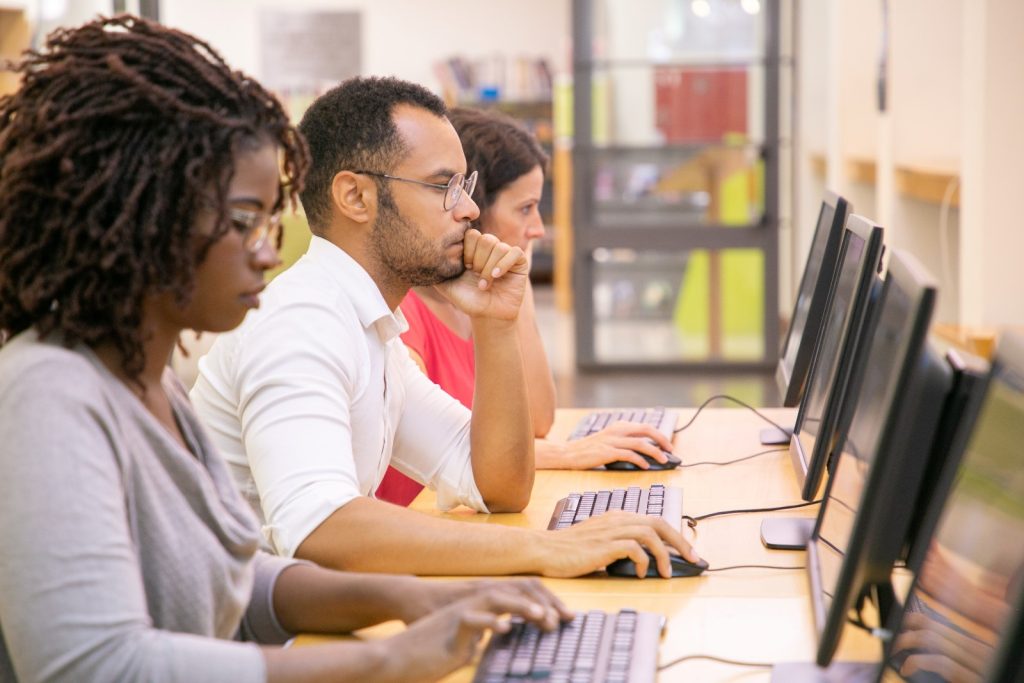
The National Conference of Bar Examiners (NCBE), which developed the new exam, described the problem as an “on-site hardware and configuration issue” limited to certain testing locations in three jurisdictions—Maryland, Missouri, and Washingtons state. In Maryland, one site was impacted and that issue was resolved in less than one hour, and applicants completed Day One testing as scheduled. In Missouri, a “site-specific network bandwidth issue” that delayed the start of testing was resolved and the administration that exam modified its testing schedule to accommodate examinees.
The Washington State Bar Association (WSBA) on the hand, cancelled its administration of the exam stating: “WSBA did not have sufficient confidence that the technology issue had been resolved to safely resume the exam on July 29 and made the decision to cancel the July 2026 administration. We sincerely apologize to the candidates who worked so hard to prepare, and we deeply regret that we could not deliver a successful exam experience.”
The cancellation prevented the bulk of the roughly 645 to 700 standard-time examinees from completing Day One testing on July 28. Examinees with approved accommodations — about 30 to 40 students — were able to proceed as scheduled and were not affected. Some 2,624 applicants across 10 jurisdictions completed testing using NCBE’s NextGen testing platform without incident.



According to a statement from the Yakima Convention & Event Center to KING5, a “catastrophic equipment failure” that remained unresolved the following day caused the mishap.


“We entered the event with full confidence in the systems we had put in place. However, as demonstrated here, technology is not always reliable – even when redundancies are in place,” a spokesperson said.
For test-takers, the day unfolded as a cascade of delays and uncertainty. In a detailed account posted on Reddit by user TracingWoodgrains, examinees described arriving prepared only to find roughly one-third of the room initially unable to connect. Limited tech support struggled for hours as more systems dropped offline. Organizers eventually attempted a two-wave start after lunch, but even those who appeared connected could not reliably begin the exam. By the time administrators sent everyone home, the group had spent about five hours in limbo.
“There was far too much uncertainty throughout the day,” TracingWoodgrains wrote. “People came in the morning prepared to test. Two hours in, we were at once begging to test and worried about how the delays would affect all of us. Now, we have no clue whether we’ll even get to test tomorrow. The risk of overloading the event center WiFi in a small town in the middle of nowhere was knowable and contingencies should have been prepared.”
Many applicants had driven two hours or more from the Seattle-Tacoma area or flown in from out of state or overseas, only to face the prospect of booking extra hotel nights in a town with limited lodging.
Mukilteo resident Alan Clay, who accepted a job as a public defender with the Snohomish County Public Defender Association, described the financial and professional toll in an interview with the Lynnwood Times. He was able to sit the exam but many of his colleagues were not.
Clay spent 10 weeks studying — longer than the eight weeks many peers invested — and paid about $2,000 for a commercial bar-prep course. Registration with the bar cost roughly $780, plus a separate $149 technology fee paid to NCBE. Hotel expenses for three nights reached $870, and the 300-mile five-hour roundtrip drive added at least $300 in gas.
“They essentially turned their issue into our financial problem,” Clay said.
Many of those affected face financial impacts with extra hotel nights booked under the initial assumption that testing might stretch into an additional day proved difficult to cancel once the full administration was scrapped. Temporary bar-prep access often must be extended at further cost. Employers waiting for licensure results have left some graduates unable to start jobs that require a law license, delaying income by weeks or months he told the Lynnwood Times.
WSBA has given affected applicants three options: sit a make-up exam scheduled for Sept. 1–2 in Tacoma, transfer their application to the February 2027 administration, or withdraw and receive a full refund of applicable jurisdiction fees. NCBE said it would contact Washington applicants directly about handling the technology fee according to the choice they make. All registered applicants were notified by email and through the online admissions portal, WSBA said. adding it is working closely with the Washington Supreme Court on possible additional steps.
Clay noted that pushing the exam into September would prevent many from beginning positions that hinge on bar passage.
“Many people have jobs that won’t allow them to start until they have a license to practice,” he said.
Clay plans to request a refund of the $149 technology fee, arguing that applicants paid for a functioning exam that was never delivered. He also raised the possibility of a class-action lawsuit under Rule 23 of the Federal Rules of Civil Procedure, citing broken implied contracts, warranties and written agreements.
“There’s implied contracts, there’s implied warranties that they give us when they make us pay for these things and say that they’re going to do these things, and they don’t,” Clay said.
He placed primary responsibility on the Washington State Bar Association for administering the exam, even while acknowledging the technology failures.
“I can understand not having the questions, but someone could have emailed, hey, these are all the questions from the test,” Clay told the Lynnwood Times. “Print them out and then just give people stacks of paper and say just start writing.”
TracingWoodgrains on Reddit hinted at a similar work around stating that the exam could have been “pre-downloaded.”
“A system that pre-downloaded the exam would be much more robust than one that relied on WiFi; they provided us with janky technology in an unreliable location and now a bunch of us are paying the price,” TracingWoodgrains wrote.
TracingWoodgrains pointed out specifically that although the overall experience was stressful and “unsatisfactory,” the “lady in charge” of administering the exam “was extremely sympathetic, polite, and earnest the entire time.”
“Her hands were tied by what the NCBE was willing to grant, and I do not want to place blame on any individual or treat the people running the test, caught up in unexpected issues, as villains,” wrote TracingWoodgrains. “I do, however, think a few things could and should have been handled differently.”
Meanwhile, the deans of Washington’s three law schools — the University of Washington, Seattle University and Gonzaga — have petitioned the state Supreme Court for emergency diploma privilege, according to the Seattle Times. Such a grant would allow eligible graduates of ABA-accredited law schools who were registered for the canceled exam to be admitted without retaking it, specifically to avert career delays, lost job starts and additional travel costs.
The Supreme Court, which holds ultimate authority over attorney licensure, has acknowledged the situation and is coordinating with the bar association but no public decision has yet been announced. In 2020 the Court granted temporary diploma privilege for applicants registered for the July and September exams amid COVID-19 disruptions, a precedent the deans and applicants are now citing.
“This is a new system, and problems happen,” TracingWoodgrains wrote. “We all get that. But there was no real contingency plan in place, testers were left in the dark about possible solutions for hours, and the current options presented are all deeply unsatisfactory and leave the whole burden of the NCBE’s error on testers. That is unacceptable for the people who have careers resting on this exam.”

Author: Mario Lotmore