[COMMENTARY]—A potential showdown is unfolding: Does independent political speech in the digital age still receive the same constitutional protection long afforded to traditional media?
Mario Lotmore, Publisher of the Lynnwood Times.
The Public Disclosure Commission (PDC) on August 12, has opened a formal investigation into Let’s Go Washington and, by extension, independent commentator Brandi Kruse over a complaint filed by Washingtonians for Ethical Government (WFEG), that alleges Kruse’s discussion of causes aligned with that of Let’s Go Washington (LGW) on her platform unDivided, constitutes as “native advertising” and argued that Kruse is operating as a “commercial advertiser” rather than an exempt journalist or editorial voice. WFEG assigned a value for this “promotion” to between $345,000 and $1.25 million in unreported “in-kind political advertising” by Let’s Go Washington.
There is a lot of speculation online as to the possible motives by the PDC to open a formal investigation and that of the WFEG filing the complaint just as three initiatives on the November ballot — sponsored by LGW — that, if passed by voters, would have profound societal and fiscal impact to Washington state.
I am not going down that “woulda, shoulda, coulda” rabbit hole; I am here to offer some insight as to if the PDC were to broadly accept the WFEG’s theory, on that the fallout would not stop with just one podcaster—as the proverb says, “the road to hell is paved with good intentions.”
Newspaper editorial boards that endorse candidates while the paper sells political ads could face new challenges—just think of the deluge of PDC complaints especially against the big newspapers who received hundreds of thousands of dollars in advertising revenue yet rarely investigate unethical behavior or better yet, use their platform to attack competing newspapers for exposing the unethical behavior, of specific party-aligned darlings.
Union newsletters, websites, emails, and social-media posts urging members to support or oppose ballot measures could suddenly be treated as reportable in-kind contributions.
Public-sector unions, which routinely communicate with elected members and lobbyists about legislation and initiatives, would confront heavy new compliance burdens and potential liability.
And finally, independent journalists, newsletter writers, and YouTubers who monetize their work would operate under constant threat of complaints—something that would expand news deserts in the state and lead to self-censorship.
Washington state already stands apart in how aggressively it regulates channels of political speech when in 2018, the PDC passed emergency transparency rules in May of that year, which were formalized into permanent regulations effective December 31, 2018, trigger when Facebook and Google failed to turn over local political ad data to The Stanger.
The state’s commercial-advertiser disclosure requirements are so detailed that major platforms—including Meta, Google, Yahoo, and others—have banned or stopped accepting state and local political advertising in Washington state. These social media juggernauts continue to sell such ads in every other state; a move that undoubtedly benefits incumbents who can amass a war chest promoting their political platforms using more costly mailers while preventing challengers with limited financial means from promoting their campaigns.
As I said earlier, “the road to hell is paved with good intentions.” In this case, the unintended consequence was an information distribution advantage for incumbent candidates.
It is important to note that the Public Disclosure Commission has never successfully fined any person nor entity under a similar WFEG’s complaint. Other media-related complaints involving newspaper editorials, endorsements, or occasional mentions of commentators have almost always been reviewed by PDC staff and closed at the preliminary stage with findings of “no evidence of a violation” or “no formal investigation warranted.” The decision to now open a formal investigation into LGW, and by extension, Kruse’s podcast commentary is therefore a departure from the norm in what will become a test of how far the PDC is prepared to push against settled First Amendment protections.
The 2007 Washington State Supreme Court decision in San Juan County v. No New Gas Tax strongly indicates that Kruse’s content is protected editorial speech; however, the complaint insists it is reportable “political advertising.” This is not your standard dispute over campaign-finance paperwork and how this is answered will shape the boundaries of free expression for podcasters, independent journalists, union publications, and ordinary citizens who choose to speak out.
In 2005, KVI radio hosts John Carlson and Kirby Wilbur used their regularly scheduled programs to champion Initiative 912, a measure aimed at repealing a 3-cent gas-tax increase. They urged listeners to sign petitions, contribute money, and get involved. Local governments didn’t like that so they sued, claiming the airtime constituted a “valuable in-kind contribution” that had to be reported and limited.
The Thurston County Superior Court granted the municipalities’ preliminary injunction and the trial court ruled that the No New Gas Tax campaign received contributions of free airtime for political advertising in support of I-912
The Washington Supreme Court reversed the lower court’s ruling in a unanimous 9-0 decision. The Court held that the hosts’ commentary fell within the statutory media exemption. The broadcasts occurred during the content portion of regularly scheduled programs on a station not controlled by a political committee, and payment was not normally required for that airtime. And even if the hosts “acted at the behest” of the campaign, the speech remained protected and that treating it as a campaign contribution would violate the First Amendment.
The American Civil Liberties Union of Washington filed a strong friend-of-the-court brief supporting the hosts. The ACLU argued that talk-radio shows are not the same as paid advertisements and cannot be treated as campaign contributions without undermining free-speech protections.
In 2007 it was AM radio; today almost 20 years later, it is podcasts, YouTube channels, and social platforms. Kruse’s UnDivided is a regularly produced program featuring opinion, interviews, and analysis—she is influential and is listened to by thousands daily. When she discusses ballot measures, she is doing what Carlson and Wilbur did two decades ago—speaking directly to an audience that chooses to listen.
The parallels are strong—both formats feature hosts expressing views in real time, both are regularly scheduled, and both carry commercial sponsorships while still delivering editorial content. If the 2007 ruling protected radio hosts who solicited signatures and donations on air, one would think it should protect a podcaster who encourages listeners to visit a website and sign initiative petitions?
The medium may evolve but the constitutional principle does not.
WFEG’s complaint tries to evade the 2007 Washington State Supreme Court ruling precedent by labeling Kruse a “commercial influencer” selling “native advertising.” Native advertising is promotional content deliberately designed to blend with surrounding material so it does not look like a traditional ad. Because Kruse sells sponsorships and sometimes delivers promotional messages in a conversational style, the WFEG argues that her initiative discussions should be treated as paid political advertising that must be reported to the PDC.
There are compelling arguments in distinguishing “native advertisements” from both perspectives in this case.
A supporter of WFEG’s complaint may argue that modern influencers run commercial enterprises by sell advertising packages and listing sponsors that may deliver promotional value in forms that look like opinion. When that same style is used to advance a ballot measure, the public has a right to know the value and the source. Allowing such activity to remain unreported, one may say, creates a loophole that political campaigns can exploit.
On the other side of the argument, traditional newspapers and radio stations have always sold advertising while still enjoying the media exemption for their news and opinion content; and that monetization does not automatically convert political opinion into regulated campaign speech. The argument was center on that the First Amendment does not turn on whether the speaker works for a legacy broadcaster or runs an independent digital platform and that expanding the definition of reportable contributions to cover monetized independent speech would chill the intention the 2007 court ruling it sought to protect.
See, the Washington State Supreme Court in 2007 drew a clear, speech-protective line precisely to avoid endless case-by-case fights over whether commentary was “really” advertising. A broader “native advertising” test would reopen that door and create chaos.
Kruse has stated she never received a cent from Let’s Go Washington; however, campaign-finance law does not require a direct payment from a PAC to create a reportable in-kind contribution. Coordination or funding through related entities such as Future 42 or Project 42 could make the value attributable to the LGW even without a direct check.
A realistic path to a violation against Let’s Go Washington would require the PDC to find that:
Kruse’s content constitutes political advertising rather than exempt editorial speech;
The value of that content benefited the LGW’s ballot measures; and
The value was not reported.
If the content is first characterized as political advertising, secondary exposure for Kruse becomes possible under PDC’s commercial-advertiser rules. Those rules require anyone who accepts or provides political advertising to maintain a “books of account” (just like social media platforms) showing who paid, what was provided, and the cost. Failure to keep or produce those records can itself trigger a PDC enforcement with hefty fines.
Brian Heywood faces primary civil risk as the named sponsor of Let’s Go Washington as the principal decision-maker of the political advocacy group coupled with his role as Vice Chair and Secretary of Project 42, the parent organization of Future 42.
Washington law allows civil penalties against people/entities who fail to report contributions or expenditures, including penalties up to $10,000 per violation. With the WFEG alleging a value between $345,000 and $1.25 million for 149 instances of “promotion” by Kruse, the potential financial exposure for the committee could be at least $1.49 million if investigators find that value flowed through those entities in a coordinated way to Kruse—one can see how this can get complicated and a recipe for suppressing disfavored speech.
The PDC’s formal investigation now gives the agency subpoena power to examine whether Heywood, through his leadership role at Project 42, coordinated promotional value that was never documented with the PDC. However, investigators still face a legal threshold.
The Commission or a court must first conclude that Kruse’s content does not qualify for the media/editorial exemption. The 2007 Supreme Court decision remains Let’s Go Washington’s and Kruse’s strongest legal shield against the PDC. Without overcoming that precedent, coordination findings alone do not create a liability for Kruse nor LGW.
If the PDC were to issue an adverse finding and if the case were to proceed through the Washington courts, it could force the Washington State Supreme Court again to decide whether its 2007 ruling protects modern podcasts, social-media commentary, and influencer content. If the state’s highest court rules it doesn’t, well open the flood gates for every wannabe influencer looking for his or her 15-minutes of fame to flood the PDC with complaints against every entity taking a political cause overwhelming the system and creating a financial burden on unions, cash-strapped newspapers, and fellow competing podcasters.
Heywood has the resources to fund a serious defense all the way to the U.S. Supreme Court — something he has not commented on, but from his very public fight against the powers-that-be, one should assume he probably will. Kruse has a platform that can rally public support and keep the free-speech stakes visible. For both, the principle of fighting for free speech, may simply outweigh the hefty legal costs.
Campaign-finance rules that burden political speech are repeatedly reviewed by the U.S. Supreme Court. A case such as this, presenting a restriction on digital political commentary (something that most likely led to the rise of President Doanld J Trump) could reach the Court that currently has a 6-3 majority of justices appointed by Republican presidents—justices who have generally been protective of political speech.
I want to end with this: Freedom of the press and free speech are not a partisan convenience. It is a constitutional protection in our Republic that allows everyone to speak, listen, and decide. The Washington State Supreme Court understood that in 2007 and now the current PDC investigation will test whether Washington’s institutions still do. Their outcome will determine whether independent voices will remain free to comment on trending issues or whether they must first assess the regulatory risk of being caught up in bureaucratic “blue” tape.
As an award-winning professional journalist, engineer, and publisher, I will commit to you, my readers, to continue providing objective journalism. As I said earlier, I am not going to engage into the speculation as to why the formal investigation by the PDC into LGW, but to warn that if political speech in the digital age is no longer constitutionally protected as with traditional media, the fallout would not stop with just one podcaster, it will apply to independent journalists, Substack writers, YouTubers, unions, and newspapers.
Mario Lotmore, Publisher, Lynnwood Times
COMMENTARY DISCLAIMER: The views and comments expressed are those of the writer and not necessarily those of the Lynnwood Times nor any of its affiliates.






Free Speech on trial: Why the Brandi Kruse investigation threatens more than one podcast
[COMMENTARY]—A potential showdown is unfolding: Does independent political speech in the digital age still receive the same constitutional protection long afforded to traditional media?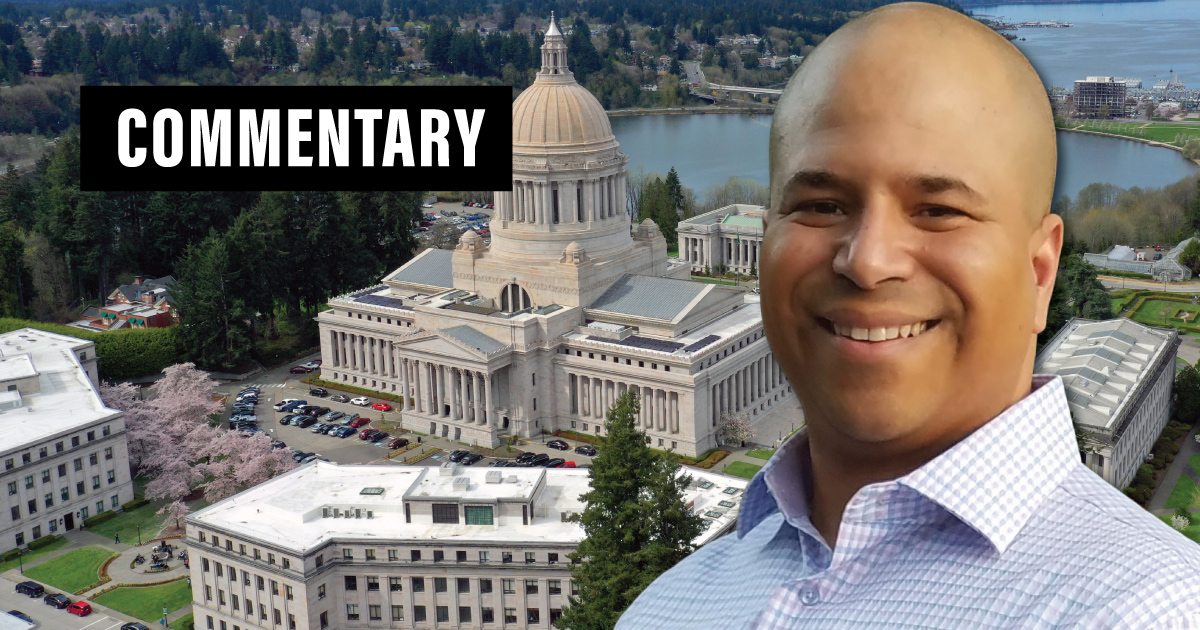
Mario Lotmore, Publisher of the Lynnwood Times.
The Public Disclosure Commission (PDC) on August 12, has opened a formal investigation into Let’s Go Washington and, by extension, independent commentator Brandi Kruse over a complaint filed by Washingtonians for Ethical Government (WFEG), that alleges Kruse’s discussion of causes aligned with that of Let’s Go Washington (LGW) on her platform unDivided, constitutes as “native advertising” and argued that Kruse is operating as a “commercial advertiser” rather than an exempt journalist or editorial voice. WFEG assigned a value for this “promotion” to between $345,000 and $1.25 million in unreported “in-kind political advertising” by Let’s Go Washington.
There is a lot of speculation online as to the possible motives by the PDC to open a formal investigation and that of the WFEG filing the complaint just as three initiatives on the November ballot — sponsored by LGW — that, if passed by voters, would have profound societal and fiscal impact to Washington state.
I am not going down that “woulda, shoulda, coulda” rabbit hole; I am here to offer some insight as to if the PDC were to broadly accept the WFEG’s theory, on that the fallout would not stop with just one podcaster—as the proverb says, “the road to hell is paved with good intentions.”
Newspaper editorial boards that endorse candidates while the paper sells political ads could face new challenges—just think of the deluge of PDC complaints especially against the big newspapers who received hundreds of thousands of dollars in advertising revenue yet rarely investigate unethical behavior or better yet, use their platform to attack competing newspapers for exposing the unethical behavior, of specific party-aligned darlings.
Union newsletters, websites, emails, and social-media posts urging members to support or oppose ballot measures could suddenly be treated as reportable in-kind contributions.
Public-sector unions, which routinely communicate with elected members and lobbyists about legislation and initiatives, would confront heavy new compliance burdens and potential liability.
And finally, independent journalists, newsletter writers, and YouTubers who monetize their work would operate under constant threat of complaints—something that would expand news deserts in the state and lead to self-censorship.
Washington state already stands apart in how aggressively it regulates channels of political speech when in 2018, the PDC passed emergency transparency rules in May of that year, which were formalized into permanent regulations effective December 31, 2018, trigger when Facebook and Google failed to turn over local political ad data to The Stanger.
The state’s commercial-advertiser disclosure requirements are so detailed that major platforms—including Meta, Google, Yahoo, and others—have banned or stopped accepting state and local political advertising in Washington state. These social media juggernauts continue to sell such ads in every other state; a move that undoubtedly benefits incumbents who can amass a war chest promoting their political platforms using more costly mailers while preventing challengers with limited financial means from promoting their campaigns.
As I said earlier, “the road to hell is paved with good intentions.” In this case, the unintended consequence was an information distribution advantage for incumbent candidates.
It is important to note that the Public Disclosure Commission has never successfully fined any person nor entity under a similar WFEG’s complaint. Other media-related complaints involving newspaper editorials, endorsements, or occasional mentions of commentators have almost always been reviewed by PDC staff and closed at the preliminary stage with findings of “no evidence of a violation” or “no formal investigation warranted.” The decision to now open a formal investigation into LGW, and by extension, Kruse’s podcast commentary is therefore a departure from the norm in what will become a test of how far the PDC is prepared to push against settled First Amendment protections.
The 2007 Washington State Supreme Court decision in San Juan County v. No New Gas Tax strongly indicates that Kruse’s content is protected editorial speech; however, the complaint insists it is reportable “political advertising.” This is not your standard dispute over campaign-finance paperwork and how this is answered will shape the boundaries of free expression for podcasters, independent journalists, union publications, and ordinary citizens who choose to speak out.
In 2005, KVI radio hosts John Carlson and Kirby Wilbur used their regularly scheduled programs to champion Initiative 912, a measure aimed at repealing a 3-cent gas-tax increase. They urged listeners to sign petitions, contribute money, and get involved. Local governments didn’t like that so they sued, claiming the airtime constituted a “valuable in-kind contribution” that had to be reported and limited.
The Thurston County Superior Court granted the municipalities’ preliminary injunction and the trial court ruled that the No New Gas Tax campaign received contributions of free airtime for political advertising in support of I-912
The Washington Supreme Court reversed the lower court’s ruling in a unanimous 9-0 decision. The Court held that the hosts’ commentary fell within the statutory media exemption. The broadcasts occurred during the content portion of regularly scheduled programs on a station not controlled by a political committee, and payment was not normally required for that airtime. And even if the hosts “acted at the behest” of the campaign, the speech remained protected and that treating it as a campaign contribution would violate the First Amendment.
The American Civil Liberties Union of Washington filed a strong friend-of-the-court brief supporting the hosts. The ACLU argued that talk-radio shows are not the same as paid advertisements and cannot be treated as campaign contributions without undermining free-speech protections.
In 2007 it was AM radio; today almost 20 years later, it is podcasts, YouTube channels, and social platforms. Kruse’s UnDivided is a regularly produced program featuring opinion, interviews, and analysis—she is influential and is listened to by thousands daily. When she discusses ballot measures, she is doing what Carlson and Wilbur did two decades ago—speaking directly to an audience that chooses to listen.
The parallels are strong—both formats feature hosts expressing views in real time, both are regularly scheduled, and both carry commercial sponsorships while still delivering editorial content. If the 2007 ruling protected radio hosts who solicited signatures and donations on air, one would think it should protect a podcaster who encourages listeners to visit a website and sign initiative petitions?
The medium may evolve but the constitutional principle does not.
WFEG’s complaint tries to evade the 2007 Washington State Supreme Court ruling precedent by labeling Kruse a “commercial influencer” selling “native advertising.” Native advertising is promotional content deliberately designed to blend with surrounding material so it does not look like a traditional ad. Because Kruse sells sponsorships and sometimes delivers promotional messages in a conversational style, the WFEG argues that her initiative discussions should be treated as paid political advertising that must be reported to the PDC.
There are compelling arguments in distinguishing “native advertisements” from both perspectives in this case.
A supporter of WFEG’s complaint may argue that modern influencers run commercial enterprises by sell advertising packages and listing sponsors that may deliver promotional value in forms that look like opinion. When that same style is used to advance a ballot measure, the public has a right to know the value and the source. Allowing such activity to remain unreported, one may say, creates a loophole that political campaigns can exploit.
On the other side of the argument, traditional newspapers and radio stations have always sold advertising while still enjoying the media exemption for their news and opinion content; and that monetization does not automatically convert political opinion into regulated campaign speech. The argument was center on that the First Amendment does not turn on whether the speaker works for a legacy broadcaster or runs an independent digital platform and that expanding the definition of reportable contributions to cover monetized independent speech would chill the intention the 2007 court ruling it sought to protect.
See, the Washington State Supreme Court in 2007 drew a clear, speech-protective line precisely to avoid endless case-by-case fights over whether commentary was “really” advertising. A broader “native advertising” test would reopen that door and create chaos.
Kruse has stated she never received a cent from Let’s Go Washington; however, campaign-finance law does not require a direct payment from a PAC to create a reportable in-kind contribution. Coordination or funding through related entities such as Future 42 or Project 42 could make the value attributable to the LGW even without a direct check.
A realistic path to a violation against Let’s Go Washington would require the PDC to find that:
If the content is first characterized as political advertising, secondary exposure for Kruse becomes possible under PDC’s commercial-advertiser rules. Those rules require anyone who accepts or provides political advertising to maintain a “books of account” (just like social media platforms) showing who paid, what was provided, and the cost. Failure to keep or produce those records can itself trigger a PDC enforcement with hefty fines.
Brian Heywood faces primary civil risk as the named sponsor of Let’s Go Washington as the principal decision-maker of the political advocacy group coupled with his role as Vice Chair and Secretary of Project 42, the parent organization of Future 42.
Washington law allows civil penalties against people/entities who fail to report contributions or expenditures, including penalties up to $10,000 per violation. With the WFEG alleging a value between $345,000 and $1.25 million for 149 instances of “promotion” by Kruse, the potential financial exposure for the committee could be at least $1.49 million if investigators find that value flowed through those entities in a coordinated way to Kruse—one can see how this can get complicated and a recipe for suppressing disfavored speech.
The PDC’s formal investigation now gives the agency subpoena power to examine whether Heywood, through his leadership role at Project 42, coordinated promotional value that was never documented with the PDC. However, investigators still face a legal threshold.
The Commission or a court must first conclude that Kruse’s content does not qualify for the media/editorial exemption. The 2007 Supreme Court decision remains Let’s Go Washington’s and Kruse’s strongest legal shield against the PDC. Without overcoming that precedent, coordination findings alone do not create a liability for Kruse nor LGW.
If the PDC were to issue an adverse finding and if the case were to proceed through the Washington courts, it could force the Washington State Supreme Court again to decide whether its 2007 ruling protects modern podcasts, social-media commentary, and influencer content. If the state’s highest court rules it doesn’t, well open the flood gates for every wannabe influencer looking for his or her 15-minutes of fame to flood the PDC with complaints against every entity taking a political cause overwhelming the system and creating a financial burden on unions, cash-strapped newspapers, and fellow competing podcasters.
Heywood has the resources to fund a serious defense all the way to the U.S. Supreme Court — something he has not commented on, but from his very public fight against the powers-that-be, one should assume he probably will. Kruse has a platform that can rally public support and keep the free-speech stakes visible. For both, the principle of fighting for free speech, may simply outweigh the hefty legal costs.
Campaign-finance rules that burden political speech are repeatedly reviewed by the U.S. Supreme Court. A case such as this, presenting a restriction on digital political commentary (something that most likely led to the rise of President Doanld J Trump) could reach the Court that currently has a 6-3 majority of justices appointed by Republican presidents—justices who have generally been protective of political speech.
I want to end with this: Freedom of the press and free speech are not a partisan convenience. It is a constitutional protection in our Republic that allows everyone to speak, listen, and decide. The Washington State Supreme Court understood that in 2007 and now the current PDC investigation will test whether Washington’s institutions still do. Their outcome will determine whether independent voices will remain free to comment on trending issues or whether they must first assess the regulatory risk of being caught up in bureaucratic “blue” tape.
As an award-winning professional journalist, engineer, and publisher, I will commit to you, my readers, to continue providing objective journalism. As I said earlier, I am not going to engage into the speculation as to why the formal investigation by the PDC into LGW, but to warn that if political speech in the digital age is no longer constitutionally protected as with traditional media, the fallout would not stop with just one podcaster, it will apply to independent journalists, Substack writers, YouTubers, unions, and newspapers.
Mario Lotmore, Publisher, Lynnwood Times
COMMENTARY DISCLAIMER: The views and comments expressed are those of the writer and not necessarily those of the Lynnwood Times nor any of its affiliates.
Author: Mario Lotmore