


EVERETT — The Snohomish County Council will hold a public hearing on Wednesday, August 19, on an emergency moratorium it adopted unanimously on June 24 that pauses new data center development in unincorporated areas of the county—meeting information at end of article.
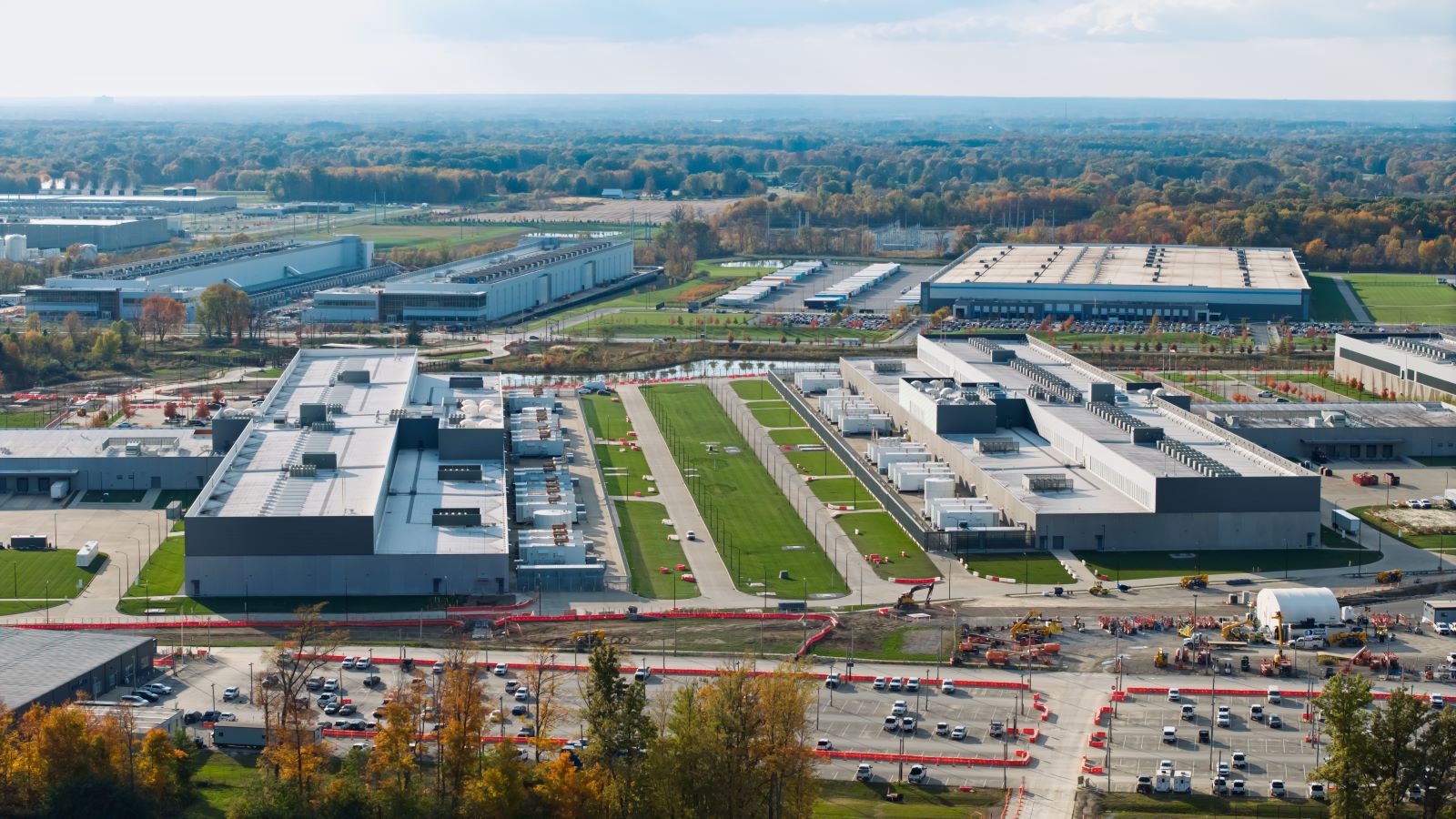
Emergency Ordinance 26-026 places a six-month hold on the filing, acceptance, processing or approval of applications to establish, expand or change the use of properties to data centers in all zones of unincorporated Snohomish County. The measure applies whether a data center is the entire project or only a component of a larger proposal. It supersedes any general regulations that might otherwise be interpreted to allow such facilities.



“Data centers have become a significant topic of public interest and concern,” Councilman Nate Nehring, who sponsored the ordinance, wrote in a commentary published in the Lynnwood Times. “While these facilities play a role in supporting many digital services, their impacts on land use, infrastructure, energy and water demand, and neighboring communities weigh heavily on the minds of many Snohomish County residents.”
He added, “The purpose of the moratorium is to press ‘pause’ so that our county has the ability to carefully deliberate on what a long-term data center policy should look like without having to worry about these facilities being sited before any regulations have been established.”




The ordinance defined a data center as “a facility used primarily for the housing, operation, or co-location of computer and networking equipment and the handling, storing, managing, processing, and backing up of digital data, and having a total planned electrical load of 2 megawatts (MW) or greater, and generally requiring uninterruptible power supplies and associated infrastructure such as cooling systems, backup power systems and battery storage.”


“There aren’t any data centers currently planned, so this gives us an opportunity to create a framework that includes concerns from labor, concerns from [the] environmental community,” Councilman Strom Peterson said during June’s meeting.
Data centers require land and, currently, large amounts of energy, can consume significant quantities of cooling water, and involve a continuous low-frequency hum and other environmental impacts that “can place untenable strain on the communities and ecosystems in which they are sited,” the ordinance says.
A “typical” data center’s energy use varies widely by size and type:
- Small enterprise / server rooms: 0.1–1 MW
- Mid-size enterprise or smaller colocation: 1–10 MW
- Larger colocation facilities: 3–15+ MW
- Hyperscale data centers (the ones driving most of the growth and public debate): typically 20–150 MW, with many new facilities designed for 50–100+ MW. Some campuses or AI-focused sites reach several hundred MW or more.
A 10 MW facility running continuously uses roughly 87–88 GWh per year— roughly equivalent to 7,800–8,000 average homes in Snohomish County for a full year based on Snohomish PUD average annual residential consumption of 11,249 kWh. In 2024–2025, U.S. data centers consumed roughly 180–200 TWh, or about 4.4–4.7% of total U.S. electricity. Projections for 2030 estimate the consumption to be in the 9–15% range.
Advances in biocomputing technology could substantially reduce the energy and environmental footprint of future computing infrastructure. Molecular and DNA-based computing systems have demonstrated energy use 1,000 to 10,000 times lower per operation than traditional electronic processors in experimental settings. Living neuron and organoid systems under development by startups report even greater efficiency claims for certain tasks, with some units drawing as little as 30 watts total— roughly the power of a small laptop.
These approaches harness biological processes such as chemical reactions, DNA hybridization, or networks of living cells for extreme energy efficiency, lessening demands for electricity, cooling water, and the associated noise from large mechanical systems which would address local concerns contributing to regulatory pauses.
In Quincy, a farming town of about 8,500 people in Grant County, roughly 30 data centers now shoulder an estimated 57% of the city’s property taxes, according to a recent August 2026 article in CNN Business. That revenue from the data centers have funded a $120 million high school, hospital improvements, a public library, new police and fire stations, and a $15 million aquatic center. The added assessed value has also driven down the city’s levy rate by about 70% since 2006.
Former city administrator Pat Haley called it the “Quincy miracle,” sharing that data centers “opened up what could have been a low-opportunity town into this place with brand-new everything.”
The County’s current moratorium is set to last six months from its June 24 effective date and will expire automatically by December 25 unless renewed. Renewal requires a subsequent public hearing and findings of fact.
Wednesday’s hearing is not a vote on whether to impose the pause; that decision was already made, instead, it provides the legally required opportunity for the public to offer testimony on the already adopted measure. The hearing is scheduled for 10:30 a.m. in the Jackson Board Room on the eighth floor of the Robert J. Drewel Building at 3000 Rockefeller Ave. in Everett. Residents also may join remotely via Zoom at https://zoom.us/j/94846850772 or by phone at 1-253-215-8782 or 1-206-337-9723, using meeting ID 948-4685 0772.

Author: Mario Lotmore





2 Responses
From what I read, the county is already leaning toward approving data centers, and are seeing them as an income generator. Shame on you! Put this to a vote so the people of Snohomish County can have a real voice in our county’s direction. Or maybe yiue affraid of that? These open forums are a waist of time, and from my experience, they just provide a means for the council to “check a box”, and then do what ever they want anyway. Let’s see a published comprehensive plan that hase been approved by us.
We don’t need more data centers. It cost average Americans more than the net worth they may create