
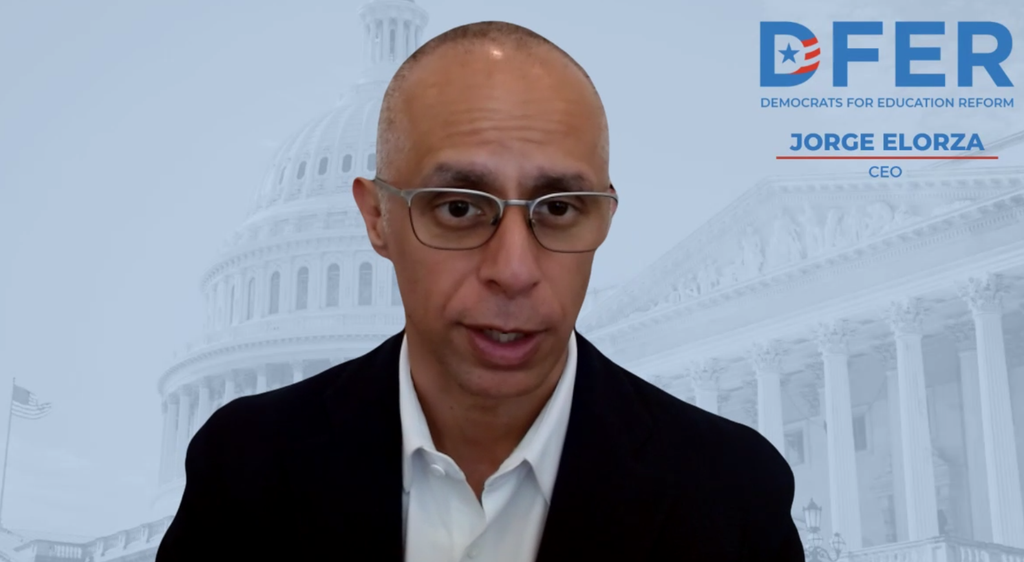
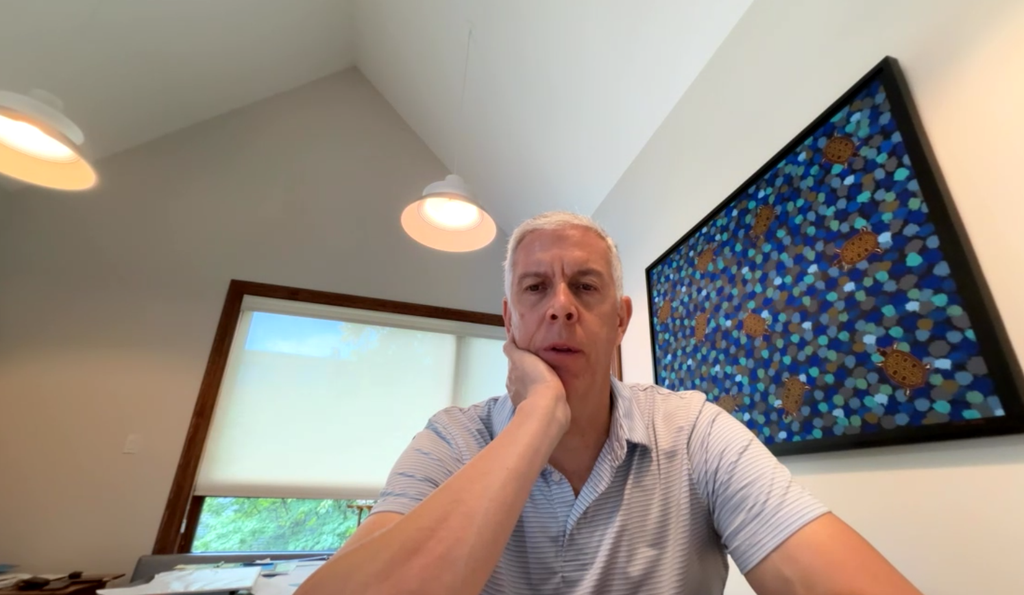
Washington State media representatives were invited to a virtual call about the Federal Scholarship Tax Credit program with former U.S. Secretary of Education, Arne Duncan, and Jorge Elorza, CEO of Democrats for Education Reform on Tuesday, September 15.
The Federal Scholarship Tax Credit (FSTC)—also known as the Education Freedom Tax Credit—is a nationwide program that gives individuals a dollar-for-dollar federal income tax credit of up to $1,700 for cash donations made to approved Scholarship Granting Organizations (SGO).

SGOs are certified 501(c)(3) nonprofits, but Elorza noted Tuesday that educational associations or committees affiliated with school districts will be able to start their own SGOs, providing scholarships for tutoring and, if they wanted to, require that tutoring be teachers in the district.
Essentially how it works is a taxpayer would donate to a qualifying SGO, and that donation then goes to eligible K-12 students via that SGO. The donating taxpayer could than receive a federal tax credit for their donation.



“The money doesn’t go to the district; it goes to families. But families could then use it to purchase tutoring, or potentially other services that are provided by district employees,” said Elorza.
According to Dr. Vicki Murray, Director, Center for Education & Paul W. Locke Research Fellow for Education Washington Policy Center, the moneys would not be specifically for private schools but public schools as well. Public schools are looking into partnering with an existing non-profit that provides educational services and leveraging their own non-profit or fundraising efforts.
As of September 17, 2026, Washington State has not opted into the program with Governor Bob Ferguson still on the fence. As such, there are no existing SGOs in Washington to date.
Jorge Elorza called this a “chicken in the egg” problem because many nonprofits are not willing to invest in the time, and resources, to become an SGO unless they know their state is opting in, but many State Governors have said they won’t opt in unless they know they have an existing list of participating SGOs.
“That chicken in the egg problem is real but what we’re finding is there’s no shortage of organizations that will be SGOs, and there are national SGOs that can designate funds specifically for Washington State. The Governor should not be concerned about organizations stepping up to fill that space,” said Jorge Elorza. “This is a no brainer. You can opt out and the money leaves the state, but you can opt in and support kids in Washington. Where is this a hard decision?”
The Lynnwood Times asked Duncan and Elorza how much control a state would have over the problem after opting in, and what accountability measures would be in place.
Once a state opts in, their role is “ministerial”, Elorza replied, meaning that any nonprofit, in good standing, that wants to be included in the SGO list can become an SGO. However, it will be up to local elected officials, particularly the Governor, to ensure that the SGOs that align with the state’s priorities are the SGOs that taxpayers contribute to.
Arne Duncan elaborated on this with a hypothetical. If the state’s mission is to support third, and fourth, grade reading levels, for example, and there are five SGOs committed to that mission, it will be up to the state to evaluate how will they are performing in helping kids improve and who did the best job.
“This is really democratizing philanthropy. If I have scarce tax dollars, I want to donate towards results and I maybe want to donate my tax dollars to the organization that did the best job of helping kids accelerate,” said Duncan. “So it’s a real chance to have a virtuous cycle here, to have some healthy competition between providers and as long as we’re measuring apples to apples we can figure out who’s doing the best job at accelerating student achievement. And hopefully in subsequent years they would have the opportunity to serve many more students because of their success.”
Elorza added that, since this is a new program, there will likely be amendments to the law and modifications to the program in subsequent years based upon what was successful.
“The federal scholarship tax credit program is very different than what was advocated for. There were literally significant changes that were made in the eleventh hour, including the $1,700 per person, including the Governor opting, and those are important visions that completely change how this program operates and what the impact is going to be,” said Duncan. “It is an important law. No one thinks that it’s a perfect law but we’re going to learn a great deal from it, and I’m sure it will evolve and made perfect over time.”
Dr. Vicki Murray shared that in her home state of Arizona there have been a number of programs with little-to-no regulation over the last 30 years but one of the most important guardrails has been donors themselves.
“We all become better philanthropists when we are donating our hard earned tax dollars and we want it particularly to go to children’s education. The more SGOs the better because there is an immediate feedback loop. If this SGO doesn’t donate the dollars they said they were going to do, for the purposes they said they were going to do and not getting the results, we will take our hard-earned tax dollars and give it to another SGO that works for students, for schools, and is transparent,” said Dr. Muray. “The government is a floor, not a ceiling, the more transparency the better.”
High intensity tutoring is effective, but expensive, Elorza said Tuesday. With many states facing financial and budget crunches most states cannot provide high-dosage tutoring to kids who need it most. That’s why the program exists in a nutshell, he continued, at little to no impact to the state.
“To have a new funding source to give tens of thousands of additional kids access to what we know is working here in Chicago, and Oakland, and across the country, that’s the opportunity ahead of us now,” said Duncan.
The law defines an eligible student for the FSTC program as someone who is both eligible to enroll in public elementary or secondary school; and lives in a household with income no greater than 300% of area median gross income (AMI).
The scholarship can cover expenses associated with public, private, or religious schools including tuition, books, supplies, tutoring, uniforms, special-needs services, computers and technology, and more.
The program will officially take effect on January 1, 2027, and will be managed by the U.S. Department of the Treasury rather than the Department of Education.
Gov. Ferguson said he would be hesitant to opt into the program until the program’s rules are finalized. Elorza said that the U.S. Department of Treasury should have draft rules completed by the end of September. These rules, he added, will be released in two batches – the first will be focused on some of the concerns state Governors have been seeking guidance on, and the second batch will focus on the operations on SGOs (which will be released later).
“For me this is an unprecedented opportunity and given the urgency in which kids need help, this is not one that I’d be studying for five years to figure it out. I’d be figuring out now how to take advantage to provide new resources for kids that need help,” said Duncan.

Author: Kienan Briscoe